The Formation Stays Behind. The Principles Travel. — Yeray Rodríguez
Spanish coach Yeray Rodríguez on twenty years across seven countries — Lanzarote to Menorca to Libya to UAE to China to Qatar to Jordan. UEFA PRO. QSL Cup final with Al-Arabi, Beijing Cup with Sangao, two-time UAE Best Academy Director. What travels is not the formation; it is the principles.
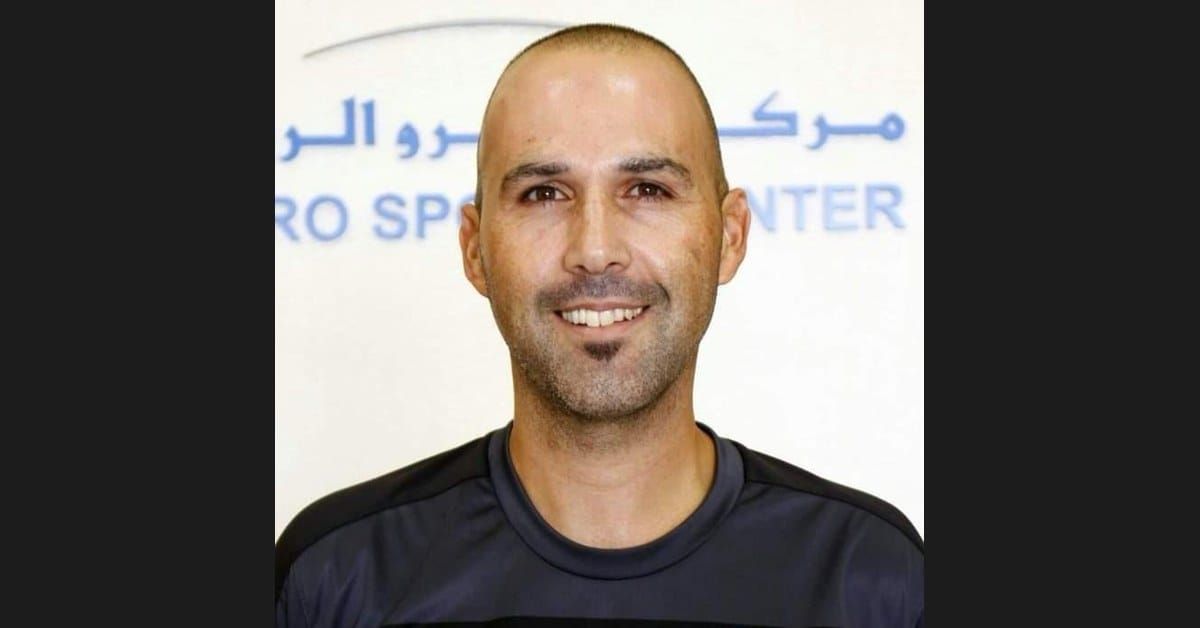
Yeray Rodríguez started coaching in 1997 at Sporting Tías in Lanzarote, in the Canary Islands. He has not stopped since. Across nearly two decades he has moved through Atlético Tiñense (Lanzarote), Atlètic Ciutadella and Esportiu Mercadal (Menorca), Al Hilal in Libya, RCD Espanyol Academy Ajman in the UAE, Beijing Sangao in China, Sharjah FC in the UAE, FK Apolonia in Albania, Al-Arabi SC in Qatar, and now, since 2026, Al-Hussein SC in Jordan as assistant coach. Seven countries, three confederations, and a UEFA PRO Licence through the Royal Spanish Football Federation, plus international study visits at Bayern Munich, Villarreal CF, and RCD Espanyol.
The honours list reads less like a career summary than a diagnostic. Libyan First Division Cup winner with Al Hilal in 2013–14, during political instability so severe that "we had to accept that certain plans might change overnight." Named Best Academy Director in the UAE for two consecutive seasons, 2015–16 and 2016–17, with RCD Espanyol Academy Ajman. Third in the league and Beijing Cup winner with Beijing Sangao in 2019–20. UAE U17 league champion with Sharjah in 2022–23. QSL Cup runner-up with Al-Arabi in 2024–25 as interim head coach of the first team, in a dressing room that included Marco Verratti. In each place the context shifted completely. The method, by his own account, did not.
In the written exchange that follows, Yeray walks through the five components of his game model and the sequence in which he builds them, why he keeps a performance model and a management model strictly distinct, how he decides in real time from the bench whether a problem is one of execution or structure, what Libya taught him about keeping a dressing room stable when the surrounding environment is not, how he harmonises foreign and local players under one game model inside the strict Gulf-league quotas, and — in Part 8 — what he would do if a K League club or a Korean side preparing for the AFC Champions League called him tomorrow. The line that stayed with us is from Q10, and it is the title of this piece: "What should travel with you isn't the tactical formation; it's your principles. Everything else must adapt to the football, the players, the club, and the competition facing you."
What follows is a written exchange, published in his own words and in the order he answered them.
Spanish head coach · UEFA PRO · twenty years across seven countries
CURRENT ROLE
Assistant Coach, Al-Hussein SC (Jordan, 2026–present)
COACHING CAREER
- 2026–present · Al-Hussein SC (Jordan) · Assistant Coach
- 2025 · Al-Arabi SC (Qatar) · Interim Head Coach, First Team
- 2025 · Al-Arabi SC (Qatar) · Head Coach, U-23 Olympic Team
- 2024–2025 · Al-Arabi SC (Qatar) · Interim Head Coach, First Team
- 2024 · Al-Arabi SC (Qatar) · U-19 Coach
- 2023 · FK Apolonia (Albania) · Head Coach
- 2021–2023 · Sharjah FC (UAE) · Head Coach, U17 and U19
- 2018–2019 · Beijing Sangao (China) · Head Coach
- 2014–2018 · RCD Espanyol Academy Ajman (UAE) · Academy Director
- 2013–2014 · Al Hilal FC (Libya) · Head Coach
- 2009–2013 · Esportiu Mercadal (Menorca, Spain) · Head Coach
- 2008–2009 · Atlètic Ciutadella (Menorca, Spain) · Head Coach
- 2006–2008 · Sporting Tías (Lanzarote, Spain) · Head Coach
- 2004–2006 · Atlético Tiñense (Lanzarote, Spain) · Head Coach
- 1997–2004 · Sporting Tías (Lanzarote, Spain) · Coach and Head of Youth Development
HONOURS
- 2024–25 · QSL Cup runner-up (Qatar) · Al-Arabi SC interim head coach
- 2022–23 · UAE U17 league champion · Sharjah FC
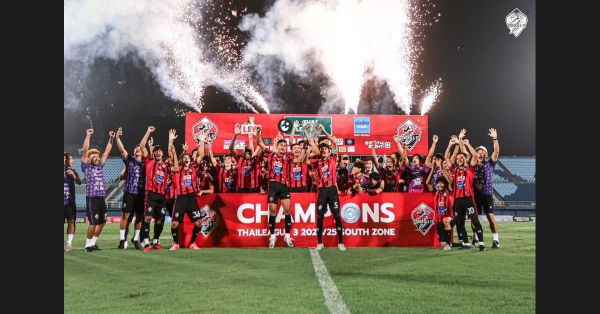
- 2019–20 · Third in the league and Beijing Cup winner · Beijing Sangao
- 2016–17, 2015–16 · Best Academy Director in the UAE, two years running · RCD Espanyol Academy
- 2013–14 · Libyan First Division Cup winner · Al Hilal FC
- 2009–10 · Best coach in the Balearic third division
- 2005–06 · Promotion to Preferente · Atlético Tiñense
METHODOLOGY & AREAS OF EXPERTISE
- Context analysis — culture, city, reality, club objectives
- Game model design and application
- Separating the performance model from the management model
- Training periodisation and load control
- Youth academy management
QUALIFICATIONS
- UEFA PRO Licence — Royal Spanish Football Federation
- International study visits — Bayern Munich · Villarreal CF · RCD Espanyol
PART 1 · IDENTITY
From a small club in the Balearic Islands to the first divisions of Libya, the UAE, China, and Qatar — nearly two decades of journeying across continents. If you were to introduce yourself in a single sentence, and define the football you pursue in just one line, what would you say?
From Lanzarote (Canary Islands) to Menorca (Balearic Islands) and from there to the first divisions of Libya, the UAE, China, and Qatar — nearly two decades of journeying across continents.
Who I am: A professional football coach shaped by the journey, with nearly two decades of experience across diverse cultures that have taught me to adapt, compete, and build teams.
My football: An intense, organized, and bold style of play, where the team comes before the individual and adapting to the context never comes at the expense of a clear identity.
PART 2 · PHILOSOPHICAL FOUNDATIONS
You have identified "analysis and evaluation of the culture, city, reality, and club objectives" as the first element of team improvement. Most coaches start by opening the tactics board and the squad list, yet you place environmental analysis at the very beginning. Why? How does this analysis concretely determine specific aspects of your game model, and what problems do you believe arise when this stage is skipped?
Because a playing style isn't built in a vacuum. Before deciding how I want my team to play, I need to understand where I am, who we are, who we are competing against, and what is expected of us. The tactics board tells me what I want to do; the context tells me what is possible, what is necessary, and what makes sense.
For me, that initial analysis has a very concrete consequence: it shapes the priorities of the playing style.
The club's culture determines the behaviors and values I want to preserve. If the club has a historic identity based on competitiveness, physical commitment, and bravery, I need to make sure the playing style continues to express those traits — not deny them. If the club values a specific style of play, I have to find a way to connect my principles with that identity.
The city and the fans play a key role. Football is also an emotional language, and I need to understand what moves the fans and what they want to see from their team. That doesn't mean becoming a prisoner of their expectations, but it does mean recognising that playing style is part of the club's identity and that the stadium is part of the environment where we compete.
The reality on the ground tells me what I can and cannot do. The characteristics of the players, the training conditions, the daily schedule, the quality of the facilities, the competitive calendar — all of this influences the kind of football I can actually produce.
The club's objectives tell me where we have to go. It is not the same to coach a team fighting for the title, one trying to establish itself, or one working to avoid relegation. Each of these situations requires different priorities, and the game model has to reflect them.
When this step is skipped, you end up with teams that train very well for something they might not actually need. Contradictions arise between the coach, the players, and the club; unrealistic goals are set; and, above all, time is wasted trying to fix problems that actually stem from a misreading of the context.
To me, coaching is about understanding first and intervening second. Tactics are the tool; analyzing the context tells you which tool you need and how to use it.
"To me, coaching is about understanding first and intervening second. Tactics are the tool; analyzing the context tells you which tool you need and how to use it."
You have stated that you seek "a playing style suited to the qualities, characteristics, and abilities of the players and fans." Yet there is always a gap between a coach's own philosophy and the reality of the squad. When your ideal vision of football collides with the given squad's capabilities, where do you adapt to the players, and where do you absolutely refuse to compromise? What determines that boundary between pragmatism and principle?
I believe a coach must know how to distinguish between the principles that define their football and the tools used to implement them. That, for me, is where the line lies between adapting and abandoning one's identity.
I adapt significantly to the players. If I have center-backs with a great ability to defend by stepping forward, I can set up a higher defensive line; if I don't, I have to protect them differently. If my midfielders have the ability to dominate the game with the ball, I will leverage that quality; if my greatest strength lies in the speed of my attackers, it might make more sense to attack open spaces and play a more vertical game. I don't want a player doing something they lack the necessary tools for simply because it was my initial idea.
I also adapt to the characteristics of the fanbase and the surrounding environment. Football isn't just what happens between the lines on the pitch. The way we compete, the level of expectation, the relationship with the people, and the club's ambitions are all part of the context — and therefore, they influence how we want to play.
That said, there are things I consider non-negotiable. Intensity, commitment, collective discipline, solidarity, a competitive mindset, and defensive responsibility are all part of my identity. I might change the system, the height of our defensive block, the way we build up play, the attacking tempo, or even the amount of possession we hold, but I do not want to change the attitude with which we compete.
To me, pragmatism doesn't mean abandoning principles; it means finding different ways to uphold them.
I might not have a team equipped to dominate through possession, yet I can still want a brave team. I might not always press high up the pitch, yet I can still want an aggressive team. I might defend deeper at times, yet still demand concentration, solidarity, and the ability to attack immediately after winning the ball back.
The limit is defined by a very simple question: am I adapting to make the team more competitive, or am I abandoning what I believe in? If the adaptation improves the team without compromising its principles, then it is pragmatism. If achieving a result requires me to abandon the values and behaviors I want to define the team, then I am no longer adapting — I am losing my identity.
That is why I do not believe in imposing a static image of how a team should play. My football philosophy is built on certain principles; reality compels me to find the best expression of those principles using the players at my disposal. And therein lies one of the most rewarding aspects of coaching: enabling a different squad, in a different context, to find its own way of expressing that same identity.
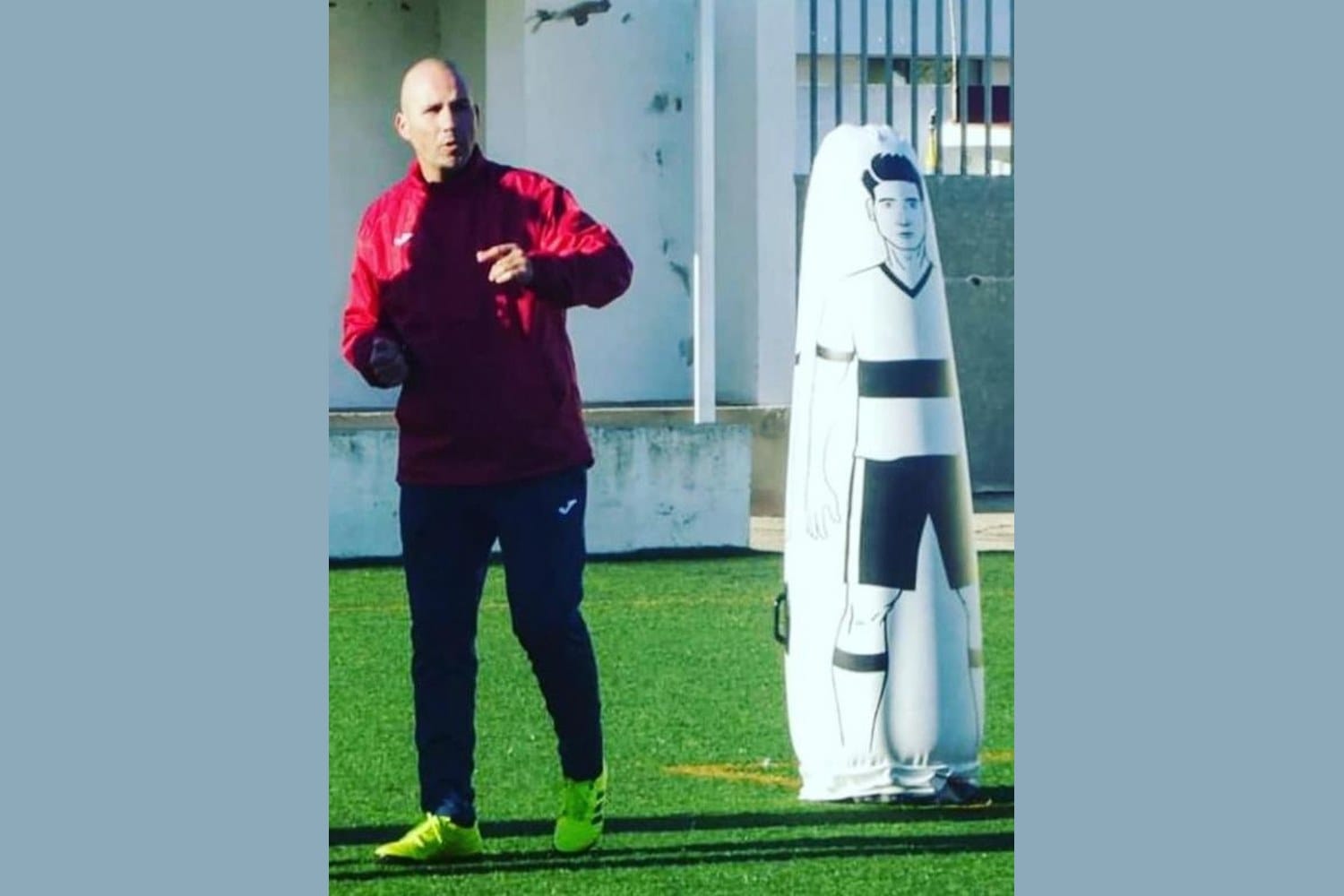
PART 3 · STRUCTURE OF THE GAME MODEL
You have outlined five components of your game model: "positional functions and responsibilities," "attacking principles," "defensive principles," "philosophy and transitions," and "base system and alternatives." While these appear to be distinct elements, in practice they must interconnect and operate as one. How do you establish a hierarchy among them, and when you take charge of a new team, which do you construct first and which do you complete later? Please explain the sequence and the reasoning behind it.
At this point, I think it is important to clarify that I do not view these five components as watertight compartments or as a checklist to be completed sequentially. Instead, I see them as different layers of a single game concept. While there is indeed a sequence of construction, it is based on priorities and the relationships between them.
If I had to summarize my approach in a single sentence, it would be: first, I define how I want the team to compete; next, what each player must do to achieve that; and finally, the structure that best enables all of that to happen. The tactical formation is the result of the model, not the starting point.
You have articulated an ambition for "attractive attacking style, yet solid in defence, and visible, competitive football." The term 'visible' is striking. Does it mean visual spectacle for the crowd, or does it mean that your team's intentions and patterns are clear yet unstoppable? When your team is functioning at its peak on the pitch, what specific scene would you hope to see unfold? Can you paint that frame for us?
I would interpret "visible" in both senses, but above all in the second: I want an outsider to be able to recognize how my team plays. I am not looking for spectacle for spectacle's sake; I am looking for football with intent, with personality, and with identifiable behaviors.
For me, "visible" football doesn't necessarily mean a possession-based game, lots of passing, or spectacular plays. Visible means the team's intentions are perceptible. It means the player knows what they want to do, their teammates recognize it, and — from the stands — you can identify specific patterns of behavior.
I want people to see what we do when we have the ball, what we do when we lose it, how we want to win it back, how we occupy space, and how we react to different match situations. And I want all of that to have continuity. I don't want isolated actions, but rather behaviors the team repeats because they have internalized them.
That is why I speak of attractive, attacking football, but also a solid, competitive style. To me, there is no contradiction there. I want a team that wants to attack but knows how to defend; that wants to take the initiative but understands when to be pragmatic; that is brave with the ball and aggressive without it.
If I had to picture my team at its peak, it would be a highly connected team.
I picture the center-back who wins the ball back and already knows where his teammates are. The midfielder who receives a pass because someone else has created the space. The full-backs reading the game to know when to provide width and when to hold their position. The attackers who don't just wait for the ball but trigger movements to help the team advance. And when we lose possession, I want to see all eleven reacting together, not isolated players trying to solve the situation on their own.
And there is another image that is fundamental to me: the team enjoying the competition. I want the player to know what needs to be done but also have the freedom to interpret the game. I want organization without stifling creativity. Ultimately, when I look at one of my teams at its best, I want the feeling to be: "I know exactly how this team wants to play, yet it is also very difficult to play against."
To me, that is the meaning of a visible style of football: an identity that is seen, understood, and felt at every moment of the match. And if it also manages to stir the emotions of the fans, then we have achieved something even more important.
Between attacking principles and defensive principles lies the decisive moment of transition. In modern football, the three seconds after losing the ball and the three seconds after winning it can determine the outcome. In your game model, what are the actions and decision-making criteria that players must execute in the first instant of attack-to-defence and defence-to-attack transitions, and how do you drill and internalise these transitional moments on the training ground?
For me, the transition begins before the loss or recovery actually occurs. The position we hold while attacking determines how we can react upon losing the ball, just as our defensive structure dictates what we can do when we win it back. That is why the three seconds following the event are crucial, but so are the seconds leading up to it.
In the attack-to-defence transition, the first decision is clear: react. The player closest to the ball must immediately assess whether we can win it back aggressively or if the situation requires us to delay the opponent. I do not want disorganized pressing simply because we have lost possession.
There are three fundamental criteria: distance to the ball, the positioning of our teammates, and the positioning of the opposition. If we have a numerical advantage or are close by, we want to try to win the ball back immediately. If we cannot, the objective shifts to closing down passing lanes, protecting the centre, and buying time for the rest of the team to reorganize. And there is something I consider fundamental: players far from the ball also bear responsibility. Not everyone should sprint toward the ball; some must close down spaces, guard against balls played in behind, or keep an eye on potential receivers.
In the defence-to-attack transition, the opposite applies. The first look should be forward. After winning the ball, the player must quickly identify whether there is an opportunity to attack open space, find an unmarked teammate, or advance with the ball. If the advantage is there, I want us to be vertical and aggressive. If not, there is no need to rush the play: we can secure possession, reorganize, and return to our positional attack.
Therefore, I do not want to automate a single, fixed response. I want to automate decision-making criteria. The player must learn to read the game: Can we win the ball back? Can we progress? Is there space? Do we have a numerical advantage? Should we accelerate or play it safe?
This is addressed in training in a very specific way. Transitions must occur within the drills themselves, rather than just as isolated transition exercises. We design scenarios where the team has to attack, lose the ball, react, win it back, and attack again. We can adjust the playing area, the number of players, the time limit for finishing a play, or recovery zones to generate specific behaviours.
I also rely heavily on repetition with immediate correction. If we lose possession and the collective reaction isn't right, I stop play, correct the positioning or the decision, and we replay the situation. I want the player to understand not just what to do, but why they need to do it.
Over time, the goal is for that ability to read the game to become a habit — so that after losing the ball, they don't have to wait for instructions from the bench, and the team knows how to react on its own. The exact same applies after winning the ball back.
Ultimately, for me, a good transition is a combination of mental speed, collective coordination, and the ability to interpret the context. It isn't simply about running for three seconds; it's about the team making good decisions faster than the opponent during those three seconds.
There is a phrase that sums up quite well how I want to approach this phase: when we lose the ball, we want to know immediately how to win it back; when we win it back, we want to know immediately how to hurt the opposition.
"When we lose the ball, we want to know immediately how to win it back; when we win it back, we want to know immediately how to hurt the opposition."
You have mentioned that you always prepare "alternatives" beyond the base system. Is the timing for switching to an alternative system predetermined before the match, or do you decide in real time based on the flow of the game? What signals do you read from the bench that tell you "now is the moment to change," and when you deploy an alternative system, what is the first thing you demand from your players?
Alternatives are prepared before the match, but the moment to use them isn't predetermined. I want to go into the game with various solutions ready, but not with a stopwatch dictating, "Change the system in the 60th minute." That's not how football works.
Before the match, we analyze different scenarios: what the opponent might throw at us, where we can find advantages, what might happen if we're leading or trailing, and what the team might need during the game. Based on that, I prepare alternatives, but it's the match itself that tells me when to use them.
From the bench, I try to pick up on signals. One of the most important is checking whether our system is allowing the players to do what we need them to do. If we're constantly arriving late, failing to control specific zones, if the opponent is finding a player between the lines too easily, or if we can't progress because certain spaces are being blocked off, I have to ask myself whether the problem is one of execution or structure.
I also observe the flow of the match. I don't focus on just one action. An isolated chance won't make me change the system. But if the same problem repeats over several minutes, if the opponent starts dominating a specific area, or if we're losing an advantage we previously held, then it might be time to intervene.
And there's another crucial signal: the behaviour of our own players. From the bench, I can sense if they're uncomfortable, if they're late to provide support, if the gaps between the lines are becoming too wide, or if one of our strengths is being neutralized. Sometimes, a tactical change isn't a reaction to what the opponent is doing, but rather a need to restore certain reference points for the team.
When I decide to make a change, the first thing I demand is clarity. I don't want a player thinking they have to learn a whole new system in the middle of a match. The alternative must have been worked on beforehand and needs to be simple enough for the player to know immediately what is changing, what isn't, and what their new reference point is.
That's why the primary requirement is always collective: organization and communication. Knowing where we position ourselves, who steps out to press, who provides cover, where we want to advance, and which spaces we need to protect.
Then comes individual adaptation. A player's position, depth, responsibilities, or relationship with a teammate might change, but the fundamental principles must remain recognizable. I don't want a change in system to mean the team loses its identity.
To me, a good alternative isn't about changing for the sake of change. It is about altering the structure to solve a specific problem or to capitalize on an opportunity the match is presenting.
And perhaps most importantly: the coach doesn't need to prove they know how to change the system; they need to demonstrate they know when a change isn't necessary and when it is. The best decision might be to modify the structure, but it could just as well be to correct a behaviour within the existing system.
Ultimately, alternatives are prepared in training but activated when the match demands them. The coaching staff must constantly read the game to anticipate problems, rather than waiting for the scoreline to force a reaction.
PART 4 · SYSTEM AND SQUAD MANAGEMENT
You have emphasised the harmony between "good foreign players" and "good young local players." Middle Eastern leagues have strict foreign player quotas and mandatory local player participation rules. What is your ideal division of roles between foreign players and local prospects, and when harmonising these two groups within a single game model, how do you differentiate positional deployment and training methods?
I believe it is important to avoid framing this as a competition between foreign and local players. I don't assign roles based on nationality, but rather on ability, characteristics, and function within the team. A foreign player needs to deliver performance and experience, but also elevate the local players; meanwhile, a young local player needs genuine room to grow and compete, rather than just filling a quota.
For me, the ideal balance isn't about saying "foreigners do this and locals do that." It's about identifying what each player can contribute to the collective. Nationality shouldn't dictate a player's footballing role.
Good foreign players bear a significant responsibility: to bring quality, experience, competitiveness, and high-level know-how. But for me, there is something even more important: the ability to make the players around them better. If a foreign player arrives and performs well individually but fails to help the local player grow, we are losing part of their value.
The same applies to young local players. I don't want them on the team simply because of a regulatory requirement. I want them to have real responsibilities — progressive ones that match their skill level. We need to demand a lot from them, but we also need to protect their learning process. A young player needs to feel they are there because they can contribute and that there is a pathway for them to become a key player.
That's why I like to foster a relationship in the dressing room where the experienced player acts as a role model and facilitates the younger player's growth. The foreign player can teach based on their experience, but the local player also contributes knowledge of the competition, the culture, the environment, and the club's identity. It's a two-way relationship.
As for the style of play, I don't think we should create two different models. The team must share the same principles. What can vary is how each player executes them, depending on their specific characteristics.
For instance, if I have a young player with great physical attributes but limited tactical experience, I might initially give them clearer, simpler guidelines: when to press, which space to protect, and which teammates to link up with. As they progress, I gradually increase the demands on their ability to read the game.
With an experienced foreign player, I can demand greater autonomy right from the start. They might have the freedom to interpret certain situations, adjust their positioning, identify advantages, or take on responsibilities that require more experience.
This also affects positional choices. I don't want to put a young player in a position simply so they can get minutes. I try to place them where their attributes can help the team while also allowing them to develop. And if an experienced player can fill a role that creates better conditions for that youngster to play, we'll use that approach as well.
In training sessions, I can tailor the work to specific needs. With young players, I focus heavily on game understanding, decision-making, positional awareness, and managing different phases of the match. With experienced players, I can delve deeper into specific details, their responsibilities within the tactical system, and how to leverage their experience to resolve complex situations.
However, there is one thing I refuse to differentiate: the level of competitive demand. A young player cannot be held to a different standard regarding commitment, intensity, or collective responsibility. They may have less experience, but the expectations placed upon them cannot be lower.
And I believe that is where true harmony lies: foreign players bring experience and immediate performance; young players bring energy, talent, and future potential; and the coach's job is to ensure these elements reinforce one another.
My goal isn't to have a team of foreigners and a team of local youngsters sharing the same dressing room. My goal is to have a single team where every player understands their responsibilities and where the experience of some accelerates the growth of others. When you achieve that, regulations cease to be a limitation and instead become an opportunity to build a more well-rounded and sustainable team.
You have stated that you clearly define positional functions and responsibilities, yet in modern football the boundaries of positions continue to blur. Wing-backs become midfielders, strikers drop back to the defensive line. In your model, what is the ratio between each position's 'fixed responsibility' and 'situational fluidity,' and where do you place the balance between individual player creativity and overall system discipline?
I wouldn't speak so much of a fixed ratio between responsibility and freedom, but rather of an idea that is fundamental to me: responsibilities are stable; positions can be variable.
When I define a player's role, I don't just want to tell them where to stand. I want to explain what they must guarantee. For instance, a full-back might be responsible for providing width, but that doesn't mean they have to stay glued to the touchline for the full ninety minutes. If the game situation calls for them to move inside to create a numerical advantage, they can do so. What matters is knowing what happens next: who fills the space they leave behind and how we maintain our collective balance.
That is why, for me, structure is a reference point, not a prison.
First, I establish very clear responsibilities: which spaces we must occupy, which passing lanes we want to create or block, who provides width, who offers protection, who can step out to press, and who must provide cover. Then, we give the player the freedom to interpret the game within those rules.
That is where situational fluidity comes in. A striker might drop deep to receive the ball, a winger might drift inside, a full-back might step into midfield, or a centre-back might carry the ball into advanced areas. But that freedom only makes sense if it creates an advantage and if the team is prepared to compensate for the movement.
I don't want movement for movement's sake. Mobility must have a purpose.
And that connects directly to individual creativity. I have never wanted players who are merely executors of orders. Football needs players capable of interpreting the game, making decisions, and surprising the opposition. If everything were predetermined, we would end up with a very organized team that was also easily predictable.
However, individual creativity cannot become a constant exception to the team's collective functioning. For me, the question is: does this individual decision improve the team? If a player breaks their position to create an advantage and the team can sustain that decision, then great. If they do it and leave the team exposed or disrupt the connections we've worked on, then we have a problem.
That is why I believe discipline lies not in always holding one's position, but in respecting the team's logic. A player can leave their zone, but they cannot abandon their responsibility. They can improvise, but they must understand the consequences of their decision. They can take risks, but their teammates must recognize that risk and be prepared to compensate for it.
In training, I aim to strike precisely that balance. First, we provide the player with structural reference points, and then we introduce situations where they must decide when to stick to them and when to break away. I don't want them simply memorizing movements; I want them to learn to read the game.
If I had to sum it up in one sentence, I would say: I want players who are disciplined enough to understand the system, yet free enough to improve upon what the system cannot foresee.
For me, the best team isn't one with eleven players strictly adhering to the exact same formation; it is a team with eleven players who understand the same game and know when to remain faithful to the structure — and when to break it to create an advantage.
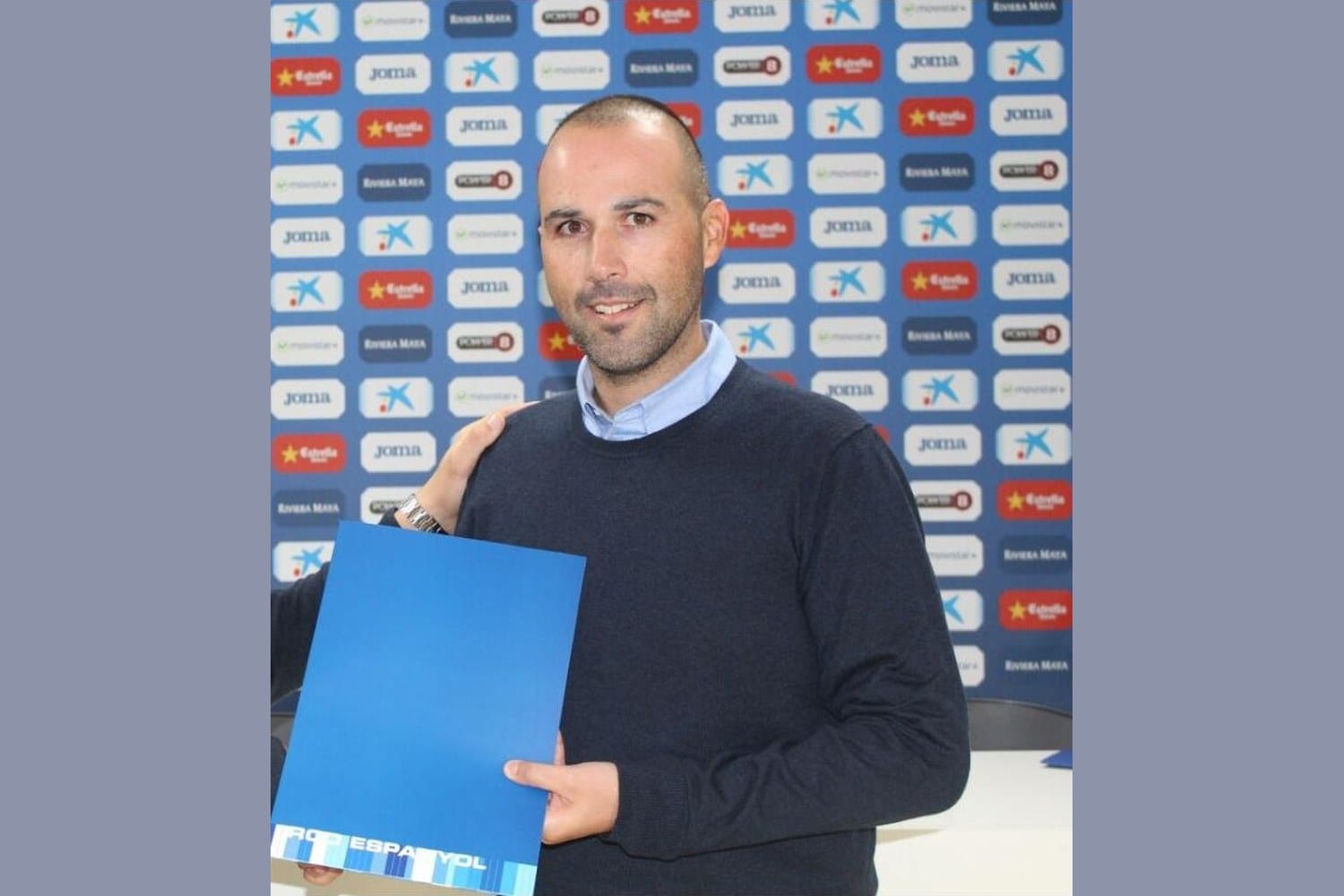
PART 5 · CASE STUDIES
You won the league with Sharjah's U17 side in the UAE, and you reached the QSL Cup final as interim head coach of Al Arabi's first team in Qatar. Youth football and a first team, the UAE and Qatar — the conditions were completely different. How was the same coach's game model implemented differently in these two environments, and what were the two or three key variables that created those differences?
The difference lay not in changing my identity as a coach, but in changing how I expressed it depending on the context. At both Sharjah and Al Arabi, I started from similar principles — a competitive, organized team that takes the initiative when the match allows and is capable of hurting the opposition — but the conditions for implementing them on the pitch differed.
At Sharjah, the context allowed me to build based on a logic oriented more toward consistency and dominating the competition. At Al Arabi, however, I arrived at a team facing a different reality — and during a season where we needed to restore balance and confidence. In fact, before the QSL Cup final, we spoke specifically about player absences and focusing on the available squad, while throughout the competition, we emphasized regaining balance and creating chances.
I would say the model didn't change in its principles; it changed in its priorities and the way it was implemented on the pitch.
At Sharjah, the conditions allowed me to focus more on building a dominant, consistent team over the course of a long season. The priority was for the team to have a very clear identity, to be able to impose specific game situations, and, above all, to maintain a high level of competitiveness over many matchdays.
At Al Arabi, the context was different. The club has a rich history and huge expectations, and the squad included top-level players, but we also had to manage a different sporting reality. When I took over the first team, for instance, we placed great emphasis on regaining balance, correcting errors, and leveraging the squad's existing strengths.
I believe there were three fundamental variables.
The first was the composition of the squad. You cannot ask for exactly the same things when your players have different characteristics. At Sharjah, I was working with specific physical, technical, and tactical attributes; at Al Arabi, I worked with players possessing vast international experience and very different profiles. Having players like Marco Verratti, for example, offers different possibilities for managing possession and playing through the middle. Furthermore, the QSL Cup final demonstrated the team's ability to ramp up the pressure and push for an equalizer after halftime.
The second was the competitive context and the team's current state. It is one thing to build a team from scratch with a specific season goal in mind, and quite another to step into a team that needs results, confidence, and relatively quick solutions. In that second scenario, you have to clearly distinguish between what you want to build for the medium term and what the team needs right away.
Then there is the club culture and expectations. You don't compete the same way when arriving at a club looking to establish itself as you do at an institution accustomed to fighting for titles. That was very evident at Al Arabi: the club has a history that demands competing for major honours, and the fans are part of that expectation. Before big matches, we would talk about the importance of fan support and the team's responsibility toward them.
That is why, if someone were to view both teams from the outside, they would likely find common elements: organization, intensity, attacking intent, collective responsibility, and a competitive spirit. Yet, the actual expression of the team could differ.
At Sharjah, there was perhaps more scope to build based on stability and continuity. At Al Arabi, that identity had to be combined with a greater ability to adapt to the flow of the match, the players' characteristics, and immediate needs.
For me, that is precisely the essence of coaching in different countries: not simply taking a recipe from one place to another, but carrying a set of principles and knowing how to interpret them within each specific context.
A coach who tries to replicate the exact same team setup in the UAE, Qatar, China, or Libya is likely making a mistake. What should travel with you isn't the tactical formation; it's your principles. Everything else must adapt to the football, the players, the club, and the competition facing you.
"What should travel with you isn't the tactical formation; it's your principles. Everything else must adapt to the football, the players, the club, and the competition facing you."
In the 2014-2015 season you won the First Division Cup with Al Hilal in Libya. Libya was politically very unstable at the time, and football infrastructure must have been severely limited. How did your emphasis on "analysis of club reality and city culture" operate in such an extreme context? What constraints did the chaos beyond football impose on team management and match preparation, and what was the key breakthrough that still enabled you to lift the cup?
Yes, and perhaps that experience in Libya taught me more than almost anything else about what it really means to analyze the context before you start coaching. When I arrived, I quickly realized that I couldn't simply transplant a methodology that worked in Spain and expect it to work the same way there.
In fact, right from the moment I arrived in Libyan football, I knew that cultural adaptation would be crucial. The project was linked to Espanyol, and my job wasn't just coaching; I also had responsibilities regarding management, coordination, and training. I spoke back then about the need to adapt to the language, the customs, and a completely different reality.
In that context, football had to coexist with a very complicated social and political situation. That affected things we usually take for granted: planning, travel, schedules, facility availability, training continuity, and — above all — the sense of security and stability any team needs to function normally.
That's why I had to change one fundamental thing: my capacity for improvisation. We had to plan, of course, but also accept that certain plans might change overnight. If a session couldn't go ahead as scheduled, we had to find another solution. If travel arrangements changed, we had to adapt. You couldn't let those things derail the group's functioning.
And that's where something essential for me as a coach came into play: when the environment is unstable, you have to ensure the dressing room remains stable.
I tried to give the players a few very clear reference points: what we wanted to do with the ball, how we wanted to defend, how we reacted after losing or regaining possession, and — above all — the level of commitment and solidarity we demanded. The more complex the situation around us became, the simpler and clearer our message on the pitch had to be.
I also learned that analyzing a culture doesn't just mean knowing its customs. It means understanding how your players think and how they experience football. You had to listen carefully, observe, earn their trust, and not try to change everything from day one. And I believe that one of the decisive factors in winning the Cup was the group.
Under normal circumstances, you can offset certain issues with infrastructure, resources, or planning. In that situation, many of those tools weren't always available. What we could control was the team's attitude, the unity of the dressing room, the discipline, and the conviction that — regardless of what was happening outside — once we stepped onto the pitch, we had to compete.
That is why I wouldn't say we won because we found some extraordinary tactical formula. We won because we managed to build a team capable of competing despite the surrounding circumstances.
That experience confirmed something for me that remains part of my coaching philosophy to this day: a coach cannot control the context, but they can control how they prepare the team to navigate it.
And perhaps that is the greatest lesson I took away from Libya: when everything around you is unpredictable, identity, clarity, and group unity become a competitive advantage.
There will inevitably be moments when the game model does not work as expected on the pitch. How do you distinguish whether the cause is the players' lack of understanding, the opponent's tactical superiority, or a flaw in the model's design itself? What criteria and methods guide your real-time judgements from the bench during the match versus your post-match video analysis, and what is the final criterion by which you decide to make corrections?
I would frame the answer around a central idea: before correcting, you must diagnose. Not every problem that arises on the pitch requires changing the model; sometimes it is a matter of correcting execution, at other times a decision, and in certain cases, acknowledging that the opponent has found a response that compels us to modify our approach.
PART 6 · METHODOLOGY AND KNOWLEDGE
The UEFA PRO License is Europe's highest coaching qualification. Of the theories and methodologies you learned during that course, which tool or concept do you use most deeply and most frequently in practice? And did it transfer intact to Middle Eastern and Asian contexts, or did you have to adapt or reinterpret it to fit the local realities?
The UEFA Pro course provided me with many tools, but if I had to choose one that I use particularly often in my day-to-day work, I would say it is game-oriented and problem-solving-focused training.
What resonated with me most was realizing that a session shouldn't simply be designed to work on technical, tactical, or physical aspects in isolation; instead, it should expose the player to the actual situations they will need to resolve during a match. The UEFA Pro approach itself places great emphasis on designing, developing, and reviewing game-oriented training sessions, taking into account the opponent, pressure, intensity, and team objectives.
That is why, when I prepare a drill, the first question I ask myself is: what behavior do I want to elicit, and what problem do I want the player to learn to solve? I build the exercise around that. The playing area, the number of players, the rules, the constraints, numerical advantages or disadvantages, and the duration of play must all serve that objective.
You have mentioned creating separate performance models and management models. Many coaches conflate the two, yet you keep them distinct. Why? If the performance model governs the ninety minutes on the pitch, what specifically does the management model cover, and when the two models conflict — for instance, when a key player needs rest but a crucial match is imminent — which takes priority?
Yes, for me, they are two different models, though they are completely interconnected. The performance model defines how we want the team to compete; the management model defines how we organize everything surrounding that to make such performance possible and sustainable.
The performance model is much more closely tied to the game itself: our principles with and without the ball, transitions, player roles, structures, and the solutions we seek at any given moment during a match. It is what we want to see on the pitch.
However, a professional team's existence isn't limited to those ninety minutes. A vast number of decisions shape what happens outside of them: weekly planning, training loads, recovery, squad rotation, managing playing time, player communication, relationships with the coaching staff, emotional states, individual development, locker-room dynamics, medical and performance data, match preparation, and even managing the club's expectations.
All of that is part of what I consider the management model.
Your game model — attacking principles, defensive principles, transitions, strategy, systems — is highly structured and complex. When conveying and internalising all of this with your players, which do you prioritise most: video analysis, training-ground repetition, individual conversations, or tactical meetings? If you had to name the single most effective methodology for moving players from intellectual understanding to automatic physical execution, what would it be?
For me, it is not a matter of choosing between video, training sessions, meetings, or one-on-one conversations. Each tool plays a different role in the learning process, but if I had to pinpoint the most effective method for moving from intellectual understanding to physical execution, I would clearly choose contextualized, repetitive behavioral training within game situations.
Video is for showing; meetings are for explaining; one-on-one conversations are for personalizing. But it is on the pitch that the player must perceive, decide, and execute. And that is where the habit is truly built.
When we introduce a principle, I try to ensure the player first understands the "why." I don't want them simply memorizing, "When A happens, I must do B." I want them to grasp the problem we are trying to solve. For instance, if we are discussing pressing after losing possession, I don't want the player to know only that they must sprint toward the ball. They need to understand when we can win it back, which teammates should close down space, which areas must be protected, and when we should delay the opponent.
From there, training must replicate situations where that principle is required. This concept is closely linked to game-based learning approaches: the more representative the task is of the perceptual, tactical, and decision-making demands of actual competition, the more meaningful the learning becomes.
In your game model materials, the abbreviation "ABP" appears in the strategy section. What does this acronym stand for specifically, and what role does it play in your strategic design? And how do you distinguish the three layers — strategy, tactics, and game model — and in what sequence do these three interlock during a week of match preparation?
ABP stands for Set Pieces. Within my strategic model, it is the specific component dedicated to planning and training for game-restart situations, both offensive and defensive.
PART 7 · FROM ACADEMY TO FIRST TEAM
You were named UAE Best Academy Director in consecutive seasons, 2015-2016 and 2016-2017. How did your experience designing and running a youth development system as Academy Director influence your subsequent work as a first-team head coach in team-building and game model construction? Please contrast one principle that worked at youth level and remains valid with professional adult players, and one that absolutely does not transfer.
My experience as an academy director fundamentally changed how I later approached working with a first team. In an academy, you aren't just training players; you are building a structure that ensures they arrive at professional football fully prepared. This compels you to think in the medium and long term — defining a player profile, a shared methodology, and a clear progression path between age groups.
That experience directly influences how you subsequently assemble a professional squad. You begin to view players differently. You don't just ask, "What kind of performance can I get from them today?" You also consider: "What does the team need? Which profile complements the others? What can they learn? What can they contribute two years down the line? And what characteristics does my system require to function?"
The academy also taught me a crucial lesson: you cannot build a game model in isolation from the players you actually have. If you have spent years in youth development trying to cultivate specific profiles, then — upon reaching the first team — you have a much better understanding of which characteristics to seek in the transfer market and which ones can be developed internally.
This even affects squad building. I try to ensure that signings aren't merely a collection of talented individuals. I look for a relationship between profiles, roles, and the needs of the game model. A center-back might be extraordinary as an individual, but if I need to defend a lot of space behind the defensive line and want to build play from specific positions, his attributes must align with those demands.
The same applies to young players. Having worked in an academy makes me more patient with certain processes, yet it also makes me very clear about the standards required. Developing a young player doesn't mean lowering the bar; it means adapting the pathway so they can reach that level.
If I had to single out one development principle that translates perfectly to professional football, it would be decision-making.
From an early age, I want players to understand the game, perceive what is happening, and learn to choose the best solution. I don't want to develop players who simply execute orders; I want players capable of interpreting the game.
That principle remains exactly the same at the first-team level. The difference lies in the complexity of the context. A professional has to make decisions faster, with less space, under greater pressure, and against opponents who know and anticipate his intentions. Yet the principle remains the same: understanding the situation before executing the solution.
For instance, in youth development, we might teach a player to recognize when he has space to carry the ball, when to pass, or when to draw in an opponent. At the professional level, the question may be far more complex, but it remains a matter of perception and decision-making. The player must read what the opponent is offering and what the team needs at that specific moment.
However, there is one principle of youth development that I would not directly transfer to professional football: the absolute priority of individual development over immediate results.
In youth academies — especially at certain age groups — I can accept a team losing because the primary goal is player learning. I might play someone out of position because I need him to develop specific skills. I can accept errors as part of the process. I might even sacrifice a degree of competitive efficiency to foster learning.
In a first team, that changes completely.
Performance and results carry much more weight. If we are playing a final, I cannot use the match as a laboratory for individual development. I have to field players where I believe the team has the best chance of competing and winning. Development is still present, but it is subordinate to competitive responsibility.
That does not mean abandoning the young player. It means being more selective about when and how to develop him. He can learn by training with professionals, competing in specific matches, taking on progressive responsibilities, or even playing fewer minutes when the situation demands a different approach.
That is why I believe the key difference is this: in the academy, you prepare the player for the future; in the first team, you must compete in the present while continuing to build for the future.
And it is precisely that balance — between developing and competing, between patience and demand, between long-term vision and immediate responsibility — that defines the difference between coaching a youth team and leading professionals.
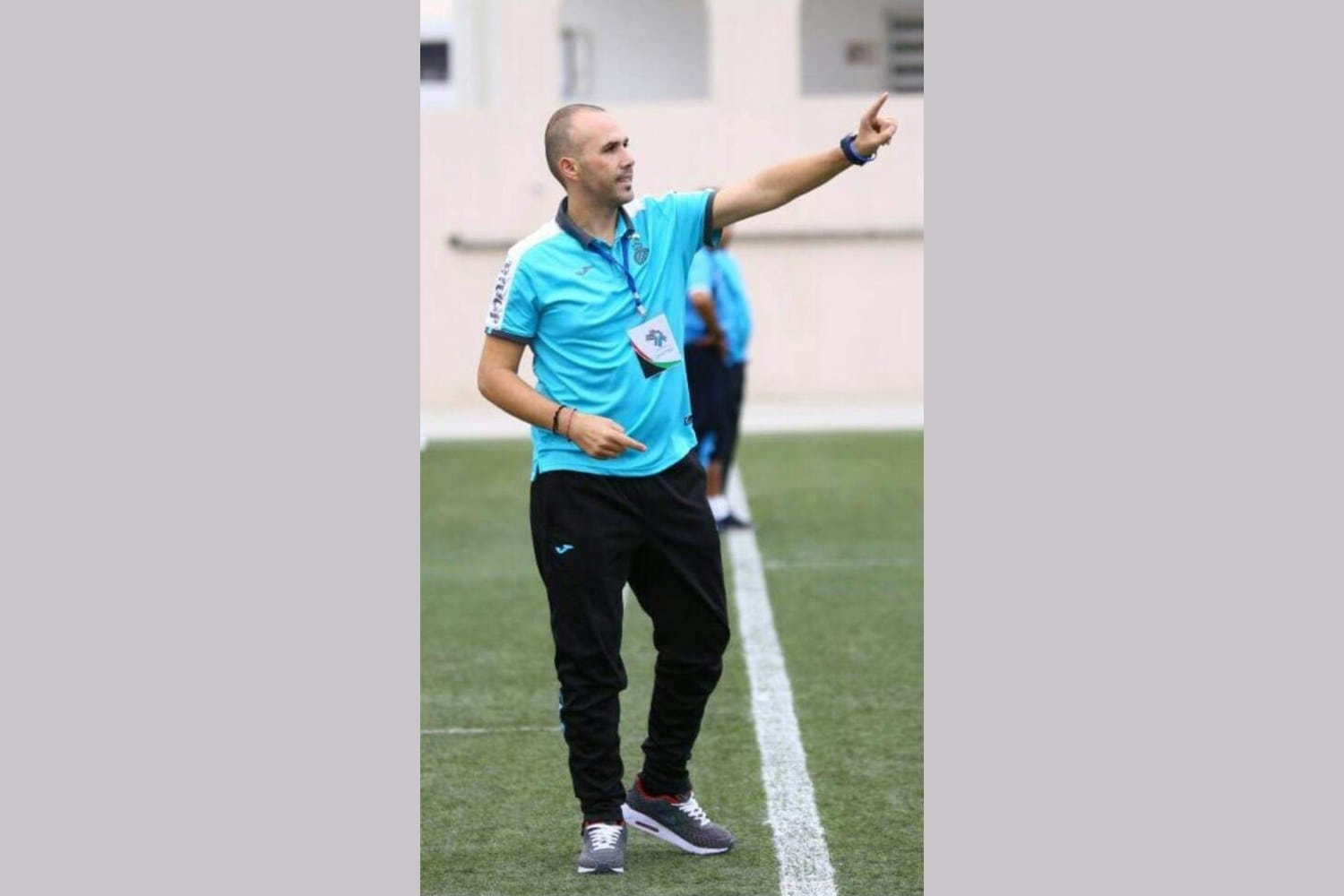
PART 8 · ASIAN FOOTBALL AND KOREA
You have won a league title with Sharjah's U17 team and reached the QSL Cup final with Al Arabi, demonstrating deep adaptation to Middle Eastern football environments. The K League is Asia's oldest professional league and one whose tactical sophistication has been rising rapidly. If a K League club or a Korean club targeting the AFC Champions League were to approach you, what characteristics and assets of Korean football would you focus on, and how would you reconfigure your game model to suit Korean players and Korean supporters?
If I had the opportunity to work in the K League, the first thing I would do is observe before intervening. I wouldn't arrive thinking I had to mold Korean football to fit my own model; instead, I would try to understand what makes that style of football strong and what the specific club needs in order to compete.
The K League is a competition with a highly developed football culture and, furthermore, an ever-growing capacity for analysis. The league's own technical reports now analyze aspects such as pressing, transitions, build-up play, passing sequences, set-pieces, and the tactical characteristics of each team. This demonstrates that we are dealing with an environment where tactical detail and performance analysis play a significant role.
There are several characteristics of Korean players that I find particularly interesting. Collective discipline, work ethic, intensity, speed of execution, and a competitive spirit are traits I would seek to enhance rather than change. I would also be very interested in assessing each player's individual technical and tactical level, as Korean football has evolved toward teams that are increasingly sophisticated in their use of space, pressing, and various tactical structures.
That is why my first task would be to analyze the squad player by player and ask myself: what does this group do exceptionally well, and how can I build a model that maximizes those capabilities?
My identity wouldn't change. I would still want a team that is intense, organized, brave, cohesive, and capable of adapting to the match. However, the way those principles are expressed could certainly differ. It is a growing league; I have been following it for years and see how it is evolving, as well as the level of its national team.
PART 9 · LEADERSHIP
Over nearly two decades you have moved between Spain, Libya, the UAE, China, and Qatar, leading players with different languages, cultures, and football philosophies. Communication is often called the essence of leadership, yet communication becomes far harder when language and culture differ. What is the very first thing you do when joining a new team to earn the squad's trust, and if you have a leadership principle of your own for transcending cultural barriers, what is it?
When I join a new team, the first thing I try to do is get to know the people. Before they are players, they are people, and I believe that to lead effectively, you must understand who is standing in front of you — their concerns, their culture, their communication style, and what each of them expects from the experience.
I have been fortunate enough to work in very different environments, with players of various nationalities, languages, and cultures. This has taught me that there is no single way to lead. You have to know how to adapt without compromising your principles.
My leadership principle is simple: first connect, then convince, and finally demand. Trust cannot be imposed; it is built through consistency, approachability, and respect. When a player perceives that you are honest with him, that you listen to him, and that your decisions aim to help the team, cultural and linguistic barriers become much easier to overcome.
Ultimately, the language of football is universal, but for that language to work, the player needs to believe in you — and, above all, feel that you believe in him.
"My leadership principle is simple: first connect, then convince, and finally demand. Trust cannot be imposed; it is built through consistency, approachability, and respect."
PART 10 · VISION AND LEGACY
From third-division manager in the Balearics to the first divisions of Libya, the UAE, China, and Qatar — your journey is a story in itself. What is the next challenge and vision you are drawing toward, and ultimately, when you retire, how would you like to be remembered as a coach? And if there is a legacy you wish to leave for the next generation of coaches and aspiring managers, what would it be?
Coming from a small island like Lanzarote (in the Canaries) has not been an easy journey; having lived through such diverse experiences, I no longer measure my next challenge solely by the club's division or name. What I seek is a project where I can continue to grow as a coach, compete at the highest level, and — above all — have the chance to leave a lasting mark on the team. I am particularly drawn to environments that present a significant sporting challenge and where the coaching staff's work can truly make a difference.
My vision is to keep evolving. Football is constantly changing, and a coach who stops learning begins to fall behind. I want to continue discovering new cultures, methodologies, and ways of understanding the game, all without losing my own identity. After working in so many different countries, perhaps what I value most is having learned to adapt while remaining true to myself.
When I retire, I would like to be remembered as a coach who made his players — and the people around him — better. Titles and results matter, of course, because our livelihood depends on competing and winning; yet, in the long run, I believe what endures is how you treated people and the influence you had on their careers and lives.
If I could leave a legacy for the next generation of coaches, it would be this: do not be afraid to step out of your comfort zone. Travel, listen, make mistakes, and learn from other cultures. Do not try to copy another coach; instead, find your own identity.
I would also tell them never to forget that we coach people first, and footballers second. Tactical knowledge is essential, but knowing how to manage a dressing room, build trust, communicate effectively, and understand different personalities can be just as decisive.
CLOSING
Read end to end, this exchange is one coherent argument. Context before tactics. Principles before formation. A performance model distinct from a management model. Transitions understood as decisions made in the three seconds before the ball changes hands as well as the three seconds after. Position as reference point, not prison. Discipline as respect for the team's logic, not for a diagram. Leadership as a sequence of three verbs — first connect, then convince, and finally demand. The method is one idea, applied in seven countries and across three confederations, by a coach who refuses to collapse what travels (the principles) into what has to be adapted (everything else).
The honours list anchors the method. Lanzarote 2005–06, promotion to Preferente. Balearics 2009–10, best coach in the third division. Libya 2013–14, First Division Cup winner against a political backdrop that forced the capacity for improvisation into a load-bearing structural quality — when the environment is unstable, you have to ensure the dressing room remains stable. UAE 2015–16 and 2016–17, two-time Best Academy Director with RCD Espanyol Academy Ajman. China 2019–20, Beijing Cup winner and third in the league with Beijing Sangao. UAE 2022–23, Sharjah U17 league champion. Qatar 2024–25, Al-Arabi SC interim head coach to the QSL Cup final with Marco Verratti in the dressing room. Jordan 2026 to the present, Al-Hussein SC assistant coach. The itinerary itself is the thesis.
The Korea chapter in Part 8 is modest, as it should be for a coach who has not yet worked inside the K League. But the Asian aggregate underneath it is not modest. Beijing Sangao, Sharjah FC, Al-Arabi SC — a China top-flight head-coach tenure, a UAE top-flight U17 title, and a Qatar top-flight interim tenure to a cup final — are the credentials K League 1 clubs preparing ACL Elite campaigns, or looking for a Spanish methodology lead to pair with a Korean head coach, will recognise. His own statement about Korean football is deliberate: collective discipline, work ethic, intensity, speed of execution, competitive spirit — traits I would seek to enhance rather than change, and I have been following it for years. His own line about the next challenge is characteristic: a project where I can continue to grow as a coach, compete at the highest level, and leave a lasting mark on the team. Three verbs. Grow, compete, leave a mark. Football Agent Lab will be watching.
SEOK LIM — Editor · Football Agent Lab
FIFA-licensed football agent and steel market analyst with over a decade of experience in commodity research. Football Agent Lab publishes interviews and market reports at the intersection of football, agency work, and global markets.