Teaching Today with Ten Years in View — Bartosz Groszak on Ten Years of Legia Goalkeepers
Polish goalkeeper coach Bartosz Groszak on ten years at the Legia Warszawa academy, developing Majecki (AS Monaco), Ojrzyński (Liverpool FC II), Tobiasz (Legia / Poland NT), Miszta (Rio Ave) and more. Train as you play, play as you train — and the decision before the save.
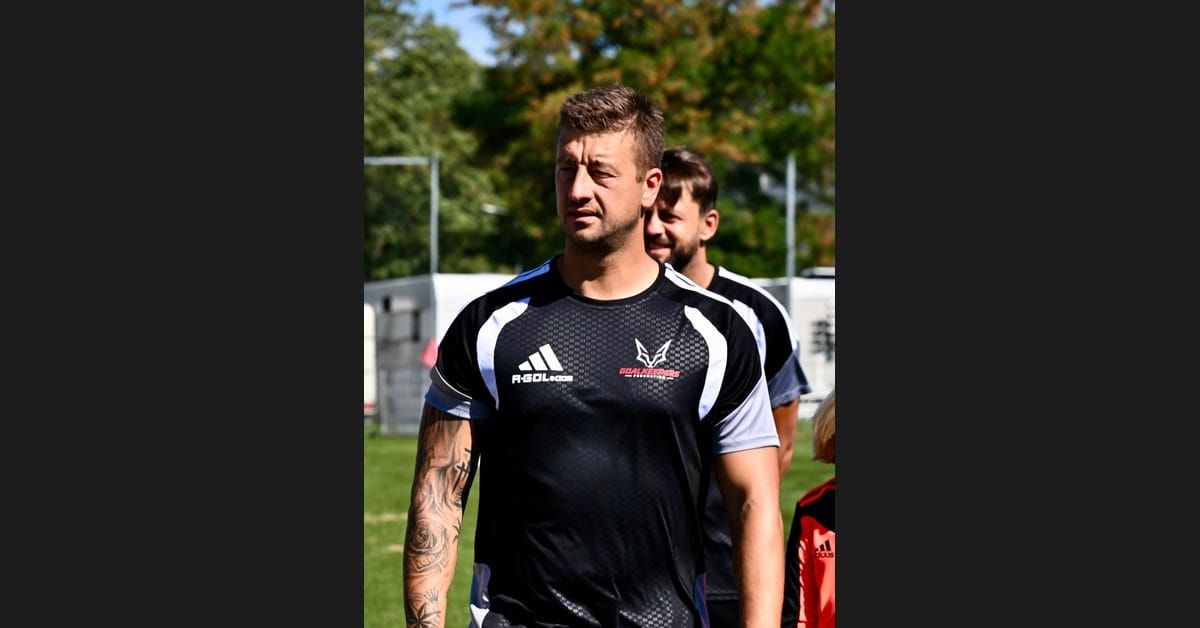
Bartosz Groszak spent ten years inside the Legia Warszawa academy. He arrived in 2014, coached the U16, U17 and U19 sides for a decade, became Head Goalkeeper Coach for the Legia first team in 2024, and in 2026 moved on to MKS Świt in the same role. In parallel, from 2015 he has been the goalkeeper coach for the Mazovian Football Association Regional Team, and from 2016 to 2026 he coordinated the nationwide Legia Soccer Schools Goalkeeper Project — more than 250 players and a staff of nine goalkeeper coaches, under one methodology, across ten years.
What came out of that work is a list unusual for its density. Radosław Majecki is at AS Monaco. Jakub Ojrzyński is at Liverpool FC's second team. Kacper Tobiasz is Legia's first-choice goalkeeper and a Poland international. Cezary Miszta is at Rio Ave FC. Maciej Kikolski is at Radomiak Radom. Gabriel Kobylak has moved from Radomiak to Legia. Groszak holds the UEFA Goalkeeper B and UEFA B licences through the Polish Football Association, has done international internships at FC Barcelona and Real Madrid, has won the Polish CLJ U15 and three times the CLJ U19, and led Legia's goalkeepers into the UEFA Youth League in 2024. The pathway Groszak actually operated — regional selection → club academy → European elite — is one Korean youth setups and KFA regional centres have been trying to systematise for years.
In the written exchange that follows, Groszak walks through how to turn a goalkeeper training session into a match arena rather than a sequence of repetitions, how to analyse a ninety-minute match in which the goalkeeper has only a handful of direct actions, how to design a single week of training around a game problem rather than a technical topic, how he weighs the one who stops against the one who creates in the modern goalkeeper, and what he saw first in Majecki and Ojrzyński before anyone else called them elite. The line that stayed with us is from Part 6, where he answers the question most Korean readers of this publication will care about most: "the difference is often not made by the save itself — it is made by the decision before the save."
What follows is a written exchange, published in his own words and in the order he answered them.
Polish goalkeeper coach · youth development specialist
CURRENT ROLE
Head Goalkeeper Coach, MKS Świt (Poland, 2026–present)
CONCURRENT ROLE
Goalkeeper Coach, Mazovian Football Association Regional Team (2015–present)
COACHING EXPERIENCE
- 2024–2026 · Legia Warszawa (Poland) · Head Goalkeeper Coach (first team)
- 2014–2026 · Legia Warszawa (Poland) · Goalkeeper Coach — U16, U17, U19
- 2016–2026 · Legia Soccer Schools (Poland) · Goalkeeper Project Coordinator (nationwide, 250+ players, 9 coaches)
- 2015–present · Mazovian Football Association (Poland) · Goalkeeper Coach, Regional Team
KEY WORK
- Legia Warszawa · planning and delivery of goalkeeper training across all youth age groups from U10 to U19 · match and training performance analysis · monitoring player progress
- Legia Soccer Schools · ran the nationwide goalkeeper project for ten years with more than 250 players · led a team of nine goalkeeper coaches · coach education and mentoring · communication with parents and board members
- Mazovian Football Association · goalkeeper coach for the regional team · identifying and developing local talent
ACHIEVEMENTS
- Polish CLJ U15 Champion
- Polish CLJ U19 Champion × 3
- UEFA Youth League 2024 and 2025 participant (led the goalkeepers in 2024)
GOALKEEPERS DEVELOPED
- Radosław Majecki — AS Monaco (first team)
- Jakub Ojrzyński — Liverpool FC (second team)
- Kacper Tobiasz — Legia Warszawa · Poland national team
- Cezary Miszta — Rio Ave FC (first team)
- Maciej Kikolski — Radomiak Radom (first team)
- Gabriel Kobylak — Radomiak · Legia Warszawa (first team)
METHODOLOGY & AREAS OF EXPERTISE
- Youth goalkeeper development (U10–U19)
- Match-replicated training design — "Train as you play, play as you train"
- Match and training performance analysis
- Nationwide goalkeeper programmes
- Coach education and mentoring
LICENCES & INTERNATIONAL EXPERIENCE
- UEFA Goalkeeper B — Polish Football Association
- UEFA B — Polish Football Association
- International internships — FC Barcelona · Real Madrid
PART 1 · INTRODUCTION
Let us begin with a request to introduce yourself in a single sentence. Twelve years of coaching, ten of them devoted to the Legia Warszawa academy, watching over players from U10 all the way to U19 — if that long journey were compressed into one name, "goalkeeper coach Bartosz Groszak," what sentence would it become? We would like to hear, first of all, the one line by which you define yourself.
"I am a goalkeeper coach and developer who has spent more than a decade helping young goalkeepers grow not only in technical ability, but also in decision-making, confidence, and understanding of the game — guiding them from their first steps in the academy toward professional football."
We understand that your ultimate aim is to raise young goalkeepers into the kind of material capable of standing on the elite professional stage. Yet youth development is also a task that demands a constant weighing of immediate victory against long-term growth. The moment you first place a ten-year-old between the posts, is there already a "picture of ten years from now" forming in your mind? We would be grateful if you could unfold that imagined scene for us.
When I first place a ten-year-old goalkeeper between the posts, I do not see a finished player or try to predict exactly where he will be in ten years. Instead, I see a long developmental journey and the potential to build the foundations that may one day allow him to perform at the highest level.
At that age, my priority is not immediate results or winning every match. It is about developing a young goalkeeper who enjoys the game, is brave enough to make decisions, is not afraid of mistakes, and understands that goalkeeping is much more than making saves. I want him to learn how to communicate, control space, support his team in possession, and read the game.
Of course, I have an image of what I would like that goalkeeper to become in the future: an independent, confident and intelligent player who can perform under pressure and make the right decisions in different game situations. But the path is never linear. Every goalkeeper develops at a different pace, and our role as coaches is not to rush the process, but to create the right environment for long-term growth.
If, ten years later, that young goalkeeper is able to compete at a professional level, take responsibility, adapt to the demands of the game and continue learning, then the foundations we built at the age of ten will have served their purpose.
"If, ten years later, that young goalkeeper is able to compete at a professional level, take responsibility, adapt to the demands of the game and continue learning, then the foundations we built at the age of ten will have served their purpose."
PART 2 · METHODOLOGY & TRAINING DESIGN
At the root of your coaching philosophy lies the idea of turning the training ground into a match arena — the principle of sharpening goalkeepers within scenarios that reproduce the real game exactly. But transplanting a match "as it is" into goalkeeper training must be painstaking work, controlling everything down to the angle of an incoming ball and the position of a single defender. When one of your sessions actually unfolds on the pitch, choose one scene and paint it for us from start to finish, as it would appear to the eye.
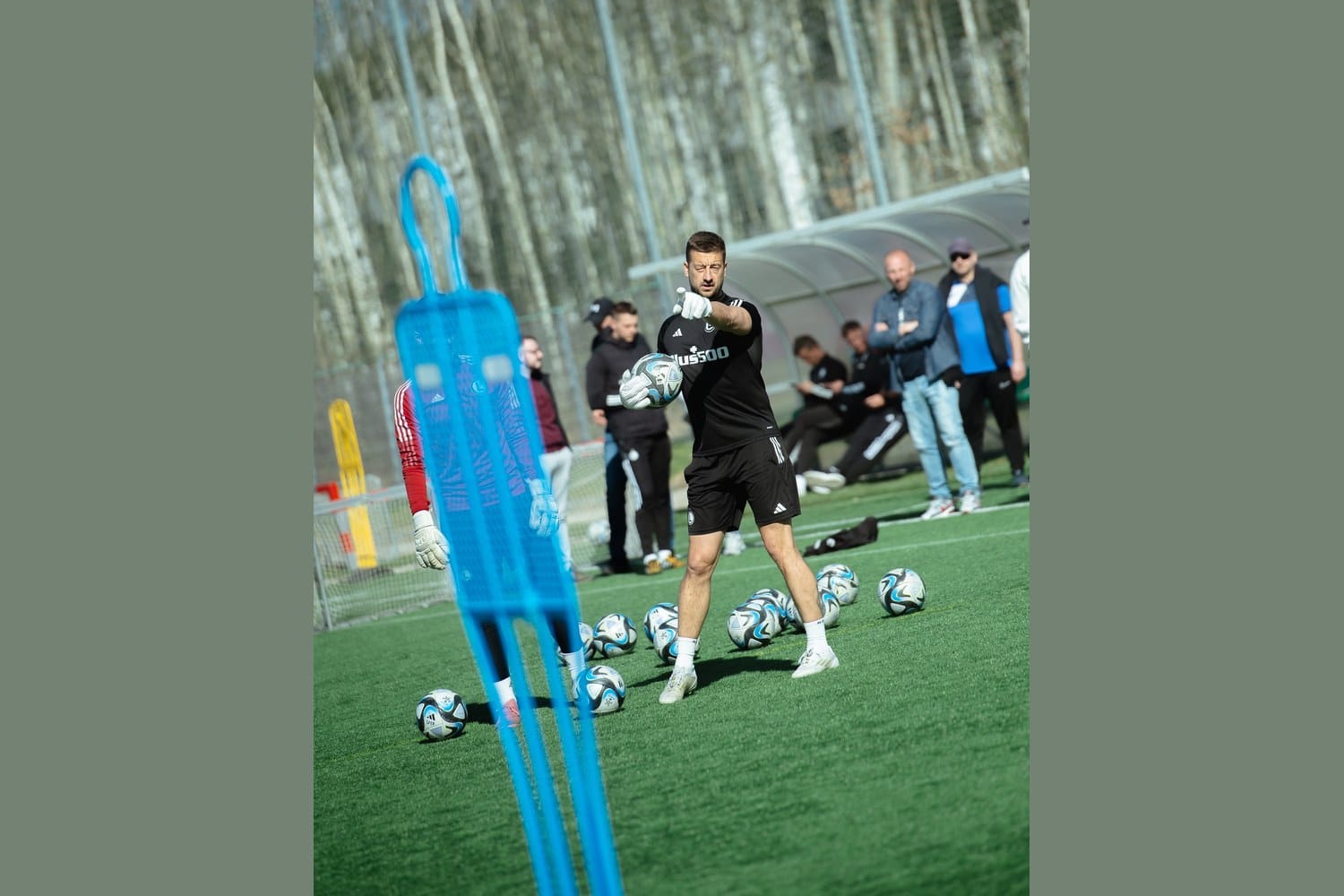
One scene that represents my coaching philosophy begins with a realistic game situation: the opposition attacks through a wide area, the ball is played toward the flank, and our defensive line must react to both the movement of the attackers and the potential cross into the penalty area.
The goalkeeper is not standing in the centre of the goal waiting for a shot. He is constantly reading the situation. He adjusts his position in relation to the ball, the goal, the defensive line and the space behind it. At the same time, he communicates with his defenders and scans the positions and movements of the opponents inside the penalty area.
As the wide player receives the ball, the goalkeeper must recognise the details that will influence his next decision: the distance from the goal, the angle of the cross, the position of the defender applying pressure, the movement of the attackers and whether the ball is likely to be delivered with an inswinging or outswinging trajectory.
The cross is then played into the penalty area. The goalkeeper has only a moment to decide: should he attack the ball and claim it, stay in position and prepare for a shot, or organise his defenders and protect the space behind them? There is no predetermined answer. His decision must be based on the information he has collected during the action.
If he decides to come, he must recognise the right moment, move explosively through traffic, communicate clearly and attack the ball with confidence. If he stays, he must adjust his position, prepare for the next action and react to a possible header, second ball or shot.
The action does not end with the first intervention. If the goalkeeper wins the ball, he must immediately decide whether to start a counterattack, play short or secure possession. If the ball is cleared or rebounds, the game continues and the goalkeeper must reorganise the defensive line.
That is what I mean by turning the training ground into a match arena. I do not want to isolate a goalkeeper and repeat a movement without context. I want every technical action to have a tactical purpose, every decision to be connected to real information, and every exercise to reflect the demands the goalkeeper will face in the game. The goal is not simply to teach the goalkeeper how to perform an action, but to help him understand when, why and how to perform it.
Play as you train, train as you play — this long-held principle of yours places its emphasis on tearing down the wall between training and the real thing. And yet, however finely a session is reproduced, it can never quite match the true match, laden with the roar of the crowd and the weight of a goal conceded. How do you bridge this gap? When you try to instill the very tension of a match on the training ground, in what concrete form does that appear? Please walk us through it.
You are right — no training session can fully reproduce the emotional intensity of a real match. We cannot recreate the noise of the crowd, the importance of the result or the feeling a goalkeeper experiences after conceding a decisive goal. However, we can prepare the goalkeeper to deal with pressure by creating training environments in which decisions have consequences and every action matters.
For me, match tension is not created simply by shouting, adding more shots or making an exercise physically exhausting. It comes from the context of the task. The goalkeeper must have a clear objective, limited time to make a decision, realistic opposition, uncertainty and responsibility for the outcome.
For example, we may create a game scenario in which the score is level and there are only a few minutes remaining. The opposition attacks through a wide area, our defenders must protect the penalty area, and the goalkeeper has to organise the defensive line while reading the movement of the ball and the attackers. The situation can develop in different ways: the ball may be crossed, cut back, played behind the defensive line or lost and immediately recovered. The goalkeeper does not know what will happen next, just as in a real match.
We also introduce consequences. A goal conceded may change the score, affect the next phase of the exercise or create an additional challenge for the goalkeeper's team. At the same time, a successful intervention is not treated as the end of the action. The goalkeeper may have to secure the ball, make a quick decision in possession and initiate a counterattack. This creates a continuous sequence of actions rather than isolated repetitions.
Another important element is accountability. The goalkeeper must communicate, organise defenders, make decisions independently and deal with the outcome. As coaches, we should not provide every answer from the sideline. Sometimes the goalkeeper needs to experience the consequences of a decision, reflect on it and find a better solution in the next action.
We also work with emotional moments. After a mistake or a conceded goal, the goalkeeper must immediately reset, reorganise the team and be ready for the next situation. This ability to recover mentally is one of the most important qualities in the position. In training, we can deliberately create quick transitions and repeated high-pressure moments so that the goalkeeper learns not to remain focused on the previous action.
The purpose is not to manufacture artificial stress. It is to expose the goalkeeper to realistic uncertainty, time pressure, responsibility and emotional challenges in a controlled environment. Then, when the same type of situation appears in a match, it is not completely new. The goalkeeper has already experienced the demands of the moment, made decisions under pressure and learned how to respond.
That is how I try to bridge the gap between training and competition: not by copying the atmosphere of the stadium, but by reproducing the information, decisions, consequences and emotional demands that make the game what it is.
Saving, catching, footwork, distribution at the feet — the elements of goalkeeper training are many, but no single session can hold them all. When you design a day's work, what do you place at the heart of the session, and how do you arrange the rest around it? Following the flow of one session, could you show us how the principle of match reproduction intervenes in that order of design?
When I design a training session, I do not begin by asking, "Which technical elements should we practise today?" I begin with a different question: "What game situation do I want the goalkeeper to understand and solve better?"
That game situation becomes the heart of the session. It may be defending the space behind the defensive line, dealing with crosses, protecting the penalty area, building play under pressure or managing situations close to the goal. Once the central game problem is clear, I organise the rest of the session around it.
For example, if the main theme is defending the penalty area against crosses, the session may begin with a preparation phase focused on the movements and technical actions that the goalkeeper will need later. We might work on footwork, body position, timing of movement and the basic mechanics of catching or punching the ball. However, these actions are not trained in isolation for their own sake. From the beginning, they are connected to the information the goalkeeper will have to read in the game.
The next stage introduces more context. We add the position of the ball, the angle of the cross, the movement of attackers, the location of defenders and the goalkeeper's communication with the defensive line. The goalkeeper must now recognise where the danger is coming from and adjust his position before the ball is delivered.
In the main part of the session, the exercise becomes increasingly similar to the match. The goalkeeper works with defenders and faces active opponents. The attacking team can create different outcomes: an inswinging cross, an outswinging cross, a cut-back, a ball played to the far post or a pass behind the defensive line. The goalkeeper does not know in advance which solution will be required. He must scan, communicate, position himself and make a decision based on the information available.
The technical action — catching, punching, making a save or remaining in position — is therefore the result of a decision, not the starting point of the exercise. The goalkeeper is not simply repeating a movement. He is learning when, why and how to use that movement within a realistic game situation.
The session may then progress into a small-sided or conditioned game in which the same principles remain present, but the goalkeeper has greater freedom and the situations are less predictable. The final part may include a more open game, where I observe whether the goalkeeper can transfer the learning into a realistic and continuously changing environment.
This is how the principle of match reproduction influences the entire design. The session moves from preparation to context, from context to realistic decision-making, and finally to game transfer. The technical elements are still essential, but they are connected to the tactical problem and the demands of the match.
For me, a successful session is not one in which the goalkeeper has completed the highest number of saves or catches. It is one in which the goalkeeper has improved his ability to recognise the situation, make an appropriate decision and execute the required action effectively under realistic pressure.
You have made the direct analysis of training and match performance a central part of your work. Goalkeeper analysis carries a paradox absent for outfield players: with so few touches, the data on which to base a judgment is scarce. By what criteria do you select and read those few decisive moments in a ninety-minute match? Paint us the scene of sitting down face to face with a player over the clips of a single game.
Goalkeeper analysis is different from analysing an outfield player because the goalkeeper may have only a small number of direct actions during ninety minutes. However, I do not see this as a limitation. It means that every action must be analysed in greater depth and always within the context of the game.
When I review a match, I do not begin with the question, "How many saves did the goalkeeper make?" I begin by looking at the complete picture: how the opposition created chances, how our team defended, where the spaces appeared and what information was available to the goalkeeper before each decisive moment.
I analyse not only the final action, but also everything that happened before it. What was the goalkeeper's starting position? How did he scan the situation? What information could he see? How did he communicate with the defensive line? Did he recognise the developing danger early enough? Was his decision appropriate for the situation? And finally, how effectively did he execute that decision?
For example, a goal conceded may appear to be a goalkeeper's mistake when we watch only the final shot. But when we go back several seconds, we may see that the defensive line was disorganised, the goalkeeper's view was blocked, or the attacking player received the ball in a position where the goalkeeper had very little chance of making the save. On the other hand, a save that looks spectacular may have been made more difficult because of an earlier positioning error.
That is why context is essential. I try to separate the outcome from the quality of the decision. A goalkeeper can make the right decision and still concede a goal, just as he can make a poor decision and still be successful because of the opponent's mistake. The result alone does not always tell us whether the process was correct.
When I sit down face to face with a goalkeeper, I do not want the analysis to become a lecture in which I simply tell him what he did well or badly. I want it to be a conversation. We watch the clip together, usually beginning with the wider picture rather than immediately focusing on the goalkeeper.
I may pause the video before the decisive action and ask: "What did you see at this moment? What information were you using? What options did you consider? Why did you choose this solution?"
The goalkeeper then explains his perception and decision-making process. This is extremely important because the same action can have different reasons behind it. I do not want to judge only what I see from outside; I want to understand what the goalkeeper saw and felt inside the situation.
After listening, we compare his perspective with the video. We may look at alternative options, but the goal is not to find a perfect answer with the benefit of hindsight. The goal is to identify what information could have been recognised earlier and what could help him make a better decision in a similar situation in the future.
I also make sure that the analysis includes positive actions. We review moments in which the goalkeeper anticipated danger, communicated effectively, controlled space, supported the team in possession or made a good decision even when the action did not end with a save. These moments are often invisible in traditional statistics, but they are essential to goalkeeper performance.
At the end of the meeting, I do not want the player to leave with ten different corrections. We select one or two clear development priorities and connect them directly to the training process. The analysis should lead to action: what did we learn from the match, and how will we create the right environment to improve it on the training ground?
For me, the purpose of analysis is not to judge the goalkeeper or create a list of mistakes. It is to understand performance, develop the goalkeeper's self-awareness and turn match experience into better decisions in the future.
You have gained training experience at FC Barcelona and Real Madrid. The two clubs are famous for holding fundamentally different views of the goalkeeper. If there was one concrete detail from these placements that you judged, "this much I must take and make my own," could you show us how it lives and breathes on your training ground today?
My experiences at FC Barcelona and Real Madrid showed me that there is no single universal model of goalkeeper development. The two clubs have different football identities, different tactical priorities and, naturally, different expectations of the goalkeeper. But the most valuable lesson I took from both environments was the importance of connecting goalkeeper development directly to the team's way of playing.
If I had to choose one detail that I knew I wanted to make my own, it would be this: the goalkeeper should never be developed in isolation from the game. Every technical action, tactical decision and physical demand must be connected to the team model and to the situations the goalkeeper will face in competition.
That principle is alive on my training ground every day. For example, when we work on building play, I do not see distribution simply as a passing technique. The goalkeeper must first scan the pitch, recognise the opponent's pressing structure, understand the positions of his teammates and choose the most effective solution. The quality of the pass is important, but it comes after perception and decision-making.
The same applies to defending. When we train crosses or balls played behind the defensive line, the goalkeeper is not working alone with a coach serving repeated balls. He is connected to defenders, attackers, space and the tactical behaviour of the team. He must communicate, recognise the developing situation and decide whether to attack the ball, hold his position or prepare for the next action.
What I took from those experiences was not one specific exercise that could simply be copied. It was a way of thinking: begin with the game, understand the role of the goalkeeper within the team, and then design the training around the real demands of that role.
Today, this principle influences every stage of my work. I ask myself: "What information will the goalkeeper have in the match? What decision will he need to make? What tactical problem is he trying to solve?" Only then do I decide which technical actions and training methods are needed.
In that sense, the lessons from Barcelona and Madrid continue to live in my sessions — not as replicas of their training, but as principles adapted to my own philosophy. My goal is not to reproduce another club's model. It is to combine the best ideas I have experienced with my own knowledge and create a development environment that prepares goalkeepers to understand, influence and perform within the game.
"The goalkeeper should never be developed in isolation from the game. Every technical action, tactical decision and physical demand must be connected to the team model and to the situations the goalkeeper will face in competition."
PART 3 · GAME MODEL & THE IDEAL GOALKEEPER
Today's goalkeeper is at once the last line of defense and the first point of departure for the build-up. Within your game model, does the weight fall more heavily on the goalkeeper as "the one who stops" or "the one who creates"? If you were forced to establish one first, which would you choose, and how is that judgment inscribed into your training priorities?
I do not see these two roles as opposites. The modern goalkeeper must be both: the player who protects the goal and the player who helps the team create and control the game. The demands of modern football mean that a goalkeeper can no longer be judged only by the number of saves he makes.
However, if I were forced to establish one role first, I would begin with the goalkeeper as "the one who stops." The fundamental responsibility of the position is still to protect the goal. The goalkeeper must understand how to control space, organise the defensive line, deal with shots, crosses and balls played behind the defence, and make effective decisions in critical defensive moments.
But I would not interpret this as developing defensive qualities first and introducing the goalkeeper's role in possession much later. From the very beginning, the goalkeeper should learn that he is an active player within the team. Even a young goalkeeper must understand how to receive the ball, scan the pitch, create angles, support teammates and make decisions under pressure.
The priority is therefore not a simple choice between stopping and creating. It is about establishing the correct foundations and then developing both roles in connection with the game model.
In my training, the defensive role remains the reference point because protecting the goal is the goalkeeper's unique responsibility. At the same time, possession is integrated into the training process every day. We work on distribution not as an isolated passing skill, but as part of reading the game. The goalkeeper must recognise the opponent's pressing structure, understand the available spaces, communicate with teammates and choose the most effective solution.
For example, after making a save or claiming a cross, the action does not necessarily end. The goalkeeper may have an opportunity to initiate a counterattack, play through the first line of pressure or maintain possession. In this way, defending and attacking become connected rather than separated.
I also believe that the balance depends on the age and stage of development. With younger goalkeepers, we must first create a strong relationship with the goal, the ball and the basic defensive responsibilities of the position. As they develop, we progressively increase the tactical complexity and the demands placed on them in possession.
Ultimately, I want to develop a goalkeeper who is reliable when the team needs protection and influential when the team has the ball. He must be able to make a decisive save in one moment and, in the next, make the right decision to begin an attack.
So if I must choose one foundation, I choose "the one who stops." But the goalkeeper I want to develop is never only a stopper. He is a complete player who protects the goal, controls space, supports the team and helps shape the game.
In modern football, the positioning of the sweeper-keeper moves as one body with the entire defensive line. At what point do you bring the goalkeeper's individual training together with the context of team tactics? When you create on the training ground the scene of a goalkeeper breathing as one with the back line, in what concrete form does it appear? Please paint us one such moment.
I bring the goalkeeper's individual training into the context of team tactics as early as possible. The goalkeeper can develop certain technical qualities individually, but his positioning and decision-making cannot be fully understood without the movements of the defensive line, the pressure on the ball and the spaces created by the opposition.
For me, the goalkeeper and the back line must operate as one connected unit. The goalkeeper's position is not determined only by the distance from the goal. It changes continuously according to the position of the ball, the height and direction of the defensive line, the pressure applied to the opponent and the movement of the attacking players.
One moment that illustrates this begins with our team defending high up the pitch. The defensive line is positioned near the halfway line, and the opposition has possession in the central area. The goalkeeper is already advanced from his goal because he understands that the space behind the defensive line is now a potential danger.
As the opponent receives the ball, our midfield applies pressure. The goalkeeper scans the position of the ball, the defensive line and the runs of the attacking players. He communicates with the defenders and adjusts his position according to the quality of the pressure. If the ball carrier is under strong pressure and has limited time and vision, the goalkeeper may be able to hold a higher position. If the pressure is broken and the opponent has time to look forward, the goalkeeper immediately recognises the increased danger and begins to adjust his depth.
Then the opponent attempts a through ball behind the defensive line. At that moment, the goalkeeper must make a decision in a fraction of a second. He has to judge the speed, direction and weight of the pass, the distance to the ball, the position of the attacking player and the movement of his defenders.
If the goalkeeper decides to leave the penalty area, the action must be decisive. He accelerates forward, communicates clearly and chooses the safest and most effective solution: controlling the ball, clearing it or playing the next pass. If the defender is able to recover and protect the situation, the goalkeeper may instead adjust his position, remain connected to the line and prepare for the next action.
The key point is that the goalkeeper's movement is not an individual reaction to the pass. His starting position has already been influenced by the entire defensive situation: the height of the line, the pressure on the ball, the position of the attackers and the tactical intention of the team.
On the training ground, we create this moment by including the goalkeeper, defenders, midfield players and active opponents. We do not begin with a coach simply serving balls behind the defensive line. The situation develops through realistic possession, pressure and movement. The defenders must decide whether to hold the line, drop or recover, while the goalkeeper must continuously adapt his position and communicate.
We also vary the conditions. Sometimes the pressure on the ball is strong, sometimes it is broken. Sometimes the pass is played early, sometimes the attacker delays and dribbles forward. This creates uncertainty and forces the goalkeeper to read the game rather than react to a predetermined signal.
That is how the goalkeeper learns to breathe with the defensive line. He does not simply stand behind the defenders. He reads the same information, anticipates the same danger and adjusts his position as the defensive situation changes.
The goal is to create a goalkeeper who understands that his position is part of the team's collective organisation. When the line moves forward, he moves with it. When the line drops, he adjusts with it. When pressure is lost, he recognises the danger early. The goalkeeper and the defensive line are not separate units — they are one connected defensive system.
You have long held that continuously observing a player's growth and development is essential. Observation, in the end, is a question of what one looks at first. When you meet an unfamiliar goalkeeper for the first time, where does your eye turn first — to the saving at the fingertips, to the work at the feet, or to the expression on the face just after conceding? Paint us that first glance.
When I meet a goalkeeper for the first time, I do not begin by looking only at the save, the feet or the physical qualities. I first look at the person inside the position — how he behaves, how he understands the game and how he responds to different situations.
Of course, technical details are important. I observe the quality of his movement, his set position, his footwork, his handling technique and his ability to execute actions. But before analysing the final action, I want to understand the process that leads to it.
My first attention often goes to moments when the goalkeeper is not directly involved in the action. How does he position himself before the danger appears? Is he scanning the pitch? Does he communicate with his defenders? Does he show awareness of what is happening around him? These moments reveal how the goalkeeper thinks.
I also watch the reaction after difficult moments. Not only the face after conceding a goal, but the behaviour that follows. Does he take responsibility? Can he reset quickly? Does he stay connected with the team? A goalkeeper's mentality is revealed not only by his saves, but by how he responds when things do not go perfectly.
For example, if I see a goalkeeper concede a goal, my first question is not "Could he have saved it?" My first questions are: "What information did he have? What did he recognise? What decision did he make? How did he react afterwards?"
The best goalkeepers are not those who never make mistakes. They are those who learn quickly, stay emotionally balanced and continue to make good decisions under pressure.
When I observe a new goalkeeper, I am trying to discover his profile. What are his natural strengths? What areas can be developed? How does he learn? How does he communicate? How does he deal with challenges?
A goalkeeper is a combination of technical ability, tactical understanding, physical qualities and mentality. The hands may make the save, but the brain and personality often determine whether the goalkeeper is in the right place to make it.
So my first glance is not only at the fingertips or the feet. It is at the whole player: how he sees the game, how he reacts to the game and how he wants to improve within the game.
"The hands may make the save, but the brain and personality often determine whether the goalkeeper is in the right place to make it."
Even within the same philosophy, the ideal goalkeeper one asks of a ten-year-old and the one asked of a nineteen-year-old on the threshold of the professional game cannot be the same. As the ages rise, what do you take away and what do you add? If a single child were to walk alongside you from U10 to U19, could you describe, stage by stage, the curve of growth that unfolds?
When a goalkeeper begins at U10, my objective is not to create a smaller version of a professional goalkeeper. The priority is to build the foundations that will allow him to develop for many years. At each stage, we remove certain limitations and add new layers of understanding, responsibility and complexity.
At U10, the most important thing is creating a positive relationship with the position. The goalkeeper should enjoy making saves, enjoy training and develop confidence with the ball. We focus on fundamental movement skills, coordination, basic catching technique, footwork, body awareness and simple decision-making. We also begin to develop qualities that are often overlooked at this age: courage, communication and the willingness to learn.
At this stage, I do not want to overload the goalkeeper with tactical information. I want him to experience the game, explore, make mistakes and develop a natural connection with the ball and the goal.
Moving into U12–U13, the goalkeeper begins to understand that he is not only a player who protects the goal, but a teammate who influences the game. We increase the focus on technique under pressure, positioning, understanding angles, dealing with crosses and starting attacks. The goalkeeper begins to connect his actions with the behaviour of defenders and opponents.
The next stage, around U14–U15, is where the tactical side becomes much more important. The goalkeeper starts to understand the principles behind situations: when to stay, when to come, how to control space behind the defensive line, how to support a high defensive line and how to organise teammates. We also develop the ability to analyse situations and understand why a decision was successful or unsuccessful.
At U16–U17, the demands become closer to professional football. The goalkeeper must deal with greater speed, physicality and tactical complexity. Training becomes more connected to the team model. We work on playing under pressure, decision-making in realistic match scenarios, communication, leadership and consistency. The goalkeeper must begin to take more responsibility for his own development.
By U18–U19, the focus shifts towards preparing the goalkeeper for the professional environment. The foundations are already established; now the challenge is performance. We refine details, increase the intensity and reproduce the demands of senior football: managing pressure, analysing opponents, adapting to different tactical situations and performing consistently.
At this stage, the goalkeeper should not only ask, "How do I make the save?" He should understand, "Why did this situation happen? What information did I have? What decision gives my team the best chance of success?"
If one goalkeeper walked with me from U10 to U19, the biggest change I would want to see is not only technical improvement. I would want to see a player who becomes more independent, more intelligent and more responsible. A young goalkeeper who initially needs guidance should gradually become a goalkeeper who can analyse, communicate, solve problems and lead.
The journey from U10 to U19 is not about adding more and more exercises. It is about progressively adding more understanding. The goalkeeper moves from learning actions, to understanding situations, and finally to mastering the game.
Between the standard curriculum you mastered in the UEFA Goalkeeper B and UEFA B licence courses and the methodology you have refined with your own hands on the training ground each day, there is bound to be a variation that is uniquely yours. If there is something that deserves to be called "the Groszak colour," beyond the textbook, what is it? Paint us one scene in which that colour reveals itself on the training ground.
If I had to describe what could be called the "Groszak colour," I would say it is the belief that goalkeeper development begins with understanding the game, not simply repeating goalkeeper actions.
The UEFA Goalkeeper B and UEFA B licence courses gave me an important foundation: structure, methodology, technical principles and a clear understanding of the demands of the position. But the years spent every day on the training ground taught me that a goalkeeper cannot be developed through a fixed catalogue of exercises. Every goalkeeper is different, every situation is different and every action must have a purpose connected to the game.
The colour I try to add is the constant search for the connection between technique, tactics and decision-making. I do not want a goalkeeper who only knows how to perform a movement. I want a goalkeeper who understands why that movement is needed, when to use it and how it influences the team.
A scene that represents this begins during a training exercise focused on defending space behind the defensive line. Instead of starting with a coach simply playing balls over the defence, we create a real match situation. Defenders are positioned high, midfielders apply pressure, attackers look for runs in behind, and the goalkeeper must constantly read the picture.
At one moment, the attacking team receives the ball and the goalkeeper is positioned outside his penalty area. The natural reaction for many young goalkeepers is to focus only on the ball. But I stop the action and ask: "Before the pass was played, what information did you collect? Where were the defenders? What was the pressure on the ball? What options did the opponent have?"
The goalkeeper begins to understand that his decision was not created when the ball was played behind the line. It was created several seconds earlier through scanning, positioning and reading the game.
After that, we restart the situation. The goalkeeper makes a different decision, communicates earlier, adjusts his position and solves the problem. The important moment is not only the final intervention. The important moment is the learning process that happens before the action.
That is the environment I want to create: a training ground where goalkeepers are encouraged to think, ask questions and become independent decision-makers.
Another part of my philosophy is creating ownership. I do not want the goalkeeper to leave training thinking, "I did what the coach told me." I want him to leave thinking, "I understand why I did it, and I can recognise this situation again in a match."
So the "Groszak colour" is not one specific exercise or one specific method. It is a way of connecting everything: technical detail, tactical understanding, psychological preparation and the reality of competition.
The ultimate goal is simple: to develop goalkeepers who are not only effective with their hands and feet, but intelligent with their decisions.
PART 4 · CASE STUDIES
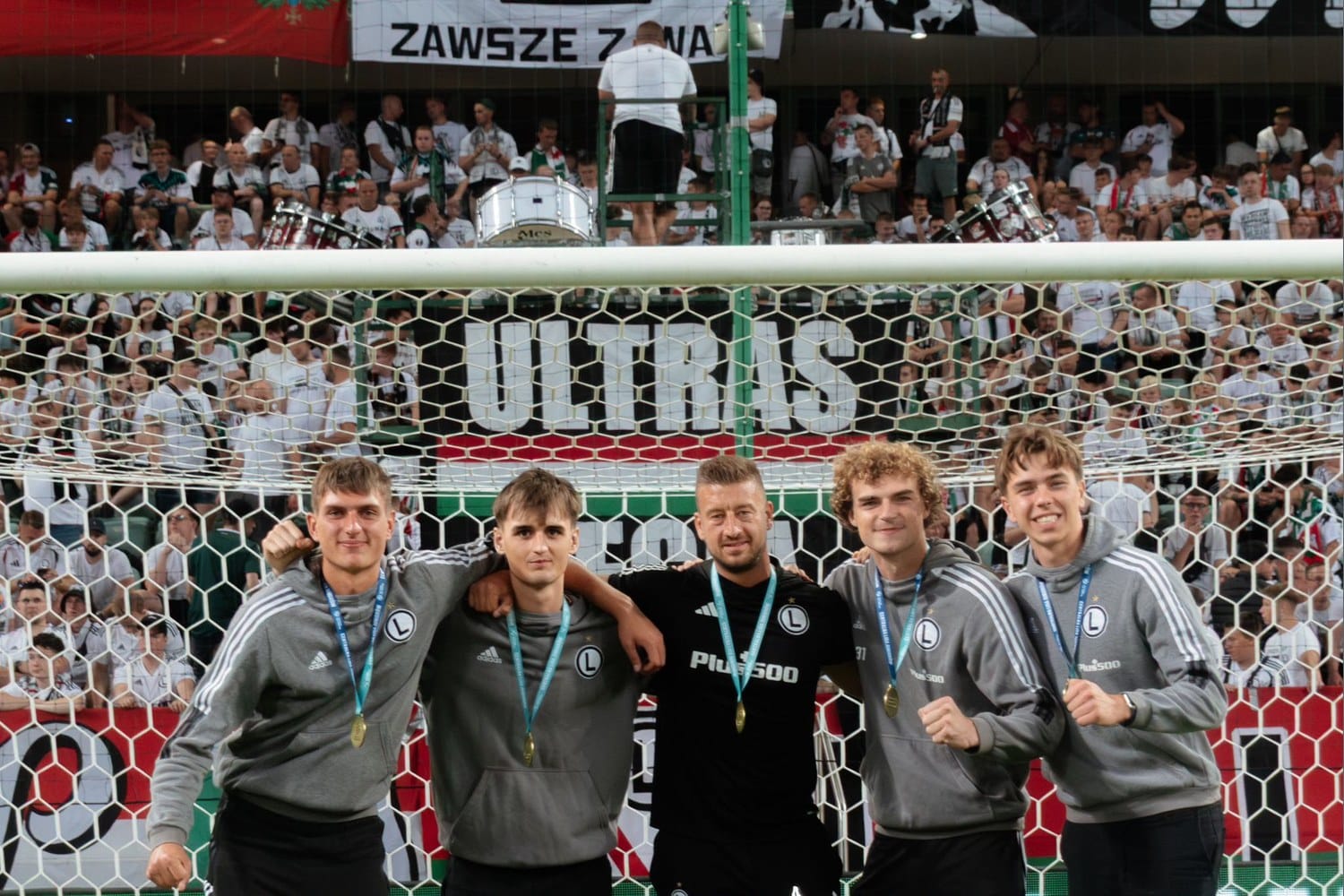
Through your hands, Radosław Majecki went on to AS Monaco and Jakub Ojrzyński to Liverpool FC. At what moment, and on seeing what, did you become certain that a prospect was "material to leap into the elite"? If you could paint us as a single scene the common point you found in these players, we would be grateful.
When I look back at goalkeepers who have reached the highest level, I do not think there is one single moment when you suddenly know, "This player will become elite." It is usually a combination of many small signals that appear consistently over time.
With players like Radosław Majecki and Jakub Ojrzyński, what stood out was not only their physical ability or technical potential. Many young goalkeepers have talent. The difference is the mentality behind that talent — the willingness to improve every day, the ability to accept challenges and the desire to constantly raise their own standards.
The moment that often reveals the future elite goalkeeper is not necessarily a spectacular save. It is a training moment when the goalkeeper faces difficulty. Maybe he makes a mistake, concedes a goal or struggles with a new demand. Then you observe the reaction.
Does he look for excuses, or does he look for solutions? Does he become frustrated, or does he immediately want to understand what happened? Does he need constant motivation from the outside, or does he have an internal drive to improve?
One scene that represents this is a demanding training session where the goalkeeper is exposed to repeated high-pressure situations. The exercises are intense, decisions must be made quickly and mistakes are inevitable. After an unsuccessful action, the elite mentality appears: the goalkeeper resets, communicates, asks questions, analyses the situation and is ready for the next repetition with the same concentration.
That ability to respond is something I have seen in goalkeepers who progress to the highest level. They do not measure themselves only by success. They use every situation — especially difficult ones — as information for development.
Technically, elite goalkeepers usually share strong foundations: efficient movement, good positioning, the ability to deal with different types of actions and the capacity to adapt. But the biggest difference is often in their understanding of the game and their personality.
They want responsibility. They are not afraid of difficult moments. They are able to stay focused when the pressure increases.
If I had to describe the common point I found in players with elite potential, I would say it is this: they are always one step ahead in their thinking. They do not only react to the game — they try to understand it before it happens.
The goalkeeper who reaches the highest level is not simply the one with the best save. He is the one who continuously learns, adapts and finds solutions in an increasingly demanding environment.
Kacper Tobiasz came through Legia and the Poland national team, while Cezary Miszta moved on to Rio Ave FC. Even goalkeepers raised in the same academy must have drawn their growth curves quite differently. Calling to mind the one player who required the most different approach, could you explain in concrete terms what you changed for his sake?
One of the most important lessons I have learned as a goalkeeper coach is that there is no single pathway to develop a goalkeeper. Even within the same academy environment, every player has a different personality, different experiences and different needs.
When I think about a goalkeeper who required the most individual approach, I would not describe it simply as changing exercises. The biggest adjustment was changing the way we communicated, the way we created challenges and the way we guided his development process.
Some goalkeepers need more confidence and freedom. Others need more structure and clear expectations. Some develop by receiving more responsibility, while others need a carefully controlled environment where they can build consistency step by step.
With one goalkeeper, the biggest focus was helping him move from relying mainly on his natural ability toward becoming a more complete and independent player. He had strong physical qualities and great potential, but the next step was developing his understanding of the game, his decision-making and his ability to take responsibility in different situations.
We changed the training approach by creating more situations where he had to think, not just react. Instead of giving him the answer immediately, we encouraged him to analyse situations, explain his decisions and understand the consequences of his actions.
For example, after a goal conceded, the conversation was not simply: "You should have saved this." We looked deeper. What information did he have? What was his starting position? What options did he consider? What could he recognise earlier next time? The objective was to develop his ability to solve problems independently.
We also adjusted the balance between challenge and support. A goalkeeper with high potential needs demanding standards, but he also needs trust. The environment must allow him to make mistakes, learn from them and continue developing without fear.
This is something I believe strongly in: coaching is not about making every goalkeeper fit into the same model. The model must create enough structure to develop the required qualities, but enough flexibility to respect the individual player.
The success of an academy is not only measured by how many goalkeepers reach professional football. It is also measured by whether each player receives the environment that allows him to become the best version of himself.
That is why, when I work with a goalkeeper, the first question is not "How do I teach him my way?" The first question is "What does this player need in order to take his next step?"
There are goalkeepers overflowing with talent who stall not in technique but in psychology and mentality. In your twelve years, have you had the experience of taking a goalkeeper who had slumped down before such a wall and standing him back between the posts with confidence? Paint us as a single scene the process you shared with him until he rose again.
Yes, I have experienced situations where a goalkeeper's biggest obstacle was not technical ability, but confidence, self-belief and the psychological demands of the position.
One of the hardest moments for a goalkeeper is when he begins to lose trust in himself. For an outfield player, one mistake can disappear during the flow of the game. For a goalkeeper, one mistake can immediately become a goal, and that can create a cycle of fear, hesitation and overthinking.
In those moments, my role as a coach is not simply to tell the goalkeeper to "be confident." Confidence cannot be given as advice. It has to be rebuilt through the right environment, small successes and a clear understanding of the process.
I remember working with a goalkeeper who reached a difficult period. His technical ability was still there, but his decisions became influenced by fear of making mistakes. He started to focus more on avoiding failure than on performing his role with freedom.
The first step was not adding more pressure. It was creating clarity. We analysed situations together and separated the mistake from the person. We looked at what actually happened: Was the decision wrong? Was the execution wrong? Was there information the goalkeeper missed? We tried to replace emotional reactions with objective understanding.
On the training ground, we adjusted the environment. We created situations where he could experience success again, but without making the sessions easier. The demands remained high. The difference was that every action had a clear purpose, and every mistake became an opportunity to learn rather than a reason for frustration.
A moment that represents this process was during a high-pressure exercise. The goalkeeper made an error, but instead of showing frustration or losing focus, he immediately reorganised the defence, prepared for the next action and made the following intervention with confidence.
For me, that was the real turning point. The important moment was not the save itself. It was the reaction after the mistake. He started to understand that one action does not define him. What defines a goalkeeper is his ability to respond.
We also worked on taking ownership. I wanted him to become responsible for his development — to analyse his own performances, identify solutions and understand that confidence comes from preparation and repeated evidence of improvement.
The process taught me once again that goalkeepers are not only developed physically and technically. They are developed emotionally and mentally. A goalkeeper needs the courage to make decisions, the ability to accept mistakes and the resilience to continue competing.
The moment when a goalkeeper truly returns is not when he makes a spectacular save. It is when he stands in the goal again with the same personality, the same courage and the belief that he can influence the next action.
That is one of the most rewarding parts of coaching: seeing a player rediscover not only his performance, but also himself.
PART 5 · SYSTEM & LEADERSHIP
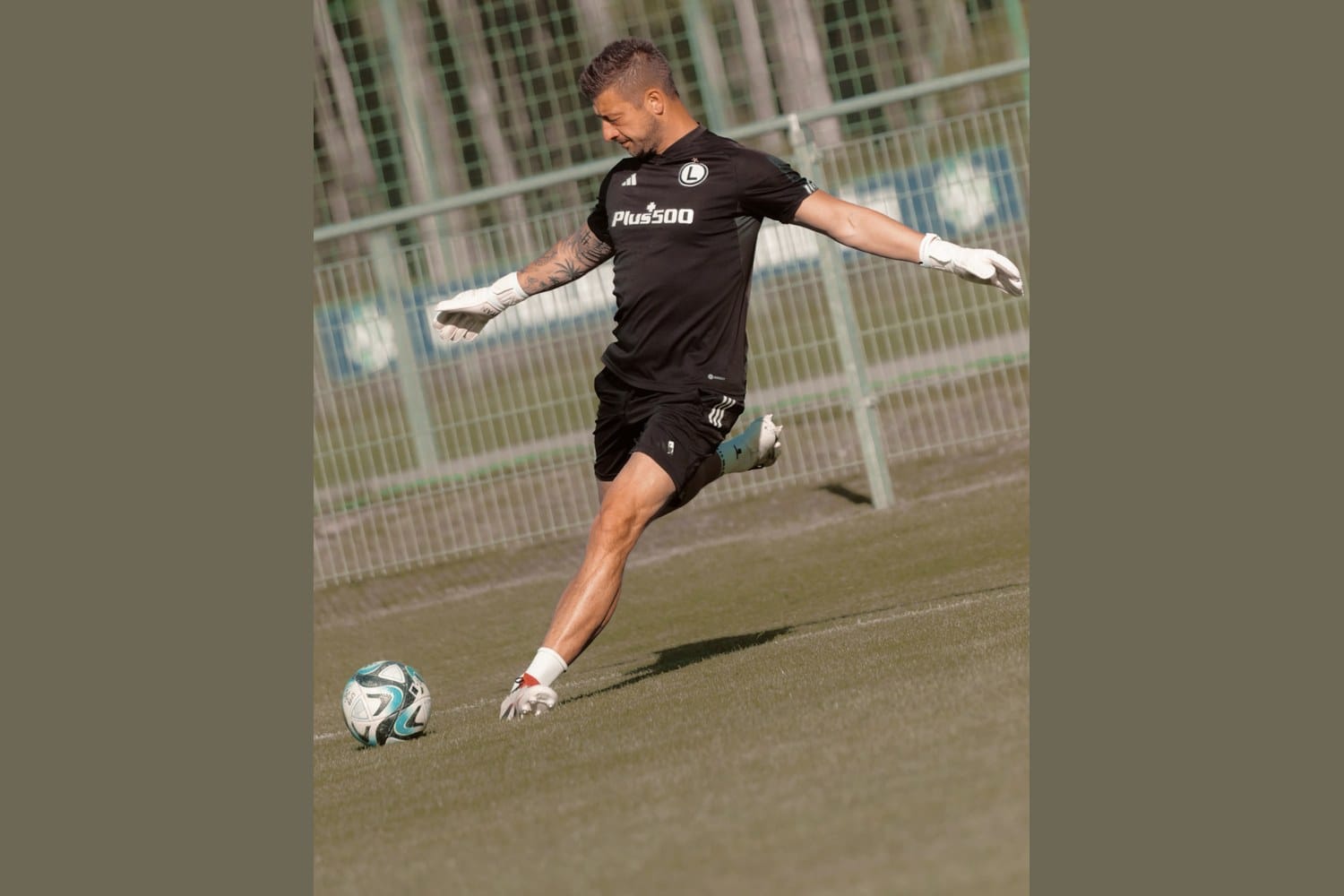
At Legia Soccer Schools you ran a nationwide goalkeeper project, leading a team of goalkeeper coaches. Safeguarding the individual growth of every player and a single unified methodology at the same time is no easy pairing. How did you hold on to both axes — individuality and standardization — and what did this system look like when it was actually up and running? Please paint it for us.
Managing a nationwide goalkeeper project with more than 250 players and a team of goalkeeper coaches taught me that the biggest challenge is not creating a methodology. The biggest challenge is making sure that the methodology remains alive while respecting the individuality of every goalkeeper.
For me, standardisation and individualisation are not opposites. A strong development system needs both. The methodology creates a common language, clear expectations and a consistent direction. Individualisation allows us to understand that every goalkeeper arrives at the same destination through a different path.
The first step was creating a clear framework: what qualities we want to develop, what principles guide our training and what behaviours define our goalkeepers at each stage of development. This gave every coach a reference point and ensured that regardless of location, the players were working towards the same football identity.
However, the framework was never a closed script. Within that structure, every coach had the responsibility to adapt the process to the goalkeeper in front of them. A ten-year-old goalkeeper with great confidence and aggression might need different challenges than a goalkeeper of the same age who needs more support in decision-making or self-belief.
A typical example would be a training week across different locations. The main theme might be the same — for example, defending the penalty area or playing under pressure — but the way it was delivered could change depending on the group. One goalkeeper might need more technical repetition, another might need more game understanding, and another might need more responsibility and decision-making opportunities.
The role of the goalkeeper coach was not only to deliver exercises. It was to observe, evaluate and understand the player. We created regular communication between coaches, shared observations and discussed player development so that decisions were based on a complete picture rather than one training session.
When the system was fully operating, it looked like a network connected by one philosophy. The coaches were not copies of each other; they were individuals bringing their own experience and personality. But they shared the same principles: develop goalkeepers through the game, focus on decision-making, create realistic environments and support long-term growth.
One scene that represents this system is a coaches' meeting after training. We are not only discussing whether a goalkeeper caught a ball or made a save. We are asking deeper questions: What decisions is this goalkeeper making? What does he understand? What is his next development step? How can we create the right environment for him?
That was the balance we wanted to achieve: one methodology, but many individual journeys.
The purpose of a development system is not to produce identical goalkeepers. It is to create a consistent environment where every goalkeeper has the opportunity to become the best version of himself.
Managing nine coaches, you took direct charge of their education and mentoring as well. Forging a single coach must be work as delicate as forging a single goalkeeper. When you planted your methodology in the body of a junior coach, in what manner did you pass it on? Please unfold one scene for us in concrete detail.
When I was responsible for developing goalkeeper coaches, I approached it in a similar way to developing goalkeepers. I did not want to simply give them answers. I wanted to help them learn how to observe, analyse and make their own decisions.
A methodology only becomes truly alive when the people who deliver it understand the reasons behind it. My role was not to create coaches who copied my sessions. My role was to help them develop their own coaching identity while sharing the same fundamental principles.
One scene that represents this process happened during a training session observation. A young coach was delivering an exercise focused on goalkeeper distribution. The exercise was organised well, the technical execution was correct and the goalkeeper was getting many repetitions. However, I noticed that the situation was missing an important element: the decision-making process.
After the session, instead of saying, "This exercise is wrong," we sat together and reviewed it. I asked him questions: "What problem are we trying to solve? What information does the goalkeeper have before receiving the ball? What decisions will he need to make in a match? What can we add to make the situation more realistic?"
Through that conversation, he began to see that the exercise was not just about passing accuracy. It was about scanning, recognising pressure, understanding teammates' positions and choosing the best solution.
The next time we worked on the same topic, the session changed. We added opponents, created realistic pressure, included defenders and gave the goalkeeper different scenarios to solve. The exercise became less about repeating a technique and more about developing a player who could understand the game.
That moment was important because the coach did not simply improve one exercise. He changed the way he thought about coaching.
In mentoring coaches, I always emphasised three questions:
"What are we training?"
"Why are we training it?"
"How does it appear in the match?"
If a coach can answer these three questions clearly, the methodology becomes part of his thinking rather than just a collection of drills.
I also believe that coaches develop through responsibility. They need opportunities to lead, make mistakes, reflect and improve. My role was to create an environment where they felt supported but also challenged to grow.
Managing a group of coaches is not about creating nine versions of yourself. It is about building a team of coaches who share the same vision, language and standards, while bringing their own personality and experience.
The greatest success of a coaching department is not only the development of players. It is when coaches themselves continue to grow and become capable of developing the next generation.
The goalkeeper occupies the loneliest position on the team, where a single mistake leads straight to a goal conceded. You handled communication with parents and the board directly as well; when a young goalkeeper has just made a grave error, what are the first words and actions you offer him? Could you paint us that moment, beside the bench or in the dressing room?
The first thing I do is protect the goalkeeper. In that moment, he doesn't need someone to remind him that he made a mistake — he already knows. A goalkeeper lives with his mistakes more than anyone else on the pitch.
My first words would be simple: "Look at me. It's done. Stay in the game. We need you for the next action."
I would approach him calmly, make eye contact, and show confidence in him. The biggest challenge after a mistake is not the technical error itself, but the emotional reaction — losing focus, confidence, or courage to make the next decision.
During the match, I would give him one clear message, not ten corrections. I want him to reset quickly and stay connected with the team. If there is a positive action he can take immediately — a communication moment, a decision on a cross, a good starting position — I would direct his attention towards that.
After the game, when emotions are lower, we analyse the situation together. I ask questions first: "What did you see? What was your decision? What could you do differently next time?" I want him to develop ownership and understanding, not just receive instructions.
When working with young goalkeepers, my role is not only to improve their technique or tactics, but also to build their resilience. A goalkeeper who is afraid of making mistakes will never become a brave goalkeeper. My job is to create an environment where mistakes become learning opportunities and where the player feels supported, challenged, and trusted.
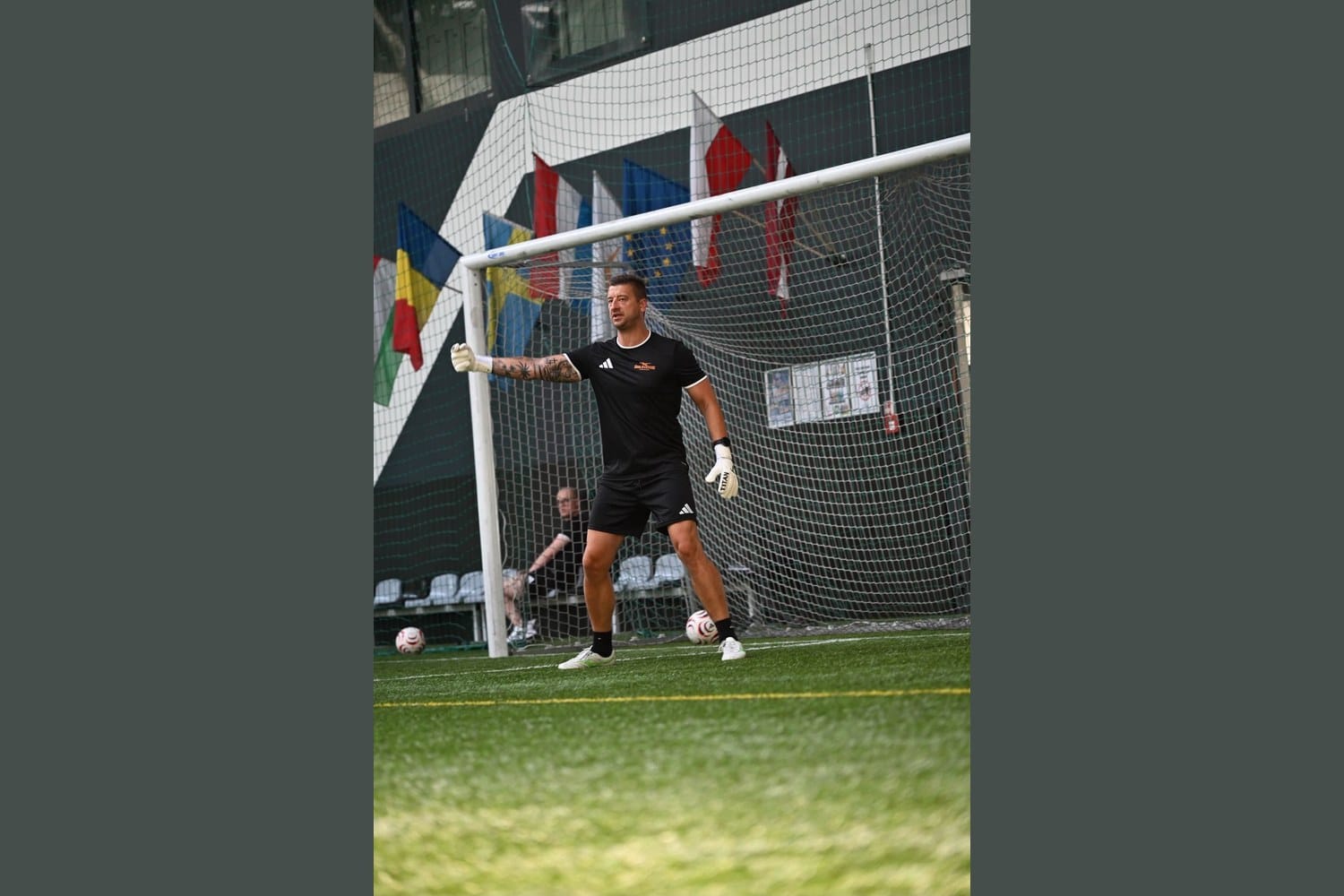
PART 6 · CONNECTION TO KOREA & CLOSING
Since 2015 you have unearthed and developed regional prospects with the Mazovia Regional Team, placing several of them on the European path that runs through Legia to Liverpool and AS Monaco. This link between regional selection and the club academy surely holds great significance for the K League youth system as well. Through your eyes, if you were to name the one thing a promising Korean goalkeeper must possess to step onto the European stage, what would it be — and what is the first piece of know-how you would want to share with Asian coaches? Please paint it for us.
If I had to choose one quality that a promising Korean goalkeeper must possess to reach the European stage, I would say: the ability to make decisions under pressure.
Modern football is no longer only about saving shots. A goalkeeper is a player who influences the game with his positioning, communication, understanding of space, and decisions with and without the ball. European clubs are looking for goalkeepers who can solve problems, not only react to them.
During my work with regional teams and academy goalkeepers, I always tried to create an environment that reflects the reality of the match. We cannot develop a goalkeeper who only looks perfect in isolated technical exercises. We have to put him in situations where he must read the game, make a decision, make a mistake, learn, and repeat.
The first piece of knowledge I would share with Asian coaches is this: train the goalkeeper the way he plays the game. Every exercise should have a purpose connected to football. Ask: "What decision does the goalkeeper need to make here? What information does he need before the action? How can we prepare him for the next moment?"
I believe Korean goalkeepers already have many important qualities: discipline, work ethic, respect for the process, and commitment to improvement. The next step is to develop more freedom, creativity, and confidence in decision-making.
To reach Europe, a goalkeeper needs not only technical ability, but also football intelligence and personality. Because at the highest level, the difference is often not made by the save itself — it is made by the decision before the save.
"At the highest level, the difference is often not made by the save itself — it is made by the decision before the save."
Over ten years you devoted yourself to Legia Warszawa and sent a succession of goalkeepers onto the elite stage. Now, as you look toward a new stage, what is the vision and the goal you envisage for the road ahead? And in the days to come, how would you wish to be remembered — by the goalkeepers who passed through your hands and by the junior coaches who followed you — as what kind of goalkeeper coach? Please leave us with your final words.
After more than ten years at Legia Warszawa, I look back with great pride and gratitude. It was a journey built on passion, daily work, and a belief that every goalkeeper has potential if we create the right environment for development.
The next stage of my career is about sharing my experience on a wider level. I want to continue developing goalkeepers, but also develop goalkeeper coaches and build environments where young players can grow not only as athletes, but also as people. My vision is to create a modern goalkeeper development pathway based on the connection between technical ability, tactical understanding, decision-making, and the mental side of the position.
Throughout my career, I have learned that a goalkeeper coach is not only someone who improves saves, footwork, or technique. We are people who influence careers, confidence, and sometimes the entire life of a young player. The biggest reward is not only seeing a goalkeeper reach the first team or a top European club — it is seeing him become a responsible, brave, and independent person.
I would like to be remembered as a coach who believed in people before they became successful. A coach who demanded high standards but always cared about the individual behind the goalkeeper. Someone who created an environment where players were not afraid to make mistakes, because mistakes were part of the journey towards excellence.
To the goalkeepers I have worked with, I would say: believe in your process, stay curious, and never stop improving. To the coaches who follow this path: remember that we are not only developing goalkeepers for tomorrow's matches — we are helping shape the people who will face challenges throughout their lives.
My journey continues. The passion remains the same. The goal is always the same: to help goalkeepers and coaches reach their full potential.
CLOSING
Across the twenty answers of this written exchange, what Groszak returns to most consistently is a single pedagogical refusal: the refusal to let any goalkeeper training sit outside the game it is supposed to prepare for. Every training session starts with a game problem rather than a technical topic. Every clip in a video review is paused and the goalkeeper is asked what he saw before he is told what the coach saw. Every weakness identified in a Monday match becomes a session where the player must find the answer rather than receive it. Every young coach in his nine-strong Legia Soccer Schools team is pushed through the same three questions he puts to his own players — What are we training? Why are we training it? How does it appear in the match? The method rewards ownership. It also, measurably, rewards results. Majecki, Ojrzyński, Tobiasz, Miszta, Kikolski, Kobylak. Six goalkeepers at European first-team or second-team level, built inside the same academy, under the same methodology, by the same coach.
The ten-year Legia chapter has just closed, and the next chapter is already underway at MKS Świt. The broader direction is wider still: Groszak uses Q20 to name it as "sharing my experience on a wider level… develop goalkeeper coaches and build environments where young players can grow not only as athletes, but also as people." That is the architecture of a coach-education reach that outruns a single club.
The structural pathway Groszak actually operated — regional selection with Mazovia from 2015, Legia academy from 2014, European first teams and national-team selections thereafter — is the pathway KFA regional centres and K League 1 academies have been trying to systematise for several years. His Q19 is short and modest, as it should be for someone who has not worked inside Korean football: Korean goalkeepers already have discipline, work ethic, respect for the process, and commitment to improvement, and the next step is more freedom, creativity, and confidence in decision-making. The line that follows, however, is the thesis of the entire exchange and the title of this piece: at the highest level, the difference is often not made by the save itself — it is made by the decision before the save. His own stated remembrance is characteristic: a coach who believed in people before they became successful. Football Agent Lab will be watching.
FIFA-licensed football agent and steel market analyst with over a decade of experience in commodity research. Football Agent Lab publishes interviews and market reports at the intersection of football, agency work, and global markets.