Beyond Imitation, Football as Second Nature — Cristian Toncheff Ferberovich
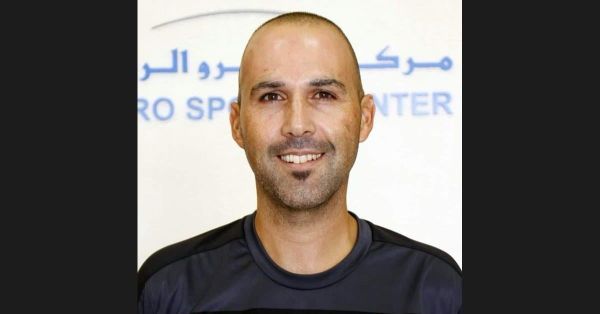
Methodology director Cristian Toncheff Ferberovich on Barça philosophy across five countries — Catalonia, Mongolia, Malta, Gibraltar, Romania — as Technical Director of AFC Chindia Târgoviște, Sports Coordinator at Barça Academy Romania, two-time La Masia camp lead. One word: audacity.
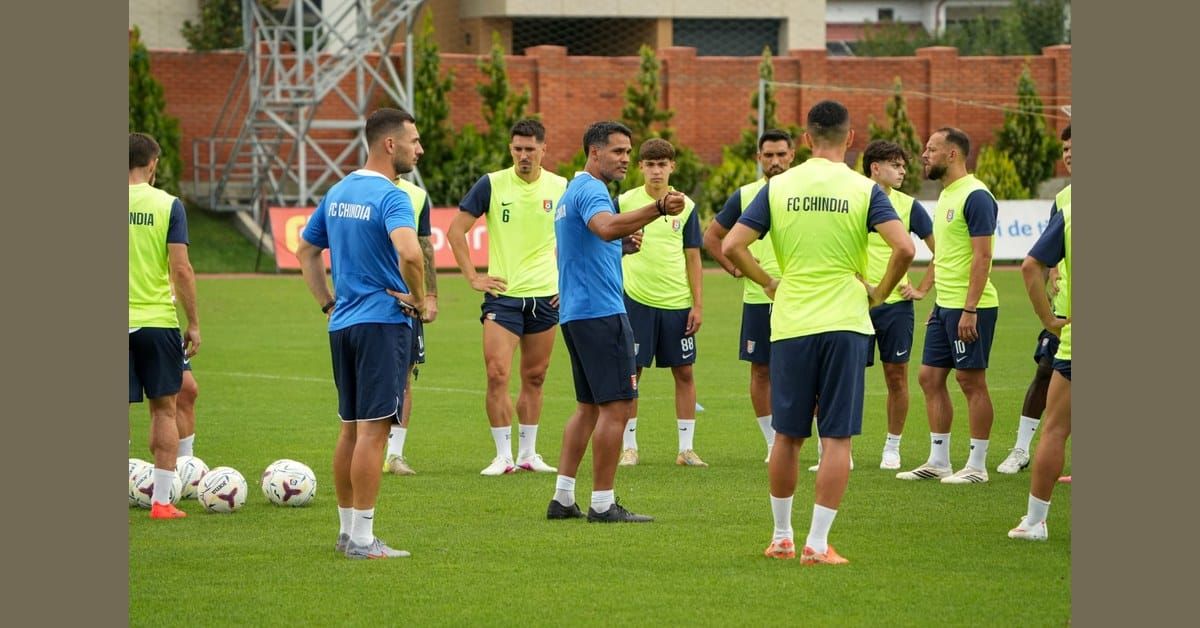
Cristian Toncheff Ferberovich coaches in three roles at once. He is Technical Director and assistant coach at AFC Chindia Târgoviște in the Romanian professional pyramid. He is Sports Coordinator and Methodology lead at Barça Academy Romania. He is U-19 assistant coach at Berja CF in Spain. Add to that two consecutive years running the La Masia summer camp (2023 and 2024), the Barça Academy projects in Mongolia, and earlier head-coach spells at CF Adra and Peñarroya-Pueblonuevo in the Spanish lower leagues, Fgura United in Malta, and an assistant and youth-coach chapter at Manchester 62 FC in Gibraltar. UEFA A Licence through the Royal Spanish Football Federation, UEFA C via the Football Association of Wales, FA Level 1 through England's Football Association, a Barça Innovation Hub tactical analyst certificate, and specialist courses in physical conditioning, nutrition, sports psychology, and digital competencies in the sports ecosystem.
Asked in Q1 to compress that whole itinerary into a single-sentence football philosophy, his answer is one word: "audacity." Asked in Q2 how methodology differs from simply designing training programmes, he reframes the question entirely — before methodology there has to be a shared vocabulary, and before vocabulary there has to be a shared idea of what the sport is: "Once we determine that it is a game and not a war, we begin to understand the identity of wanting to be winners, but not in just any manner—rather, with the ball, giving it total importance." Methodology, in his hands, is first an ethical and vocabulary-level claim and only then a session structure. Asked in Q4 how the same Barça philosophy lands with a Catalan teenager and a Mongolian teenager, he answers with the exchange's most vivid metaphor: "it would be like two teenagers—one Catalan, one Mongolian—talking about a perfume. One is wearing that perfume and the other is not, but both can dialogue and receive information about the perfume."
In the written exchange that follows, Cristian walks through what "implementing a methodological model" actually looks like day to day; why he refuses to call a Catalan-to-Romanian or Catalan-to-Mongolian transfer a "clash"; what a Barça Academy methodology director actually does inside a youth programme; what he kept and what he adapted at Fgura United in Malta; why he regards talent as a capacity to learn rather than an innate gift, invoking Carol Dweck's Mindset by name; why — asked directly how he would apply his methodology in Korea — he deliberately declines to prescribe one, because "South Korea has its own cultural essence and will be enriched by this idea," not by its replacement. The line that sets the register of the whole piece is in Q14: "Even one day is enough to begin, to instill and share this way of playing and growing in football."
What follows is a written exchange, published in his own words and in the order he answered them.
Technical Director · UEFA A · Barça Academy methodology · five countries
CURRENT CONCURRENT ROLES
- 2025–present · AFC Chindia Târgoviște (Romania) · Technical Director & Assistant Coach
- 2024–present · Berja CF (Spain) · U-19 Assistant Coach
- 2023–present · Barça Academy Romania · Sports Coordinator & Methodology
PRIOR COACHING CAREER
- 2024 · Poli Ejido CF (Spain) · Head Coach
- 2023–2025 · FC Barcelona (Spain, Mongolia) · Coach & Coordinator, La Masia Summer Camp (2023, 2024)
- 2021–2022 · CF Adra (Spain) · Head Coach
- 2020–2021 · Peñarroya-Pueblonuevo CF (Spain) · Head Coach
- 2019–2020 · Fgura United FC (Malta) · Head Coach
- 2015–2016 · Manchester 62 FC (Gibraltar) · Assistant Coach & Youth Coach
COUNTRIES OF COACHING EXPERIENCE
Spain · Malta · Gibraltar · Romania · Mongolia
CORE METHODOLOGY & EXPERTISE
- Football philosophy: audacity
- Building a game identity that gives the ball total importance
- Implementation of methodological models on the pitch
- Talent development built on understanding the game (Dweck-grounded view of talent as capacity to learn)
- Coach education and leadership of coaches
- Adapting Barça methodology to local contexts
QUALIFICATIONS
- UEFA A Licence — Royal Spanish Football Federation
- UEFA B Licence — Royal Spanish Football Federation
- UEFA C Licence — Football Association of Wales
- FA Level 1 — The Football Association (England)
- Técnico Deportivo (Sports Coach) — Academia Integral Madrid
- Tactical Analyst Certificate — Barça Innovation Hub
- Digital Competencies in the Sports Ecosystem — Universidad Rey Juan Carlos
- Specialist Course in Physical Conditioning, Nutrition and Sports Psychology — Universidad Miguel de Cervantes
PART 1 · ENTRY
Could you define your current role and football philosophy in a single sentence? Over the past decade you have worked across Spain, Malta, Gibraltar, Romania, and Mongolia—is there one guiding principle that runs through this entire journey?
Technical Director of Methodology and assistant coach. My football philosophy in one word would be: audacity. I could mention as guiding principles "dreams," faith, and perseverance in work.
"My football philosophy in one word would be: audacity. I could mention as guiding principles 'dreams,' faith, and perseverance in work."
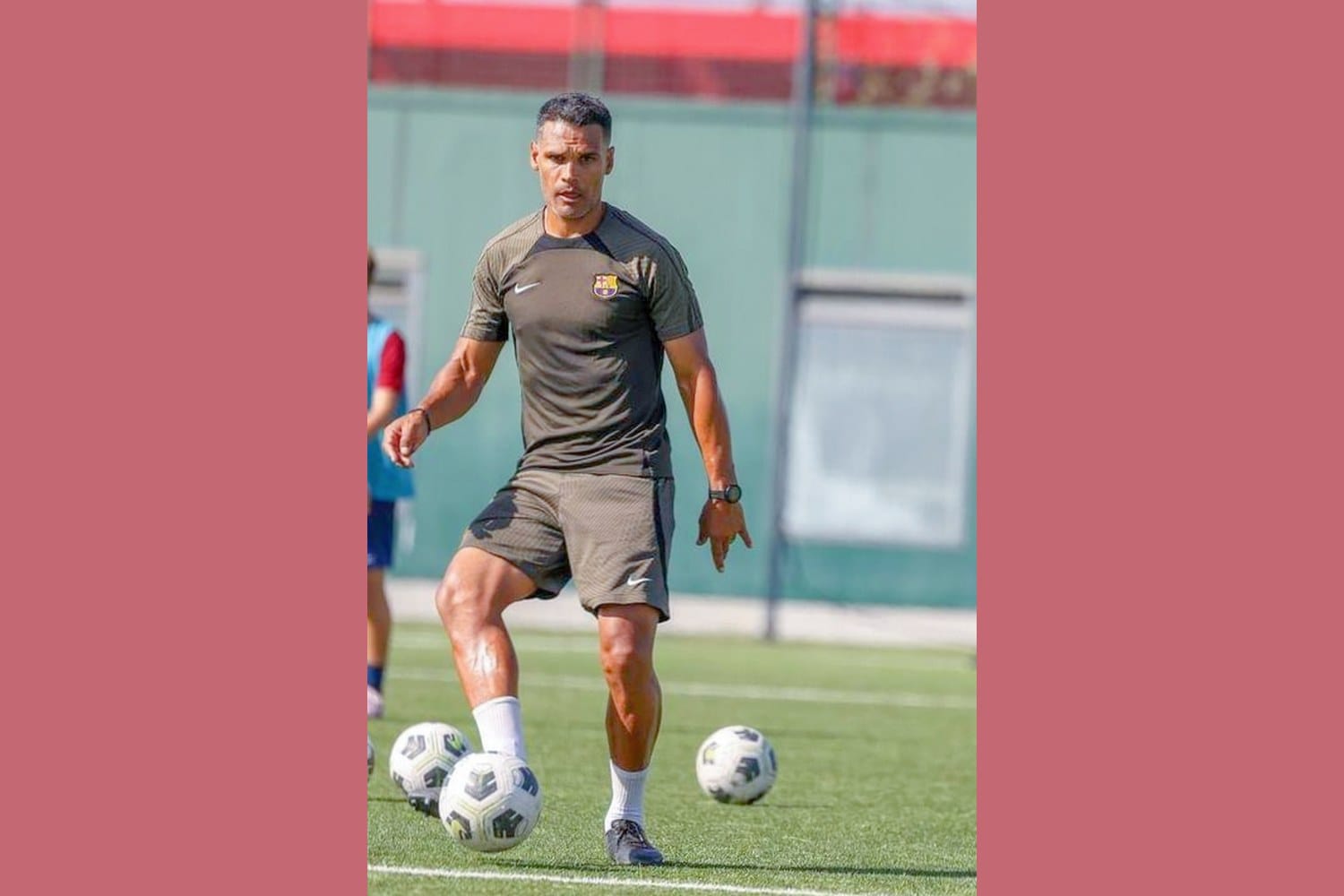
PART 2 · GAME MODEL AND PHILOSOPHY
Your CV lists "Implementación de modelos metodológicos" (implementation of methodological models) as a core competency. How does this differ from simply designing training programmes, and could you paint a picture of what this looks like in practice at club level?
To speak of methodology we should speak of philosophy, or the idea behind this game. For that, it is fundamental to begin with the dialect through which we express what we feel, believe, and do in this sport—football. Once we determine that it is a game and not a war, we begin to understand the identity of wanting to be winners, but not in just any manner—rather, with the ball, giving it total importance. We apply this daily, from the vocabulary we use to the intensive practice of concepts and tasks that identify our game philosophy.
"Once we determine that it is a game and not a war, we begin to understand the identity of wanting to be winners, but not in just any manner—rather, with the ball, giving it total importance."
As Barça Academy Romania coordinator you have applied the concept of "Construcción de identidad de juego" (construction of game identity) in your work. Yet Romanian football culture and Barcelona's game philosophy are historically and culturally quite different. How did you resolve this clash—or did you in fact use the clash itself as a resource for building identity?
The desire to imitate rarely works out well. Therefore we must focus on taking as an example a philosophy that is successful worldwide, because it is not simply about football, but about a form of behavior sustained by values such as humility, effort, ambition, respect, and teamwork. As you rightly say, these are different cultures, both with important aspects that are very useful for adapting a totally distinct philosophy. At no point was it—nor is it—a conflict to contribute something different, because these are unique opportunities to renew and reawaken an exquisite football identity, as the Golden Generation once was.
You ran the La Masia summer camp in both 2023 and 2024, and also led Barcelona projects in Mongolia. Even with the same Barça methodology, the way a Catalan teenager and a Mongolian teenager receive it must differ. What were those differences concretely, and which parts of the methodology did you keep fixed and which did you adapt locally?
I'll answer you with a metaphor: it would be like two teenagers—one Catalan, one Mongolian—talking about a perfume. One is wearing that perfume and the other is not, but both can dialogue and receive information about the perfume. However, the one who is impregnated with that perfume has greater ease in finding ways to describe or express it (perfume = football). The Catalan comes impregnated with the atmosphere that surrounds FC Barcelona. We maintain a large part of our methodology, especially the part that involves the human player—their structures and those values which we proclaim. What we can adapt is the language and perhaps, in some very specific cases, games that provide an introduction to this way of understanding and playing the football we are passionate about.
You currently serve as technical director at AFC Chindia Târgoviște. As technical director you must design the club-wide game model, while the first team is judged on its results week after week. How do you balance long-term methodological construction against short-term points pressure? If forced to sacrifice one, which would you protect first?
Currently I serve in the role of Technical Director, attempting over time to mold this way of seeing and loving football so that it can be expressed on the field of play. Regarding the first team, I do not have absolute authority, as we have staff who were already working prior to my arrival and a head coach who is appointed by the club's sporting direction. I cannot consider it a sacrifice when it is possibly part of the process—both are necessary to achieve success in a project: long-term planning and short-term points. Therefore I should not separate one from the other. It is important to mention that good planning and performance in the short and long term gives results and life to a project and to the history of any club.
You list "Desarrollo de talento" (talent development) as another core competency. Does 'talent' for you mean a player's physical and technical gifts, or their tactical intelligence within the system? If both, when does the priority between the two shift?
To speak of "talent" is to engage with many theories, including that of Dr. Carol Dweck, a psychologist and professor of social psychology, who affirms in one of her books—Mindset—that "talent" is not an innate and immutable gift, but rather a capacity, like the capacity to learn. Therefore, "talent" must be approached from an integral point of view proper to the human being as player, and their structures, such as the cognitive. Having said that, I believe one must observe a boy or girl's capacity to understand the game more than their physical capacities.
You have trained in tactical analysis with Barça Innovation Hub and completed a digital competencies in sport ecosystems course at Universidad Rey Juan Carlos. What role do data and video analysis play in your game-model construction? Would your methodology fail to function without them, or are they auxiliary tools?
As you rightly say, they are auxiliary tools, since analysis can give you information, but information about a past event that will not repeat itself, given that football is dynamic, changing, and complex, and the same play never repeats itself even if it may seem similar.
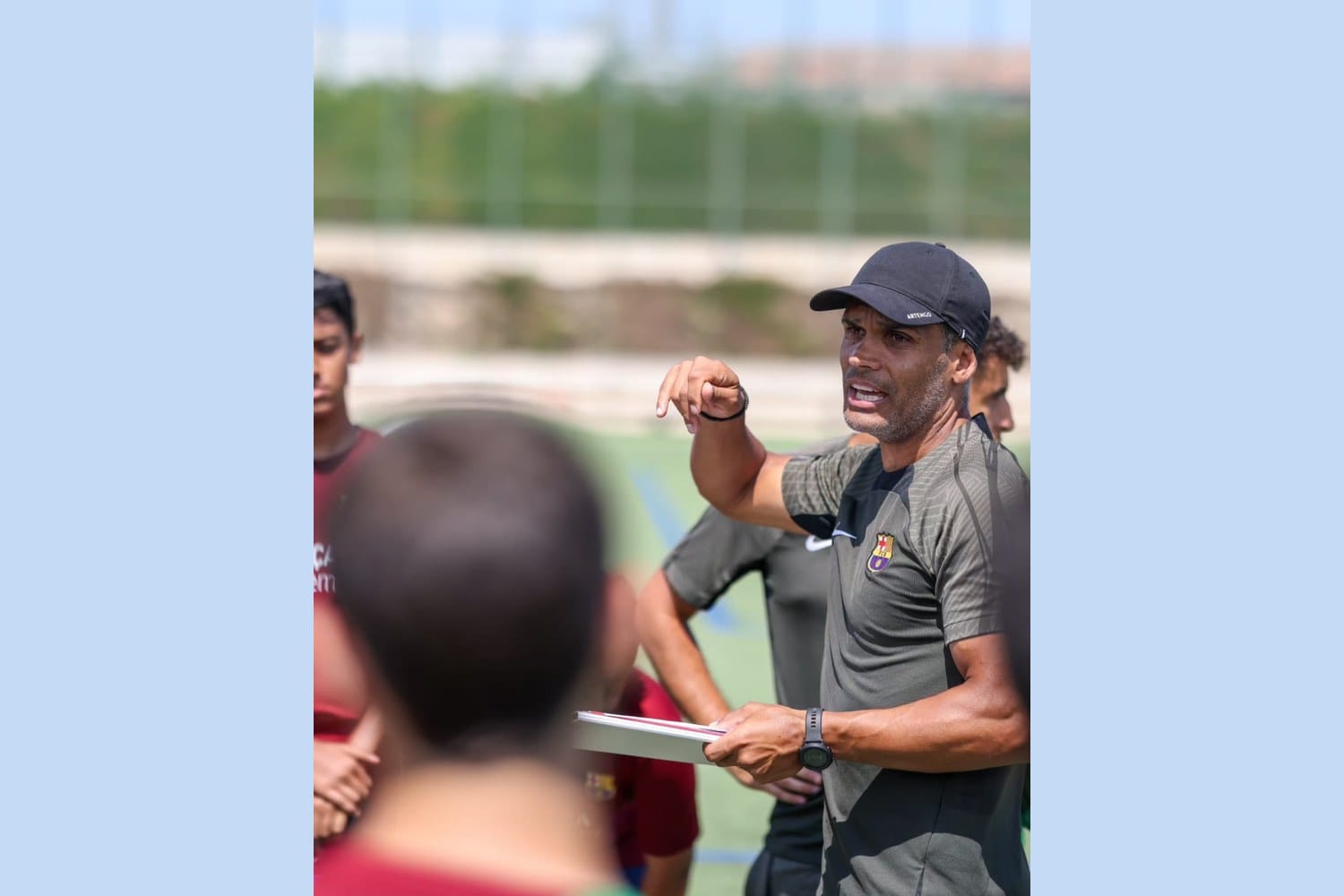
PART 3 · SYSTEM IMPLEMENTATION
Since 2023 you have served as sports coordinator and methodology director at Barça Academy Romania. What does a 'methodology director' at a youth academy actually do? Could you walk us through a typical day, and tell us which part of that day demands the most time and energy?
A typical day, depending on which it is, consists of training the academy coaches, providing daily training sessions with their respective objectives for the day—concepts, guidelines to reflect on—as well as attending matches and training sessions across the different age groups. We take advantage of official matches to record them, analyse, and then adjust the methodology and optimise the player. Also, assisting the first-team technical staff at training sessions and matches.
Your CV mentions "Liderazgo de entrenadores" (leadership of coaches). Leadership is usually understood as directed toward players, yet you emphasise leadership of coaches as a distinct competency. How does leading coaches differ from leading players, and if coach leadership collapses, does the club's entire game identity collapse with it?
To lead is to propose, to accompany, and to walk a path together. Both have similarities and differences. The player must be convinced, and the coach must be given tools to help the boys. A formative coach must understand concepts regarding both formation and performance. The formative coach does not run the risk of collapsing, since it is a role of guidance, help, and accompaniment—different from that of a performance coach. If your identity is based on results and not on principles, it will possibly collapse.
You worked with the first team at Poli Ejido CF from February to June 2024, and from September with the U-19s at Berja CF. Why did you move back to youth work after that first-team spell, and how does that choice fit into your long-term career design?
This stage was brief and collaborative, as both clubs have a relationship and my proposal was simply to collaborate.
Beyond your UEFA A Licence, you hold coaching qualifications from Spain (Técnico Deportivo), Wales (FAW UEFA C), and England (FA Level 1). Each country has its own coaching philosophy and licensing framework. How has this multi-layered educational background fed into your methodology? Do you lean more heavily on one national system, or have you blended them into an independent model?
The knowledge I gained from different schools of football gave me a broader vision and understanding of the sport, which I have integrated independently.
PART 4 · CASE STUDIES
You managed Fgura United FC in Malta during the 2019–20 season. Maltese football is classified as a European periphery league, incomparable to Spain or Romania in resources and infrastructure. Did you still insist on your methodological principles in that environment, or did you adapt them to reality? Which parts did you abandon and which did you defend?
I maintained principles that, regardless of country or infrastructure, I try to uphold or adapt. It was not a stage of abandoning anything I had learned, because Malta and Fgura United also became part of who I am. What I did defend was the intention of wanting the ball in order to do what we believe in.
You managed CF Adra and Peñarroya-Pueblonuevo CF for one season each. Both are Spanish lower-league clubs, far removed from elite environments like Barça Academy or La Masia. How did the experience at these two clubs become an asset when you later took on Barcelona projects and the Romania academy coordinator role?
Adra and Peñarroya Pueblonuevo CF were both stepping stones I had to climb to reach where I am now, and both left me with lessons you cannot obtain in universities.
You operated the La Masia summer camp for two consecutive years. The camp allows youth players from around the world to experience Barça philosophy over a short period. Do you believe 'game identity' can be instilled in the limited span of two or four weeks, or does the camp have a different objective altogether?
Even one day is enough to begin, to instill and share this way of playing and growing in football.
"Even one day is enough to begin, to instill and share this way of playing and growing in football."
PART 5 · METHODOLOGY AND EXPERTISE
You completed specialist courses in physical conditioning, nutrition, and sports psychology at Universidad Miguel de Cervantes. Do you believe a football manager must study conditioning, nutrition, and psychology beyond tactics and technique? How do these three elements connect to your game model?
I believe that having knowledge does not award you the title of sage, but it does give you options. Each contribution has enriched the game I believe in.
Your CV also lists tactical analysis training with Barça Innovation Hub. You already hold a UEFA A Licence—why pursue an additional specialist qualification in tactical analysis? Do you see the boundary between manager and analyst blurring in modern football, or do you believe managers must be able to use analytical tools themselves?
Analysing or seeing something from different perspectives is never the same. FC Barcelona has a perspective that identifies me as a person and in the way I see and live this sport.
Of the four core competencies listed in your CV—implementation of methodological models, talent development, leadership of coaches, and construction of game identity—which is your strongest, and conversely, which do you feel still requires further development?
I will not master any of these until the day my days end, because each day we learn. I believe the day I feel certain I have mastered any of them will never arrive—except perhaps the day I no longer have the opportunity to work and keep improving.
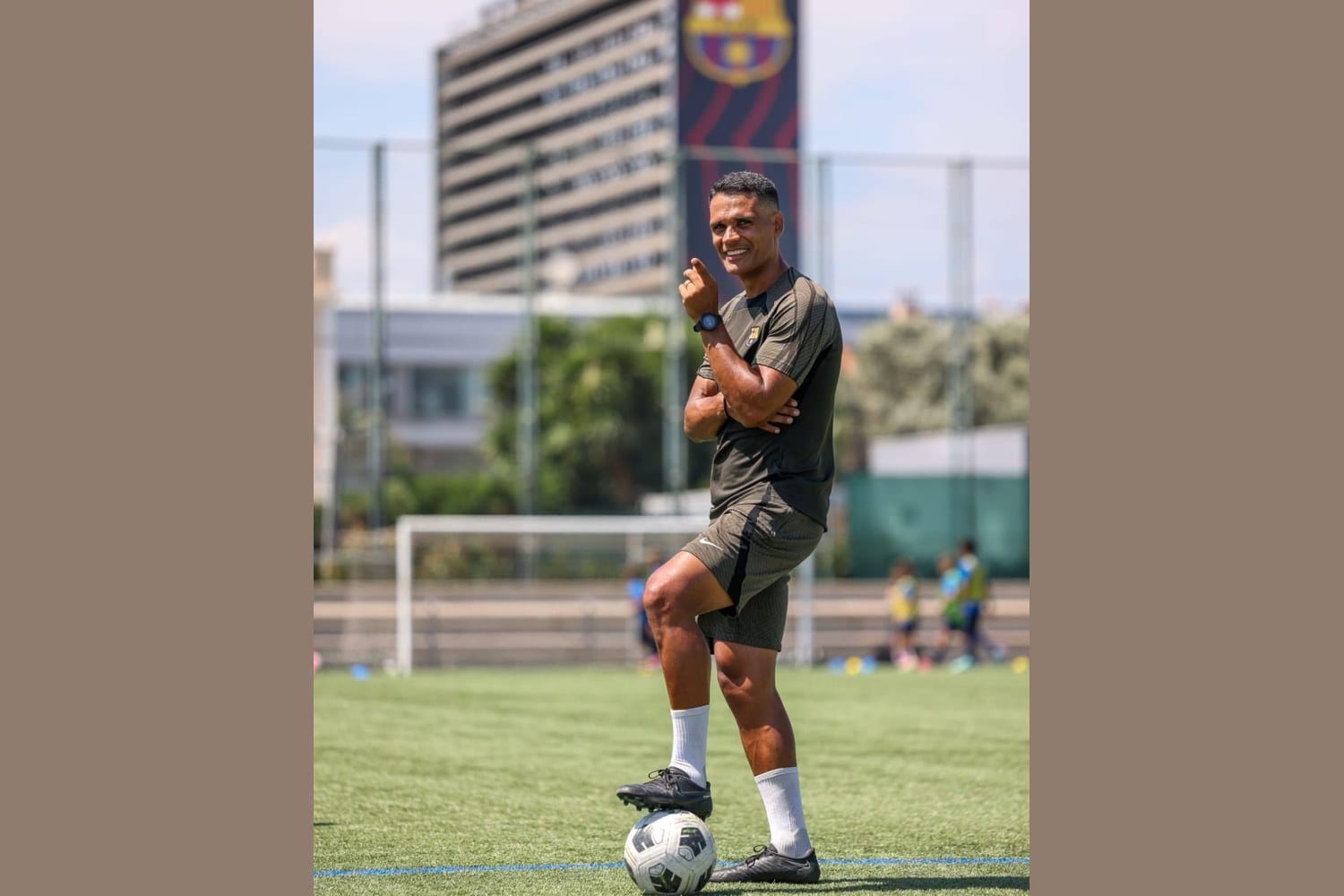
PART 6 · NEW ENVIRONMENTS AND KOREAN CONTEXT
You have built coaching experience across five or more countries: Spain, Gibraltar, Malta, Romania, and Mongolia. The Mongolia project in particular was your first engagement with the Asian market. What characteristics of the Asian football environment did you discover through that experience? If a K League club or youth academy in South Korea approached you, how would you apply your methodology there?
I believe I have a strong idea, but it is not necessary to mention it because South Korea has its own cultural essence and will be enriched by this idea.
K League clubs have recently embraced youth-system innovation and data-driven coaching. You bring experience as Barça Academy Romania coordinator in methodological construction, together with specialist training in tactical analysis from Barça Innovation Hub. What value do you believe these two assets could offer Korean clubs, and how would you bridge the gap between Korean football culture and European methodology?
Data is added value, but it is not the most important thing in a sport that belongs to human beings.
"Data is added value, but it is not the most important thing in a sport that belongs to human beings."
PART 7 · LEADERSHIP AND CLOSING
What is your vision for the future? Drawing on your experience as technical director at a Romanian professional club, Barça Academy coordinator, and La Masia camp operator, what kind of manager and leader do you want to become over the next decade, and what legacy would you like to leave when you eventually retire?
Unpredictable, versatile, and attractive to watch. A legacy cannot be predicted, because it consists of the day-to-day.
CLOSING
Read end to end, this exchange is a single, patient argument. Methodology before drills. Vocabulary before methodology. Values before vocabulary. A game and not a war. The ball with total importance. A philosophy that travels because what travels is a set of values — humility, effort, ambition, respect, teamwork — rather than a particular 4-3-3. Talent as capacity to learn, not as inheritance. Leadership as accompaniment, not as command. A formative coach who is less exposed to collapse than a performance coach, because principles survive what results do not. Analysis as an auxiliary rather than a system of rule. A perfume that one teenager is wearing and another is not, but which both can speak about if the language is shared. Even one day of camp is enough to begin. No day is enough to finish; mastery, by his own account in Q17, is not the point.
The itinerary anchors the argument. Manchester 62 FC in Gibraltar as assistant and youth coach. Fgura United in Malta as head coach, where principles were defended rather than abandoned. Peñarroya-Pueblonuevo and CF Adra in the Spanish lower leagues, which left him lessons you cannot obtain in universities. FC Barcelona for two consecutive La Masia summer camps in Catalonia and for the Barça Academy projects in Mongolia — his first engagement with the Asian market. Poli Ejido briefly in the spring and summer of 2024. Berja CF U-19 from the autumn. And now, concurrently, Barça Academy Romania as Sports Coordinator and Methodology lead since 2023, and AFC Chindia Târgoviște as Technical Director and assistant coach from 2025. Three roles at once, across the Barcelona-to-Târgoviște axis.
The Korea chapter in Part 6 is the single most characteristic moment in the exchange. Asked directly how he would apply his methodology at a K League club or a Korean youth academy, he does not pitch himself — he hands the frame back: "I believe I have a strong idea, but it is not necessary to mention it because South Korea has its own cultural essence and will be enriched by this idea." Asked how he would bridge European methodology with Korean football culture via data, he answers in one line: "Data is added value, but it is not the most important thing in a sport that belongs to human beings." What Korean youth academies, methodology-partnership programmes, and K League analytics departments can take from this exchange is not a plan for Korea — he has declined to write one — but an approach to localising Barça philosophy across contexts as different as Catalonia, the Spanish periphery, Malta, Romania, and Mongolia, built on the conviction that the identity to be built is the club's own and not an imitation of someone else's. His own line about the next horizon is characteristic: unpredictable, versatile, and attractive to watch. A legacy cannot be predicted, because it consists of the day-to-day. Football Agent Lab will be watching the day-to-day.
ABOUT THE AUTHOR
FIFA-licensed football agent and steel market analyst with over a decade of experience in commodity research. Football Agent Lab publishes interviews and market reports at the intersection of football, agency work, and global markets.