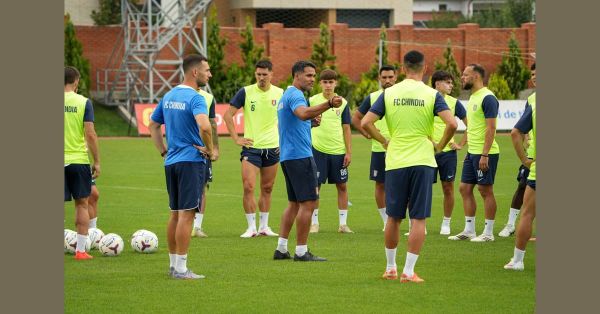
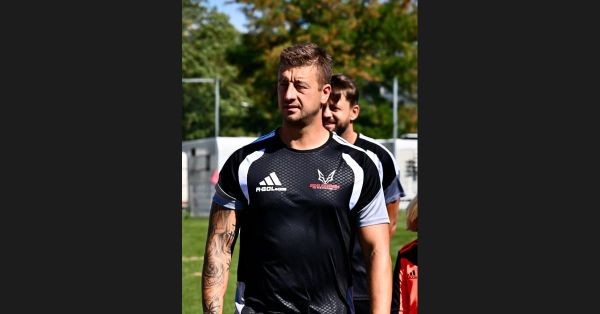
Zero seconds, ten seconds, and one direction — inside Daiki Higuchi's game model
Most models leave the transitions vague. This one gives them the only numbers it has.
FAL Playbook · Modelos

Ask most coaches where their model is most precisely specified and they will point you at the phase they spend longest on — the build-up, or the defensive block. The transitions, the two moments that pass in a breath, usually come out of a written model thinner than the rest. They are hard to draw, and harder to count.
Daiki Higuchi’s model is specified the other way round. Organized attack and organized defence are given structures and principles. The two transitions are given numbers. Transition 0 second after the ball is lost. Ten seconds to finish after it is won. In a model built by a coach rather than a committee, that inversion is the first thing worth noticing — and the clue to everything else.
Higuchi is Japanese, 42, and has built his entire coaching career abroad. He moved to Thailand as a player in 2011 and retired there in 2018, which is when the coaching started: analyst and assistant at Chonburi FC, then Chiangrai United, where the team won a domestic cup and qualified for the 2020 AFC Champions League. His first head-coach job came at Songkhla FC in Thai League 3 at the age of 37, followed by a spell as Head of Coaching at Phrae United, and then a return to Songkhla — two consecutive Southern Region titles, a cup final, and promotion to Thai League 2. He holds the AFC A Diploma and is completing the Pro Diploma. The reason he started outside Japan is simple, and he states it plainly: he always wanted to be an international coach, because he believes the coaching market is a global one.
Two words, and the two halves of the game
His identity fits in three words — Aggressive and Dynamic Football — and the first thing he does with them is split the game in two.
“Aggression mainly defines how we play out of possession, while dynamism defines how we play in possession.”
That is a cleaner division than it first appears. Aggression is not a temperament applied evenly across ninety minutes; it is what the team does when it does not have the ball, and it has a destination — pressing triggers, specific areas, and the regain made in a place from which a chance can be created. Dynamism is not fluidity for its own sake; it is what the team does with the ball, and it also has a destination. “We possess the ball with purpose — to break lines and move forward.”
Both halves point the same way. The team is always facing the opponent’s goal, whether or not the ball is at its feet.
Diagonal support, and the pass it makes possible
The attacking principle that carries the most weight is also the one that sounds most like a slogan: Always Look Forward, Run Forward. What stops it from being one is the mechanism underneath.
“We always provide diagonal support behind the ball, which gives the player vertical passing options.”
Support that arrives flat, beside the ball, gives the receiver a sideways pass. Support that arrives on a diagonal from behind opens a line through the opponent instead — and the follow-up is specified too: the diagonal pass, then the lay-off, then the ball goes forward past the line that has just been drawn in. Around it, the players nearest the ball move to build the small advantages he names in numbers, 2v1s and 3v2s, and he is explicit that these are not reserved for one zone of the pitch but sought across the whole of it.

The shape that holds all this, a 1-2-4-3-1, he describes almost dismissively: “just our starting position, and it is very flexible.” What is not flexible is its purpose — central overloads, and vertical passing options. Whether the four midfielders sit in a line, a box or a diamond he treats as the wrong question, because the arrangement follows the ball, the situation and the players he happens to have.
That flexibility extends further than most declared models allow. At one club he built a 1-3-3-4 around a single winger whose strength was beating people one against one: the left-back joined a back three, the right-back inverted into the middle, and the central space the winger was no longer occupying got filled by somebody else. The structure moved; the purpose did not. “The structure is adaptable, but our playing identity and core principles must remain consistent.”

Zero seconds
Then the ball is lost, and the model’s first number appears.
Transition 0 second is a declaration about thinking time: there is to be none. A player who has to decide whether to press has already spent the window. Which raises the obvious question of how a reaction gets into a player’s body, and his answer is about the training ground rather than the team talk.
“If we want the players to execute ‘Transition 0 Second’ in a match, we have to create training situations where they repeatedly experience the moment of losing possession and have to react immediately. The session itself should demand that reaction from the players.”
Repetition, then reinforcement every single time the ball goes, until — in his words — “the players start to develop it as a habit rather than having to think about what to do.” The number is not a target the players aim at. It is what is left when the deciding has been removed.

“The important question is not whether we play backwards, but why we play backwards.”
Guide them wide — then take it
The defensive principle is Control Central & Press Forward, and the order of those two halves is the whole idea. Before any pressing happens, the centre has to be shut.
His reasoning for that is, again, directional. If an opponent centre-back can play through the first line into midfield, then “our front four then have to run backwards and press backwards. That is not our intention. We want to press forward.” Compactness is not a defensive value in itself here; it is what keeps the team facing the right way.
With the middle closed, the opponent goes wide — and he is careful about how that is described. “I wouldn’t say that we intentionally leave the flanks open. Our intention is to guide the opponent towards the wide area, compress the space around the ball, limit their options, and win possession.” Not a door left ajar, but a direction imposed.
What happens once the ball arrives there is the most mechanically precise passage in the whole model. The nearest winger goes at the full-back hard, and the stated purpose of that intensity is not the tackle: “to give the full-back no time to look up and find the next option.” A player who cannot look up plays the pass he had already decided on. That makes the next ball predictable, and a predictable ball is one the next defender can step in front of. Pressure on the ball is how the regain is manufactured several metres away from the ball.

Ten seconds, and the centre comes first
The ball is won, and the model’s second number starts. “One of our attacking-transition principles is to play forward first and try to finish within 10 seconds.”
The preparation for it was laid during the defensive phase. His 9 and 10 are not resting ahead of the block; they have defensive work — protecting the space in front of the midfielders, staying connected — and that work happens to leave them standing exactly where the counter needs them when the ball turns over.
And then the instruction that cuts against the instinct. The usual reflex on winning the ball is to find the free man wide, because that is where the space is visible. He asks for the opposite first.
“Before exploiting the wide space, I want us to use the central area and attract the opponent’s defenders towards the center. Then we can attack the space that opens up out wide.”
Going centrally is faster, but it is also what makes the wide space worth having. Run straight to the flank and you arrive at space a recovering defender can still cover. Go through the middle first and the defender has to come to you, which is how the flank becomes genuinely open rather than merely empty.

Counting the line breaks
There is one more layer here that most declared models do not have, and it comes from where Higuchi started. His first job in football was as an analyst, and he still uses data — but not where you would expect. Barely at all on the opponent. Almost entirely on himself.
“One of our key attacking principles is playing forward and breaking lines. So after each match, I work with the analyst to measure how many times we successfully break the opponent’s lines with forward passes.”
Alongside that, entries into the specific areas he wants to attack — cross zone, D-zone, vital zone, assist zone — and how often his attackers actually receive the ball in the finishing zone. Every metric is a principle turned into a count. “Data is mainly a tool to evaluate and validate our game model and performance, rather than something that determines how the opponent plays.”
Which closes the loop on the whole document. A declared model is a claim about what a team intends to do. Higuchi makes the claim, then counts whether it happened. For a series built on declared models, that is an unusually honest piece of equipment to find inside one.
And it is also why the principles survive being loosened. He insists, twice and without being asked, that “a principle is not a rule that forces players to make a certain decision” — a centre-back under pressure may play backwards, and should, if that is the better ball. What he will not accept is the player who never looks: “If you don’t try, you will never succeed.” The decision belongs to the player. The intention does not.
Full four-phase breakdown — sources & sub-principles
Phase 1 · Organized Attack
① Structure: a starting position, not a shape
Source“The 1-2-4-3-1 attacking structure is just our starting position, and it is very flexible. The main purpose is to create central overloads and provide more vertical passing options.”
- Arrangement of the four midfielders deliberately unfixed — line, box or diamond all permitted
- Varies with ball position, game situation and player characteristics
- If a winger holds width, another player must occupy the central space
② Looking forward first
Source“When a player receives the ball, the first priority is to look forward and play forward… We possess the ball with purpose — to break lines and move forward.”
- Possession is the instrument, not the objective
- Backward passes permitted — judged by purpose, not by direction
- “We may play backwards to create a better situation to go forward again.”
③ The mechanisms: diagonal support, lay-offs, third man
Source“We always provide diagonal support behind the ball, which gives the player vertical passing options. We also encourage diagonal passes followed by lay-offs to help us break lines and progress forward.”
- Diagonal support from behind is what makes the vertical pass available
- Diagonal pass → lay-off → forward ball as the repeating line-breaking sequence
- Third-man combinations taught explicitly as a solution for tight space
④ Dynamic situations — 2v1 and 3v2
Source“For me, 2v1s and 3v2s are not numerical targets for one specific area of the pitch. We try to create these situations across the entire field when we are in possession.”
- Local superiority sought everywhere, not in a designated zone
- In the final third, movement after the pass is demanded: “support, drag an opponent away, create an overload, or open space for another player”
- Stopping after the pass is what stops new space appearing
⑤ Central superiority and the switch, at the same time
Source“My idea is that central superiority and the opportunity to switch the point of attack exist at the same time… We can switch the ball through the central area using short combinations.”
- Not a sequence — the overload is what creates the switching routes
- Switch through the centre by combination, or directly when the far side opens
- First priority remains breaking lines centrally
⑥ Freedom with tasks, not boundaries
Source“We don’t have strict positional boundaries, but every position has specific tasks and responsibilities. The players have to understand why they move and why they occupy a certain space.”
- No positional limits, particularly in the final third
- Movement must produce an advantage — freedom is not licence to drift
- Named responsibilities instead: far-side winger attacks the second post, a number 8 arrives in the box
Phase 2 · Negative Transition (Attack → Defence)
① Transition 0 second
Source“If we want the players to execute ‘Transition 0 Second’ in a match, we have to create training situations where they repeatedly experience the moment of losing possession and have to react immediately. The session itself should demand that reaction from the players.”
- The window is zero — the reaction precedes the decision
- Built by session design, repetition and consistent coaching, in that order
- Target state: “a habit rather than having to think about what to do”
Phase 3 · Organized Defence
① Ball-Oriented Defending
Source“Our main concept out of possession — Ball-Oriented Defending — remains the same: press forward, compress the space around the ball, win possession as quickly as possible, and use that regain to create another attacking opportunity.”
- 1-4-2-2-2 used to compress one side of the pitch
- Player movements explicitly unfixed — wingers may press centre-backs or drop onto the defensive line depending on the opponent’s build-up
- The regain is defined by what it enables, not by the stop
② Control central, then press forward
Source“If an opponent’s centre-back can play through our first line into the middle, our front four then have to run backwards and press backwards. That is not our intention. We want to press forward.”
- Compactness laterally and vertically precedes any pressing
- Central control exists to protect the direction the team presses in
- Forward passing options limited, the opponent guided wide
③ The wide regain
Source“When the opponent’s left full-back receives the ball, our right winger presses him with high intensity. The purpose is to give the full-back no time to look up and find the next option.”
- Intensity on the ball is a device for removing the opponent’s options, not primarily a tackle
- A ball-carrier who cannot look up becomes predictable
- The next defender anticipates the predicted pass and steps in
- Framing corrected by the coach: the flanks are guided towards, not left open
④ Who decides
Source“The final decision-making always belongs to the players. Whether we go to press or not is also part of their decision-making… Of course, as a head coach, I provide clear pressing triggers.”
- Triggers supplied by the coach so the team shares one picture
- The moment of stepping in is read by the player
- In middle and high blocks the priority is winning the ball, not delaying
Phase 4 · Positive Transition (Defence → Attack)
① Ten seconds
Source“One of our attacking-transition principles is to play forward first and try to finish within 10 seconds.”
- First intention after the regain is forward — not securing the ball, not going wide
- A stated finishing window, the model’s second hard number
② The 9 and 10 as the hinge
Source“Our number 9 and number 10 have to protect the space in front of our midfielders and stay connected to the defensive block… those two players are already in positions where they can exploit the space in front of the opponent’s defensive line.”
- One positioning serves both phases — defensive task, transition preparation
- Reaching them immediately is what accelerates the counter
③ Centre before flank
Source“Many number 9s or number 10s immediately want to use the wide areas after winning the ball. But my idea is different. Before exploiting the wide space, I want us to use the central area and attract the opponent’s defenders towards the center. Then we can attack the space that opens up out wide.”
- Deliberate inversion of the common counter-attacking instinct
- Central penetration pulls defenders in and manufactures the wide space
- Consistent with the attacking phase: centre first, width as the consequence
Validation — the model measured against itself
Source“After each match, I work with the analyst to measure how many times we successfully break the opponent’s lines with forward passes… Data is mainly a tool to evaluate and validate our game model and performance, rather than something that determines how the opponent plays.”
- Data applied to his own team’s execution, not to opposition scouting
- Line-breaking forward passes counted directly, because that is the declared principle
- Entries tracked into cross zone, D-zone, vital zone and assist zone; receptions counted in the finishing zone
- Opposition analysis runs on a different logic: players compared first, strategy decided before tactics
Analyst Read — Modelos
- Direction is the organizing axis. Every phase is defined by which way the team faces: look forward, press forward, play forward on the regain. Even the case for central compactness is argued in directional terms — it exists so the front four never have to press backwards.
- The numbers sit in the transitions. Zero seconds and ten seconds are the only hard figures in the model, and both fall in the phases that coach-written documents usually leave vague. Organized attack and defence carry structure and principle instead.
- Structure is explicitly disposable. 1-2-4-3-1 and 1-4-2-2-2 are declared as starting positions; a 1-3-3-4 built around one winger’s qualities is offered as precedent. What is fixed is the purpose — central overload, vertical options — not the arrangement.
- Intention is non-negotiable; the decision is not. Principles are stated twice over to be guides rather than rules, and a backward pass is permitted whenever it serves the forward purpose. The one thing refused is the player who never attempts the vertical ball.
- The model is audited by its author. Line breaks and zone entries are counted after matches specifically to test whether the declared principles occurred. The declaration comes with its own measurement.
- Declared, not inferred. Every principle above is stated by Higuchi in his own words; Modelos has only formalized them into the four phases.
Football Agent Lab — Vistru Partners