Fitness Is Never Trained in Isolation — Riedoh Berdien's TAC-TEC Methodology
South African strength and conditioning coach Riedoh Berdien — across two decades, four federations, and a dozen clubs — on the TAC-TEC method, the chasers and hunters of the modern press, and why a young African dreams of the K League.
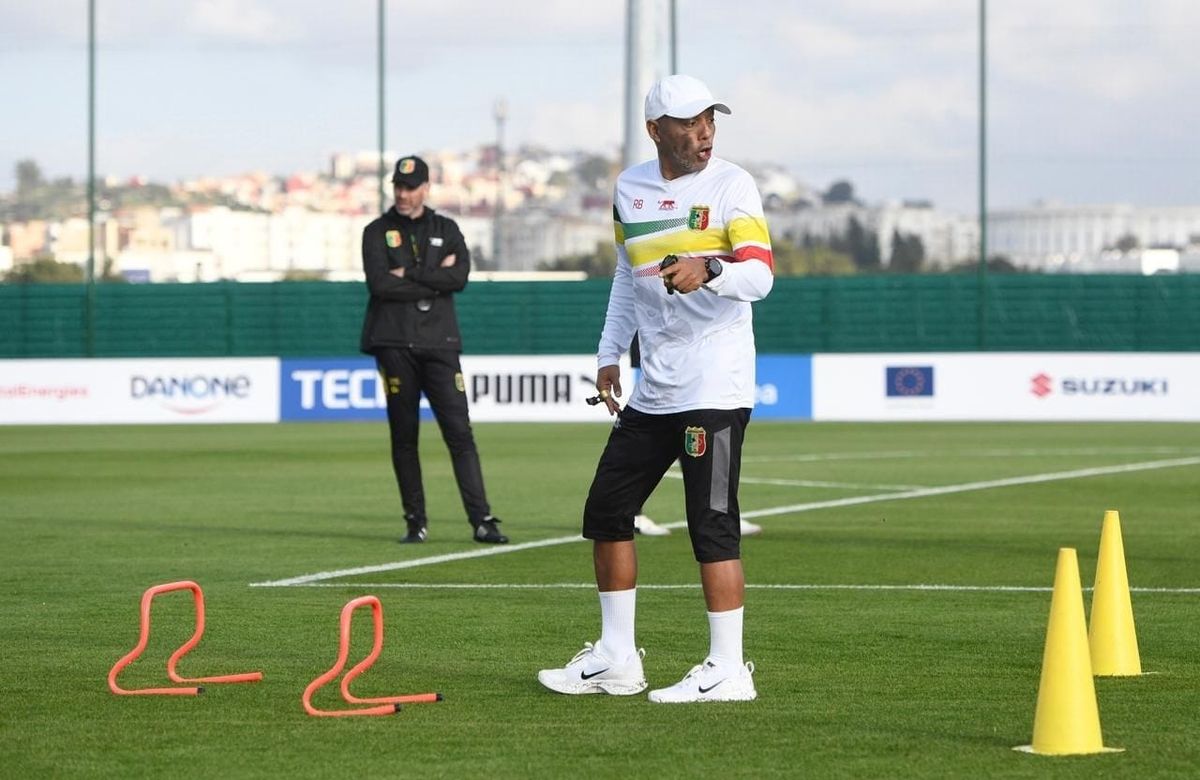
In modern football, fitness is not a department. It is not a warm-up, not a recovery slot, not a separate block on the weekly training plan. That, at least, is the conviction at the centre of Riedoh Berdien's twenty-year career across South African club football, African federation work, and a global itinerary that has run through Bolton, Inter Miami, Bloemfontein Celtic, Chippa United, Mamelodi Sundowns, Young Africans, and now Simba Sports Club in Tanzania — alongside national team appointments with Mali, Botswana, Bangladesh, Trinidad & Tobago, South Africa, Togo, Gambia, Guyana, the Philippines, and, currently, Mali again.
Berdien is Head of Performance and Strength & Conditioning Coach at Simba SC, and Strength & Conditioning Coach for the Mali Football Federation. He carries a UEFA C and B coaching licence, an in-progress UEFA A, a Bachelor's and Master's in Sport & Exercise Science, the Football Science Institute Master's in Strength & Conditioning, and the Atletico Madrid AMW1 and AMW2 specialist credentials. He has trained Jay-Jay Okocha, Emmanuel Adebayor, Omar Colley, Alaixys Romao, Mathieu Dossevi, Kenwyn Jones, and Themba Zwane. He has hosted more than twenty football science and conditioning webinars across the USA, Trinidad, Togo, Guyana, Gambia, South Africa, Tanzania, the Philippines, and China.
In a written exchange with Football Agent Lab, Berdien lays out the framework he calls TAC-TEC Conditioning — the principle that tactical and technical work are the major components of physical preparation, not a separate discipline. He distinguishes between chasers and hunters in pressing systems. He defends the medical and sports science gap between African and European football while insisting the gap is closing every year. And at the end of the conversation, he names the leagues he still wants to coach in: Serie A. The K League. The J League. A World Cup, with Korea, Japan, or China.
South African Strength & Conditioning Coach · Sport & Exercise Scientist · Re-Conditioning Expert
CURRENT ROLES
Simba Sports Club (Tanzania) · Head of Performance / Lead S&C Coach / Assistant Coach Mali Football Federation · Head of Sport Science & Performance / Lead S&C Coach / Assistant Coach
PRIOR CLUB TENURES
Mamelodi Sundowns · Young Africans (Tanzania) · Inter Miami FC (FSI Intern) · Chippa United · Free State Stars · Bloemfontein Celtic · Cape Town All Stars · Bolton Wanderers (Academy)
EDUCATION
Master's in Strength & Conditioning, Football Science Institute (FSI) · Bachelor's & Associate Degree in Sport & Exercise Science, Lionel University · UEFA C and B (UEFA A in progress) · Atletico Madrid AMW1 & AMW2 Pro/Specialist · ISSA Master Trainer, Elite Trainer, Strength & Conditioning Specialist, Sports Nutrition Specialist, Exercise Therapy, Corrective Exercise · WFA Football Periodisation Expert
AMBASSADORSHIPS
VALD Performance · Fitogether Performance System · Future Life · Certified Wimu & StatSports GPS Scientist
PLAYERS COACHED
Jay-Jay Okocha · Emmanuel Adebayor · Themba Zwane · Alaixys Romao · Omar Colley · Mathieu Dossevi · Kenwyn Jones
HONOURS (selected)
DSTV Premier League × 4 (Mamelodi Sundowns, 2020–23) · CAF Champions League Runners-up 2023 · CAF Confederation Cup Runners-up 2024 (Simba) · AFCON quarter-final, Cameroon 2022 (Gambia) · FIFA U-20 World Cup semi-final, Argentina 2023 (Gambia) · COSAFA Cup × 3 (South Africa, 2017–19) · FIFA World Cup Qualification, France 2019 (SA) · CAF Team of the Year 2017 (SA) · South African Sports Ministry Excellence Award, Physical Trainer 2020
BORN 3 July 1982 · Cape Town, South Africa
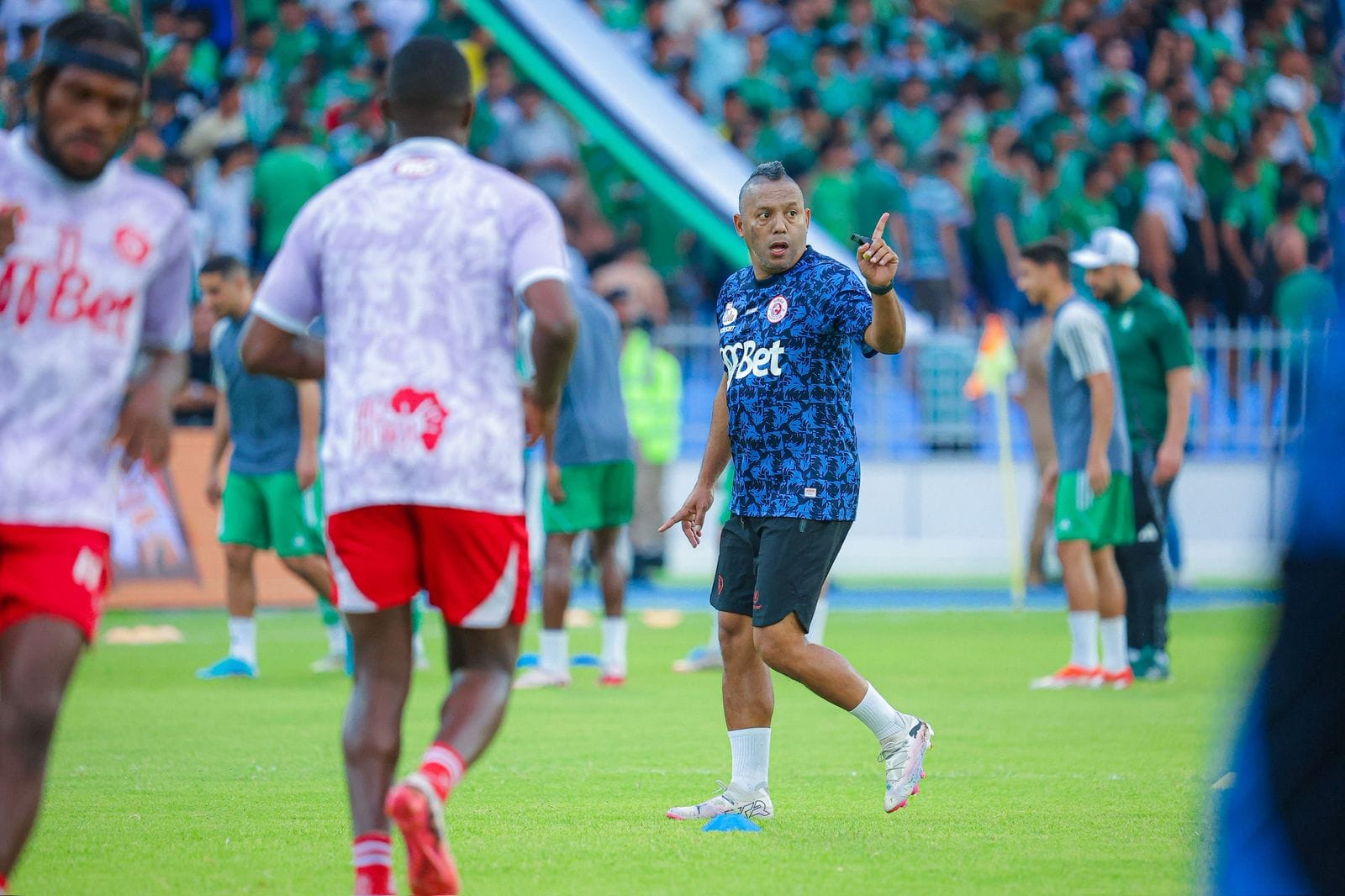
PART 1 · INTRODUCTION & CAREER JOURNEY
Q. For readers who may not be familiar with you yet, could you give us a brief introduction? Who are you as a coach, and what are you currently working on?
My name is Riedoh Berdien, born in Cape Town, South Africa. I am currently Head of Performance and Strength & Conditioning Coach for Simba Sports Club from Tanzania, as well as Strength & Conditioning Coach of the Mali National Team.
Q. You've built a career that stretches from the Bolton Wanderers Academy all the way to Mamelodi Sundowns and dozens of national teams across the globe. Looking back, was this path something you envisioned from the beginning, or did each opportunity gradually shape you into the coach you are today?
Honestly, it was something that was periodized — planned. I played football in South Africa's Second and Third Tier Leagues, and I knew I was never going to be a professional player. So I started my coaching badges at a very young age.
While playing football, I managed to obtain my Sport Science and Exercise Degree through Lionel University in the USA, and achieved my Master's in Strength & Conditioning with the Football Science Institute (FSI). I then managed to secure an opportunity at Bolton Wanderers Soccer Schools, then Bloemfontein Celtic and Chippa United as a Physiotherapist — and the rest, as they say, is history.
Q. What strikes me is that you're a physical coach who is simultaneously pursuing a UEFA coaching license. There must be a deeper reason behind that — would you mind sharing your thinking?
Yes, look — being a fitness coach with a sport science and physiotherapy background, it's important to share the same vision as your head coach. Most of the time, you must be aligned in your methodology. You have to put yourself in the head coach's or manager's shoes — analyzing his thoughts, his playing style, his game model.
That's why I felt it was important to attain coaching badges like the UEFA C, B, and A licenses. They give you far greater insight into the coaching side of the game, beyond simply being a practitioner.
PART 2 · FOOTBALL PHILOSOPHY
Q. The term "TAC-TEC" keeps appearing throughout your career and philosophy. Could you break that down in a way that your readers can really understand?
What most people don't understand is that fitness should never be done in isolation. In modern strength and conditioning, tactical and technical work are the major components of physical preparation. TAC-TEC Conditioning is, in my view, the most effective and efficient way of training — using football elements and tactics to make your team fit for purpose. This concept is directly linked to the principle of "Train the Way You Play."
Fitness should never be done in isolation.
Q. In many clubs, physical training and tactical training are still operated as two separate worlds. Where do you stand on that divide, and how do you approach it in practice?
You are 100% correct. As I mentioned with the TAC-TEC Conditioning concept, I always apply this with the coaches I work with. Modern-day physical coaches don't only apply stretches, activations, and warm-ups — they have to take a holistic approach in supporting the head coach across all elements of the game.
TAC-TEC Conditioning needs to be implemented fully within national team setups, especially because coaches don't have enough time to work with their players. Physical coaches also need to understand that tactical exercises have a significant physical output, which falls within the physical coach's responsibility in terms of managing workload.
Q. The game has shifted dramatically towards high-intensity pressing systems, and the physical demands on players today are on a completely different level compared to a decade ago. How have you adapted your methodology as tactical trends continue to evolve?
What made this adaptation work for me is that I operate on the principle of "Football First" — using football concepts when it comes to training, rehabilitation, fitness, and nutrition. The game and the players are the ultimate priority. Understanding playing styles helped me adapt my training methodology, and recognizing that tactical training underpins everything else.
When we speak about pressing schemes, of course there are different physical demands within different systems. For example, you have what I call "chasers" and "hunters" — chasers are the players closest to the ball who react immediately, while hunters wait for the next press or only press in specific positions and moments. Both of these tactical roles carry very different high-intensity physical demands.
Q. You completed the Atletico Madrid coaching courses — AMW1 and AMW2. How did that experience translate into your actual work on the training ground?
That was a fantastic course. During that period, I learned from top coaches at Atletico Madrid under the guidance of Diego Simeone. Their periodization model is genuinely impressive — the way they connect the academy to the first team is exceptional. Some of those training concepts, conditioning circuits, and games I have since implemented and adapted at Mamelodi Sundowns, Young Africans, and Simba — and the results have been very encouraging.
PART 3 · PHYSICAL & SPORTS SCIENCE METHODOLOGY
Q. During the congested periods of a season, when matches pile up and recovery time shrinks, finding the balance between maintaining fitness and preventing injury is incredibly difficult. How do you design your weekly training load during those spells?
Looking back, it always starts with your pre-season preparation — a well-structured pre-season helps significantly reduce injury risk while maintaining top physical output during periods of fixture congestion. The type of pre-season installed should help reduce the risk of injury.
Squad rotation and the periodized manipulation of sessions play a huge role in balancing freshness and fitness. The most critical component during congested periods is freshness.
On MD-2 and MD-3, players are typically still in the recovery phase, so I implement what I call "tactical recovery" — using medium-intensity tactical exercises as part of the active recovery process.
The medical department also plays a key role here, installing aggressive recovery protocols such as targeted nutrition, contrast ice baths, and treatments. From my experience, on MD-1 I recommend reducing session volume to 45 minutes, combining warm-ups with rondos or passing drills while incorporating SAQ elements to keep the session effective and efficient.
Q. Tools like StatSports and Wimu generate an enormous amount of data. Of everything that comes out of those systems, which key metrics do you actually rely on most when designing your training sessions, and why?
That's a very good question. I have worked with StatSports, Wimu, and Catapult, but the system I found most useful and effective was the Fitogether System. With a full training week, I typically recommend an extensive to medium-intensive start with an intensive finish.
On MD-5 — a restart session — I focus on Heart Rate Response (HRR), Distance Covered, and Intensity (m/min). On MD-4, which is focused on fitness components such as strength and endurance, I track Distance Covered, Intensity (m/min), RPE, HSR, and Acceleration and Deceleration metrics.
On MD-3 — football conditioning — I focus on Distance Covered, Intensity (m/min), RPE, Acceleration and Deceleration, and HSR Speed Zones 4–5. MD-2 centers on speed and agility work, using Intensity (m/min), Acceleration and Deceleration, and COD agility metrics. On MD-1 — an activation session 24 hours before the match — I use Distance Covered, Intensity (m/min), Acceleration and Deceleration, and COD agility metrics.
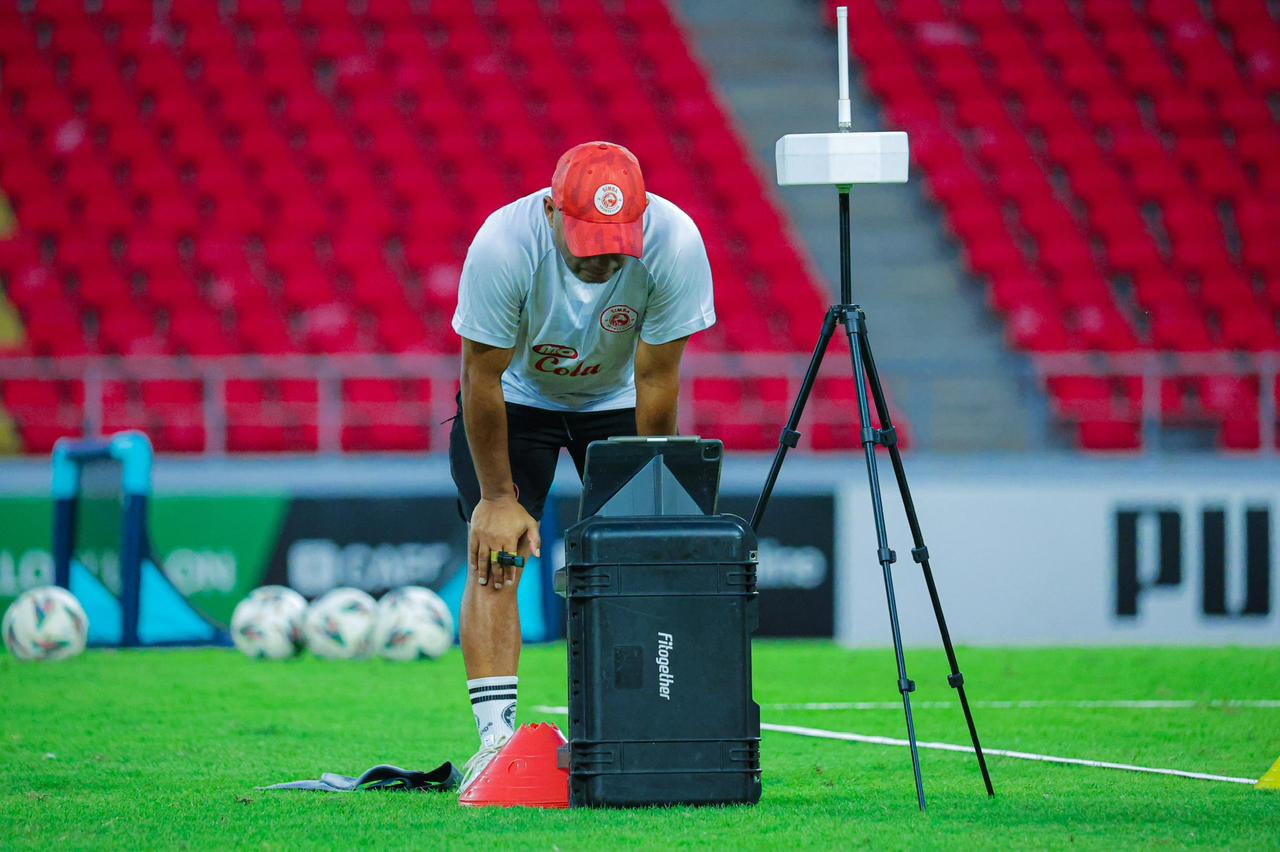
I operate on the principle of "Football First."
Q. As a VALD Performance ambassador, you work closely with that system on a daily basis. Have there been moments where the data genuinely helped you catch an injury before it happened? Could you walk us through an example?
Data helps enormously — but it all depends on how you use it and how you interpret it. It's impossible to predict exactly when an injury will happen, but data absolutely helps you reduce the risk.
For example, before football conditioning sessions I use the VALD Force Decks, where the player performs a series of countermovement jumps. Based on the intensity and data produced, you can detect whether the player is experiencing slight fatigue. With that information, you can advise the coach on whether it's safe for the player to train at full capacity or whether the session should be modified. In one instance, a player's data showed signs of fatigue, but he was pushing himself to train regardless — and he subsequently picked up a minor injury that, in my view, could have been prevented.
Q. It's well established that different positions place very different demands on the body during a match. In practice, how do you differentiate your conditioning approach between, say, a centre-back and a fullback, or a midfielder and a striker?
As a strength and conditioning coach, you have to master individual periodization. Just as different positions carry different physical demands, the principle is always to train the way you play.
Distinct metrics are set for each position. If your playing style encourages your fullback to push forward in possession, it's natural they will cover higher distances than, say, a winger or a central midfielder. Even within position-specific tactical rondos and possession games, the physical demands vary considerably from player to player — so there are days where those metrics are capped to prevent fatigue while each player performs their individual actions.
Each position has its established GPS norms. For example, a box-to-box midfielder typically covers 12–13 km per game, which is 20–30% more than a centre-back or a defensive midfielder. Wingers will produce significantly more high-speed running than a central midfielder. These metrics need to be trained and controlled accordingly.
Q. You hold qualifications in sports nutrition as well, which suggests you see diet as an integral part of the coaching process. How does that actually play out on the ground when you're working with a squad?
Sports nutrition at the team level is generally straightforward, though it varies significantly depending on which part of the world you're coaching in — culture plays a huge role in nutrition habits.
The real challenge lies in individual periodization when it comes to nutrition, which involves a lot of external factors. For players returning from injury, nutrition plays a critical part in the reconditioning process — it can be a decisive factor in whether a return-to-play protocol is accelerated or delayed.
PART 4 · ON-THE-GROUND EXPERIENCE
Q. When a player is coming back from injury, there are times when the body is ready but the mind hasn't quite caught up yet. How do you handle that gap, and what does your process look like for getting a player fully back to where they need to be?
This is an area that many fitness coaches struggle with, in my opinion. When returning from injury, the mental side also needs to be conditioned. Just as with the TAC-TEC concept, we don't separate the brain from the body.
If a player is biomechanically fit but not mentally ready, they are not declared football fit and should not be available for selection. As part of the reconditioning process, the psychological element is addressed from the very early stages of a player's rehabilitation — it is a key component of any return-to-play protocol.
We don't separate the brain from the body.
Q. Gambia's historic AFCON quarter-final in 2022 and then the U-20 World Cup semi-final — remarkable achievements. In a tournament setting where matches come thick and fast, did you have a specific conditioning strategy tailored to that format?
Everything had to be tailor-made, honestly. This was also supported enormously by Head Coach Tom Saintfiet, who is a master of football periodization and sports psychology. During the AFCON preparation, we had short but highly effective tactical meetings — we were careful not to overload the players with too much information or create unnecessary stress.
Sessions were capped at 45–60 minutes, with the tournament focus firmly on freshness over fitness. That approach played a significant role in helping us make history and perform against top footballing nations like Algeria, Tunisia, Senegal, and Cameroon.
With the U-20 squad, they operated under the same conditioning model as the senior team, playing the same style. For the U-20 group, gym activation sessions were adapted, but integrated within the team's periodization model. For many of those players, it was the first time they had ever experienced a gym environment in a football-specific context.
Q. You've personally worked with players like Jay-Jay Okocha and Emmanuel Adebayor — genuine legends of African football. When you're working at that level, is there something about an elite player's body or mindset that genuinely sets them apart from the rest?
Yes, absolutely — and it's more about the way they think, so yes, the mindset. They always believe they can achieve anything. They push themselves to win every exercise in training, and that mentality rubs off on the team in matches as well. They have a relentless drive, and they work harder than almost anyone else in the squad.
I remember Adebayor sitting at the front in team meetings and never being late for meals or any scheduled event. He was a true example of professionalism at the highest level.
In drills, he would always be at the front, setting the tone and intensity for every session. What sets them apart from the average player is the ability to take full responsibility for their own performance — they never run away from a challenge. That's why, for me, it was an honour to work with those footballing legends.
Q. Decisions around a player's return from injury can sometimes lead to tension between the coaching staff, the medical team, and the player himself. When those opinions don't align, how do you navigate that, and who do you think should ultimately have the final say?
That's precisely why top coaches travel with their own support staff — because it ultimately comes down to trust. The final decision rests with the player and the head coach. Top coaches understand that the health of a player is more important than anything else. If the player doesn't feel ready, then that decision stays with him.
PART 5 · GLOBAL STAGE & CULTURAL ADAPTATION
Q. When you've worked in countries like the Philippines or Bangladesh, where football infrastructure is still developing, how do you decide what to bring wholesale from your existing methodology and what needs to be adapted to fit the local reality?
I believe that before entering any project, you must research the team or country thoroughly before accepting the offer. My football methodology is non-negotiable — that is the starting point, because you were brought in for your football expertise and the methods you carry to improve the game and the players in that region.
Adapting to local reality means having more patience in implementing your methodology. Not everyone understands your approach immediately, and local staff sometimes need additional guidance when working together. Local staff are only as good as the guidance they receive, so your ability to explain, coach, and convey genuine passion for the work needs to filter through to them.
Q. There's a widely held view that African players have the physical potential to compete with anyone in the world, but the sports science support system still lags behind Europe in meaningful ways. As someone who has worked across both worlds, do you feel that gap in practice?
That is the sad reality. We are behind when it comes to modern football science, infrastructure, medical support, and conditioning. However, the gap is closing every year.
More and more coaches are studying abroad and gaining knowledge from top European clubs and institutions. The most important thing now is to share that knowledge with other coaches so that we can improve the game and reduce injury rates across world football — not just in one region.
PART 6 · THE NEXT GENERATION & PERSONAL AMBITIONS
Q. For young aspiring physical coaches and sports scientists in Africa and Asia who dream of making it on the international stage — what would you tell them they absolutely must have, beyond the qualifications?
Passion. You need to have a genuine passion for football and a consistent drive to improve. You must realize that the game is not about you — everything you do is for the benefit of the game and the players. You need to be prepared to give everything, and then some, to win a match or to help a player reach their potential.
Q. Thank you so much for your time today. As a final question — how would you like to be remembered as a coach, and is there a dream or goal you haven't yet achieved that you'd be willing to share with us?
I would like to be remembered as one of the best — ha! I think most fitness coaches dream of working at Real Madrid or Manchester City. But my personal dream is to work in Serie A, the K League, or the J League — or to go to a World Cup with Korea, Japan, or China.
My personal dream is to work in Serie A, the K League, or the J League — or to go to a World Cup with Korea, Japan, or China.
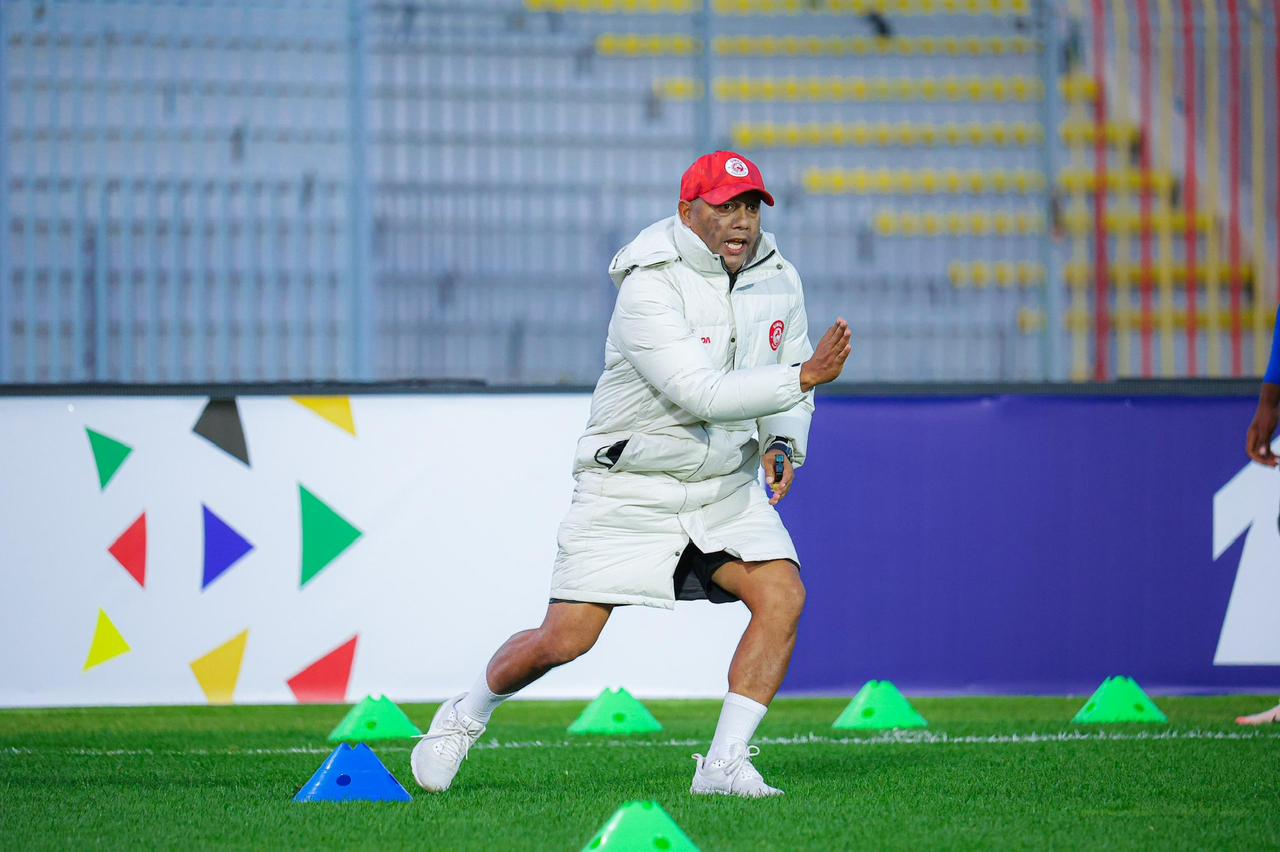
CLOSING
Berdien's career is a deliberate construction. The badges, the masters, the certifications, the federations, the clubs — none of it was accidental, none of it was the by-product of where the opportunities happened to land. "Honestly, it was something that was periodized — planned," he says of his arc from second-tier South African football to the touchlines of African Cup of Nations qualifiers. Periodisation, in his vocabulary, is not only a training framework. It is a way of describing a life.
What separates him from many of the strength and conditioning coaches working at his level is not the volume of qualifications — though the volume is unusual — but the position from which he works. Berdien is a fitness coach who has spent years pursuing a UEFA coaching licence not to become a head coach, but to see the game the way a head coach sees it. The TAC-TEC method follows from there: if tactical and technical work are the major components of physical preparation, then a physical coach who cannot read tactics is, by his standard, not yet a complete physical coach. "Fitness should never be done in isolation," he says. "We don't separate the brain from the body."
He has named his next chapter on the record. Serie A. The K League. The J League. A World Cup, with Korea, Japan, or China. He is forty-three. He is a VALD Performance ambassador, a Fitogether ambassador, a certified Wimu and StatSports GPS scientist. He has trained Okocha, Adebayor, Zwane, Colley, Dossevi, and Romao. He has reached AFCON quarter-finals with Gambia and a FIFA U-20 World Cup semi-final with the same federation. And he is, by the structure of his own answers, a coach actively looking east. Football Agent Lab will be watching.
ABOUT THE AUTHOR
SEOK LIM Editor· Football Agent Lab
FIFA-licensed football agent and steel market analyst with over a decade of experience in commodity research. Football Agent Lab publishes interviews and market reports at the intersection of football, agency work, and global markets.


