It Starts With the Goalkeeper, but You Coach the Team
A specialist goalkeeper coach across nine countries — Finland, Estonia, Qatar, South Africa, USA, Malawi, Senegal, the Netherlands. Currently Finland's national team goalkeeper coach. Recent Feyenoord chapter closed. Awaiting a new club. And, in his own words, a hope to come to Korea one day.
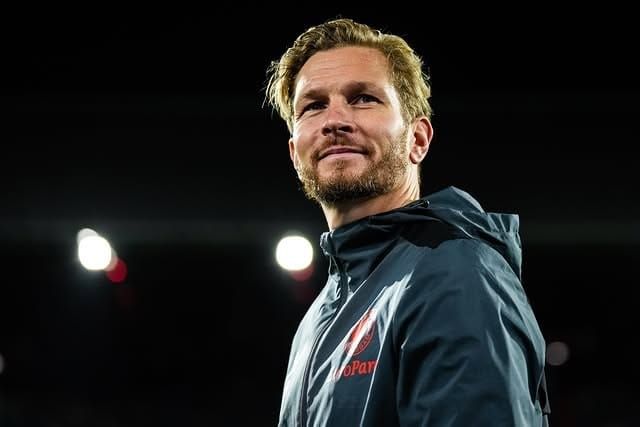
Jyri Nieminen has spent his career at the position most tightly framed on a football pitch — the six-yard box, one player, the last line of defence — and has spent it arguing, on the training ground and in the ideas, that the position is much larger than that. The goalkeeper is always an extra player. The goalkeeper coach coaches the whole team. These are the two sentences that run through the twelve years of coaching work behind him. He has held them in Finland's amateur game. He has held them at Aspire Academy in Qatar with the U17 national team goalkeepers. He has held them as National Goalkeeper Director at the Estonian FA, designing a countrywide development structure from a standing start. He has held them at San Jose Earthquakes, at New York Red Bulls, and at Orlando Pirates. And most recently he has held them at Feyenoord, where his brief expanded to include the defensive set-piece design that has traditionally belonged to outfield coaches.
Since 2025 he has been the Finland national team goalkeeper coach — a position that continues. His Feyenoord chapter closed recently: as he puts it in Q18 of this conversation, "just recently I left my position as Feyenoord goalkeeper coach, and I am now waiting to move to a new club." For the past twelve months he was carrying both roles at once, switching from Rotterdam to Helsinki over a single flight and a change of clothes. The certifications — UEFA A Goalkeeper (2016), USSF A Goalkeeper (2019), UEFA B — sit alongside a Physical Education degree from Virumäki and a working record of speaking engagements at coach education conferences worldwide. He speaks Finnish, English, and Estonian fluently, and follows conversations in German, Swedish, Spanish, and Dutch.
In a written exchange with Football Agent Lab, Nieminen is at once methodologically direct — Game First means the bravery to leave out anything not tied to the specific scenario you are coaching — and unusually candid about the parts of the work most goalkeeper coaches keep private. He describes his approach to a long-term backup goalkeeper in specific and moving terms. He names the moment he stopped treating goalkeeper is a twelfth outfield player as an interesting idea and hardened it into non-negotiable practice. He credits every league move to the analyst at the new club, whose first job is to teach him the league. He says, plainly, that the year of doing the club and the national team simultaneously was a year of no time to watch movies or have a night out. And in PART 8 — asked to connect the European and North American goalkeeper coaching pathways to the K League environment — he writes a sentence unusual for someone who has never yet worked in Korea. I hope that when I one day come to Korea, I will experience a strong, independent Korean culture and a K League that has been able to learn from others around it.
Finnish International Goalkeeper Coach · Assistant Coach · Defensive Set-Piece Specialist · Coach Educator
CURRENT ROLE (2025–present)
Finland National Team · Goalkeeper Coach
RECENT CLUB ROLE
Feyenoord (Netherlands, Eredivisie) · First-Team Goalkeeper Coach & Defensive Set Pieces · 2023–2026 (chapter recently closed)
PRIOR TENURES
New York Red Bulls (USA, MLS) · First-Team Goalkeeper Coach · 2021–2023
Orlando Pirates (South Africa) · First-Team Goalkeeper Coach · 2019–2020
San Jose Earthquakes (USA, MLS) · First-Team Goalkeeper Coach · 2018–2019
Malawi National Team · Performance Analyst · 2017
Aspire Academy & Qatar U17 National Team · Goalkeeper Coach · 2015–2018
Estonian FA · Head of Goalkeeping (National Goalkeeper Director) · 2014–2015
FC TPS Turku (Finland) · First-Team Assistant & Goalkeeper Coach · 2013–2014
FC Honka (Finland) · U15 & U17 Goalkeeper Coach · 2012
Finnish Amateur Level · Goalkeeper & Football Coach · 2005–2012
CORE METHODOLOGY
Game First — game-scenario-based session design · One-v-one and build-up as twin technical pillars · Rhythm, intensity, and continuity as chained principles · Analysis- and scouting-based session and match preparation · Progressive arc from pre-match video → warm-up → post-match review · Individual Development Plans (IDPs) · "The goalkeeper is always an extra player" · "The goalkeeper coach coaches the whole team"
LICENCES & EDUCATION
UEFA A Goalkeeper Licence (2016) · USSF A Goalkeeper Licence (2019) · UEFA B Coaching Licence (2015) · BA in Physical Education, Virumäki (Finland, 2012) · Coach educator & speaker at coach education workshops and conferences worldwide
LANGUAGES
Finnish · English · Estonian (fluent) · German · Swedish · Spanish · Dutch (intermediate / working knowledge)
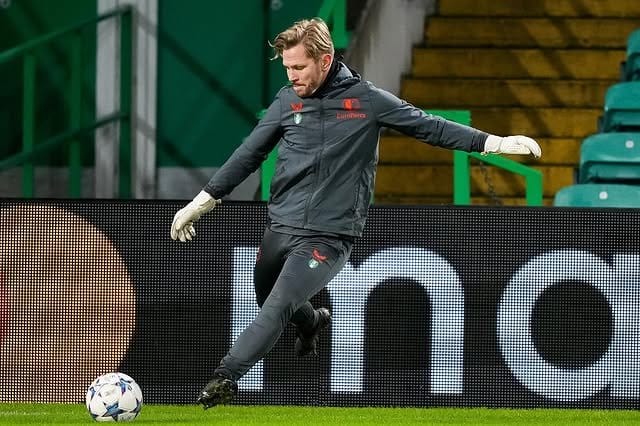
PART 1 · THE COORDINATES OF A PHILOSOPHY
Goalkeeper coach, assistant coach, defensive set-piece architect, international staff member — across the full span of your career, the boundaries of your role have never stopped expanding. If someone pressed you to compress the footballing philosophy threading through every one of those titles into a single sentence, what would you give them?
I am a person who wants to understand the nature of football so well that I can always find the right priorities to help the team and the individual on the spot.
I am a person who wants to understand the nature of football so well that I can always find the right priorities to help the team and the individual on the spot.
There is a conviction that runs through your work — that the goalkeeper is always one extra player, the team's twelfth outfield contributor rather than simply the last defender standing in front of the goal. Was there a particular moment when that conviction stopped being an interesting idea and hardened into something you would never coach without?
I developed this thinking and created practical actions to truly find an advantage. I was observing all the game scenarios through this lens, while not many teams were taking full advantage of it. Then I realised that by doing this in a new dimension I might have a competitive edge as a coach. This happened when I travelled around Europe, visiting clubs and coaches while I was still working in Finland. Football was developing in that direction, and that played to my advantage.
PART 2 · THE GAME MODEL — WHAT "GAME FIRST" ACTUALLY LOOKS LIKE ON THE GROUND
You have held consistently to the principle that training must begin from match situations — that game scenarios serve as the reference point against which every session is designed. A great many coaches will say something similar, and yet the gap between stating that principle and genuinely living by it on the training pitch can be enormous. When a session of yours truly has that principle running through it, what does it look like?
The key element there is the bravery not to do certain things that are not related to the specific scenario I am focusing on. The bravery to leave things out, and in that way being able to go deeper into the chosen topic. That takes something, because traditions and learned habits run so deep in training culture and in players' upbringing.
In a specific session, the player must be able to feel that the progression is logical and that the demand of the task is rising. At the same time, the player's success rate might go down, and that tells me you are reaching the real complexity of the game situation and hitting the mental aspect of the game as well, since the player also has to deal with setbacks.
Holding to the idea that a goalkeeper coach coaches the whole team inevitably raises a rather delicate question about where your role ends and the head coach's begins. At a club operating at the tactical intensity of Feyenoord, were there moments when your approach created genuine friction with the head coach's game model — and if so, what did the conversation that resolved it actually look like?
Throughout my career, I always had to develop my social and communication skills hand in hand with tactical knowledge and coaching ability. Without being able to understand the nature of a complex situation in the club or in the team, it is impossible to communicate in a way that gives you a chance to reach the goal. In the rhythm of a top football club, deep preparation is everything, and when you come prepared and approach situations and people with respect, you will always be heard.
At Feyenoord you have carried the goalkeeper coaching brief and the defensive set-piece responsibility at the same time — territory that has traditionally belonged to outfield coaches. What does it actually change, tactically, to design defensive set pieces from a goalkeeper's vantage point?
I am sure that when a traditional outfield coach is organising defensive set pieces, he can also understand the goalkeeper's point of view very well, but that takes some effort to study the specific nature of goalkeeping — even the technical possibilities and so on. In that sense, a goalkeeper coach has a naturally good starting point, but at the same time he needs to understand a lot about the basic defensive actions inside the box. For example, how to attack the ball in a heading duel, or the orientation of the body when an attacker is trying to free himself up in the box.
Nevertheless, to aim for the top in this specific area, a coach needs to dive really deep and understand both vantage points in absolute depth.
New York Red Bulls and Orlando Pirates — different leagues, different continents, different footballing cultures entirely. Were there game-model principles you refused to abandon in either environment — and equally, were there things the difference in context forced you to approach in a completely different way?
As an assistant, there can never be a situation where, after conversations and a deep process, one of the assistants refuses to work on the team principles in any sense. I have been hired to bring my input to the process. In some cases, as a result of that process, certain things have been adjusted together, and in other cases it has been my role to adapt and find ways to make things work.
It is my choice to become the person who is always able to adapt without losing myself in those changing circumstances, from South Africa to the US.
PART 3 · SESSION DESIGN — THE ARCHITECTURE OF RHYTHM, INTENSITY, AND CONTINUITY
You have long argued that good session design is what gives training its rhythm, intensity, and continuity. Before we go any further, I want to understand whether those three elements work independently of one another, or whether they form a kind of chain — so that when one gives way, the others follow. In your experience on the ground, which link in that chain has been the most likely to crack?
Those things really do come as a chain, and they are consequences of one another. Without one you can still maintain the others, but I must say that requires a lot of pushing; when things go well, the dynamic keeps the wheels moving.
Good session design is the key to keeping those wheels rolling, and when that organisation is lacking, you usually see it first in the rhythm — it does not flow organically, and people need constant guidance and coaching.
When the organisation is lacking, you usually see it first in the rhythm — it does not flow organically.
I would like you to bring to life the full arc of your method — from pre-session video analysis through the warm-up to the post-match review — as it functions on an actual training day. Take a specific scenario: an attacking pattern from the next opponent has been picked up in advance video work. Could you walk us through, step by step, exactly how that intelligence finds its way into the movement patterns and intensity of the goalkeeper warm-up later that same day?
Once the opponent has been analysed deeply, it is time to prioritise what we bring to the training pitch and what we decide to coach only in the classroom. A third category is the things we simply decide to inform the players about, so that they are not surprised in the game.
Once that one topic is chosen and ready to be transformed into training, I will either have a short meeting with the goalkeepers about the context for the session, or just send them the video and check with them in a short conversation before the session.
I design the training session around that specific situation, respecting its complexity to the best of my ability and the resources I have that day. I always keep everything in its natural environment, while trying to create progressions that allow the goalkeepers to grow into the exercise. In building and translating the game situation into a training exercise, I always have to make many compromises, from my optimal set-up down to what is realistically possible that day. The key there is being able to make the right choices and sacrifices.
Another element is teaching and helping the players to live the exercise through the different roles they play in it, because only this way is the environment rich enough for the goals to be achieved.
The last important element is being flexible during the session. The plan is done, but as I am running it I must also feel the situation and analyse everything during the drills. I have to be able to modify the drill as I go, and even change the progressions completely, if the goalkeepers or the process require it.
A methodology built on analysis and scouting can only function if the information-sharing structure with the analysis staff is already in good working order. When you compare a high-end analytical environment like Feyenoord's with the more limited setups you worked in earlier in your career, did the difference in infrastructure actually change the nature of the methodology — or did only the tools change whilst the underlying design principles held firm?
All the coaching staffs and club set-ups have had their typical characteristics, but the work needs to get done. It is hard to make a fair comparison between different environments, since there are so many variables, but first I look at myself and say that my own process must have changed over the years.
In one era I spent a lot of time analysing everything by myself, and even worked as an analyst at the same time, while at other times I received such complete scouting packages that my biggest task was to choose and delete clips. It is very beneficial for a coach to be in both situations and learn both ends — and also to learn to tolerate a big workload.
Any time I have moved to a new league, the analyst at the club has been the crucial person to teach me the league and the players.
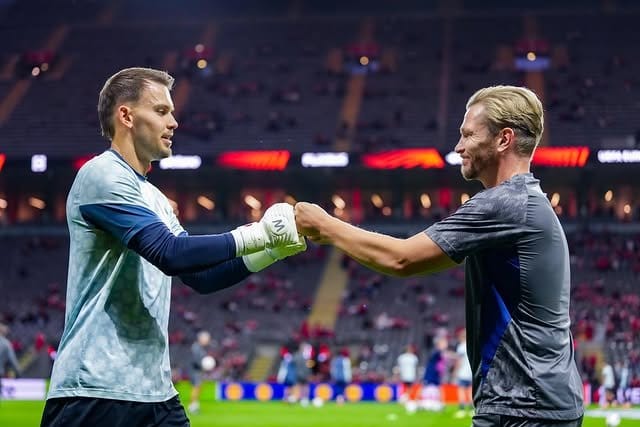
PART 4 · TECHNICAL REPERTOIRE — BETWEEN THE ONE-V-ONE AND THE BUILD-UP
You have long treated one-v-one defending and build-up play together as the twin pillars of a goalkeeper's technical development. Yet these two competencies ask for very different psychological stances: the one-v-one is an intensely reactive moment, whilst the build-up demands proactive, pre-planned decision-making. In your view, which of the two needs to be solidly established first before the other can genuinely function?
We cannot really compare those phases of the game, because whatever I would say, the goalkeeper needs to participate and play a central role in both. It is true that they both demand very different skill sets, but I would not make it too complicated either.
We have to remember that all the game phases have been there ever since the little goalkeeper went into goal for the first time.
At San Jose Earthquakes and New York Red Bulls you were engaged in the work of making goalkeepers function as a twelfth outfield player. Where did the deepest resistance to internalising that role actually come from — was it the players' own fixed sense of what a goalkeeper is, or a structural constraint built into the team's game model? And how, in practice, did you break through it?
Goalkeepers are always willing to become better, and when they realise there is a person who genuinely wants to help them, they are all in.
But being truly the eleventh player can still be hard in the tough moments of a game. The reason for that is the culture and the definition of risk. Goalkeepers are still a bit afraid of being judged, and their actions have been isolated from the team's actions in the moments when goals are conceded. So they need the head coach and the whole coaching staff to stand behind them in the moments of loss as well.
As for other potential sources of resistance, head coaches and staff members are often very happy when a goalkeeper is able to defend a bigger space and participate actively in the build-up, providing numerical superiority. Of course there have been moments when I needed to explain the what and the how in detail to get the buy-in, but that is definitely a normal part of the job, and every goalkeeper coach needs to be prepared to do it.
It all starts from knowledge and ends with social awareness and communication.
PART 5 · CASE STUDIES — SYSTEM DESIGN AND THE CRACKS THAT OPEN UP
When you were National Goalkeeper Director at the Estonian FA, your task was not to work within a single club but to design a nationwide goalkeeper development system from scratch. Building that under conditions of limited infrastructure and limited playing depth — what did you go to first, and what did you consciously set aside until later?
The very first thing was to understand the talent in the country, in order to make educated decisions and set priorities for the future. The second, practical thing was to start extra goalkeeper training once a week for the national team goalkeepers of every age group.
My reason for this was to lead by example and introduce my training methodology in the most practical way, instead of only creating nice presentations — which I obviously also had to do. So this was my way to connect with the other goalkeeper coaches, and also to make myself familiar with the other personnel at the clubs.
Something we had to leave for later was the goalkeeper coach education courses authorised by UEFA, although we started preparing that structure as well. Unfortunately, I had the opportunity to move on before we were able to have any clear product there.
Set your experience coaching Qatar U17 goalkeepers at Aspire Academy directly against your work with first-team adults at Feyenoord. How do the content and the design of individual development plans actually differ between those two contexts?
On a very fundamental level, nothing is different when we start, but the level of each individual defines their individual objectives and how we go about them. I also need to highlight that today I am a very different coach than I was back then.
To compare it in practical terms: with high-level adult goalkeepers it is just easier to identify and select which individual objectives need extra time the most. There are still many things to polish and add to the toolbox, but somehow it is more direct.
When working with a 16-year-old goalkeeper, things are even more connected. For example, many coordinative skills are connected to each other, while at the same time being heavily dependent on physical development, and everything comes out as technical execution. A young player might have more challenges dealing with his body, but he is more adaptable and therefore easier to mould.
On the other side of this, an older goalkeeper might have consciously repeated and drilled some techniques that are actually more harmful than helpful for his effectiveness, and fixing this takes much more effort than simply learning new skills.
The 2019–2020 season at Orlando Pirates placed you inside an African football culture that was quite unlike anything you had worked in before. Was there a moment when a coaching approach you had simply taken for granted stopped working altogether?
I actually had some experience of the African continent from my short projects in Senegal and with the Malawi national team, so I was not completely surprised by anything — but of course the South African culture and football environment is very unique and specific.
I was very humble in learning to understand it as a whole, and not only from a football point of view. At the same time, when it came to football and goalkeeping, I needed to understand that I had been brought over to bring extra value from the standpoint of my methodology and goalkeeping philosophy.
Talking about the coaching approach, one important thing is that two of the goalkeepers were older than me and one almost the same age, so I had to understand the local hierarchy and communication culture to earn a basic level of respect before starting to impress with football content. On top of that, the hierarchy and the position of each goalkeeper play a role alongside their personalities. I would say my biggest learnings are in these areas.
Other than that, the goalkeepers were very keen on learning and working in general. I am sure this experience was completely necessary and prepared me for my future challenges as a leader of the group.
PART 6 · PLAYER MANAGEMENT — THE ISOLATED POSITION AND THE LANGUAGE OF TRUST
The goalkeeper is, by the structure of the game, the most isolated position on the pitch. Sustaining the motivation and focus of a long-term backup — a goalkeeper who may see no playing time whatsoever — is a genuinely delicate challenge even for an experienced coach. If you have a working approach to maintaining a real relationship of trust with a goalkeeper who simply is not playing, could you describe what that looks like on the training ground from day to day?
This is one of my favourite topics, and I have two pillars that I feel are most important in any relationship.
As for the day-to-day work, I need to help this backup goalkeeper every day — meaning that he genuinely experiences that I care about what he needs and wants. Beyond that, I am there every single day to help him with it. I will do all I can to help him improve and get better in all areas. I mean really available as a coach.
The second and most important one is an honest and open relationship: clear, honest communication no matter what, and trust. The foundation of trust is that the goalkeeper can tell me anything about his life, and I will never share it with anybody else and I will never judge. All feelings are allowed — but I also cannot demand this from any player. It is up to them how far they want to go; the most important thing for me is to be available and loyal when somebody wants to trust me.
The foundation of trust is that the goalkeeper can tell me anything about his life, and I will never share it with anybody else and I will never judge.
You speak Finnish, English, Estonian, German, Swedish, Spanish, and Dutch. Has there been a moment when switching languages made a tangible difference to your relationship with a player?
I can say that I speak Finnish, English and Estonian fluently, but in all the other languages I am more at the level where I can understand and follow conversations. I feel like I have been changing environment at exactly the point where I am just about to be able to go deeper and really learn a new language. At the same time, I blame myself for not having managed to master the new languages better — and that obviously comes down to more commitment to everyday practice.
It is different with kids, but in all of these environments the coaching language in training has been English. I would say languages are the most important thing outside the pitch, in terms of connecting with people and cultures. Of course, every now and then there is a small moment when I am able to help with a simple translation so that people can follow better, and this is one way to bring a little extra value.
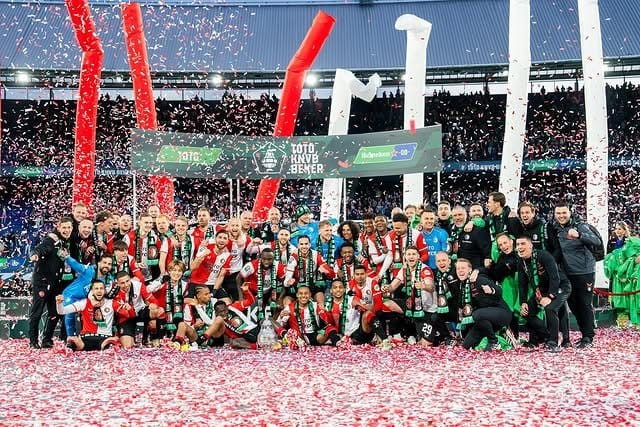
PART 7 · CRISIS JUDGEMENT — TWO HALF-TIME SCENES
You are going in at half-time 0–2 down. Now you are going in 2–0 up. How do the words you give your goalkeeper — and the play you ask for — differ between those two situations?
Once again, my main priority at half-time is to be mentally available for the goalkeeper and never dependent on the scoreline. At first it is not important what I think, but what is in the goalkeeper's head. So first I listen to him. Once I understand where his head and his emotions are, I know how to approach him and deliver my message.
First I need to take care of his worries, and once that is done — with my most honest opinion and advice — I can move on to the message I have chosen to deliver. Apart from what the goalkeeper wants to talk about, I will never speak about technical issues and so on. I will only bring tactical content that I judge will help the collective in the second half.
At that moment we don't need to talk about the goals conceded, unless the goalkeeper needs that in order to move on. My content is often build-up related, or perhaps defensive positioning in relation to the opponent. Often all of that is supported by video footage.
Until recently you were holding the Feyenoord role and the Finland national team role at the same time. The weekly rhythm of club football and the concentrated rhythm of an international window make quite different demands on a coach. When you move between the two, what do you consciously alter — and what do you consciously keep exactly as it is?
Just recently I left my position as Feyenoord goalkeeper coach, and I am now waiting to move to a new club. This past year was a big experience, working in these two roles and switching from one environment to another over a single flight and a change of clothes. There were never any breaks or adaptation periods; I had to start performing right away. A fantastic learning experience and challenge.
In practice, after the last club match I just go to the airport and fly over to the new country. I use the flight to analyse the game, and somehow, by doing that, I close the chapter for a little while so I can orientate myself to the new task the next morning. There is no time to watch movies or have a night out.
The good thing is that I love both roles — I genuinely cannot wait for the next time we get together as a national team, or for when I can return to the club routines again. They both give new energy to each other. I would say that good early preparation is my conscious action to keep going. Also understanding that football is full of surprises, and that when you are well prepared, it is easier to have the headspace to adapt and keep going again.
PART 8 · KOREA AND ASIA — QUESTIONS FROM A DIFFERENT ANGLE
You hold both the UEFA A Goalkeeper Licence and the USSF A Goalkeeper Licence. Were there points at which the European and North American coaching pathways took genuinely different positions on how the goalkeeper should be understood — and if so, how did that difference give you a particular lens for reading the Asian and Middle Eastern environment when you arrived at Aspire Academy? Looking further, what implications might all of that carry for the K League, which is currently absorbing influences from both Europe and North America?
In general, when a person has to adapt to new circumstances and surroundings, that person improves and becomes a master of adaptation, and in my opinion that is a massive ability. But also, as we adapt, we become clearer about what our own fundamentals are. Whether we are talking about coach education or the work environment, everything makes a coach more ready.
When I arrived at Aspire I was young and very green in terms of international experience, but it turned out that I had the right kind of mentality, curiosity and respect to be able to learn every day — and to build a bridge from my experience. It is very important to keep your eyes open to all influences, while at the same time being very loyal to your own values and culture.
I hope that when I one day come to Korea, I will experience a strong, independent Korean culture and a K League that has been able to learn from others around it. To take the best of everything and filter it could be the aim of everybody and every institution that has ambition and a dream.
To take the best of everything and filter it could be the aim of everybody and every institution that has ambition and a dream.
PART 9 · LEGACY — TOWARDS THE NEXT CHAPTER
You started at amateur level in Finland, worked your way through the Estonian national system, youth development in Qatar, Africa, and North America, and most recently led Feyenoord and the Finland national team simultaneously, with a new chapter now ahead of you. As a final question: what is the vision you are carrying into the next chapter of this journey — and when you reach the end of a long coaching career, what is the legacy you most want to leave behind for the goalkeeper coaches who come after you?
Over these years it has become very clear to me that I just want to help people, and if I can have a small positive impact on people's lives, I am happy and satisfied. I have a great passion for coach education and for mentoring people who have a dream. This is also the way I keep learning myself.
CLOSING
Across twenty answers, what Nieminen returns to most consistently is a specific relationship between preparation and humility. He speaks of the bravery required to leave things out of a training session so that a chosen scenario can be reached in its true complexity. He speaks of the goalkeeper's success rate going down as a signal that the exercise is finally hitting the real difficulty of the game. He describes his approach to a long-term backup — the goalkeeper who may not play — in terms not of motivation techniques but of a two-pillar architecture: day-to-day I need to help him. Beyond that, an honest and open relationship, no matter what. He credits every league move to the analyst who taught him the league. He credits Aspire Academy for teaching him, at a young age, that adaptation is itself a competency. He blames himself for not mastering four more languages. He recounts his year of simultaneous Feyenoord and Finland national team work in the shape of a flight, a change of clothes, no time for movies, no night out — and calls it, in the same breath, a fantastic experience.
What makes the conversation particular is that the methodology is unusually specific. Game First is not a slogan for him. It is the discipline of resisting non-scenario work on the training ground. The goalkeeper coach coaches the whole team is not a slogan either. It is the reason he now designs defensive set pieces from the goalkeeper's vantage point at a top Eredivisie club — reading heading duels and marking orientation from inside the six-yard box, then translating that view outward. The competitive edge, in his own account, came not from anything invented in Rotterdam but from long trips around European clubs while he was still working in Finnish football. He watched, then he made the practice.
He is in his mid-thirties. He remains Finland's national team goalkeeper coach. The Feyenoord chapter has closed. He is waiting for his next club. He writes about Korea, plainly, as somewhere he hopes to work one day — a hope framed with the same humility he brings to everything else, and with a specific interest in the way the K League is currently absorbing influences from both European and North American goalkeeping cultures. To take the best of everything and filter it, he writes, could be the aim of everybody and every institution that has ambition and a dream. Football Agent Lab will be watching, with a quiet hope that the next chapter finds him soon — and, perhaps in time, that it takes him to the country he has named.
ABOUT THE AUTHOR
SEOK LIM Editor· Football Agent Lab
FIFA-licensed football agent and steel market analyst with over a decade of experience in commodity research. Football Agent Lab publishes interviews and market reports at the intersection of football, agency work, and global markets.


