Discipline Creates Freedom — the football philosophy of Michał Probierz
Twenty years in the dugout, from Polonia Bytom to the Poland side he guided to UEFA Euro 2024. Now between roles, Michał Probierz sits with Football Agent Lab for a written exchange on discipline, freedom, youth development — and a philosophy that always puts the team first.
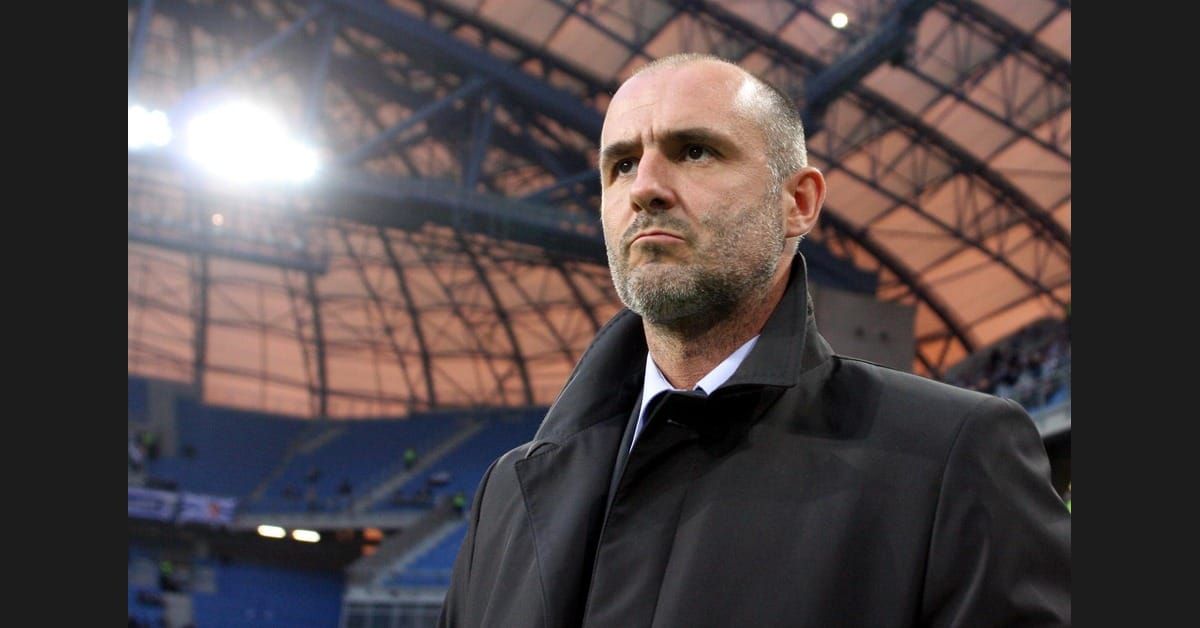
Michał Probierz sits down with Football Agent Lab for a written exchange that runs the length of a twenty-year career — from a young coach taking over a last-place Polonia Bytom in 2005 to the touchline of the Poland national team he guided to UEFA Euro 2024. It is his first conversation with us, and it arrives at a natural pause: his most recent chapter, with Poland, is recently behind him, and he answers here as a coach between roles — open, on the record, to what comes next.
The arc in between is unmistakably a Polish football life, with detours abroad. He built and rebuilt clubs that were rarely the richest in the room — twice at Polonia Bytom, twice at Jagiellonia Białystok, four and a half years at Cracovia where he also served as vice-president for sport — and delivered, from those unglamorous starting points, two Polish Cups, two Polish Super Cups, an Ekstraklasa runner-up finish in 2016/17, and European qualification on three separate occasions. He is also one of the relatively few Polish coaches to have managed abroad, with a spell at Aris Thessaloniki in Greece. Then, having stepped up from the Poland U-21s, he inherited a senior national side mid-qualification and carried it through a sudden-death play-off — Estonia beaten 5-1, then Wales on penalties in Cardiff — to the Euro 2024 finals.
He holds the UEFA Pro Licence, the highest coaching qualification in Europe, and speaks Polish, German, and English. He describes his own football in three words that recur throughout this interview: tactical discipline, youth development, and strong leadership on and off the pitch. But if there is one sentence that carries the whole conversation, it is the one he returns to again and again, and finally names as his motto: no one can be above the team. When our questions turn, late on, toward Korea and Asia — toward K League academies and the single-match knife-edge that Asian national teams so often face — he answers as a youth-development man first, and signs off with a line we have kept for the very end.
Polish Head Coach · Youth Development Specialist · UEFA Pro Licence
MOST RECENT ROLE (2023–2025)
Poland National Team · Head Coach · qualified for UEFA Euro 2024 (via play-off) Poland U-21 National Team · Head Coach · 2022–2023
HEAD COACH TENURES (clubs)
MKS Cracovia (Poland · Ekstraklasa) · 2017–2021 · also Vice-President for Sport Jagiellonia Białystok (Poland · Ekstraklasa) · 2014–2017 · and 2008–2011 Lechia Gdańsk (Poland) · 2013–2014 Wisła Kraków · GKS Bełchatów (Poland) · 2012 Aris Thessaloniki (Greece) · 2011–2012 ŁKS Łódź (Poland) · 2011 Polonia Bytom (Poland) · 2005–2006 and 2007–2008 Widzew Łódź (Poland) · 2006–2007
HONOURS
Polish Cup — 2019/20 (Cracovia) · 2009/10 (Jagiellonia) Polish Super Cup — 2020/21 (Cracovia) · 2010/11 (Jagiellonia) Ekstraklasa — Runner-up 2016/17 · Third place 2014/15 (Jagiellonia) UEFA Euro 2024 — qualification with Poland (play-off) UEFA Europa League — qualification on three occasions (2015, 2020, 2021)
METHODOLOGY
Tactical discipline · youth development & talent identification · crisis and relegation-survival projects · national-team management in short preparation windows · set-piece design · wing-based attacking play · preferred systems 1-3-4-3 / 1-3-5-2
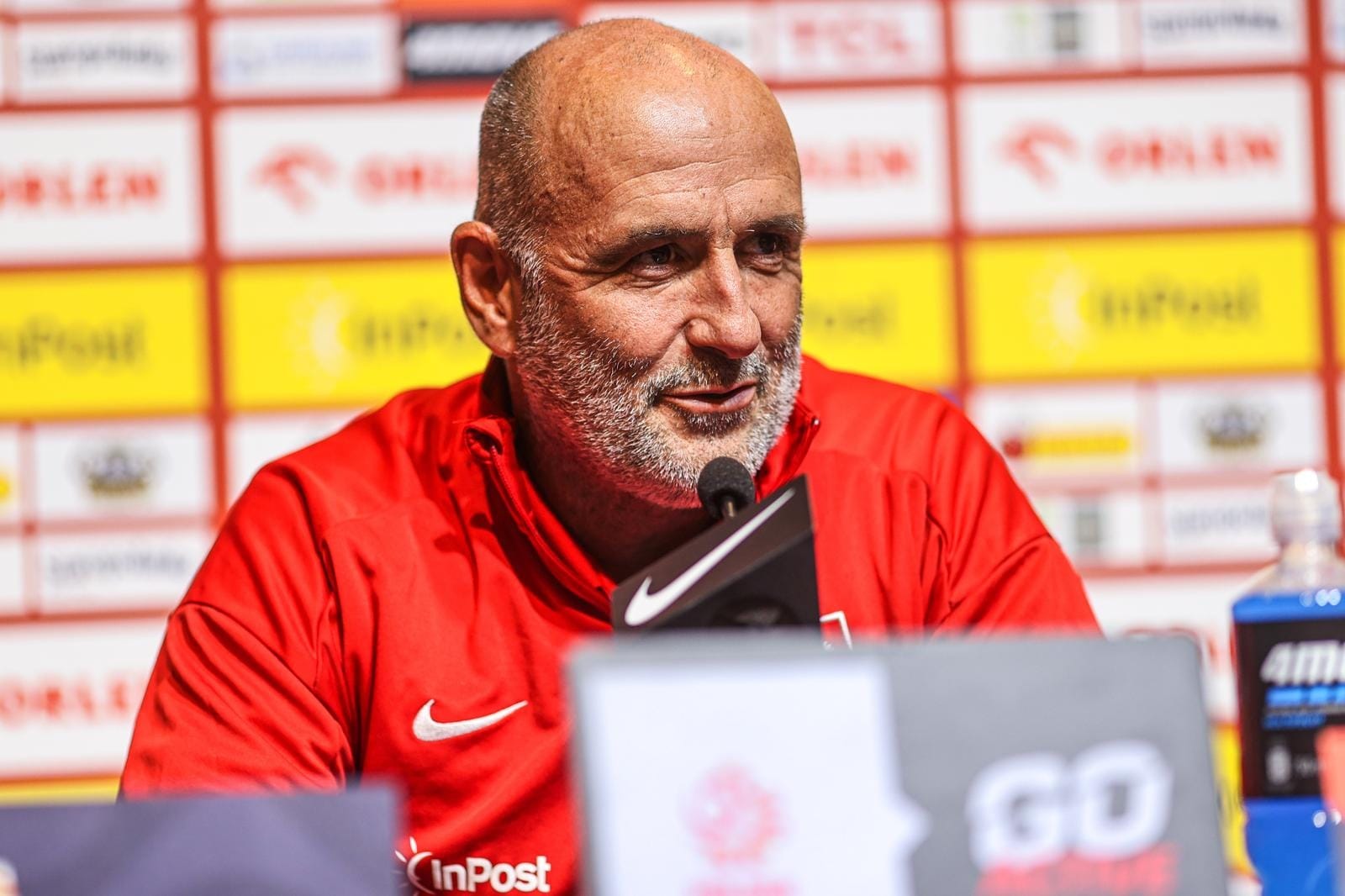
PART 1 · THE TEAM COMES FIRST
In your résumé, you describe yourself as a coach built on three foundations: "tactical discipline," "youth development," and "strong leadership on and off the pitch." All three are values worth having, yet every manager has his own instinct about which one to tackle first upon inheriting a new team. If you had to capture "the football of Michał Probierz" in a single sentence, in what order would you raise these three pillars?
When I was 23, I realized I wanted to be a coach. After completing a coaching course in Germany, I decided to keep playing and finish all the courses so I could work in football. I initially led groups of 10-year-olds, which made it easier for me to learn the coaching profession. Later, when I had my coaching licenses, I coached youth teams and indoor football. Back then, I introduced many tactical innovations among the youth and focused on talent identification. Later, as a playing assistant coach for a few years at Górnik Zabrze and Widzew Łódź, I developed solutions in the context of balancing the roles of head coach and assistants.
The first priority was to establish the team's values and to adapt the tactics appropriately for the team. The second was clear rules functioning within the group. The third was searching for and developing talents in the team. The most important is always the team, and that is my motto.
Your road began at Polonia Bytom back in 2005 and, passing through Aris Thessaloniki, has carried you all the way to the Poland national team. Along the way you have worked in settings of wildly different pressure — the lower reaches of Polish football, the Greek game, and the Euro finals themselves. Across these two decades, we'd like to hear of one belief you have held onto from day one and never surrendered, and — on the other side of the coin — one idea you have set aside entirely as the years have gone by.
Every coach has to adapt to generational change. Every 4-5 years, the coach must change, not the players. Today, in the era of computerization, communication with players is different. At the lower levels, partnership was always important because many people played without money. In youth football, I always focused on individualization. An important aspect for me is the development of players and dedicating time to improve their individual skills.
One thing I have maintained over the years and do not change is discipline, because without it, it's hard to have order in the team. The team always comes first.
PART 2 · DISCIPLINE AND FREEDOM
The term "tactical discipline" is often heard as a kind of control that stifles a player's freedom. Yet there are coaches who argue the opposite — that the tighter the framework, the more room a player has to trust his instincts in the moment. For you, are discipline and freedom at odds with one another, or is discipline the very thing that makes freedom possible? It would be wonderful if you could paint a single scene from a real match in which that balance comes to life.
Regarding discipline and killing individuality, that's only half the truth. In my offense, players have full freedom, but defensive behaviors are a team discipline. How to behave after losing the ball, how to rebuild the formation, how to react in difficult moments.
For example, I once had a player and I warned him not to play offside because they had very fast players. In the 5th minute, he was offside three times, and I had to substitute him in the 7th minute. It's painful for the player, but the player's well-being was the most important. After talking with him and the team, I made them realize that subordinating to the team comes first when it comes to defensive principles. However, in the next match, the player started from the first minute.
In my offense, players have full freedom, but defensive behaviors are a team discipline.
When your team has the ball, what does the crowd in the stands actually see? Are you a side that lures opponents forward with short passing from the back to prise open space, or one that pushes on quickly to threaten the ground in behind? And specifically, in the moment when a team presses hard and high and your build-up is being smothered — are your players trained to keep playing out short in the teeth of that pressure, or do you also arm them with the option to go long without hesitation?
Although one would always like to play very spectacularly in football, it is impossible. There are moments when we want to play short, passing the ball from the back, but match situations sometimes require a change when the opponent breaks through us and we have a problem with ball distribution.
A lot also depends on the footballing potential of the team. You won't play out from the back if you're defending against relegation and taking over the team a few rounds before the end of the season. Sometimes the situation just requires scoring points. My teams have always been characterized by wing-based play and always played to the end, often changing the course of the match.
We're just as curious about the picture when you don't have the ball. Do you want a team that hunts to win possession back high up the pitch, or one that drops into a low block, holds its shape, and bides its time to strike on the break? In a national-team setting, where preparation time is scarce and the opposition is frequently the stronger outfit, we'd ask you to spell out, in concrete terms, the criteria you use to choose between those two roads.
A club and a national team are two different worlds. In a club, when you start working before the season, you can jointly establish a strategy with the people who hire you, choose players for specific positions, and set the team's playing style. In the national team, you come in with a group of players and already determine the tactics and playing style.
In the Polish national team, from the very first day, we had a problem with the lack of a left defender, and therefore from the first day, we changed to a 1-3-4-3 or 1-3-5-2 formation. In this short time, we tried to utilize the strengths of the club players. Initially, due to the ages of the players, some were not playing in clubs, so we had to search for solutions to enable them to play.
We had two key matches right away because I took over the team during the qualifiers and we had to play a playoff to qualify for the European Championships. By winning against Wales, we qualified for this tournament.
At clubs like Jagiellonia and Cracovia — sides never blessed with lavish resources — you still delivered cup glory, a runner-up finish in the league, and Europa League qualification. One might call that the knack of closing the gap through "organization" when the talent simply isn't on your side. When you take on a team that holds the advantage in quality versus one that's up against it, is your game model fundamentally different, or is it the same set of principles applied at a different intensity?
It's true that in the early stages of my coaching career, step by step, I led clubs that usually faced problems. At Polonia Bytom, where I took over the team in last place, we saved ourselves through a playoff and kept the team up. Later, while coaching Widzew, I had many young players, and in the first season, we comfortably stayed in the league.
At Jagiellonia, I started working and built the team from scratch because 20 players left and 20 new ones arrived, changing the team's profile and playing style. However, we faced a problem with a minus 10-point penalty, which was the most difficult moment in my coaching career. There was no margin for error, and from the very beginning, we had to catch up on points.
Cracovia was also a time of great changes, but we won the Polish Cup and played twice in the cups. These teams were then characterized by great character and very good organization of play.
A league season is a 38-round marathon, whereas the Euro qualifying play-off in which you carried Poland to the finals was a case of everything riding on one match. We'd imagine the discipline that produced your 2016/17 Ekstraklasa runner-up finish was of a different grain to the discipline you called upon in that sudden-death shoot-out. Could you set the two side by side and explain how the discipline of a long league campaign and the discipline of a single, decisive night are drawn up differently in your mind?
The play-off was truly a game of truth and a small margin for error. We knew that after winning the match against Estonia 5-1 at home, we faced a very difficult task in Wales, where the fans are the 12th player. We prepared ourselves by training with the energy of the Welsh team and knowing what awaited us. We were well prepared tactically and we withstood the penalty shootout mentally.
There are many phases in the league season: injuries, weather changes, so you always have to be properly prepared for the season. You look for new solutions, young players playing in the club, and do everything to avoid losing streaks. This demotivates the team.
Picture 2–0 up with twenty minutes of the second half remaining — and then the same stretch of the same game at 0–2 down. It is the identical passage of play, yet the team wears an entirely different expression. And the sight of a side retreating to guard a lead only to hand over the momentum is one football repeats time and again. At 2–0, do you become a team that "shuts the game down" or one that "keeps on dominating" — and what do you base that call on?
This is a frequently asked question: why does the team start to play only after a 0-2 deficit? At that point, many players let their barriers down and realize that there are no longer such severe consequences for mistakes. They also try to take more initiative in the game. When you lead 2-0, it often already feels like you have the match won. Players then limit their attacking moves and try to keep possession of the ball.
I had an example of a match against Lech Poznań while working with Jagiellonia, where in the Polish Cup we were losing 2-0 after 5 minutes and had to interrupt the game briefly so that the players could recover from this shock. We managed this maneuver because, after 13 minutes, the score was 2-2. In the end, we lost after extra time 3-2.
Across your years in club football, you'll surely have won plenty of tight ties through set pieces in one competition or another. Set pieces are also one of the few weapons with which a resource-limited team can topple a stronger one. Do you treat set pieces as a secondary strand of team training, or do you build them as a pillar of the match plan in their own right? We're keen to know how you actually divide up the time you give them.
In today's football, an opening goal is often crucial for the outcome. In my career, I have played many matches where proper preparation of corner kicks or free kicks determined the final result of the game. We usually have several variants that we execute, but we also often prepare solutions tailored to the specific team.
In one match, we knew that one of the players was always late, so we played all corners and free kicks in the sector where he defends, and we scored a goal this way, winning the match. This is a very important aspect of modern football. It is also important to remember that the defensive aspect is equally crucial, and one must adapt a resilient style of defending to the team's specifics.
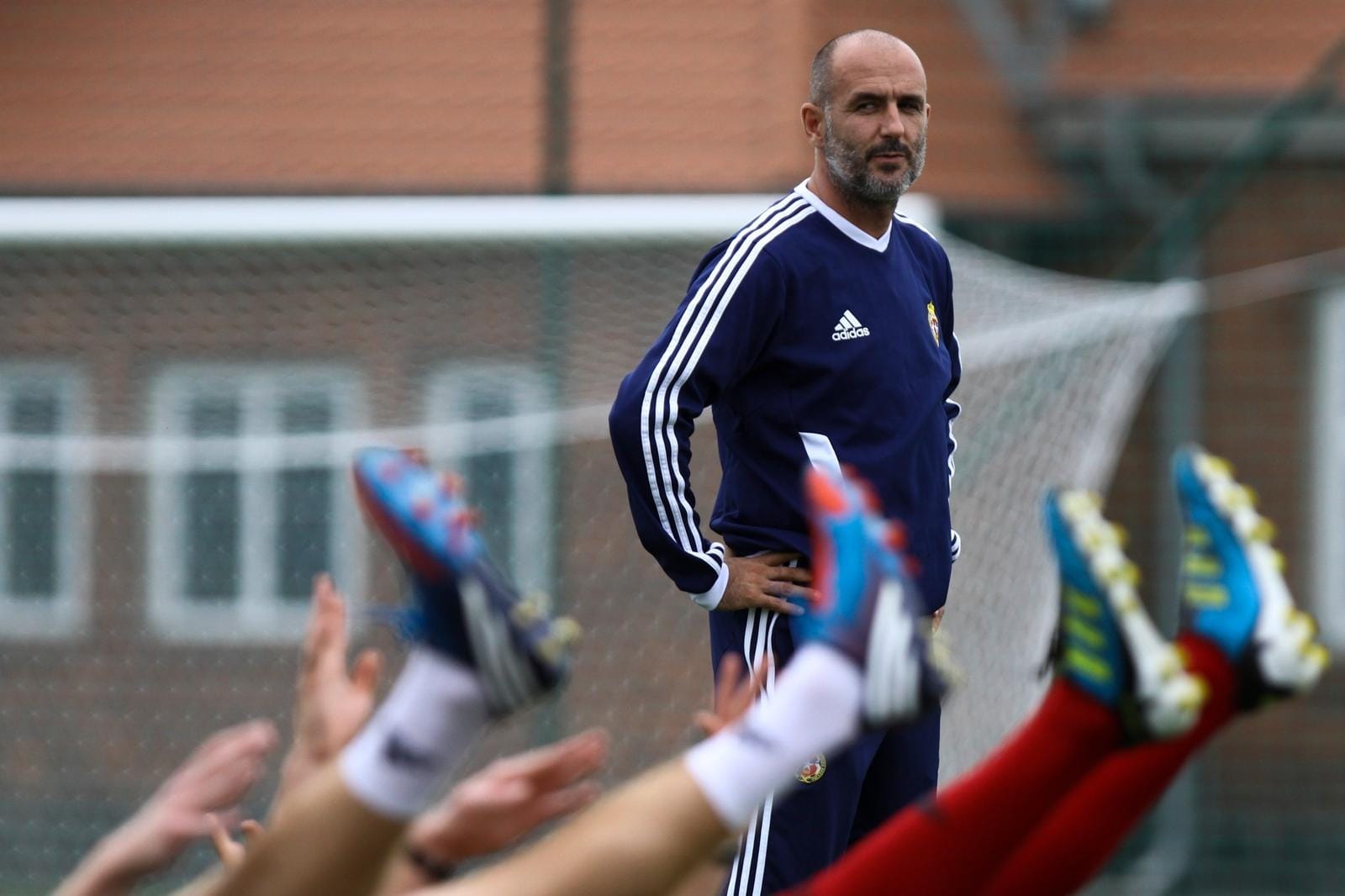
PART 3 · METHOD AND INSTINCT
You have taken an unusual route, stepping up from the U-21 side to the senior national team's dugout. When you're lifting a young player to full international level, what do you look to plant first — tactical understanding, the right competitive attitude, or the mental steel to carry the weight of the national-team stage? Show us the very first move through which your "youth development" philosophy actually takes shape on the training pitch.
Indeed, transitioning from the U-21 team to the senior national team during the qualifiers was difficult. Introducing players was also challenging because I knew that the U-21 team had been built over a longer period. However, there was a group of players who made their debut and were gradually integrated into the senior team. First and foremost, I had to assess whether the player could handle the pressure of playing in the senior national team and whether they fit tactically within the team. The introduction at that time was easier because we played in the same formation.
An example was Kacper Urbański from Bologna (at that time), who was a player that, after playing a few matches for the U-21 team, was one of the best players at the European Championship. I knew we needed a player who has no complexes, can play 1v1 in offense, and likes to have the ball. He fit perfectly with the team's style then, and it's a pity he's now out of the game.
A club coach can drill his players for hours on end, day after day, whereas a national-team coach has to assemble a side within a handful of days of the squad reporting. We're curious how you condense the methodology of repetition, honed over long years in club football, into the narrow window of international duty. When time is desperately short, could you separate the training element you're first to drop from the one you refuse to give up under any circumstances?
At the club, we have time for preparations and proper tactical readiness. We have phases for introducing elements of play and a few friendly matches.
From the first day in the national team, we had many individual talks, and the players arrived already prepared. We regularly held individual briefings with players about what they should work on, what they can improve, and how to develop as players. During matches, I looked for ways to incorporate how they play in club teams so as not to constantly change formations. In the national team, there was a period when 7 players from the starting lineup played in a similar formation at their clubs. Of course, with coaching changes at clubs, the playing style often also changed.
When you break down an opponent, does the weight fall on erasing their strengths, or on getting the most out of your own? Ahead of a must-win one-off like a Euro qualifying play-off, could you take us through — almost like a single scene — the process by which you and your staff dissect the opposition and boil it all down into one match plan?
The game is changing, and I remember my first independent work back in 2005. I was the one analyzing, searching for fragments, cutting matches from tapes. Now, teams of people are responsible for analysis, along with computer programs and platforms for game analysis. I believe that the art nowadays is to extract the right amount of information from all these analyses.
You can effectively eliminate the opponent's strengths, but there are also the player's predispositions or whether they can do it. For example, at the European Championships, we wanted to double up on and cut off Gakpo from the game in the match against the Netherlands. We partially succeeded, but we had many problems with that.
It's important how analysts prepare specific cuts where you can match the team's style to the opponent. However, I often look for solutions that give players a choice in offensive options. Schemes are only used in difficult moments, for example, when we can't break through the opponent.
Modern football keeps drifting toward a world in which data and video increasingly stand in for a coach's gut. We put this to you, a man who has stood on the touchline for more than twenty years. In the calls you make from the bench during a game, when instinct built up over the years and real-time data point you in opposite directions, which way do you lean? And if there was a moment when that decision proved right — or left a scar — we'd love to hear it.
I disagree with this opinion, I think sometimes we rely too much on data. For example, I often hear from analysts that a player shouldn't play because they have poor passing statistics, but I ask? Okay, but how many times does this player pass forward, which is crucial in football, compared to a player who constantly passes backward?
I prefer a player who looks for forward play, who accepts the ball forward, and who has the initiative to play forward. I always protect and value such a player. In the Polish national team, such a player was Piotr Zieliński.
However, changes often also result from injuries, which not everyone on the outside understands. I had a match with the national team where, a day before the game, after the warm-up, we lost one player. During the warm-up, the second at 20 minutes, the third at 45 minutes, and already when we were coming down during the break, we had huge problems. These are the choices made by the coach from the sidelines; you can't predict these.
I prefer a player who looks for forward play, who accepts the ball forward, and who has the initiative to play forward.
PART 4 · CLEAR RULES
You single out "strong leadership on and off the pitch" as a core strength. Yet the leadership demanded by a national team — where men who are already leaders at their own clubs come together — carries an entirely different weight from that of steering a young squad at a club like Polonia Bytom or Jagiellonia. When a veteran's pride runs up against the team's discipline, how far will you meet him halfway, and at what point do you hold the line on your principles?
I know from experience that everyone prefers clear rules in teams or national squads. Football players do not like it when there are no clear rules. It's easier to demand from the players then. We must also remember what I said earlier—that times are changing and we need to be able to adapt to the players, not the other way around. An example with phones, color schemes, hairstyles—these must be accepted by us as coaches.
However, there are limits set by the coach, and these should be respected. Punctuality, responsibility, and knowing that the team is the most important must be maintained. Only the team achieves success; this is not an individual sport. However, with outstanding individuals, we can give them more freedom, but they must give something back to the team in return.
In the dressing room, are you closer to a coach who has already made up his mind and sets about winning the players over, or one who listens to their voices first and leaves the conclusion open? Particularly in a place like the national team, where strong-willed leaders all gather under one roof, please bring to life — through a concrete scene — your own way of pulling many directions into a single one.
I talk to players and we often look for solutions. I have no problem when players have some issue. It is natural in a club or national team. Sometimes, players' arguments come to me and we look for solutions together. Players also often agree after a conversation, and decisions are made for the good of the team. For me, the team and its welfare are always the most important. Over the years, I know that all the decisions I made were for the good of the team.
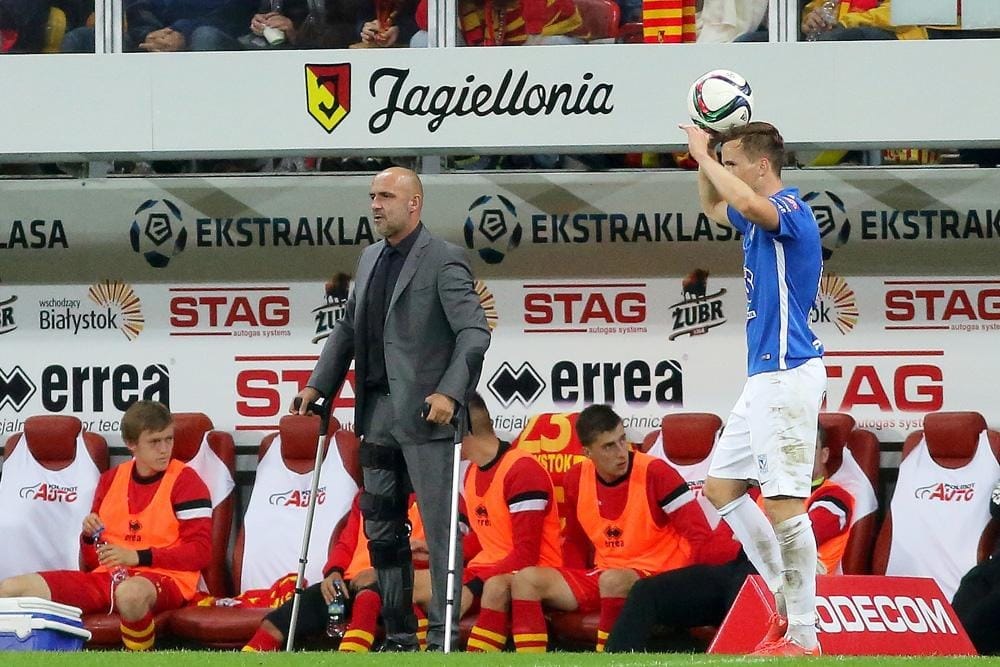
PART 5 · THE PACKED SUITCASE
Your record glitters with titles and runners-up medals, but it also holds a few brief stops between 2011 and 2013 — Aris Thessaloniki, Wisła Kraków, GKS Bełchatów — postings that came and went in a flash. What is the biggest lesson those moments, when the results wouldn't come and you had to walk away, have left with the coach you are now? Did the decisive line between the stages where you fell short and those where you succeeded lie within you, or in the surroundings?
Throughout my career years, I've faced various situations, and every coach learns from each of them. I've worked in different environments, and the ability to adapt to the workplace is very important. I still keep in touch with people from many clubs.
There was a time when many clubs faced financial problems, and I left because there was no longer a way to motivate the players. However, there were also clubs where a certain cooperation rule was exhausted. I always value employers and have never had issues with returning to a club.
I worked twice at Polonia Bytom, twice at Jagiellonia, for three and a half years each. At Cracovia, I spent four and a half years, also serving as vice president for sports. Every coach in the world, when signing a contract, already has their suitcase packed in the right hand.
Every coach in the world, when signing a contract, already has their suitcase packed in the right hand.
When a game refuses to go to plan and is already unravelling in the first half, are you the type to rip up the system itself at the break, or the type to simply crank up the intensity of execution and press on with the original plan? In that moment when you have just 45 minutes to turn a team around, please unfold, as one real scene, the first thing you reach for.
Matches are phases, and the break is a moment for changes. You can't be predictable to your players; you need to surprise them, and this is how you can change the course of a game. Sometimes, a substantive conversation helps in understanding the situation.
Today, there are two stages during the break. The first involves showing on the screen what is good and how to utilize two or three elements of the game, then what to eliminate. Then, mentally rebuild the team when losing, maintain concentration when leading. The break often changes the course of a match.
There are also surprising situations, where, for example, at the end of the break, the physiotherapist says that a certain player cannot play anymore; you need to quickly make a decision and prepare the player and the team mentally. I use a method where, during the initial phase of the break, all players go to the locker room so they can also watch tactical video elements.
PART 6 · KOREA AND ASIA
The path in youth development you have travelled chimes closely with the direction of K League clubs, who have lately been ramping up their academy investment. Even so, lifting a development model built over long years in Europe and dropping it straight into a different football culture is far from simple. If a K League club asked you to design its youth system, how would you draw the line between what could be transplanted from the European approach as it stands, and what would have to be reshaped to fit local conditions?
I personally find it much easier because I have coached children, youth, and adults myself. I understand the structure from coaching all age groups. At Cracovia, when I was a coach and vice-president, we built one of the best training bases in Poland and developed a model for the functioning of the academy. Many players are already starting to play at the European level.
Academies in clubs are key to success. Only good coaching staff and the right training base can help in introducing players to senior football. Without suitable pitches, we cannot develop an appropriate player model.
The second most important aspect is the individualization of the player's training and development. The third is psychology today; in the age of information overload, we must be able to distinguish good from bad information and utilize the good ones.
Your experience of coming through the Euro 2024 qualifying play-off could offer real, usable guidance to Asian national teams that have so often come up short at the single-match crossroads of the World Cup and the Asian Cup. If you were advising Asian coaches on your own principles for preparing a game with no way back — say, how you settle the squad's mindset and where you place your tactical priorities — what would you put right at the top of the list?
Players observe and do not always speak. In a group of about 30 players, they catch every moment of the coach's indecision or lack of preparation.
The key, in my opinion, is always being oneself and not imitating others. Often, not being oneself looks strange. Personally, I have my own rules that I adapt to changing trends but not to changing being myself. I am always myself, and the team is the most important to me.
Therefore, I wish Asian coaches good luck, good choices, finding their own solutions, and being themselves. An equally important element is luck; one missed penalty can change everything. After a defeat, you also need to be yourself, and that is a trait of a person, not a coach.
PART 7 · NO ONE ABOVE THE TEAM
From a young coach at Polonia Bytom to the mastermind who took Poland to the Euro finals, your twenty years have amounted to one long journey. So what is the vision and the goal you now hold for the road ahead? Toward which stage is your next challenge pointing, and one day, as what kind of coach — one who left behind what kind of football — would Michał Probierz wish to be remembered by supporters and by the younger coaches following in his footsteps?
I'll start from the end: the goal is to inspire future generations in football and help in their development. In the Polish federation with director Marcin Dorna, who is a man helping many players and has created the Talent Pro program, where three times a year, talented youth meet, including my own participation, observing the development of young players. It is an excellent project where the best players regularly meet and seek challenges together. Coaches develop them through individual approaches, and they draw inspiration from each other. As coaches, we need to help them in this.
I believe many exciting challenges still await me, and I will also be able to help coaches in their development. Often at various conferences, they ask about the path in coaching development, and I repeat one thing: being yourself and finding your own way as a coach. You can follow trends, watch tactical innovations, but with a player or an agent, you have to be yourself. Many coaches who have worked with me are now independent coaches; I root for them, and I know I have trained many good coaches but also good people.
For me, the most important thing after all these years of work is that people know I am a man of principles, and the most important thing for me is the team. That's probably my motto: "no one can be above the team." Greetings to Asian football, and maybe our paths will cross someday.
"No one can be above the team."
CLOSING
Twenty answers in, what stays with you is the repetition. The team is always the most important. He says it in the first answer and the last, and four or five times in between, until by the end it has stopped being a phrase and become a method — the thing every other decision is measured against. The offside substitution after seven minutes, the veteran asked to give something back before he is given more freedom, the analyst overruled because a player passes forward: all of it resolves to the same sentence. No one can be above the team.
Around that spine sits a coach who is precise about the craft and unsentimental about the trade. He can tell you exactly why a side that leads 2-0 stops playing, and exactly how he attacked the zone of a defender who was always a step late. He also knows what the job costs. Every coach in the world, when signing a contract, already has their suitcase packed in the right hand — a line that reads, from a man who has managed thirteen clubs and two national sides across twenty years, less as cynicism than as clear sight.
He is fifty-three. He holds the UEFA Pro Licence and speaks three languages. He has two Polish Cups, two Super Cups, an Ekstraklasa runner-up medal, European qualification three times over, and a Euro 2024 finals qualification earned on a night in Cardiff that came down to penalties. That most recent chapter, with Poland, is behind him, and he is between roles — open, as he puts it, to the next challenge, and clear that he still believes many of them are ahead. When our questions reached Korea and Asia, he answered as the youth-development man he has always been, and left the door ajar himself: maybe our paths will cross someday. Football Agent Lab will be watching where the next one takes him — with a quiet hope that the road, one day, runs east.
ABOUT THE AUTHOR
SEOK LIM Editor · Football Agent Lab
FIFA-licensed football agent and steel market analyst with over a decade of experience in commodity research. Football Agent Lab publishes interviews and market reports at the intersection of football, agency work, and global markets.


