Initiative, Chaos, and the Coach Who Reads the Game — Ki-hyun Kim
One of the few Korean voices in the series, Ki-hyun Kim reads a match like a text. From German youth academies to a Gwangju FC analysis room, the coach-analyst joins Football Agent Lab for a written exchange on initiative, chaos, and why football's future belongs to interpreters, not providers.
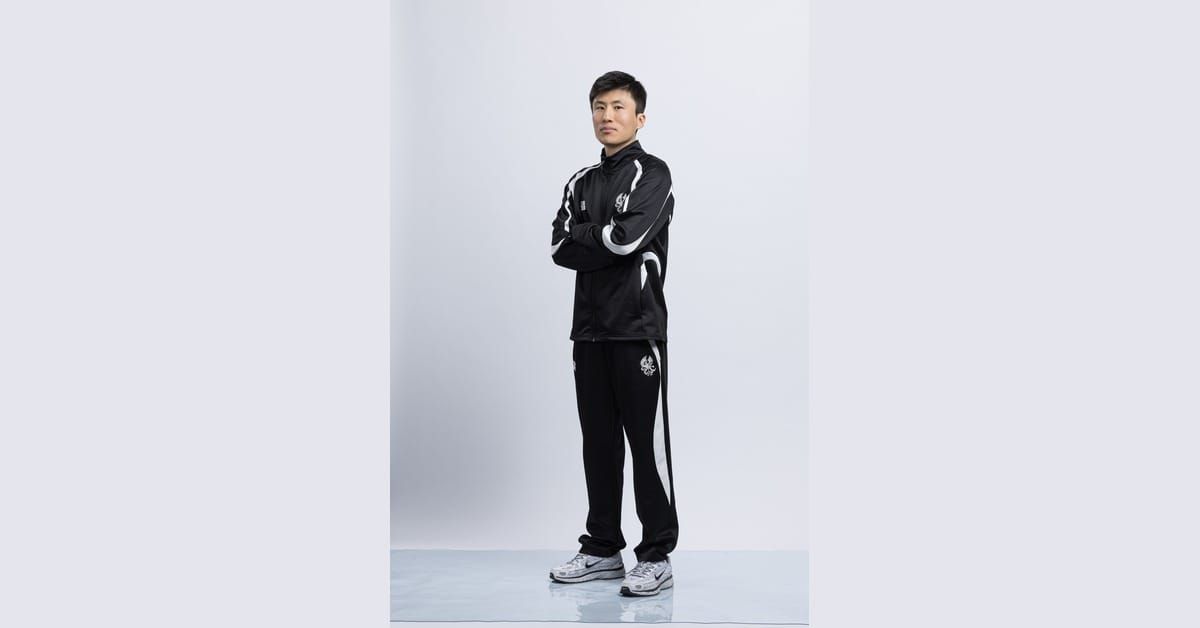
Ki-hyun Kim reads a football match the way some people read a text — looking past the scoreline for the thousands of smaller battles inside it, and for the one or two that actually decide things. He is one of the few Korean voices to appear in this series, and his path is an unusual loop: from youth-academy stints in Germany, at Carl Zeiss Jena and Rot-Weiß Erfurt, to physical and research work with Korean youth national-team players, to a tactical-analyst post at Jeonbuk Hyundai, a coaching year at Mokpo U-15, and now an analysis-coach and scouting role at Gwangju FC. It is his first conversation with us, conducted as a written exchange.
What makes the conversation unusual is how much of it is architecture. Kim works from a self-built "football coach's handbook" — seven interdependent parts, from character and game model to a "team culture dictionary" — and he is unafraid to bring the theory with him: Daniel Memmert's four types of attention, Juanma Lillo and Carles Planchart on what to discard, Ortega on the self and its circumstance, Zajonc on repeated exposure, Cruyff on who the real leader is. His game model even makes a formal place for chaos — the stretch, he says, "from the moment balance breaks until the moment we recover it" — because most of a match, at most levels, is not balance at all. Throughout, he resists the label pinned to him: "I think as a football coach rather than as an analyst."
If one idea runs under all of it, it is a warning about his own trade. Supplying objective data, he argues, is a technical task — and "there's a strong chance it will be replaced by AI within the next few years." What survives is the human part: choosing which data matters and interpreting it. The football people of the future, he says, "will only survive in the market if they become interpreters rather than providers." And yet the register is not grand. He runs Trainer Talk Net, has lectured as an adjunct professor, and wants to leave a single handbook — a "solution of solutions" — for the coaches who come after him. What he hopes for, in the end, is smaller and stranger than a legacy: to be forgotten well.
Football Coach & Analyst · Youth Development · Scouting
CURRENT ROLE
Scout · Gwangju FC (K League 1) · 2026–present
SELECTED CAREER
Trainer Talk Net — founder; tactics, training, analysis & coaching consulting for professional players and coaches · 2018–present KBS Institute of Sports Arts and Sciences (Seoul) — Adjunct Professor · 2026 Gwangju FC — Analysis Coach · 2025–2026 FC Mokpo U-15 — Coach · 2025 Jeonbuk Hyundai Motors — Tactical Analyst · 2023–2024 BEPRO — Physical trainer & football research, Korea youth national-team players · 2021 FC Carl Zeiss Jena (Germany) — U19 Video Analyst · 2019–2020 FC Rot-Weiß Erfurt (Germany) — U10–15 training internship · 2019
FRAMEWORK & WORK
Author of a "football coach's handbook" — seven interdependent elements: character, football philosophy, game model, training model, coaching model, learning model, and team-culture dictionary Game model including a formal "chaos" phase · the F4 principle (Fall Forward · Fail Big · Fire · Fun) · training paradoxes: "repetition without repetition," "coaching without coaching," "decision without decision"
LICENCE
UEFA B Coaching Licence
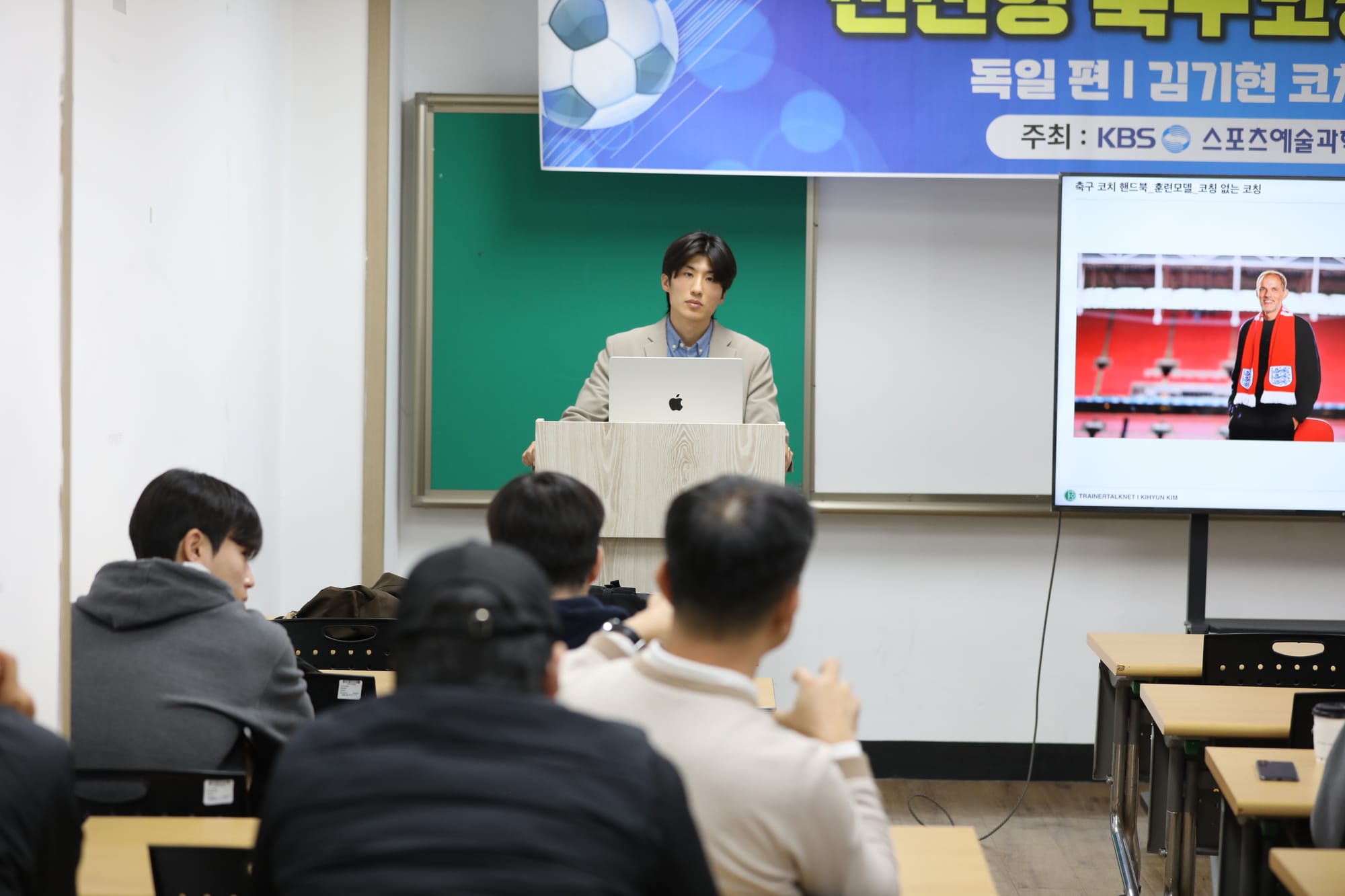
PART 1 · TAKING THE INITIATIVE
If you had to distill the football philosophy of Ki-hyun Kim into a single sentence, what would that sentence be? And when that sentence comes alive on the pitch, what does it look like — could you paint one scene for us?
My philosophy about football itself is simple. I believe the saying that "a good tree bears good fruit, and a bad tree bears bad fruit." That holds true for coaches and players alike.
My core philosophy about the game is to take the initiative. Taking the initiative doesn't only mean keeping the ball and playing a half-court game in the opponent's territory. I believe the idea of taking the initiative has to begin in our own thinking. It's less "the opponent presses us" and more "we create the opponent's press." The same is true in defense. We should start from a position where we've already read and shut down one of the opponent's options, and then anticipate their other option and look to win the ball. In other words, taking the initiative means we are always thinking through more possibilities than the opponent is.
The picture that comes to mind is players on a green pitch, a cool breeze blowing, moving through the game faster than their opponents, with conviction in their eyes.
In the opening chapter of your handbook, you write that "every perspective on football begins with the thinking self." Yet the world of the analyst is usually seen as the domain of objective data and numbers. How do these two work together — the subjectivity of the "thinking self" and the objectivity of data?
The first thing I should say is that I don't confine my role to that of an analyst. I think as a football coach rather than as an analyst. That's why my handbook is not an analyst's handbook but a football coach's handbook.
Whether in football or in anything else you take up, I believe every perspective begins with the thinking self. Each of us carries our own framework of thought and perception — a schema, a window through which we see. From the moment the self is formed, a new self is continually being made through events and experience. Through football I become a new self, and my way of seeing football is renewed as well.
Data isn't only numbers; it's also the situations that arise in a match. A situation on its own is objective. But the moment you interpret it, it becomes subjective. It's simple: at 1–0, one person will want to protect the lead, another will want to score again. The objective situation and the number — 1–0 — are the same, but the way each person reads it is different.
When a match ends, a scoreline remains — the result of the battle. But within a single match there are thousands, tens of thousands of smaller battles. One person might identify every event as a battle; another might ignore them. Among those countless battles, I look for the ones that truly matter, and I work out how and when to move in order to win them. That is the standard by which I read a match.
There's a phrase I often share with Coach Moon Se-yun of Mokpo U-15, whom I deeply respect: "the winning foot" and "the winning position." I try to find those moments, turn them into training, and bring them to life in matches. Suppose we win 1–0. That result might be the product of chance — a single decisive battle won even as we lost countless others.
What I want is to win the many battles within a match consistently. At youth level especially, I think it matters even more to win the countless battles that go unseen. When that happens, players build their own playing model, and on that foundation they can perform consistently, without the peaks and troughs.
I've thought a great deal about numbers, too. During my time at Jeonbuk Hyundai, I worked closely with BEPRO to design data tailored to the team in fine detail. In the end, though, I found I mostly used data either to confirm what I was already trying to interpret, or in its most essential, simplest form — not much beyond that. Perhaps that's because I was more absorbed in reading the game than in the numbers themselves.
And crucially, providing objective data is a technical task. I'd go further and say there's a strong chance it will be replaced by AI within the next few years. But choosing which objective data to use, and interpreting that data, is a humanistic skill. This, I believe, is where the gap between AI and humans will be greatest. The football leaders of the future — analysts and coaches alike — will only survive in the market if they become interpreters rather than providers.
The football leaders of the future — analysts and coaches alike — will only survive in the market if they become interpreters rather than providers.
PART 2 · ORDER AND CHAOS
In your handbook you define the game model as an "a priori form," and you divide it into attack, defense, attacking transition, defensive transition, set pieces, restart balance, and chaos. It's the item "chaos" that stands out — most models deal with order, yet you've brought chaos in as a formal component. What does that moment of "chaos" actually look like during a match, and how does the game model embrace it?
The truth is, it hasn't been all that long since everyone started talking about organized football and fixating on balance. In youth football, rather than staying aligned, organized, and balanced throughout, the game is chaotic, with frequent transitions between attack and defense. It's the same in the amateur adult game. When you compare the highest level of football with everything below it, the moments when distances stay tight — the settled phases — are fewer than you'd think. Which means most moments are not moments of balance but of chaos.
So what does it look like when balance breaks? We want to hold our balance throughout a match, but there will always come a moment when things slip out of control. I call the stretch from the moment balance breaks until the moment we recover it "chaos." If you review Korea's match against Mexico at this World Cup, the situation when Kim Seung-gyu and Lee Ki-hyeok collided and conceded was not a settled phase at all. In fact, I think that scene is one of the clearest examples of chaos.
Recovering balance means stabilizing our own system. But if you aim higher, it means stabilizing our system while destabilizing the opponent's at the same time. In those moments, I think the key elements are individual quality, the ability to win loose balls, and communication.
Your definition of "game model = a priori form" reads as if the team's form already exists before the match begins. And yet a player is also someone who makes spontaneous decisions moment to moment. Between the form given in advance and the improvisation of the pitch, what does it actually look like when a player has "embodied" the game model? Could you paint it through the instant a single midfielder receives the ball?
The game model is the concrete form of a way — and a set of ideas — for interpreting the game. Everyone sees a match differently. Even watching this World Cup, the fellows with their arms folded, munching snacks and offering their two cents, and the football people of the world actually on the ground would each have read the situations, and imagined the solutions, differently.
To put it more bluntly, the game model is a false reality — a world that coaches and players build together by believing it exists. But for the game model to truly work, we have to treat it not as a false reality but as a real one. And above all, we have to genuinely believe in it.
There are two kinds of game model. One is the archetype the team maintains over time. It's made up of universal principles, and over long stretches it shapes players to play in a particular way, until they finally hold their own criteria for judgment. The other is an activated form applied to a specific opponent or match situation — a temporary variation at the level of the match plan. Such variations are grounded in the archetype, but certain principles are emphasized and reinforced to suit a particular context. Before preparing for the match-plan level, players first have to embody the archetype we want to play.
I think even the smallest choice of words makes a difference. A midfielder is not a player who receives the ball but a player who links it. So receiving and giving have to happen at once, and the player has to set his body position for the next connection in advance. Of course, that doesn't always mean opening up toward the opponent's goal to receive. Sometimes you can shape your body and orientation toward your own goal and still find a way to progress forward. There's a piece of coaching language you hear all the time on the pitch: "Decide and think before you receive the ball." But rather than that, I tend to say, "Your thinking about giving has to be faster than your thinking about receiving." By naming the pass before the reception at the very start of the sentence, I've planted an implicit priority in the player. When that happens, the player can naturally control his orientation from a place of intention.
In your tactical materials, you break the "4-2-4" structure into three lines — B3, M3, F3 — and lay it out step by step, numbering everyone from the goalkeeper through the No. 6, No. 8, No. 10, and the wingers. Could you set the stage for the moment the first build-up pass is released — who moves first, and where the advantage is created?
In the context of proactive football, pressure is not something you suffer but something you create. If the opponent decides to set up and defend high up the pitch, the size of the spaces will change depending on how we position ourselves.
If the No. 6 positions near our penalty box and an opposing midfielder follows him, the space between that midfielder and their defenders grows. Conversely, if the No. 6 positions closer to the center circle than to our own goal and the opposing midfielder follows, the space between that midfielder and their forwards grows. And if the opposing midfielder doesn't follow at all, then space opens up for our No. 6.
I actually think the thing that separates world-class football from the rest is surprisingly simple. Many people explain their philosophy and their football in elaborate, nicely named detail, yet often leave out the one thing that matters most. Many players choose the way not to lose over the way to win, and often don't know what to do when they aren't being marked.
Fundamentally, players have to be able to play a sharp pass into the middle. Midfielders have to be able to operate behind the opponent's line of sight rather than in front of it — inside the opposing defensive block, not merely "receiving" the ball but "linking" it. Forwards have to be able to beat their man one-on-one. I believe 4-2-4 is the structure that lets you train all of these at once.
Now, let's say the opposing forward starts to press quickly. In that instant the No. 6 takes up a positional advantage and then plays a pass in the opposite direction to the press. That lets the center-back look forward free of pressure, with several passing options at his disposal.
The player in possession decides in a split second: whether to be the one who turns himself, or to pass to a teammate who has turned. In the end, the criterion is that "we" turn — and that, in order for "us" to reach the opponent's goal effectively, we ask who should have the ball in this very moment.
PART 3 · FALL FORWARD
In your handbook you define a team as "a living, moving organism," and you gather a team's language, behavior, standards, history, and rituals into a "team culture dictionary." If the game model is the tactical skeleton, the culture dictionary sounds like the blood running through it. What would the first week of writing that "culture dictionary" look like at a club you've just joined — could you paint one scene?
Culture is what connects people, and to connect people you need a common denominator. As I mentioned earlier, an objective event exists, but the moment it's interpreted it can become subjective. Everyone's framework of perception is different, and to bind those frameworks together and unite them, you need a shared language. When people witness a situation, they have to be able to reach for the same words.
Just as tactics and training have structure, thought can be structured too. I see building the overall structure of thought as culture — or you might call it the spirit of the team. One of the core principles of my team I call the F4 principle.
Fall Forward — fall forward. Fail Big — make big mistakes. Fire — carry a flame and lift one another up. Fun — enjoy it.
"Fall forward" means don't fall backward — even when you fall, keep the mindset that lets you move forward again.
"Fail big" is the paradox that risk only shrinks once you've lived through it. Avoid risk and it stays forever an unknown. But the more you experience it firsthand, the more you can find opportunity within it. This isn't simply permitting mistakes — it's about finding the opportunity inside them.
And I'd love for everyone to carry a flame inside and pass it to one another. They say people can sense, just from the smell of someone's sweat, something of what that person is feeling. That's why I tell my players to give off the scent of passion and to keep the flame in their hearts burning.
"Have fun" doesn't simply mean enjoy yourself. I see it as being about a way of thinking.
Let me give one example. The Mokpo U-14 players back in 2025 weren't as striking as the previous generation in terms of individual talent, but they had a special power to come together as one. So when the team's focus was high, both on and off the pitch, I think they showed a truly beautiful side as a team. During an important match, I substituted the U-14 captain for a player a year younger. I wanted the players to understand a substitution not as someone coming off because he isn't good enough, but as someone going on to create a different kind of influence. Still, that boy surely wasn't entirely happy about it. And yet he calmly passed on to his teammates everything he'd felt and observed in the first half. Watching him, I was taken aback — because I don't think I could ever have done that myself. I teach my players, yes, but that was a moment when I felt in my bones that they teach me too.
In your training model you set three paradoxes side by side: "repetition without repetition," "coaching without coaching," and "decision without decision." These may sound contradictory, but they're surely refined principles of training design. When "coaching without coaching" is actually at work on the training ground, what does Ki-hyun Kim the coach do — and not do? Could you paint it through one scene of a single session?
A football coach's handbook is made up of character, football philosophy, the game model, the training model, the coaching model, the learning model, and the team culture dictionary. These seven elements aren't independent of one another — they're interdependent.
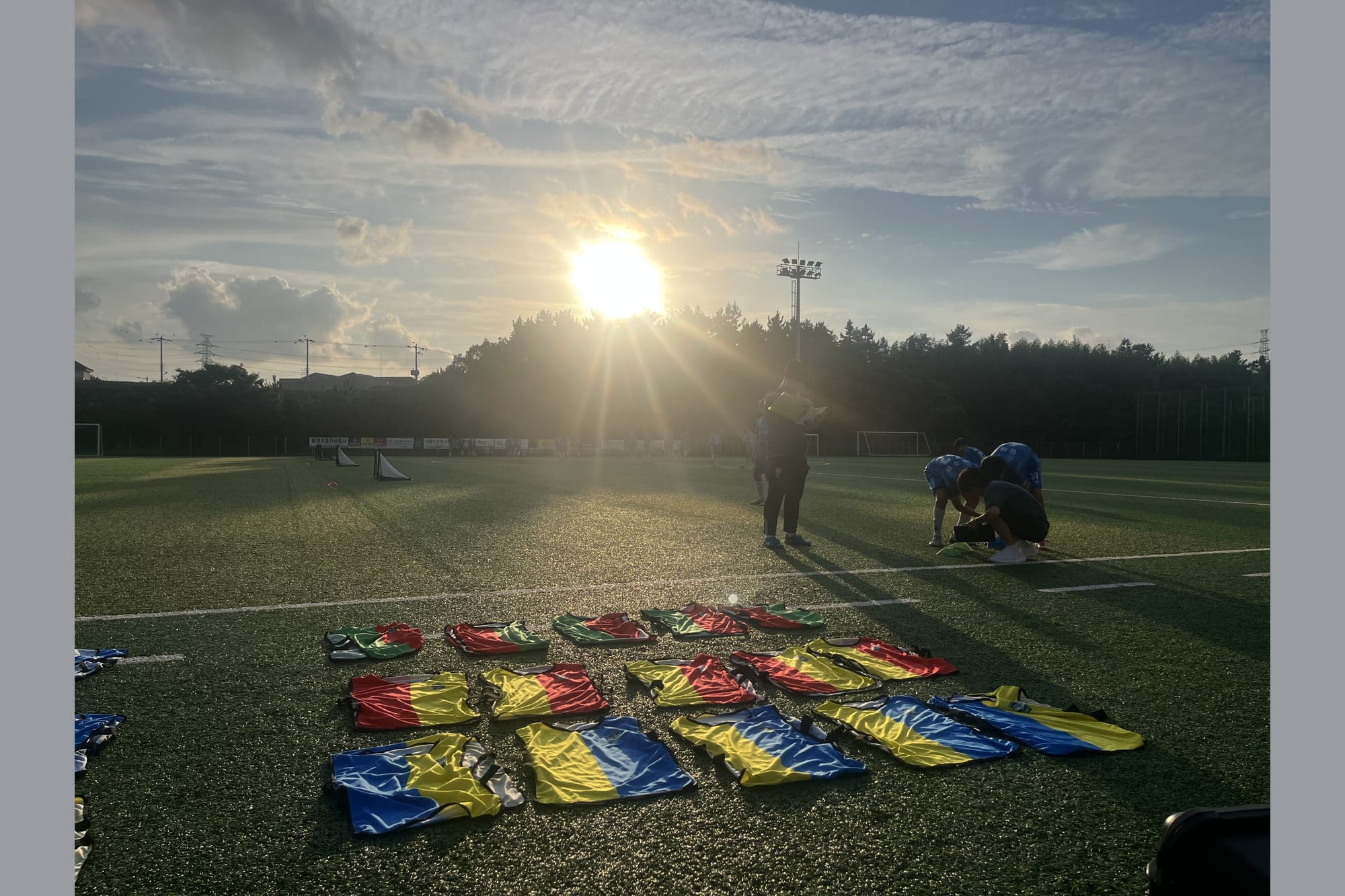
When I say "repetition without repetition" in the training model, I mean repeatedly learning the universal principles that make up the game model. You learn the same principle again and again, but by shifting the situations and conditions little by little, you apply and learn that principle across many different contexts. Coaching has two forms — implicit and explicit — and the key is to regulate the ratio between them. Rather than increasing explicit coaching, I design the training environment itself so that players learn on their own, raising the share of implicit coaching; that's what I call "coaching without coaching." The other idea is "decision without decision." It's not the player deliberating consciously for a long time, but the environment allowing decisions to be made quickly and naturally.
Of course, there are moments when implicit, environment-driven coaching isn't enough. In those moments you need explicit coaching, in language simple and clear enough for anyone to understand.
In designing your "half-and-half bib" drill, you built it up meticulously — from stage one, where the player in possession passes with the foot matching his own color, all the way to the different-color, three-player, and four-player passing stages. And you described it as "applying instability to the player's mental, cognitive, and creative structure, then growing it through overcompensation." How does that "instability" show in a player's face and in his play — could you unpack it through one scene on the training ground?
Before the rondo became famous, most teams didn't do it. But once the rondo grew familiar to everyone and settled in as a basic exercise, beyond a mere trend, now almost every team does it. Whether it's a rondo, a repetitive technical drill, or a game-based session — whatever the form — the first thing I ask is: "Does this actually mean something for our team right now?"
The brain dials down its response to the same stimulus and pays attention when it meets a new stimulus, or an error, that differs from before. Through this process of registering "difference," we widen our understanding of the world and acquire new ways of acting.
Take, for example, passing with intense concentration. A player who passes while constantly checking whether the ball is skipping, whether his touch is striking exactly the point of impact he intends, and whether he's delivering the ball precisely where he wants — that player is learning. This much you can grow through training alone.
But I don't think repetitive drills offer enough of the experience of deliberately shaking up and rebuilding a player's mental, cognitive, and creative structure. I kept asking myself what kind of training would give footballers a supple brain rather than a rigid one. And I concluded that the answer, in the end, is to experience varied, complex environments that lie beyond the range of one's own thinking.
To play proactive football, you have to see further into the future than your opponent. That's why I want my players to picture not the "first pass" but the "second pass" first. Once they're comfortable there, I want them to picture as far ahead as the "third pass." And once they reach that level, I want them to be able to control not just a ground pass but the height and quality of that final pass too — knee height, chest height, head height.
When they first start this drill, the players wear a slightly bewildered look. But as time passes, you can see them break into the brightest of smiles and call out, full of energy, the name of the next teammate who'll receive the second pass.
You've directly grafted the four types of attention distinguished by Professor Daniel Memmert of the German Sport University Cologne — orienting, selective, distributed, and focused attention — onto your half-and-half bib drill. In effect, you've translated theory into a single training rule. Could you point to exactly which rule in your training cultivates, say, "distributed attention" — that ability to shield the ball with your back turned while searching for a teammate at the same time?
There's a clear difference between a novice driver and an experienced one. When you observe the two groups, the frequency, range, and variation of their scanning differ. Experienced drivers, when they scan, quickly identify and filter the information that matters. It's the same with experienced footballers compared to beginners.
Scanning must not become the mere physical act of turning your head. You set the direction of your head and gaze to decide where to look in order to select the information the situation requires. Then, among the information that enters your field of view, you choose what matters. At the same time, you have to distribute your attention toward the spaces where new information might emerge. And then, at the decisive moment, you gather your focus back onto a single point.
The half-and-half bib drill is one that deliberately disrupts the nervous system. Passing to a predetermined target can strengthen focus on that particular target. The bib drill, by contrast, continually changes the object and range of scanning throughout the session, intentionally overloading the player's capacity to deploy attention.
Recent training theory emphasizes game-based training and the design of environment and context — building training on the realistic situations that can arise in an actual match. When I adjust particular conditions in such training, I describe it as "turning the screws." But I think only ever solving the standardized problems that appear on an exam has its limits when it comes to building a supple brain. So while keeping things realistic, I turn the "screws" of the drill little by little to push the cognitive load as high as it will go.
And scanning, as a way of putting attention to use, is a vital concept not only in attack but in defense too — because you have to be able to look at one thing while perceiving another at the same time. It's considering the two options a single player has at once, or watching two players at once.
PART 4 · THE LEAN MEAT
You lay out your analysis model as a flow — "information extraction and breakdown → trust filter → visualization → delivery" — and within it you place three axes, game-model maintenance (Education), match-plan activation (Activation), and co-training, along with "trust capital." The insight that an analyst's work ultimately stands on the intangible capital of "trust" is striking.
How much trust I'm given shapes how far the players will take in what I say. If my perspective and advice keep proving useful to them, that trust grows, and it's received all the better for it. If the opposite happens repeatedly, the trust falls. In the end, what matters, I think, is what I mean to the players not only as a coach but as a human being.
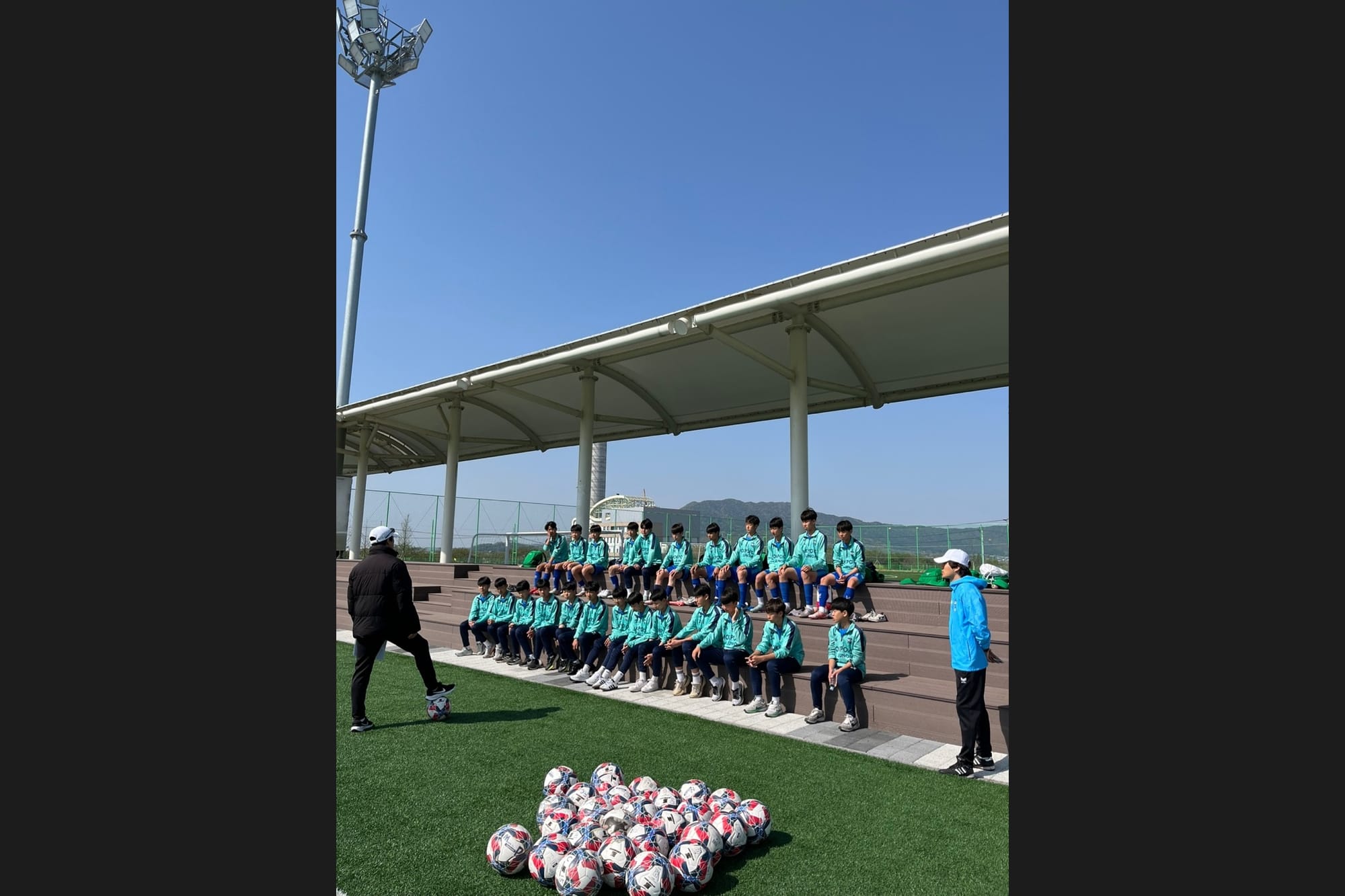
I'd like to quote Coach Moon Se-yun of Mokpo U-15, whom I respect. In 2024 the U-14 team finished runners-up at the national tournament. So for 2025, with those players a year older at U-15 and blessed with even greater talent, we expected remarkable things. But the results didn't match the expectations.
Through that period, there was something the coach often said: "Our team has no leader." We'd taught interesting football but hadn't managed to carry the team to a higher level, and that was the conclusion he reached when he analyzed why. Yet before the final match, in a moment when we all shared our honest hearts with one another, he said this, in a calm and quiet tone:
"I kept saying our team had no leader — but when I thought it over carefully, it was I who had not been your leader."
It was a painful reckoning. But that very moment was when I looked most deeply at myself, and when my respect for him grew even greater. I, too, had held the rather glib notion that good training and good analysis were enough. In the end, I hadn't won the players' hearts, nor their trust. I, too, had not been their leader.
Even now, a quiet regret sometimes washes over me — the thought that had I met these players when I was a little more mature, I might have been a better coach. The title of "mentor" still feels too grand for me to claim.
In your analysis model you quote, side by side, Carles Planchart's "show less and speak more precisely" and Juanma Lillo's "ideally, you should leave only the lean meat." For a video analyst, the hardest task is surely not what to show but what to discard. Could you unpack how that editing process actually unfolds — paring a 90-minute match down to the single piece of "lean meat" you'll hand a player?
A man's desk broke, so he called in some carpenters. They all had hammers, but none knew where to strike. There were several of them, and not one could fix the desk. Then one carpenter arrived, grasped the problem in a few seconds, gave it a single tap — and the desk was fixed. An expert is precise and fast. A professional analyst is no different: within limited time, he diagnoses the problem precisely and quickly, and shows only what is most needed.
In the past, I would watch the same clip over and over, countless times, trying to find the problem. I wasn't discovering the problem — I was watching the footage in order to search for it. But it's different now. I think I've become one of those carpenters who can fix the desk. Rather than straining to search for the problem, I've reached the stage of simply noticing it. So there are moments when, at a certain clip, an exclamation mark lights up in my mind, and I seize precisely that moment. And I believe this is possible not simply because I'm an analyst, but because I have my own football philosophy and game model firmly in place.
An expert is precise and fast.
You quote another of Lillo's lines: "We work like taxidermists — the scenes we look at are already finished, a dead image." There's a paradox in this: analysis, by nature, deals with the past, while coaching faces the future. Could you paint how that leap — drawing the living action of the next match out of an already-dead image — appears in your work?
In the course of doing analysis, and in video meetings, you often catch yourself saying, "We should have done such-and-such." But time keeps flowing, and situations don't stand still. If everything unfolded exactly as we wished, we could control it — yet often, the moment a single thing goes off script, events take an entirely different direction from what we predicted.
That's why I believe forward-looking coaching — anticipating the next situation and resetting our direction — matters more than passing judgment on the scene that's already gone.
Lately, quite a few paradoxical things have been surfacing. To my mind, analysis is only ever a supporting tool. The core tool, in the end, is the skill the players themselves possess. In fact, had I played football professionally, I think I'd have worked harder to become an expert in technical analysis than in tactical analysis — because the match unfolds out on the field, while my football unfolds inside a 16-inch MacBook screen. Between the two, some sense of disconnect is bound to arise.
Recently I've been watching, with real interest, matches played with head-mounted cameras. In official international matches, referee cams are often used. So I sometimes wonder what it would be like to film and analyze a match from each player's own point of view, the way a referee cam does.
You've even drawn Robert Zajonc's mere-exposure effect — "we come to like the things we encounter repeatedly" — into your analysis model. The idea of an analyst using a psychological exposure effect as a strategy for delivering information is a distinctive one. Could you set the stage for one concrete case where "repeatedly exposing" a player to the same tactical message actually changed his behavior?
I imagine settings other than a meeting held in what feels like a locked-down, high-security room. Usually, when you picture a team video meeting, the curtains are drawn and the presenter stands there with a laser pointer, explaining particular scenes. But I believe the heart of it isn't the explaining but the understanding of the explanation — not the speaking but the listening. So I tend to think about how to maximize the players' act of listening.
There's a famous experiment in social psychology — a study showing that when a particular popcorn or cola brand was flashed repeatedly throughout a film, sales of that product rose. In Korea we have a saying: "You don't notice your clothes getting wet in a drizzle." A fine drizzle dampens your clothes so gradually that you don't realize it at the time, but in the end it soaks them through. If that drizzle were acid rain, it could be as harmful as toxic content — but if the content is necessary and beneficial, I think you can put this principle to use in maximizing learning.
For instance, you might put a particular action into words the players can remember easily and enjoyably, or briefly recall just one or two scenes right before a match. What matters is the way you put it into words. You define the concept clearly and directly, yet you make sure the situations in which it applies can be understood broadly. When you describe one situation, for example, you mustn't let the players take that as the only answer. You have to help them see, at the same time, that it's just one option among many.
In your learning model you quote the Spanish philosopher Ortega — "I am myself and my circumstance" (Yo soy yo y mi circunstancia) — and you sketch a cycle: event → analysis of causes → experience → self-organization → "a self different from before = growth." It reads as meaning that you don't so much teach the player as let him organize himself.
The most important thing is not merely to be positioned and to exist within flowing time and space, but to know why you must be there.
A coach can create an environment in which events are able to occur. Within that environment the players interact, feel something new, and construct and interpret events afresh. But if such experiences are left as mere feelings, they can hardly accumulate into high-quality experience.
So my role is to help the player analyze why something happened, whether he's creating the event or caught up in it. Sometimes in broad language, sometimes in explicit language, I remind them and I ask them questions.
When that happens, the player thinks through the question for himself, analyzes the event, and that experience accumulates as high-quality experience.
PART 5 · THE ROOT BEFORE THE FRUIT
In the "character" chapter of your handbook, invoking "a good tree bears good fruit, a bad tree bears bad fruit," you bind identity, thought, behavior, emotion, and values together into a single tree. The philosophy, it seems, is to look first at the root — character — before a player's ability, the fruit. How does Ki-hyun Kim the scout read that "root" in a player, the part footage and data don't easily capture? Could you unpack it through a concrete scene of observation?
I'm fond of the phrase il-yeop-ji-chu — "one falling leaf tells of autumn." It means you know autumn has come from the sight of a single falling leaf. I apply this to scouting as well: reading the many facets of a person through a single clue. A scout has to gather a great deal of information in limited time, so this ability is essential.
For example, when a goal is conceded, I watch to see who is first to fetch the ball from the net and rally his teammates. Most youth players, gripped by the determination that they alone must fix it, tend to go all-in on "charge straight ahead" — which, to me, shows a lack of composed fighting spirit, calm aggression, cool passion. Johan Cruyff said: "Players who aren't leaders try to smash the opponent after a mistake. The true front-runner anticipates in advance that others will make mistakes on the field."
Assertiveness, I believe, isn't the volume of your voice but the consistency of your actions. There are players who are quiet yet move before anyone else and take responsibility before anyone else. I describe such a player as having "quiet assertiveness." What matters more is the self-regulation to keep performing steadily even in a highly volatile match environment — the ability to manage emotion, cognition, and behavior within the flow of a game and hold your role and performance consistent.
Assertiveness, I believe, isn't the volume of your voice but the consistency of your actions.
After a year and nine months as a tactical analyst at Jeonbuk Hyundai, you moved into coaching at Mokpo U-15 and also worked as an analysis coach at Gwangju FC. The "analyst" who hands over data from behind and the "coach" who delivers solutions directly must be entirely different roles. As you stepped one pace closer to the pitch, from analyst to coach, what changed most in the way you work — could you paint one scene for each role, side by side?
Looking back, there were times when my passion ran a little too far ahead of me. Even so, I remain grateful, to this day, that people accepted and understood me just as I was. Thinking about it now, I believe the truly outstanding people are those who know how to respect another person's individuality and potential.
An analyst, I think, is someone who can propose a range of ideas within the team's flow. A coach, on the other hand, is in a position to shape that flow itself, to drive it. That, I believe, is the biggest difference between the two roles. In the end, it comes down to whether you're a role that exercises expertise as a functional specialist, or a role that makes decisions as a manager.
Having passed through the youth setups of Carl Zeiss Jena and Rot-Weiß Erfurt in Germany, you then took part in physical-data and football research on Korean youth national-team players at BEPRO. How do these two assets — a feel for the German grassroots and Korean youth data — meet when you evaluate a player? With one Korean prospect in front of you, could you unpack, in concrete terms, the moment when the eye you trained in Germany and the data you built in Korea work together?
It wasn't only German football on the ground that made me. My everyday experiences, my temperament, and the way I live my life have all shaped the way I see football.
In places with a well-built league system, like Germany or other countries abroad, it's relatively straightforward: the best players naturally compete in higher leagues. Korea is a little different. A new youth team under a professional club can sometimes be somewhat weaker than the established school teams. And at ordinary clubs, you'll sometimes find a player with national-team-level talent training in the same setting as one playing purely for a hobby.
On the basis of understanding these structural differences, I observe whether a player's movement is natural, smooth, nimble, and sharp. Through these qualities I try to judge how efficiently the player's neural circuitry has been built.
In a youth player I look for tomorrow; in an adult amateur, for today. Every evaluation weighs both present and future together, but with a youth player I place more weight on the intention behind his play and his future potential. With an adult amateur, I still look at the intention and future performance, but I judge the outcome of his play and his present performance more strictly. The more firmly a player has established his own playing model, the fewer the swings in his form.
When I evaluate and scout players, what I hold most important is this: there's no such thing as a good signing or a bad signing — only good performance and bad performance. In the end, scouting isn't about finding the best player, but the process of finding the player who will be best for our team.
PART 6 · TO BE FORGOTTEN WELL
Looking at Trainer Talk Net, which you've run since 2018, and your time at the lectern as an adjunct professor at the KBS Institute of Sports Arts and Sciences, your gaze seems to reach beyond a single team, toward the whole ecosystem of Korean coaching. You're also someone who wants to distill a single handbook into a "solution of solutions" and leave it for the next generation of coaches. What is the vision and the goal you're drawing toward — and as what kind of analyst, what kind of coach, would you like to be remembered in Korean football?
First of all, the vision and the goal I'm drawing toward are simple: to create an environment where the players and football people I meet can discover the talent each of them holds, have it recognized, and express it to the full. For a football coach like me, I tend to feel the label of "mentor" is a touch too grand. For me, a single warm, mischievous text from a player I once coached is enough. I read those messages dozens of times over, and they give me a real sense of fulfillment. To remain as a good memory in someone's mind — that alone is something to be grateful for. But what I hope for more is this: that even after time passes and I'm forgotten, the players who once experienced me will find themselves within football, or through it, and live as truly themselves.
Even after time passes and I'm forgotten, the players who once experienced me will find themselves within football, or through it, and live as truly themselves.
CLOSING
Read back to back, the twenty answers behave like the handbook Ki-hyun Kim keeps describing — character underneath, game model on top, and a working vocabulary binding the two. He wants a midfielder who links rather than receives, a defender who reads one option shut before the ball has moved, a team that "creates the opponent's press" rather than suffering it. He gives chaos a formal place because most of a match, honestly, is chaos. And he keeps insisting he is a coach who happens to analyse, not the reverse — which is why his most pointed warning is aimed at his own profession: the provider's job is going to a machine, and only the interpreter's will remain.
What keeps the theory human is how often he turns it back on himself. The carpenter who fixes the desk with one tap is an aspiration, not a boast; the analyst, he says, works on "a dead image" and has to make the leap to a living next move anyway. The story he chooses to tell at length is not a triumph but a reckoning — Coach Moon Se-yun quietly admitting, before a final, "it was I who had not been your leader," and Kim recognising himself in it. He thinks "mentor" is too big a word for him. He would rather read a mischievous text from a former player a dozen times than be called one.
He is where a Korean coaching life rarely runs — out through the German grassroots and back into the Korean youth game, then along the touchline from analyst to coach to scout, and now into a Gwangju FC analysis room with a handbook he wants to leave behind as a "solution of solutions." His closing wish is the most disarming line in the whole exchange: not to be remembered, but to be forgotten well — so that the players who once passed through his sessions go and become, fully, themselves. Football Agent Lab will be reading the next chapter he writes.
ABOUT THE AUTHOR
SEOK LIM Editor · Football Agent Lab
FIFA-licensed football agent and steel market analyst with over a decade of experience in commodity research. Football Agent Lab publishes interviews and market reports at the intersection of football, agency work, and global markets.


