Diagonals, Half-Spaces, and the Architect of South American Tactics — Reinerio Márquez Returns
Twelve months on from his first FAL conversation, Chilean CONMEBOL Pro-licensed head coach Reinerio Márquez returns to the table. Tumaco International champion. Recently departed from 22 de Julio in Ecuador. And, on the record, aiming his next chapter at South Korea, Asia, or the Arabian Gulf.
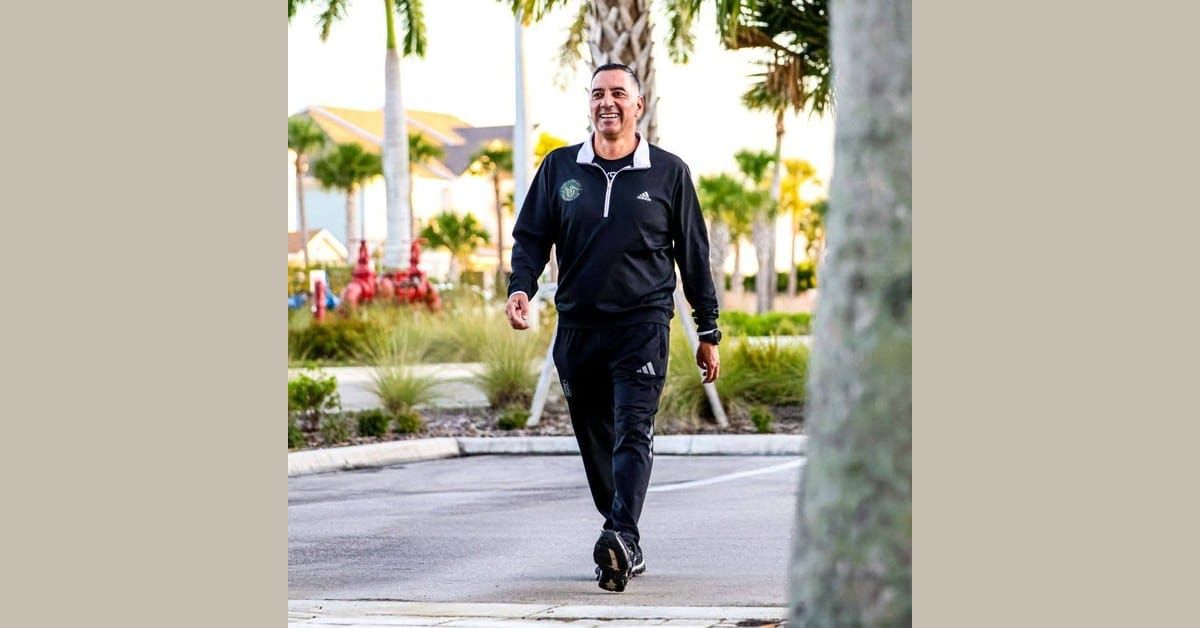
Reinerio Márquez returns to the Football Agent Lab table, twelve months on from his first written conversation with us. In the intervening year, the relationship has continued — periodic dialogue, and in mid-2026 the publication of Márquez's own game model as the first entry in our Modelos de Juego analytical series. His first interview with us, in Korean, remains here. What we are running today is a second, deeper conversation — twenty answers, more technically dense than the first, and framed as one continuous exchange between a coach and a publication that has been tracking his work for a year.
The last twelve months have carried him across three continents and four dugouts. He led 22 de Julio FC in Ecuador's Liga Pro Serie B, winning the Tumaco International Invitational before walking away from the role — a departure he addresses openly in Q1 and Q19, and attributes to the club's financial situation rather than to any football decision. Before that he served as head coach at Fort Myers City FC (USA · UPSL First Division · League Runner-Up, 2025), Honduras Progreso, and Meluca FC (Honduras · 3rd of 35 clubs nationally, 2024). Behind him lies a much longer arc: technical direction roles at Al Nasr Club (Oman · AFC · 2022–23), the Cuban Football Federation as national team sporting director (2021, 3rd in international competition), Liga de Loja (Ecuador, 2015), academy leadership at Rio Academy (Oman/UAE) and Cantolao (Peru), and youth sporting direction at Colo-Colo (Chile · U-17 and U-14 National Champions, 2011–12). At the base of the whole edifice: a decade running his family's development academy in Punta Arenas, Chile — Reinerio García FC — from 1996 through 2006, alongside his father José Márquez Triviño.
He holds the CONMEBOL Pro Licence (the highest coaching credential in South America), a Bachelor's degree in Physical Education from Universidad Pedro de Valdivia in Chile, professional football certification from the National Football Institute of Chile, and coaching accreditation from CONMEBOL, CONCACAF, and AFC. He speaks Spanish (native), English (fluent), Arabic (professional), and Portuguese (conversational). And between 2007 and 2010, in a stretch that he still names as decisive to his game model, he spent three years in an independent, self-directed study of Marcelo Bielsa's methodology — from which he took the automatic patterns, the flexible situational adaptations, and the vertical transition speed, and consciously left behind Bielsa's willingness to accept defensive risk. He was, in his own words at the time and again now, a South American coach. That framing has not softened in twelve months. It has, if anything, hardened into an ambition he now names by country: I would like to take charge of a team in South Korea or another Asian country and win a title.
Chilean Head Coach · Technical Director · Sporting Director · Youth Development Specialist
CURRENT STATUS
Between roles · based between Chile, Ecuador, and the United States · actively seeking next appointment in South Korea, Asia, or the Arabian Gulf
MOST RECENT ROLE (2026)
22 de Julio FC (Ecuador · Liga Pro Serie B) · Head Coach · Tumaco International Invitational Champion
HEAD COACH TENURES (recent)
Fort Myers City FC (USA · UPSL First Division) · Head Coach · 2025 · League Runner-Up Honduras Progreso (Honduras) · Head Coach · 2025 Meluca FC (Honduras) · Head Coach · 2024 · 3rd of 35 clubs nationally Tela FC (Honduras) · Head Coach · 2019–20 · 5th of 35 clubs nationally Espoli FC (Ecuador) · Head Coach · 2013 · 4th in national competition
TECHNICAL & SPORTING DIRECTION
Al Nasr Club (Oman · AFC) · Technical Director · 2022–23 · sporting structure & recruitment Cuban Football Federation · National Team Sporting Director · 2021 · 3rd in international competition Liga de Loja FC (Ecuador) · First-Team Sporting Director · 2015 · South American international competition
ACADEMY & YOUTH DEVELOPMENT
Rio Academy (Oman / UAE) · Youth Sporting Director · 2022–23 · multiple youth titles in Oman & UAE Cantolao (Peru) · Youth Sporting Director · 2014 · multiple national youth titles Colo-Colo (Chile) · Youth Sporting Director · 2011–12 · U-17 & U-14 National Champions Reinerio García FC (Chile · family academy in Punta Arenas) · Development Head Coach · 1996–2006 · multiple youth titles over 10 years
LICENCE & EDUCATION
CONMEBOL Pro Licence (highest South American coaching credential) · Bachelor's Degree in Physical Education, Universidad Pedro de Valdivia (Chile) · Professional Football Certification, National Football Institute of Chile · Coaching accreditation across CONMEBOL, CONCACAF, and AFC · Three years independent study of Marcelo Bielsa's methodology (2007–2010)
METHODOLOGY
Tactical periodization · game-model design · high-intensity positional play with diagonal half-space penetration · seven-in-attack, three-in-support structure with the third man · position-zone hybrid marking with man-to-man collective pressing · liberto-stopper defensive spine · weekly microcycle design · video and statistical analysis conducted personally
PREFERRED SYSTEMS
1-4-2-3-1 · 1-4-3-3 · 1-4-4-2
LANGUAGES
Spanish (native) · English (fluent) · Arabic (professional) · Portuguese (conversational)
PRIOR APPEARANCE IN THIS PUBLICATION
First Football Agent Lab interview: Naver blog (2025, English)
Game model analysis: Modelo 01 · Reinerio Márquez (Football Agent Lab · Modelos de Juego series)
PART 1 · REUNION
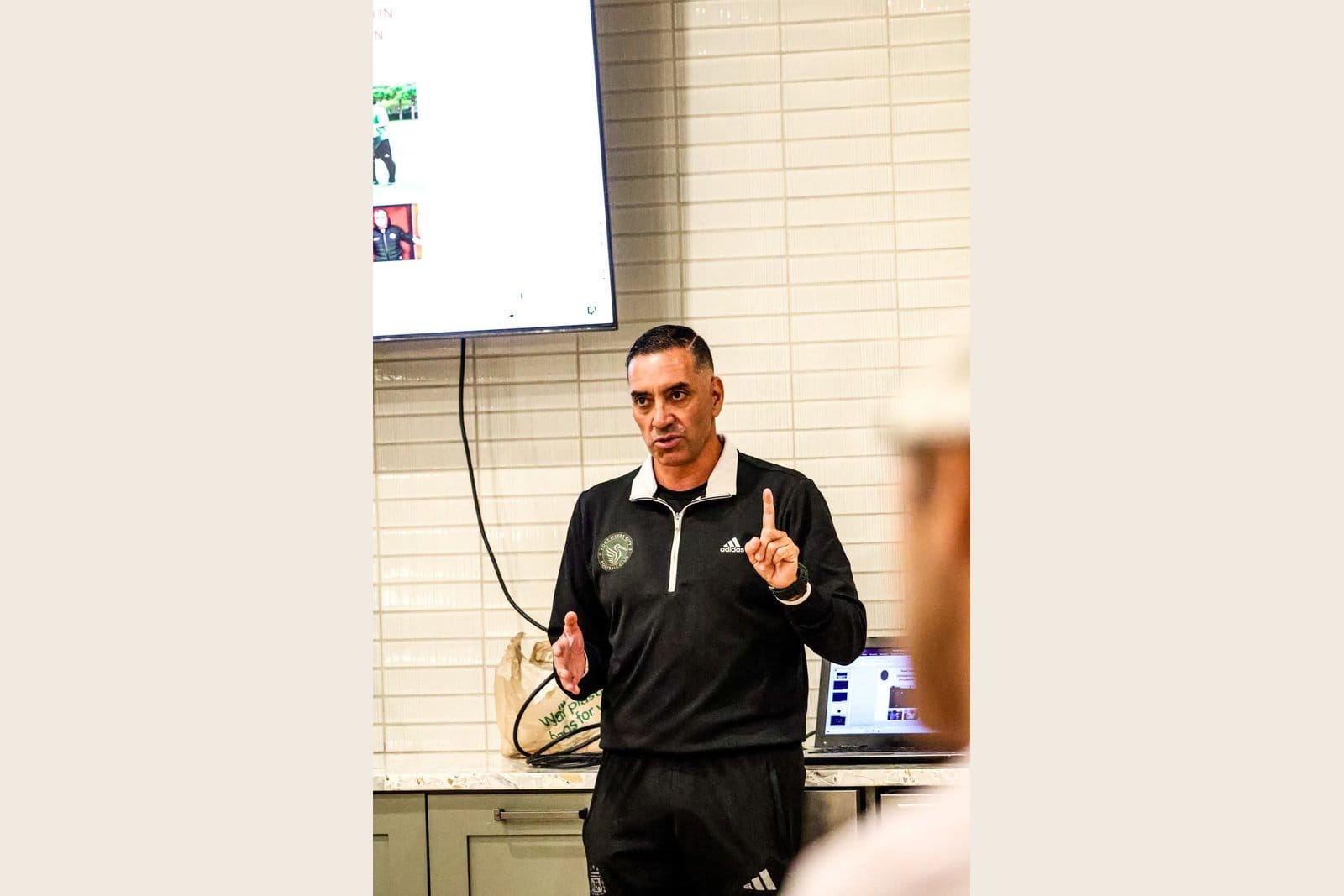
Good to have you back across the table. In the twelve months since we last spoke, you won the Tumaco Tournament in Ecuador and then walked away from 22 de Julio. A year is a long time in this profession. What do you feel has genuinely shifted in you — not in your CV, but in the way you think and work — and how do you expect that shift to show up in whatever comes next?
The clearest change over the past year is in the way I lead a group. I feel far more assured now in pulling a squad together and defining each player's role. My leadership has also matured: I read much better when to push hard and when to step back and let the players take ownership. At the same time, I've embraced new technological trends without hesitation, because in a game that moves this fast, ignoring them means falling behind. Above all, what matters most is never losing the willingness to keep learning. I expect this shift to show up naturally in the next chapter, as a calmer but more solid way of running a team.
"We are South American coaches. That is something very powerful" — it landed the first time you said it, and it stays with me now. But here you are, with your eyes on the Asian market, and I want to understand what that power actually looks like in practice when it meets an Asian dressing room. Where does South American footballing philosophy find a natural echo in Asian players, and where does it need to be handled more carefully — and how are you working through both sides of that right now?
My core direction doesn't change. I move the team forward while giving players the freedom to create, to make their own decisions, and to sharpen their individual technique. I believe this creativity and autonomy of South American football can connect naturally with technically gifted Asian players. At the same time, I'm well aware that in an environment that prizes discipline and organisation, I have to be more careful about how I release that freedom. I want to contribute everything I know to Asian football. In all three areas — tactics, physical preparation, and player psychology — I feel genuinely strong.
PART 2 · THE CORE OF THE GAME MODEL
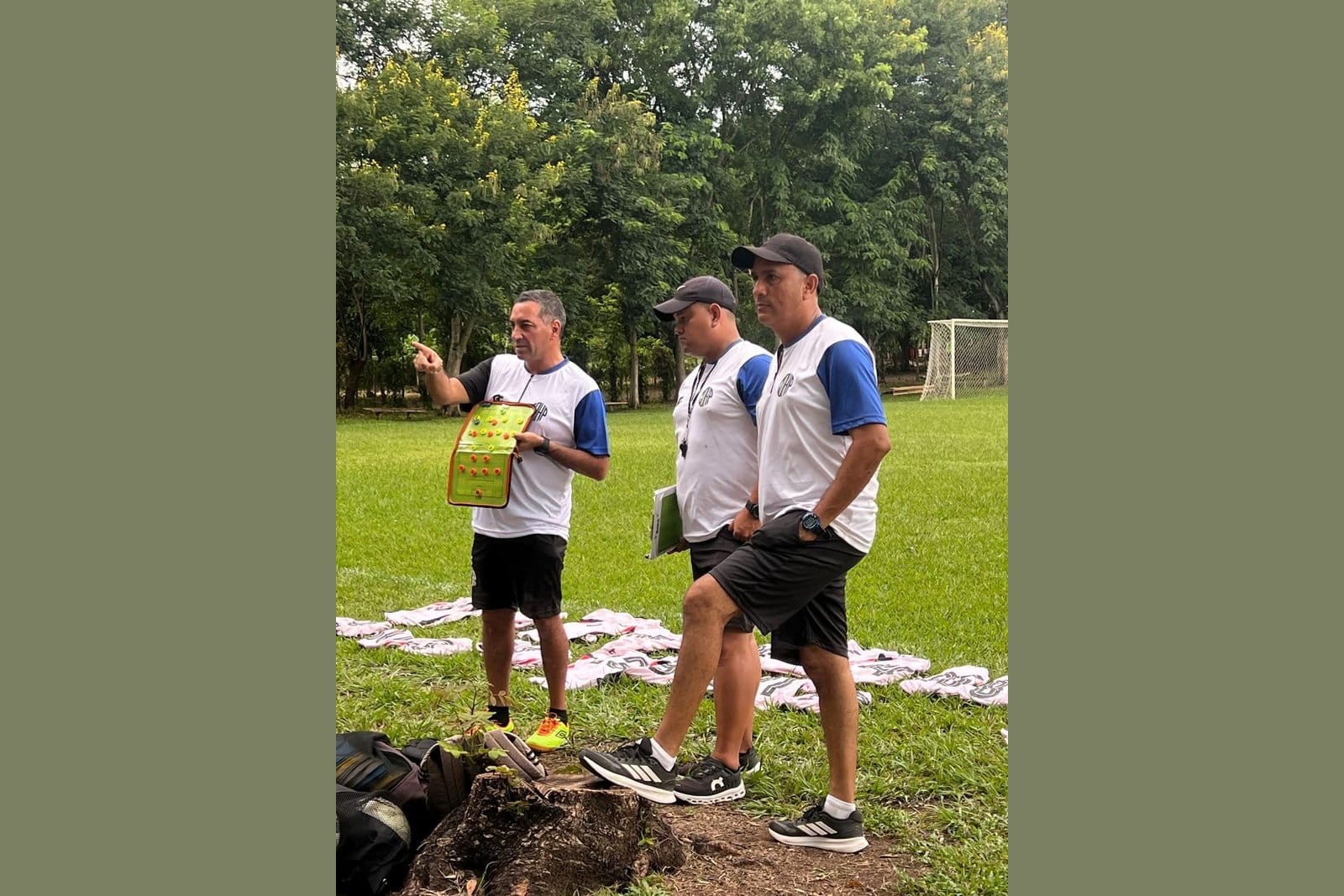
"From anywhere on the pitch, play diagonally, toward the half-spaces. Seven in attack, three in support" — the structure is almost visible just from hearing those words. But for that seven-three split to hold up, the three can't simply sit there as rearguard cover; they have to be the first mechanism of transition. So in those three or four seconds right after the opposition wins the ball and pushes to counter, where are those three players, and what exactly are they doing? Walk us through that specific moment.
The key here is the use of the third man. We don't settle for a simple two-player link; a third player is constantly moving to open up new passing lanes. Our players also keep exchanging positions so the opponent can never fix their marking assignments. At the same time, we spread players across the width and depth of the pitch to use space fully, and we form diamonds and triangles to create several short passing options at close range. Built this way, even when we lose the ball, a structure is naturally in place that lets us press immediately and win it back.
From anywhere on the pitch, play diagonally, toward the half-spaces. Seven in attack, three in support.
Building your attack around short passing and positional rotation inside a compact block of roughly 25 metres is one side of the coin. The other side — the one that makes the whole system viable — is how the team contracts when the opponent has the ball outside that block. What sets that contraction in motion, and what does the block actually look like when it's working the way you intend it to?
The starting point of our defensive transition is thorough preparation. We study the opponent closely through video analysis and prepare several alternative plans to control not only the player on the ball but also the next player likely to receive it. If one option is shut down, we can switch to another at once. When the block is working as intended, the most important thing is for the libero and the stopper to hold the centre and manage the dangerous areas. As long as those two positions stay solid, the rest of the team can press with confidence and squeeze the space.
Your defensive structure rests on two pillars — a position-zone hybrid marking system and man-to-man high-intensity pressing — and they make quite different demands on a player's mind. Within a single game, what decides when you move from one to the other? Is it something the opposition does, or is it a situational factor like the score or the clock — and what does that switch look like to you from the bench?
This switch depends above all on the playing system we choose at the start, and on how we adapt it to the opponent's system. Rather than following a fixed formula, we read the opponent's structure and the flow of the game and choose the approach that fits. Our coaching staff studies the opposition in great depth, and the players have to carry out faithfully what we've prepared. In the end, the decision to move between the marking system and the pressing scheme only takes on meaning when the players understand and execute their individual roles precisely.
Running separate set-piece strategies for corners, free kicks, and throw-ins is its own kind of statement — it says you treat set pieces as something to be engineered, not improvised. I'm curious whether your half-space principles feed directly into how you design those routines. Take a corner kick as your example: walk us through one specific routine and describe the movement patterns it produces on the pitch.
We give set pieces a great deal of weight in training. We work on corners, throw-ins, free kicks, and penalties, repeating each action three to six times. We don't drill them in isolation but in a way integrated with the real flow of the game, and at times we break a movement down and approach it analytically. On matchday we apply the prepared routines exactly as rehearsed, and afterwards we review our own footage and the opponent's on a smart device, analysing what worked and what needs fixing. I believe set pieces are perfected through repetition and analysis, never improvisation.
The 4-2-3-1, the 4-3-3, the 4-4-2 — all built on a back four, but each one offering a different midfield density and a different set of pathways into the half-spaces. When your squad resources and your opposition analysis push you toward different formations, which argument wins — and has there been a moment when you got that call wrong? If so, how do you carry it?
The initial system is only a relative reference point. When we organise our attack, we run the rear line with three or two players depending on the opponent and the flow of the game, and when necessary we set up a line of five or six. In other words, even the same formation changes shape from one phase to the next. When our squad resources and our opposition analysis point toward different formations, I don't cling to one; I prioritise what is more effective in the moment of the match. And when a call goes wrong and a mistake appears, I solve it right there by adjusting the players' positions. A quick correction often matters more than a perfect choice.
PART 3 · TACTICAL DEPTH
Three years spent between 2007 and 2010 independently studying Marcelo Bielsa's methodology — that's not discipleship, that's a process of taking something apart and putting it back together on your own terms. Some of what came out of that work is clearly still alive in your current game model, and some of it you've deliberately moved away from. Where exactly does that break happen, and how does the difference between what you kept and what you left behind show up in the way you design your training sessions?
Marcelo Bielsa is, in my view, the best coach in the world at training and at drawing the very best out of players. What I took most from his methodology is the automatic game patterns, the flexible adaptations to each situation, and the video analysis that examines both our own side and the opponent. The way of attacking vertically through quick transitions also runs deep in my game model. What I clearly did differently is the balance in defence. Where Bielsa's approach sometimes pushes forward boldly and accepts risk, I lean more toward protecting the result. In the end, what matters most to me is winning.
What matters most to me is winning.
For a coach who places tactical periodisation and game model design at the top of his technical CV, the weekly microcycle is about more than managing physical load — it's a mechanism for imprinting game principles, session by session. Take me to the first training session of your first week at a new club, when the players know nothing yet of how you work. How does that session begin, and what is the first thing you want the pitch itself to communicate on your behalf?
The first week at a new club is something my staff and I design with great care. We map out the big picture for the whole week, then refine each day's session according to that day's circumstances, because there are always last-minute variables — injured or suspended players, or administrative problems.
A session usually begins with injury prevention, then raises the body and the senses through activation work with passing, dribbling and shooting, rondos, small-sided games, and shooting drills. In the main part we devote a lot of time to tactical training that teaches our playing system and model in sequence, and we run conditioned games that mirror real situations. The final part focuses on player recovery. For me, preparing the week is, in itself, building the week's match.
Personally conducting video and statistical analysis across every position — your own squad and the opposition — means you are choosing to be the one who produces the intelligence, not just the one who acts on it. When the data and your gut point in different directions, which one do you go with — and is there a particular moment, whether it vindicated you or cost you, that you find yourself coming back to?
We have generally had good results working with our group of advisors and video analysts. The reason lies in how specifically we tailor the analysis to each player, each team, and each playing system. We look not only at our own strengths and weaknesses but at the opponent's as well, preparing dedicated material for every match. Even when the data and my instinct disagree, it is this carefully built analysis that ultimately grounds the decision. I'd like to take this chance to sincerely thank those who have helped us so much as advisors and video analysts: Fernando Vera from Ecuador, Brian Montenegro from the United States, Marcelo Almuna and Marcial Miranda from Chile, Marcelo Cataldo from Uruguay, and Fernando Samper from Colombia.
PART 4 · CASE STUDIES
When you're trying to build a game model that demands both half-space penetration and high-intensity pressing, and the resources simply aren't there to deliver everything at once, something has to give. If you can't have it all, which principle do you hold onto longest — and does the answer to that question change depending on the quality of the squad or the environment of the league?
If I can't have everything at once, what I hold onto longest is depth, width, and the improvisation that springs from the players' creativity. Using the pitch wide and deep while letting each individual change the game with a split-second decision — that is the root of my football. To this I add pressing to recover the ball the instant it's lost. That said, none of these principles is fixed; they are constantly adjusted between direct and constructed football according to the result, the moment of the game, and the opponent. The emphasis may shift with the quality of the squad or the league environment, but I never compromise on the foundation of creativity and the use of space.
A national team and a club side ask completely different things of a manager's patience. At club level, you have time to build your principles into the players gradually; with a national team, you have days to do what might otherwise take months. How does a system like yours — one that depends on players sharing a common spatial understanding — get compressed and delivered inside an extremely short international camp, and what does that process actually look like on the ground?
A national team and a club are completely different environments. With a national team you get the best players, but the camp is short, so you have to organise carefully even the timing of each player's arrival. To imprint a shared understanding of space in so little time, selection and focus are essential. At a club, by contrast, you see the players every day and can build your principles step by step, though much depends on internal factors such as the club's finances and management. In terms of playing systems and models, I apply the same ones in both, always with double training sessions, giving my best tactically, technically, physically, psychologically, and socially. For me, high performance ultimately means winning.
In youth development, the line between introducing tactical structure early and allowing individual technique to breathe freely is one of the sharpest fault lines in coaching philosophy. When you applied your methods at Colo-Colo with both the U-14s and the U-17s, those two groups must have responded in quite different ways. What does it look like to teach half-space penetration for the first time to a fourteen-year-old, and how is that scene different when the player in front of you is seventeen?
What matters most to me is that players have the freedom to finish a move — with a first touch or a dribble — using their creativity to the full. Sadly, many South American players have lost the technique they once had, because too many coaches have stripped away their creativity and their courage. That's why, the younger the player, the more I try to teach structure without smothering that spark of freedom. To this day I hold to the old school of creating goals through creativity and talent. In the end, I believe protecting a player's imagination is the true role of a good coach.
Protecting a player's imagination is the true role of a good coach.
PART 5 · ASIA AND THE KOREAN MARKET
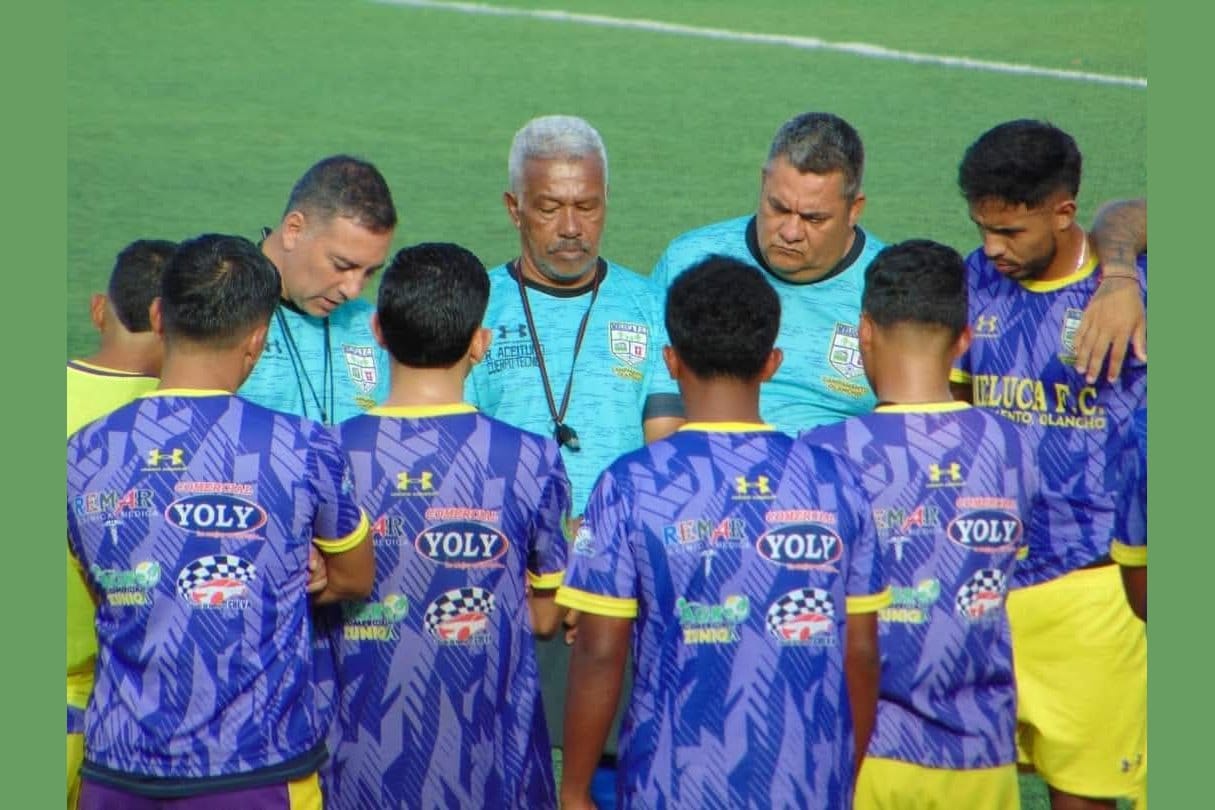
You've seen AFC football from the inside during your time in Oman, so when you look at the East Asian market now — the K League included — you're not looking at it cold. What catches your attention most? And when you think about how East Asian players might differ from Omani players in the way they take on and internalise tactical instruction, what do you expect that difference to ask of you in terms of how you deliver your game model?
The Asian player is technically very good, physically quick, and well-disciplined. What I can add for players like these comes down to two things. The first is tactical discipline that holds firm in any playing system, and the second is the winning mentality it takes to become a champion.
I would like to take charge of a team in South Korea or another Asian country and win a title. In Oman I met very good players in Arab football, but they had already grown deeply accustomed to the tactics of European coaches. I believe South American coaches have a clear strength: we know how to manage a difficult, level game, and above all we build much closer relationships with our players. That human closeness, in the end, becomes the channel through which the tactics are delivered.
I would like to take charge of a team in South Korea or another Asian country and win a title.
Speaking Arabic at a professional level meant that in Oman you could carry tactical nuance all the way to the player without anything being lost in the middle. In an environment where the language doesn't line up — or where everything has to travel through an interpreter — how does your approach to teaching a concept as spatially loaded as the half-space principle actually change, and how does that difference make itself felt on the training pitch?
I have the advantage of speaking four languages — Spanish, English, Arabic, and Portuguese — which I use in professional football training and in managing matches.
Learning the language of the country where I work is essential. I learned Arabic thanks to my friend, Professor Ahmed Qatam from Oman, and by practising every single day. I ran my training sessions in both Arabic and English.
If I get the chance to coach in South Korea or another Asian country, I'll need to learn the local language quickly, because it makes communicating with the players, the management, and the people of the country so much easier. I love the culture of the countries I go to — it's part of the playing style. That's why I had to adapt to Arab culture, and they were wonderful people. The Middle East is fascinating.
PART 6 · LEADERSHIP AND STRUCTURE
Running a full multidisciplinary staff — assistant coaches, a fitness coach, a goalkeeper coach, a medical team — there will always be weeks when the tactical demands of your game model and the fitness coach's load management are pulling in different directions. How do you handle the distribution of physical load in a high-tactical-demand week, how does the conversation inside the staff actually unfold, and what does your process look like when the room doesn't agree?
It's important to distribute the physical training loads well, from pre-season right through the competitive season. I have a very good relationship with my coaching staff, and it's essential that this relationship flows smoothly. I've been fortunate to work with outstanding assistant coaches, fitness coaches, and goalkeeping coaches: Marcelo Cataldo and Coco Aires from Uruguay; Marcial Miranda, José Márquez, and Roberto Plaza from Chile; Rene Aceituno, Army, and Jeffry Gómez from Honduras; Luis Martínez, Iván Guerra, Cristian Franco, Xavier Proaño, Carlos Vera, and Alejandro Villacis from Ecuador; Roger Zambrano from Bolivia; and Fernando Samper and Jairo Toro from Colombia.
For a coach who lists talent identification and recruitment among his core competencies, the question of whether tactical fit or developmental potential comes first is one that cuts right to the philosophy. Has there been a player where those two criteria pointed in opposite directions and you had to make a call — and looking back, would you make the same decision again?
The first thing I look for in a player is whether he can adapt to my idea of the game. On top of that, he needs good technique, physical ability, a winning mentality, and plenty of talent. But just as important is good character. I've been fortunate to coach many fine players. Moisés Caicedo, whom I worked with at Espoli in 2013, is a clear example — at the time he was in the U-12 side. In Ecuador there were Ramírez, Caicedo, Jacobo Velásquez, and Parjam, and in Honduras I met several players of international quality. In the end, I believe tactical fit and potential only grow on a foundation of good character and the right mentality.
When you take charge of a multinational squad, building cultural trust has to come before you can even begin to unify the tactical language — your time in Oman makes that point better than most. When you arrive somewhere new, what is the small signal — the quiet shift in the room, the change in the way a player looks at you — that tells you the trust has begun to take hold? How does that moment stay with you?
When I join a new team, I go in with confidence, joy, and respect, and above all I try to adapt quickly to the culture of the country and the team. The first thing I do is connect genuinely with each player, one by one, because trust begins with listening to and understanding their life stories. On that foundation I then win them over to my playing style through ability, leadership, humility, and determination. The sign that trust has taken hold is never dramatic. When players start to open up and speak to me first, when the way they look at me changes, I can feel it. That's why I always listen to my players, show empathy, and keep every promise I make.
PART 7 · PRESENT AND NEXT
Right now, between 22 de Julio and whatever comes next — what is the tactical problem you are spending the most time on? Every coach carries principles they feel are settled and principles they know still need work. What is the one you're examining most honestly and most critically in yourself at this particular moment?
Right now, the problem I'm working on most deeply is fine-tuning the control and shooting profiles to the situation, close marking, and refining the different playing systems. Honestly, I found a fair number of tactical deficiencies in training. But they weren't only down to the players' limits. 22 de Julio was a club carrying serious financial problems, and even in that environment there were good players of real quality. Because of the club's finances, though, we had to let many of them go, and that made it hard to push the team's cohesion all the way to where I wanted it. So at the moment I'm honestly examining how to hold onto my principles even within limited resources.
It started in Chile in 1996, and the road has run through Ecuador, Peru, Honduras, Cuba, Oman, the United Arab Emirates, and the United States to bring you to this conversation. Where does the road go from here — on what stage, and in what form, do you want to see the tactical philosophy you've spent a career building reach its fullest expression? And when the journey is finally done, how do you want to be remembered — by the coaches who come after you, and by the game itself?
In 1996 I began coaching the U-10 and U-12 teams at the Reinerio García club in Punta Arenas, alongside my beloved father and mentor, José Márquez Triviño. From there, I oversaw the whole process of developing young talent, from the youth ranks all the way to professional and national-team players.
My next challenge is to sign with a club in the Liga Pro first division, or to coach a national team. My goal is to settle in Asia or the Arabian Gulf; I love the life there, the culture, the way of living, and I want to focus the rest of my career on that continent. At 48, I'm at a good age with a wealth of experience, and I aspire to win a Liga Pro title and to compete at a World Cup.
My aim is to secure a strong contract in the Arabian Gulf or in Asia.
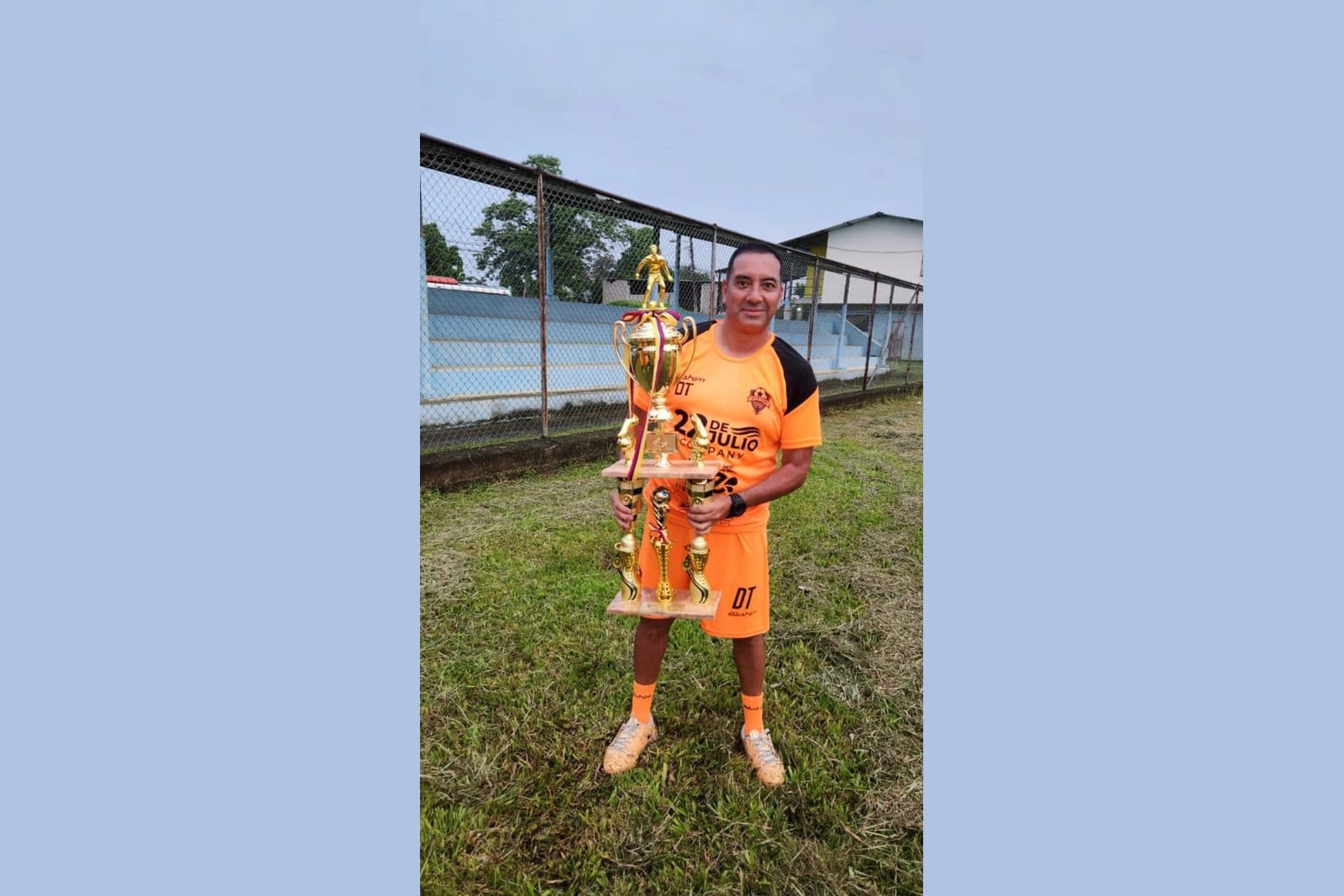
CLOSING
Read against the first conversation twelve months ago, what stands out most in this second reading is that Márquez has become more specific. About his tactics — the seven-and-three attack split, the third-man principle, the libero-stopper spine, the position-zone hybrid marking. About his mentors and colleagues — six analysts named across five countries, then more than a dozen assistant coaches, fitness coaches, and goalkeeper coaches named across seven others. About his relationship with Bielsa's methodology — clearly holding onto the automatic patterns and the video analytical rigour, clearly leaving behind the willingness to take defensive risk. And about what he wants next. Twelve months ago the ambition was framed as South American coach going somewhere. Today it is framed by country: South Korea named twice, the Arabian Gulf named twice, and "secure a strong contract" used explicitly for the last sentence of the interview.
The other thing that has hardened is a certain kind of restraint. In Q1 he speaks of reading better when to push hard and when to step back and let the players take ownership. In Q13 he defends the old school of creating goals through creativity and talent, and calls the protection of a player's imagination the true role of a good coach. In Q19 he opens up about the financial constraints at 22 de Julio and the players he had to let go — and frames the exit not as a personal setback but as examining how to hold onto my principles even within limited resources. These are not the answers of a coach chasing his first contract abroad. These are the answers of a coach who has spent twelve months since we last spoke consolidating what he already knows about himself.
He is forty-eight. He holds the CONMEBOL Pro Licence and coaching accreditation across three continental confederations. He has coached in Chile, Ecuador, Peru, Honduras, Cuba, Oman, the United Arab Emirates, and the United States. He has won youth titles at Colo-Colo and a Tumaco International in 2026. He has walked away from 22 de Julio. He is available, in his own words, for a strong contract in the Arabian Gulf or in Asia, and he names South Korea by country twice inside this interview. In our first conversation with him a year ago, he had said, on the record: "We are South American coaches. That is something very powerful." We have watched him spend the last twelve months proving it. Football Agent Lab will be watching the next twelve, too — with a quiet hope that when he next writes to us, he does so from the country he has named.
ABOUT THE AUTHOR
SEOK LIM Editor· Football Agent Lab
FIFA-licensed football agent and steel market analyst with over a decade of experience in commodity research. Football Agent Lab publishes interviews and market reports at the intersection of football, agency work, and global markets.


