46 Transfer Windows, 400 Decisions — Miguel Torrecilla
Spanish sporting director with 24 years and close to 400 deals across 46 transfer windows. Celta de Vigo, Real Betis, Sporting Gijón, Real Zaragoza, Everton de Viña del Mar. Now Development Technical Director at the Chilean Football Federation. An old K League thread: he signed Park Chu-young.
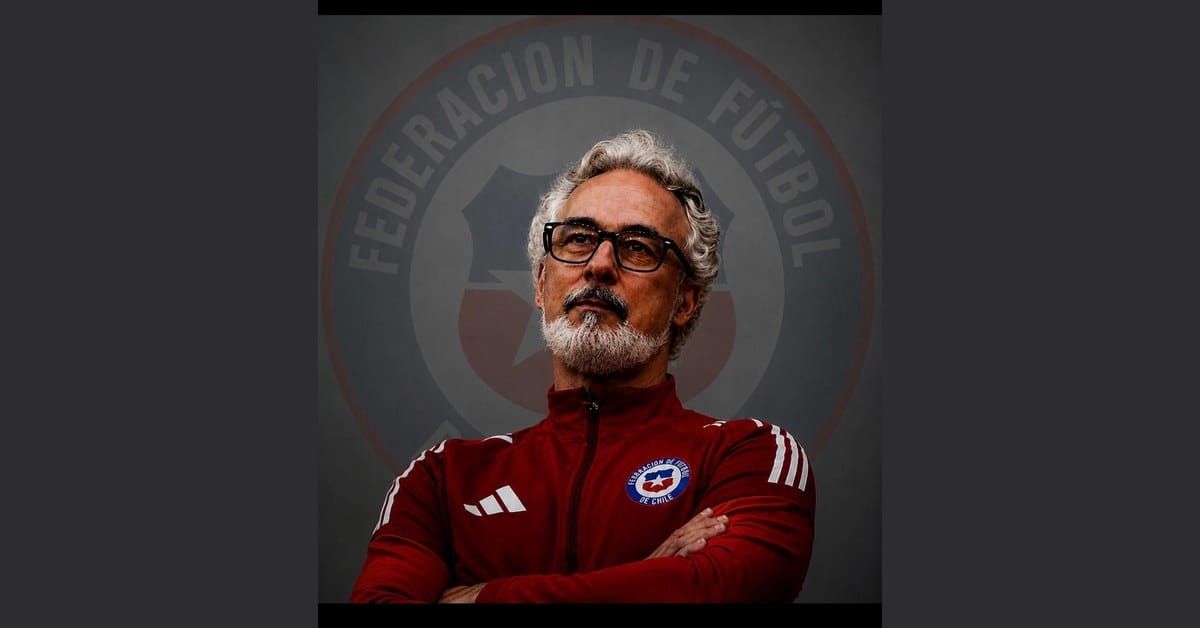
Miguel Torrecilla has spent twenty-four years as a sporting director across ten organisations and closed, by his own count, close to four hundred deals in forty-six transfer windows. The clubs read like a tour of Spanish football below and inside the top flight — Novelda, UD Salamanca, FC Cartagena, Celta de Vigo, Sporting de Gijón, Real Betis, Real Zaragoza — plus a short Belgian chapter at Waasland-Beveren and, most recently in club football, an executive-president tenure at CD Everton de Viña del Mar in Chile. Since July 2025 he has been Development Technical Director at the Chilean Football Federation. Born in Salamanca in 1969, he played twelve years as a defender before stepping fully into the office side of the game in 2001.
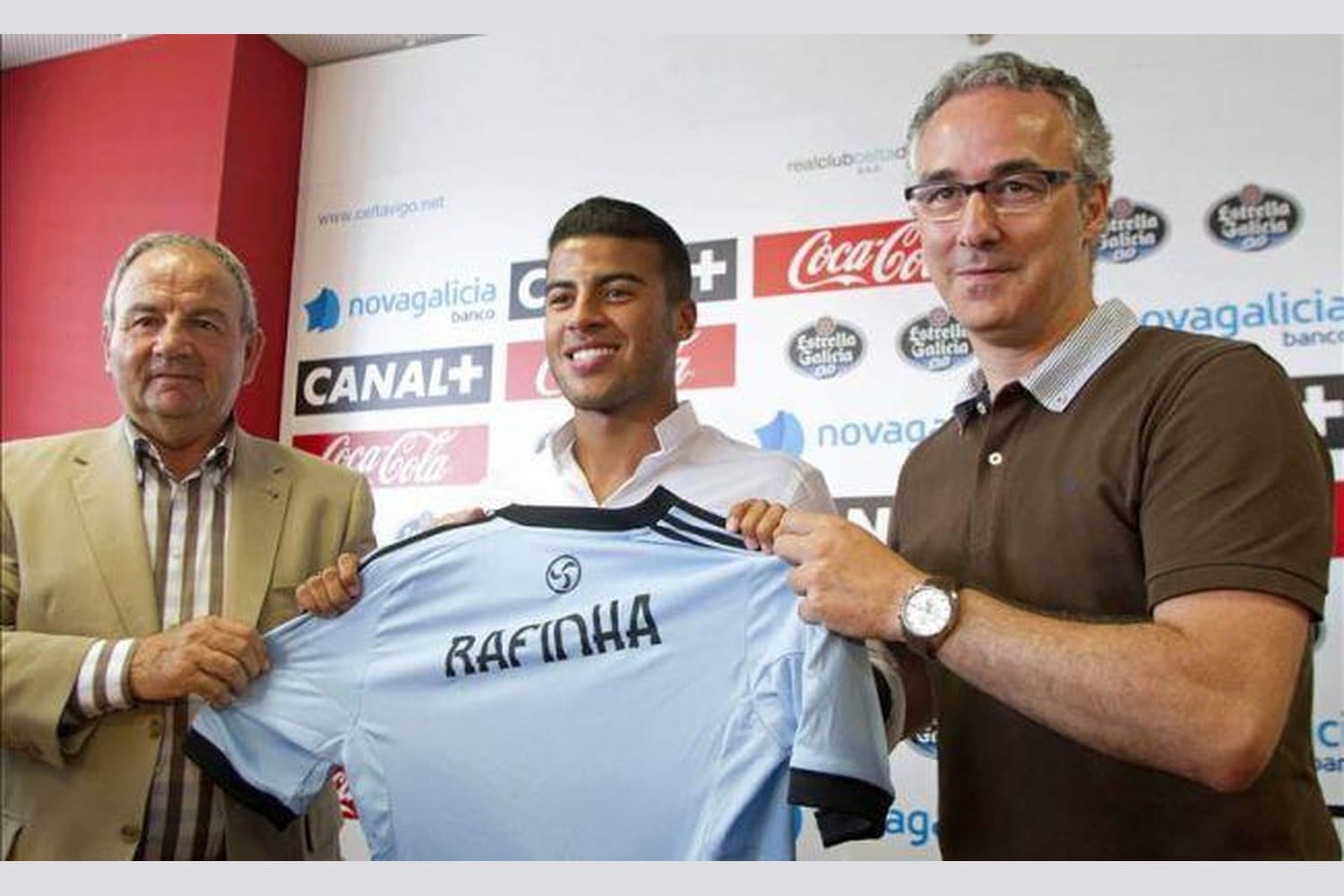
The outbound ledger from his Celta de Vigo years alone is worth reading twice. Nolito to Manchester City. Iago Aspas to Liverpool. Denis Suárez to Manchester City. Joselu and Rodrigo Moreno to Real Madrid. Augusto Fernández to Atlético Madrid. Santi Mina to Valencia. At Sporting de Gijón, Jorge Meré to FC Köln for €8.7 million, the highest transfer fee in that club's history. His reference list reads like a map of European and South American sporting leadership: Luis Enrique, Monchi, Roberto Martínez, Víctor Orta, Roberto Olabe (now President of Football Operations at Aston Villa), Raúl Sanllehí, Ángel Haro (President of Real Betis), and — a quiet thread back to this publication's very first interview — Gustavo Poyet. He speaks Spanish, Portuguese, and English, has never used an interpreter to open a negotiation, and currently teaches on the Sporting Director Diploma at INAF in Chile.
In the written exchange that follows, Torrecilla walks through the mechanics most sporting directors keep internal. He explains why the club's sporting model, not the head coach, must come first. He explains LaLiga's "1/4 formula" — the mechanism by which a financially stressed Second Division club gets to spend only €250,000 of every €1 million it generates in player sales. He explains why selling Denis Suárez to Manchester City from the second tier required a future-performance clause structure, while selling Nolito four years later came down to a single contract line (the buyout clause). He explains why the Zaragoza budget, read against LaLiga's post-season financial controls, meant the team was realistically the fourteenth-best-resourced squad in a league they were supposed to escape. And when the K League comes up in Part 6, he does not hedge the invitation. He answers it in two parts — a checklist for a potential offer, and a South-America-to-Asia transfer brief that reads like a working playbook. One historical thread sits underneath that: among the signings that helped Celta consolidate in LaLiga's top flight after promotion, he names "South Korean international Park Chu-young, from Arsenal." He signed him.
Spanish sporting director · twenty-four years, close to 400 deals across 46 transfer windows
CURRENT ROLE
Chilean Football Federation (ANFP) · Development Technical Director (Jul 2025 – present)
PRIOR ROLES
- 2023–2025 · CD Everton de Viña del Mar (Chile, Primera División) · Executive President
- 2020–2022 · Real Zaragoza (Spain, Segunda División) · Sporting Director
- 2020 · Waasland-Beveren (Belgium, Jupiler Pro League) · CEO of Sports
- 2017–2020 · Real Sporting de Gijón (Spain, Segunda División) · CEO of Sports
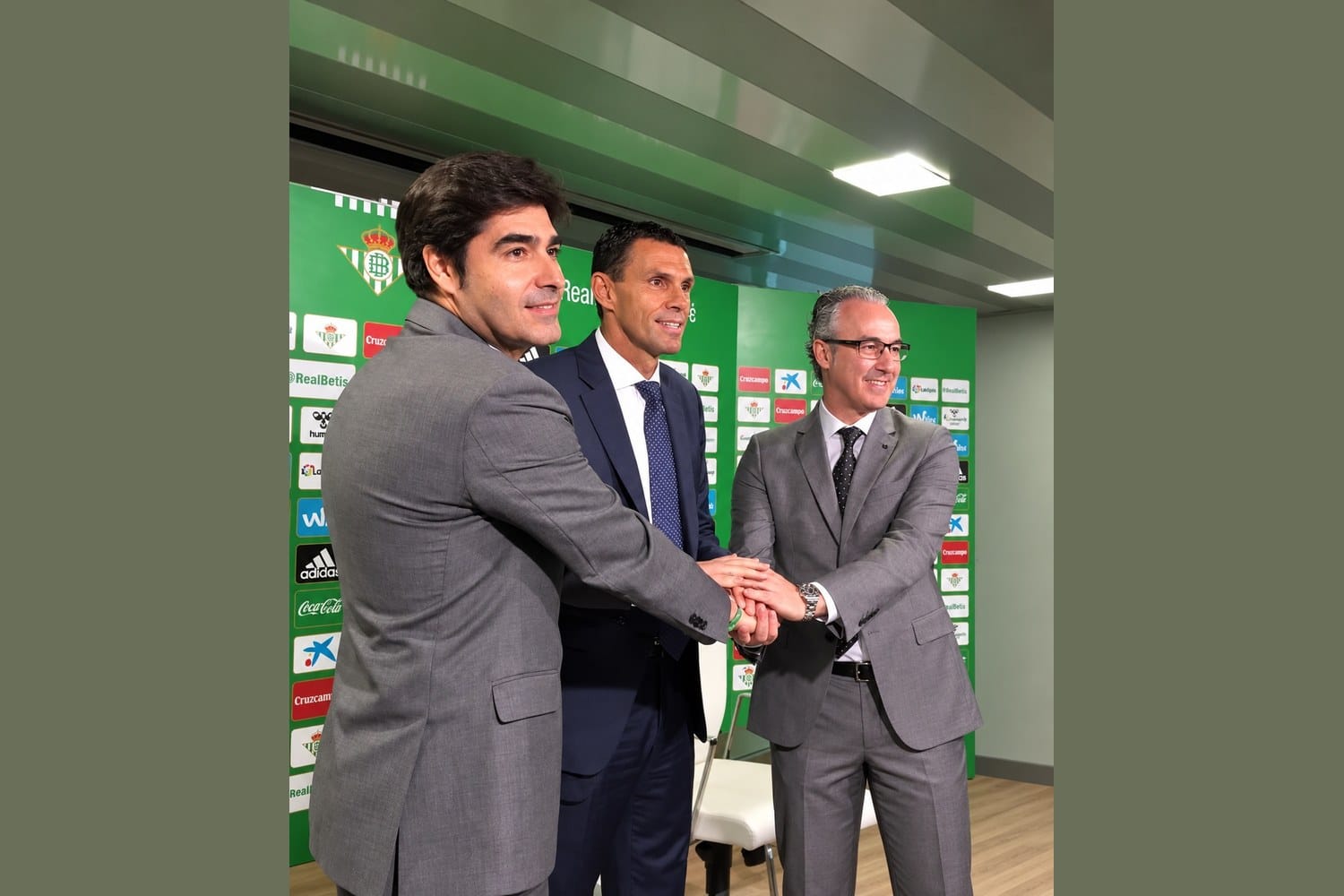
- 2016–2017 · Real Betis Balompié (Spain, LaLiga) · CEO of Sports
- 2009–2016 · RC Celta de Vigo (Spain, Segunda / LaLiga) · Sporting Director
- 2007–2009 · UD Salamanca (Spain, Segunda División) · Sporting Director
- 2005–2007 · FC Cartagena (Spain, Segunda B) · Sporting Director
- 2001–2005 · Novelda CF (Spain, Segunda B) · Sporting Director
KEY ACHIEVEMENTS
- RC Celta de Vigo · promotion to LaLiga and four consecutive top-flight seasons with Europa League qualification
- Real Sporting de Gijón · the highest transfer fee in the club's history (Jorge Meré to FC Köln, €8.7M)
- Real Zaragoza · arrived with the club in the relegation zone, secured survival and a 10th-place finish the following season
- CD Everton de Viña del Mar · seven U-20 players promoted to the first team
SELECTED TRANSFER RECORD (OUTBOUND)
- Nolito → Manchester City · €18M
- Santi Mina → Valencia · €10M
- Iago Aspas → Liverpool · €9M
- Augusto Fernández → Atlético Madrid · €6M
- Denis Suárez → Manchester City
- Joselu Mato → Real Madrid
- Rodrigo Moreno → Real Madrid
- Jorge Meré → FC Köln · €8.7M
- Dani Martín → Real Betis · €4.3M
- Sergio Álvarez → Eibar · €3.5M
- Lautaro Pastrán → Belgrano · $1.5M (50% sell-on secured)
- Cristian Riquelme → Colo-Colo (50% sell-on secured)
AREAS OF EXPERTISE
- Designing a club's sporting model
- Building data-driven scouting departments
- Academy-to-first-team pathways
- Squad building under financial constraints
- Head coach and coaching staff appointments
TEACHING
- INAF (National Football Institute of Chile) · Sporting Director Diploma
- LaLiga Business School
- UCAM Universidad Católica de Murcia
REFERENCES (as listed by the interviewee)
Luis Enrique · Monchi · Roberto Martínez · Gustavo Poyet · Víctor Orta · Roberto Olabe · Raúl Sanllehí · Ángel Haro
EDUCATION
- Master in Sports Management (Spanish Football Federation / FIFA / CIES)
- Sporting Director Programme (Spanish Football Federation)
LANGUAGES
Spanish (native) · Portuguese · English
PART 1 · GETTING STARTED
Please introduce yourself briefly. If you were to define Miguel Torrecilla as a sporting director in one sentence, how would you describe yourself?
Right now, I consider myself a chameleon-like sporting director who is highly adaptable to different environments, with a great passion for scouting, academy development, and the promotion of young talent.
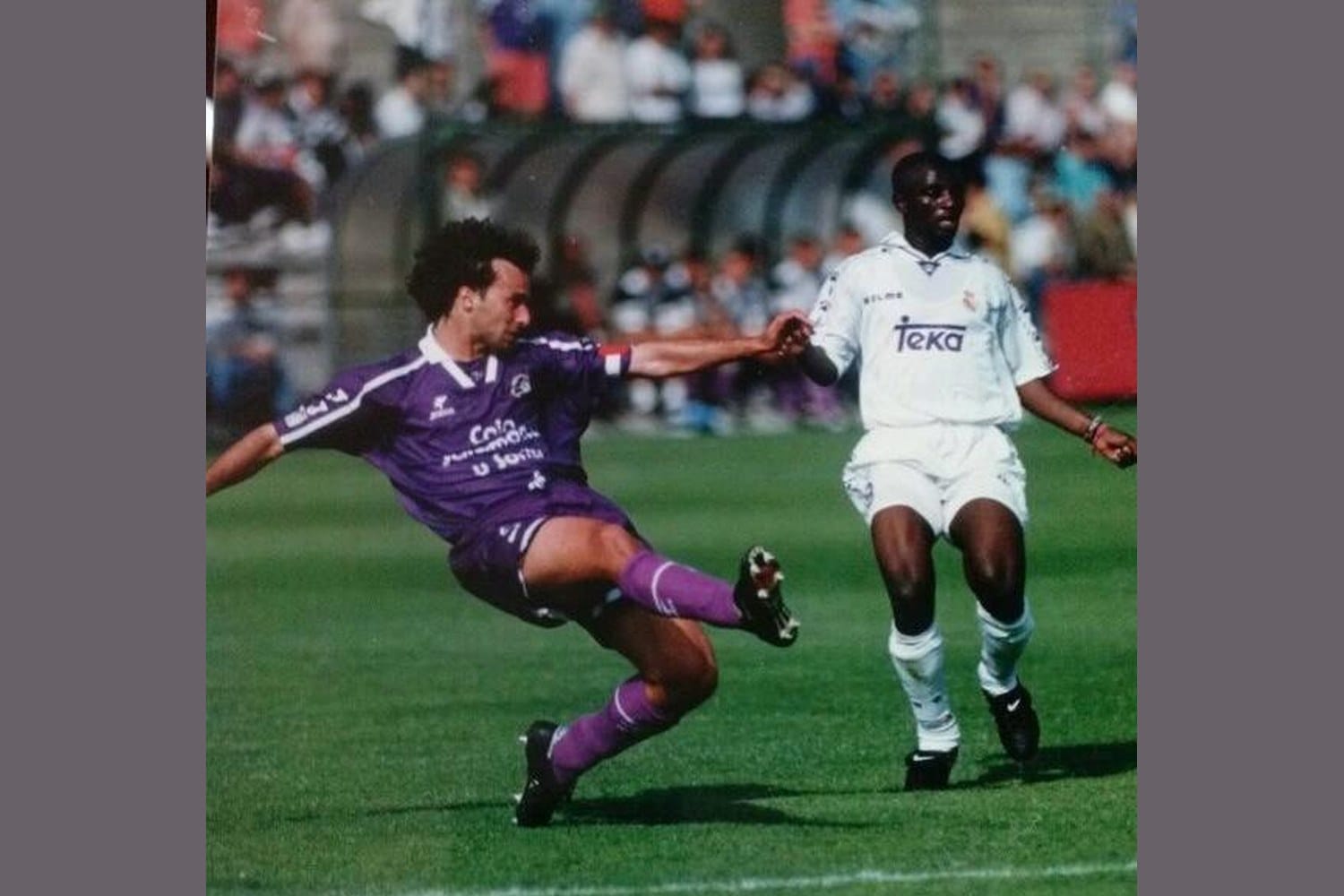
Born in 1969, you spent 12 years as a defender during your playing career and have now been working as a sporting director for 24 years since 2001. How has your background as a defender who played 300 matches influenced your approach to player evaluation? In particular, when recruiting forwards or midfielders, what specific differences do you perceive between how a former defender assesses players and how directors from other positional backgrounds might view them?
That is a very good question. Experience as a professional player always helps and is an asset when making scouting decisions, but it shouldn't be the deciding factor. It is often said that those of us who played in deeper positions, viewing the game "face-on" from the back, gain a broader perspective, having spent so much time watching the action unfold right in front of us. I'm not sure whether that is the decisive factor, but it certainly helped me understand the game and, above all, quickly recognize the different profiles of the players I was up against.
You were born and raised in Salamanca, and you began your career as a sporting director at Novelda and then at UD Salamanca, your hometown club. How did the experience you built at these early clubs lay the foundation for moving on to bigger stages like Celta de Vigo, Real Betis, and Real Zaragoza? Drawing on your own career path, please explain the differences in the capabilities required to run a Segunda División B club versus a LaLiga Primera División club.
This question takes me back to my early days as a sporting director, and I really appreciate you asking it.
At the start, youth and inexperience lead to mistakes, particularly regarding negotiation skills and ensuring that signings were finalized under the best possible terms for the club. Those were years of great learning, during which I also began to realize that technology needed to play a significant role in my daily routine.
That is why there is a vast difference between working at the clubs where I began my career and working at clubs like Real Club Celta de Vigo, Real Betis Balompié, Real Sporting de Gijón, or Real Zaragoza. This is especially evident in their scale, their impact on the fans, and their influence on the local community. Whenever these clubs play at home, they become social engines for the city, and the experience is completely different.
Another key difference lies in the ability to establish professional working structures, which, in my case, were built around scouting and promoting talent from the academy. At those clubs, I had professionals assisting me daily with the vital task of scouting new players, alongside another large group of specialists within the academy who helped ensure that talent was well prepared to make the leap to the first team as they progressed through the various stages of their development.
Ultimately, regarding my role, the three biggest differences are technology, scouting, and academy development.
PART 2 · TRANSFER MARKET STRUCTURE AND TIMING
You've stated that you completed approximately 400 deals across 46 transfer windows, a figure that includes not only player signings but also contracts with head coaches and coaching staff. When a sporting director must plan player recruitment and coaching staff recruitment at the same time, which do you decide first? Does the head coach appointment come first, or does key player recruitment come first? And how does your squad-building strategy change when this order is reversed? Please explain in concrete terms.
I consider this question one of the most crucial factors when planning a new strategy for an upcoming transfer window at a professional club. While the role of the head coach is significant, I believe the club's overall model is paramount: not just the style of play, but the sporting model that the ownership or president envisions for the club. Factors such as history, fan preferences, and the academy must be taken into account (though that is a topic worthy of an interview in its own right).
A professional club needs a clear sporting model and a defined identity regarding its style of play. A fan might arrive at the stadium to see their team take the pitch wearing the rival's jerseys, perhaps because their own were lost in customs, yet they should still be able to recognize their team by its style of play. The sporting director must ensure the appointment of a coach and staff who respect that model and can make the fans feel represented on the pitch. If that connection isn't made, positive results might sustain the situation for a while, but if negative results persist, keeping that coach could become untenable.
Regarding player profiles, it is vital for the coach to work in alignment with the sporting director and the scouting department to ensure the right players are brought in to fill vacancies. However, before looking externally for new signings, the coach should look within the academy (at the U23, U20, and U18 teams, for instance) to see whether any top academy prospects fit the required profiles: looking inward before looking outward. Sometimes coaches arrive at clubs without information on these talents. That is why it is the sporting director's responsibility to ensure that the scouting office, working alongside the data and analysis department, maintains an extensive library of video material and objective and subjective reports, thereby providing the coach with all the necessary information on talents ready to make the step up.
When bringing in new signings, a hybrid approach combining subjective scouting with objective data analysis is crucial. It is essential to secure the specific profiles requested by the coach. The process starts with a shortlist of around ten candidates recommended by the scouting team. We then work with the data department to evaluate them against the metrics required by the club's playing style, tailored to the specific demands of each role. By filtering these candidates and establishing a priority ranking, the club arrives at a shortlist ready for the pre-negotiation phase, pending a final assessment of the financial terms and of the personality and character traits that define each player's psychological profile and potential fit with the club's model.
"A fan might arrive at the stadium to see their team take the pitch wearing the rival's jerseys, perhaps because their own were lost in customs, yet they should still be able to recognize their team by its style of play."
During your time at Celta de Vigo, Denis Suárez left for Manchester City while Celta were still in Segunda División, whereas Nolito moved to the same club after spending his prime years in Primera División. Both players had the same destination, but one was an early sale of a prospect and the other was the sale of an established starter. How do the conditions and negotiation approaches demanded by big clubs differ depending on the player's career stage? Please describe in concrete terms the difference in atmosphere you felt at the negotiating table when a club like Manchester City buys a prospect versus a first-team-ready player.
Indeed, this question highlights two distinct negotiation strategies, involving not only players with very different profiles but also two vastly different stages for my club, Real Club Celta de Vigo.
First, one must consider the club's situation at the time. When Denis Suárez was transferred to Manchester City, the negotiation was between a powerhouse club and a Second Division club facing a dire financial crisis that forced us to sell our top talents. This didn't happen with Denis alone: Joselu Mato and Rodrigo Moreno had to be transferred to Real Madrid, Iago Aspas to Liverpool, and Jordi Figueras to Rubin Kazan, to name a few other examples.
Consequently, Celta did not negotiate from a position of strength. Instead, we focused on the players' future performance at these major European clubs, aiming to generate revenue based on their success. I recall working with our General Manager, Antonio Chaves, to devise formulas tied to future performance targets, which were key to finalizing agreements and securing player-sale revenue during that extremely difficult financial period.
In contrast, the Nolito case unfolded after Celta de Vigo had qualified directly for the Europa League group stage. We were negotiating from a position of financial stability, having spent four consecutive seasons in LaLiga's top flight, and we held a completely different kind of bargaining power. As a result, the deal came down simply to the payment of the buyout clause in Nolito's contract, with no need for traditional negotiations.
During your seven years at Celta de Vigo, you experienced three seasons in Segunda División and four in Primera División. I imagine the first top-flight season immediately after promotion was the most dangerous period. In the summer transfer window right after promotion, which positions did you prioritize for reinforcement? Did you secure defensive stability first, or did you strengthen your attacking firepower? Given that this choice was directly tied to avoiding relegation, please explain your decision-making criteria.
At Real Club Celta de Vigo, the initial strategy was, above all, to ensure that 50% of the squad consisted of academy players. Then, addressing the scenario you mentioned, we identified our areas of greatest weakness so we could focus the bulk of our available transfer budget on signing players for those specific positions.
We paid particular attention to the team's spine, bringing in players with proven international track records who could help our homegrown players establish themselves in LaLiga's top flight. It was a grueling and complex challenge, but we succeeded; securing our place in the league felt just like qualifying for the Champions League.
Key signings that set the tone for our strategy included goalkeeper Javi Varas (from Sevilla); center-backs Gustavo Cabral (an Argentine from Levante) and Vadim Demidov (a Norwegian international from Real Sociedad); midfielders Augusto Fernández (an Argentine from Vélez Sarsfield) and Michael Krohn-Dehli (a Danish international from Brøndby); and South Korean international Park Chu-young (from Arsenal). The guiding principle was to sign players of proven international caliber who could help accelerate the adaptation of the young talents we were promoting to the first team.
The objective had two dimensions: ensuring the stability of the club's model and demonstrating that this model can compete in the First Division (LaLiga), alongside the sporting goal of keeping the club in the top tier of Spanish football.
During your time as CEO of Everton de Viña del Mar, you sent a player to rival club Colo-Colo within the Chilean league. Transfers between rival clubs in the same league and country are directly tied to fan sentiment. What principles did you establish when making such decisions? Drawing on the situation at the time, please explain in concrete terms how you balanced securing a transfer fee against protecting the club's image.
In Chile, when the three major clubs (Colo-Colo, Universidad de Chile, and Universidad Católica) show interest in a player from another club, retaining that player becomes nearly impossible. This was especially true in this case, given that the player had little time remaining on his contract.
Cristian Riquelme had enjoyed an outstanding season after being promoted from the U-20 squad. The deal with Colo-Colo not only secured a transfer fee but also guaranteed a 50% share of any future transfer. Furthermore, the club reclaimed the percentage Colo-Colo held in key player Benjamín Berríos, thereby securing 100% of the economic rights to this excellent midfielder for Everton de Viña del Mar.
Beyond these specific outcomes, the operation sent a clear message to the young players in the academy: if they reach the first team and attract interest from a club like Colo-Colo, one of the most important clubs in the country and on the continent, their current club will not stand in the way of their career progression.
PART 3 · PLAYER EVALUATION AND LEAGUE SUITABILITY
From Celta de Vigo, Iago Aspas struggled to adapt after his move to Liverpool but returned to become a club legend, while Nolito spent one season at Manchester City before taking a different path. Both were Celta forwards, yet their Premier League adaptation played out differently. To what extent do you believe a player's fit with a league's style can be predicted when sending him abroad? Please speak candidly about how you analyze why players who succeed in LaLiga fail in the Premier League or the Bundesliga.
That is a difficult question to answer. I believe that a strong connection to their roots likely played a role in the examples you mentioned; both Nolito and Aspas, albeit for different reasons, reached the peak of their footballing performance at Celta de Vigo.
However, there are many other cases where that wasn't so, and the players still adapted very well. Sometimes knowing the language helps; other times, it's the coach strongly backing the signing or the player's family feeling comfortable in the country.
I think it is crucial for clubs, especially at the elite level, to invest in professionals and dedicated player support departments. They need to get involved in minimizing the risk of poor adaptation, not just for foreign players but across the board. You have to consider more than just sporting factors; the day-to-day life of the player's family matters too.
During my time at Real Betis Balompié, I recommended establishing a First-Team Player Family Support Office; it is still active today, led by the same person. I believe that allocating resources to such a department ensures the family's adaptation is monitored and demonstrates the club's commitment to improving the daily lives of the people around the player.
During your time at Sporting de Gijón, you sold Jorge Meré to Bundesliga side FC Köln for a substantial fee of €8.7M, shortly after the club had been relegated to Segunda División. Negotiating the sale of a defender from a newly relegated club to the German top flight cannot have been easy. What factors lay behind Köln's decision to sign him? Please explain whether the data or video material you presented, or the network you had built personally, was most decisive.
This deal took place shortly after I arrived at Sporting de Gijón from Real Betis Balompié. The club had just been relegated to the Second Division, and the summer transfer was viewed as an extraordinary financial move, but the player's standing was that of a LaLiga First Division player.
I recall that the deal was brokered by the player's agent, Gelu Rodríguez, and that the transfer fee was accepted by our president, Javier Fernández. To this day, it is remembered as the most lucrative transfer in the club's history.
At Everton de Viña del Mar, you emphasized promoting seven players from the U-20 team to the first team. Of these seven, how many genuinely had the ability to compete for a starting place? Caught between the goal of youth promotion and the immediate pressure for results, head coaches usually prioritize the latter. How did you persuade them? Please paint a concrete picture of the conversations at the time.
This is a very interesting topic for me. Developing players is one of the ways a sporting director can leave a legacy at the club where they work.
During that period, there were four very different coaching profiles. Most of these appointments stemmed from the vision of Grupo Pachuca, with the group's owner and president, Jesús Martínez, exerting significant influence on hiring decisions. The model was clear: the recruitment of foreign players depended entirely on the multi-club platform (only two cases were handled 100% under my management: Kevin Méndez from Peñarol and Tucu Contreras from Antofagasta). However, regarding the Chilean market and talent development, I was granted more freedom, supported by the scouting and data department we established during my tenure as executive president, though under the supervision of the president (Jesús Martínez) or the international vice-president (Pedro Cedillo).
As for bringing these players into the first team, the goal was always to ensure the coach held them in high regard. Before taking that step, players would frequently train with the first team so that the decision to make the leap to professional football was a consensus reached with the entire coaching staff. Even though we had ambitious goals, specifically qualifying for international competitions (an objective achieved in two out of three seasons), we always discussed with the coaches the importance of considering the top-performing players from the U-20 squad.
Among those seven players, several appeared on the U-20 national team's radar and were, in my personal opinion, truly ready to play in the starting lineup. Others joined the first team to continue their development with the aim of eventually establishing themselves. Of those seven players, four remain with the first team, two are currently at Unión Española (a historic club in the country), and only one has failed to establish a career in professional football.
"Developing players is one of the ways a sporting director can leave a legacy at the club where they work."
PART 4 · FINANCIAL STRUCTURE AND TRANSFER FEE LOGIC
During your Celta de Vigo days, Nolito was sold for €18M, Santi Mina for €10M, and Iago Aspas for €9M. All three were attackers, yet their transfer fees differed. How were these price differences determined? Among age, contract length, the buying club's financial scale, and league suitability, which had the greatest impact? Please also explain the methods you used during negotiations to close the gap between the initial offer and the final agreement.
In the cases of Nolito, Iago Aspas, and Santi Mina, the buyout clauses in their contracts were paid, meaning there was no room for negotiation in any of the deals. All three were high-impact players, and the strategy of the three buying clubs was very clear.
You worked at clubs in the Spanish Segunda División for 11 seasons. Within the financial structure of a second-tier club, what share of the club's operations does transfer income represent? First-division clubs have substantial broadcasting revenue, but in Segunda División, generating transfer income is directly tied to survival. When you worked at second-tier clubs, what minimum transfer income did you believe needed to be secured each season? Please be specific.
That's right; I spent 11 years working with four clubs in the Spanish Second Division.
The second-division clubs I worked with had different profiles, but several faced a very specific economic reality: the need to generate revenue through player sales without compromising sporting objectives. UD Salamanca, Real Club Celta de Vigo, and Real Zaragoza were in deep financial crisis; consequently, how much of the income from player sales could be allocated to the budget was subject to LaLiga's financial controls, which directly affected the annual budget.
Because those three clubs struggled to achieve financial balance, their revenue was subject to a "1/4 formula": if a player was transferred for €1 million, the professional squad's budget increased by only €250,000. Conversely, if the club was financially balanced, the formula was 1/1. While I don't recall whether the 1/1 ratio applied fully at Sporting de Gijón, the financial situation there, having recently played in the First Division, was certainly less dire than at the other three clubs.
It is a verifiable fact that revenue was generated from player sales at all four clubs during my time with them. However, given LaLiga's strict and rigorous financial controls, the impact on the professional squad's spending budget depended heavily on control mechanisms that have been firmly established for years. I consider these mechanisms fundamental to making LaLiga (across both the First and Second Divisions) one of the most sustainable competitions in the global football industry today.
Real Zaragoza is a historic club but has been stuck in Segunda División for a long time. You worked there for two years without achieving promotion. What do you diagnose as the biggest problem for a club trapped in the second tier? Is it a lack of squad quality, limitations in the financial structure, club governance issues, or is pressure from fans and the media a greater obstacle? Please explain the fundamental reason as you experienced it on the ground.
To analyze my time at Real Zaragoza, one must carefully examine the context of my arrival, the impact of the team's league position on the squad cost limit (salary cap) set by LaLiga, and the change in ownership.
To go into detail: I arrived in December, just before the halfway point of the season and the opening of the transfer window, with the team sitting in 21st place, four points from safety. We were at risk of relegation to the third tier of Spanish football, the Primera Federación (1ª RFEF). Amid this dire situation, the fans' panic was palpable; the sole objective for the remaining six months of the season was to save the team from the disaster of dropping to the third tier.
We succeeded in keeping the team up. We hired a new coach for the task, Juan Ignacio Martínez (JIM), and began planning the following season together.
We finished that season 15th out of 22 teams, four points clear of relegation, having been in the relegation zone and four points from safety at the midpoint. The most critical factor in determining the squad cost limit set by LaLiga's Financial Control body is the position achieved in the previous season. Because we finished 15th and lacked the ability to boost our budget through player sales (though we did benefit from the "fanbase" metric), we ended up with the 14th-largest budget in the division for the following season. In other words, thirteen other clubs in the Spanish Second Division had greater financial capacity to build a squad capable of winning promotion to the First Division. At a club as massive and passionate as Zaragoza, promotion is the only acceptable goal, yet a dispassionate look at the numbers reveals just how far behind the top-budget clubs we were. That season, Almería and Valladolid won direct promotion; they had the fourth- and second-largest budgets, respectively.
Ultimately, the team finished in a respectable 10th place that season, an improvement on the 15th-place finish of the previous season.
I also believe the change in ownership led to a management model vastly different from the previous one. As part of a multi-club platform, the club's leadership did not focus 100% of its attention on Zaragoza, unlike the former owners. I am not saying it was better or worse, but things began to be managed differently.
In that regard, there were internal changes at the executive level as well as a change of head coach. Juan Carlos Carcedo replaced JIM, and the squad underwent a major overhaul. The coach was finding solutions, particularly for the team's acknowledged lack of goals, by collaborating with the scouting and data departments. The goal was to have a plan in place by the January transfer window to bring in two new strikers. However, unexpectedly, and while the team sat in 13th place, we were both dismissed.
We know that at clubs with such passionate supporters and massive fanbases, pressure runs high, and the media and social media tend to inflame moments of sporting crisis. Yet, from the perspective of the scouting department, and in my own view, sticking with Juan Carlos Carcedo (or, before him, JIM) would have paid off, and within a year or two the club would have been a genuine contender for promotion.
PART 5 · NETWORK DESIGN AND RELATIONSHIP BUILDING
Your list of references includes names like Luis Enrique, Monchi, Roberto Martínez, Víctor Orta, and Gustavo Poyet, all of whom currently work, or until recently worked, at major clubs in Europe and South America. Was this network something you built intentionally, or did it form naturally over more than 20 years of work? Do you see "who you know" as an asset as important to a sporting director as "what you know"? And at what moments does that network actually come into play at the negotiating table? Please give an example.
Indeed, this is a list of key references drawn from a vast network of contacts built over 24 consecutive years in football management. The individuals you mention stand out: some because we worked together successfully and built a solid relationship based on lasting mutual admiration for each other's careers, and others because they are benchmarks of sporting leadership with whom I maintain ongoing, open communication.
While a contact list doesn't define a sporting director, it does provide the network needed to find solutions, strategies, or simply synergies.
Your football knowledge isn't defined by the number of contacts you have, but those individuals, especially the ones you cite as "references," can always vouch for you or provide insight should someone want to know more about you.
Beyond the names you mentioned, there are others, such as Roberto Olabe (currently President of Football Operations at Aston Villa), Richard Law (non-executive board member at Charlton Athletic), and Ángel Haro and José Miguel López Catalán (President and Vice-President of Real Betis) or Antonio Chaves (former General Manager of Celta de Vigo), who can speak to my approach to the profession, my professional interests, and my capabilities.
The role of sporting director requires the utmost trust and the ability to work cross-functionally. The old model, in which a single sporting director funneled every decision through himself, is becoming obsolete. Today, the focus is on structures that facilitate cross-functional collaboration, with the traditional pyramid hierarchy increasingly giving way to a model based on shared responsibilities and a horizontal approach.
"The old model, in which a single sporting director funneled every decision through himself, is becoming obsolete."
Ángel Haro, president of Real Betis, and Raúl Sanllehí, former President of Football Operations at Inter Miami, are also among your references. Relationships with club owners and executives must be fundamentally different from those with coaches or players. How do you build trust with club management? In particular, when opinions clash (for example, when you as sporting director want to develop a player further before selling him, but the president is pushing for an immediate sale), how do you respond? Please explain concretely.
This question follows naturally from my previous answer, where I noted that the cross-functional executive approach is the one showing the most durability, stability, and balance. However, individuals within their respective departments must consistently foster trust, professionalism, and a strong, routine connection with their CEO or president.
Throughout my 24-year career across ten different organizations, I have maintained excellent relationships with my direct superiors, successfully balancing high expectations with mutual trust.
I believe that maintaining a steady flow of information is crucial; as a sporting director, keeping your superiors up to date on everything is essential. Things move very quickly, and there is always a risk that news, such as the signing of a new player, might leak through the media or social media before you have a chance to inform them. That is undesirable and must be avoided whenever possible. It is better to provide too much information than too little and risk them finding out about something from an outside source.
As for keeping a player whom the president wants to sell, or whom the finance department is pushing to offload in order to bring in a transfer fee, that is a situation I have faced several times. It is difficult to stick to your sporting judgment, especially in the Second Division. It is easier in the First Division, where revenues are much higher. In my experience, player transfers were not the primary source of income there; TV rights generated the most revenue for the clubs I managed in LaLiga's First Division.
Your CV states that you speak Spanish, Portuguese, and English. When working across Belgium, Chile, and Spain, what real difference did your language skills make in negotiations? What differences have you noticed in the speed of negotiations and in how trust is built when you can speak directly, without an interpreter, compared with when you have to rely on one? I'd appreciate it if you could describe a concrete scene.
Honestly, I have never used an interpreter when starting a negotiation. English has always helped me close deals or handle situations when agents, coaches, players, or others didn't speak Spanish.
Language is important. If I ever needed help understanding someone, I think it would be important for the interpreter to understand football both as a sport and as an industry. They don't need to be an expert, but they do need a basic grasp of football culture.
PART 6 · PERSPECTIVE AS AN EDUCATOR AND ASIAN CONNECTIONS
You currently teach on the Sporting Director Diploma programme at INAF (National Football Institute) in Chile, having previously taught at LaLiga Business School and UCAM Universidad Católica de Murcia. As an educator, what ability do you emphasize most to the next generation of sporting directors? Among negotiation skills, market analysis, relationship building, and data interpretation, what do you teach first? And what differences do you see between what you needed to prepare for when you started 20 years ago and what the younger generation must prepare for now?
As an instructor, I find the diverse football backgrounds of the students particularly noteworthy. The group includes former professional players beginning their training, active players who do not want to wait until retirement to further their education, and staff members from Chilean professional clubs seeking to expand their knowledge for internal advancement or better job prospects.
I believe the new generation will be comfortable with data and AI; they will be technologically adept and equipped with numerous resources that make their work easier. We need to get on their level today, or we will be left out of the market.
Firstly, my focus was on setting up "a data-driven scouting office". I demonstrate how a club with a modest budget can build a department of four scouts and a data analyst to generate the subjective and objective insights needed to support decision-making. And now I will be speaking to the students about "Roles and Strategic Vision at Sporting Department".
When I began training for the role of sporting director over 20 years ago, data and strategic plans were not yet an established part of decision-making or day-to-day operations. Today, however, it is a reality, so we must ensure that future sporting directors receive up-to-date training in this area.
Furthermore, I believe it is essential to understand FIFA regulations on international transfers and to receive training in negotiating football agreements and contracts. Language skills are also crucial. English is fundamental, and I advise aspiring directors to be open to learning another language as well, whether Portuguese, Italian, French, or German.
Among your references, Gustavo Poyet managed Jeonbuk Hyundai Motors and has experience of the Korean market. You have also worked outside Spain, in Chile and Belgium. What characteristics do you see in Asian football, and in Korea's K League in particular, compared with South American or European markets? If an offer came from a Korean club, what would be the first condition you'd want to confirm, and why?
To me, a country's football is a reflection of its society, so I consider South Korean football to be well organized, team-oriented, and dynamic. I see significant tactical growth, characterized by constant transitions and high physical demands, with a style that favors players with exceptional physical attributes.
South American football, by comparison, is slower-paced; players dribble more, and there is at times less tactical discipline. The South American player is more unpredictable and has greater individual technical talent. I believe the combination could be perfect.
If an offer came from a Korean club, the most important thing for me would be to understand the work being done in that club's academy and to gauge its level of commitment to promoting elite young talent to the first team. It is also important to know how much the club values international scouting and what specific characteristics and qualities it seeks in foreign players.
Naturally, I would also need to know the budget available to the sporting director for building the sporting structure (the academy and its staff, the first-team staff, and the first-team squad), as well as the extent of the club's investment in foreign players: specifically, whether it will pay transfer fees or be limited to signing free agents or players on loan from other clubs.
"The combination could be perfect."
Korean clubs have recently been recruiting more young players from South American markets such as Chile and Argentina. You have first-hand experience of the South American market structure, having sent prospects from Chile to Argentina. If a K League club wanted to sign a player in his early twenties from South America, what would you advise it to watch out for? When evaluating how likely a South American player is to adapt to an Asian league, which factors are most decisive? Please explain concretely.
On the technical and tactical side, it obviously depends on being sure he will make a distinctive contribution to the team. While he would naturally need time to adapt, I believe psychological factors and maturity of character are fundamental.
If a player can handle the pressure of starting for a First Division club in Argentina or Chile at that age, showing no signs of frustration during setbacks and displaying a competitive spirit in contested situations, that tells me a great deal.
I would make it a priority to watch him play live at the stadium; observing the warm-up alone can reveal details that either reinforce or undermine a potential decision.
Once interest is confirmed and conveyed to his inner circle (his family and agents), I would try to meet him in person to build a rapport. This ensures that, should he be signed, he understands why he is being recruited and knows what to expect regarding the team, the stadium, the training ground, the atmosphere among the fans, and the place where he will live, including potential housing options and how he might spend his free time.
PART 7 · CLOSING AND VISION
What are your vision and goals for the future? After your youth development project with the Chilean federation, would you like to return to club-level operations, or would you prefer to remain a system architect at national-team level? And how do you hope the name Miguel Torrecilla, a man who has completed 46 transfer windows and approximately 400 deals, will be remembered in football history?
Thank you for the question. Honestly, I see myself wherever people think Miguel Torrecilla can help to develop and grow a sporting project.
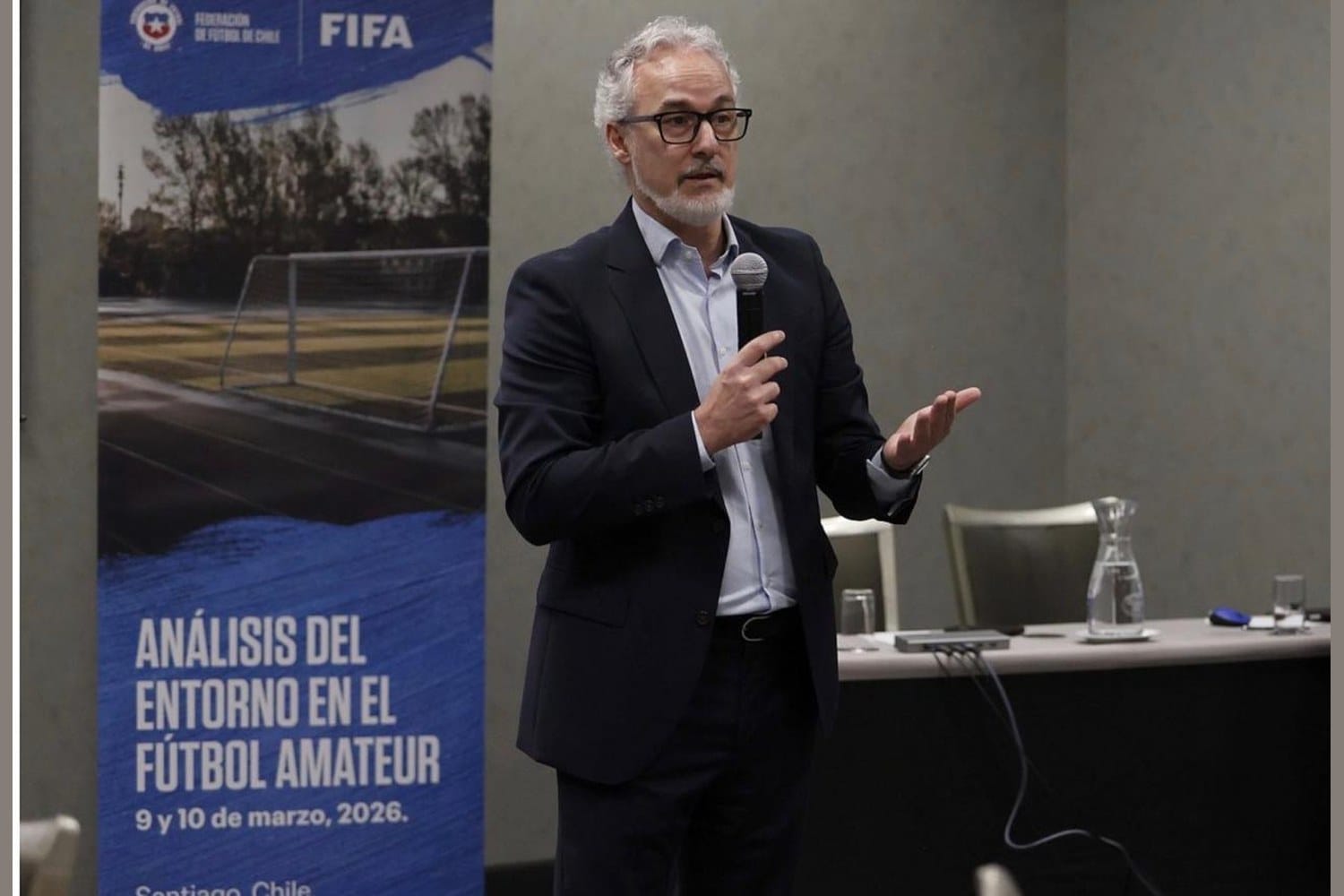
I currently head the Development Department at the Chilean Football Federation. Elections for the ANFP presidency will take place on November 19, and the incumbent president will not seek re-election, so everything depends on the new leadership of the ANFP (National Association of Professional Football).
I feel good here. I maintain a solid relationship with FIFA and CONMEBOL, take part in many of their events, and feel that my work is respected. No one knows what the path or the next step will be; the most important thing is that I am prepared to make the right decision, whether that means continuing in federation management or returning to the role of sporting director at a club.
CLOSING
Twenty-four years, ten organisations, close to four hundred deals, forty-six transfer windows. Read against the Q&A that produced it, the number does not read as a career summary. It reads as a shape. There is the early Spanish lower-tier work (Novelda, Cartagena, Salamanca) that taught him negotiation and technology. There is the Celta de Vigo decade, where Rodrigo Moreno and Joselu went to Real Madrid, Iago Aspas to Liverpool, Nolito and Denis Suárez to Manchester City — and where a crisis-era Second Division club pioneered future-performance clauses just to keep the lights on. There is the Betis year that produced the First-Team Player Family Support Office still active today. There is the Sporting de Gijón year that produced the Jorge Meré €8.7M record. There is the Zaragoza stretch that reads, honestly, like a case study in how the LaLiga salary cap compounds a Second Division struggle: 14th budget in a league you are expected to escape, 15th finish, then 10th, then dismissal in the middle of the recovery. There is the Belgian chapter, the Chilean executive-presidency chapter, and now the federation chapter.
What the reader is handed, across the twenty answers, is the mechanics most sporting directors keep internal. The "1/4 formula" — €250,000 of every €1 million from a sale, when the club is financially stressed. The looking inward before looking outward rule — academy U23/U20/U18 first, external shortlist second. The ten candidates, filtered against role-specific metrics, then ranked pipeline. The buy-out-clause-paid reality of three of the biggest Celta sales (Nolito, Aspas, Santi Mina) — meaning no negotiation at all. And the quieter administrative innovation he installed at Betis: a family-adaptation office, because the day-to-day life of a player's family matters too. He is also direct about what has changed in his industry — "the old model, in which a single sporting director funneled every decision through himself, is becoming obsolete" — and about what the next generation must own: data, AI, FIFA transfer regulations, English plus one more language.
The Korea chapter sits inside that larger ledger and runs in three threads, laid cleanly on top of one another. The first is historic: among the signings that helped Celta de Vigo consolidate in LaLiga's top flight after promotion, Torrecilla names South Korean international Park Chu-young, from Arsenal. That line is thirteen years old, and it is his. The second is methodological: he treats the Q18 Korean-offer question as something to engineer rather than to admire. First the academy and its commitment to promoting young talent. Then the club's investment in international scouting. Then the budget for the sporting structure and the extent of the club's commitment to foreign-player fees versus free agents. The third is advisory: in Q19 he hands K League clubs a working brief for South American recruitment — psychological maturity, pressure-handling under First Division conditions in Argentina or Chile, live stadium observation (even the warm-up), and a face-to-face meeting with the player and his inner circle. These three threads do not force themselves on each other. They sit, read together, like a prospectus. His own next step is honest: he waits for the new ANFP leadership after the November 19 election, and he is prepared, in his words, to make the right decision, whether that means continuing in federation management or returning to the role of sporting director at a club. Football Agent Lab will be watching, with a quiet hope that one of the chapters still ahead of him is written on this side of the Pacific.
ABOUT THE AUTHOR
SEOK LIM — Editor · Football Agent Lab
FIFA-licensed football agent and steel market analyst with over a decade of experience in commodity research. Football Agent Lab publishes interviews and market reports at the intersection of football, agency work, and global markets.


