"Football Is Not Chess, Everything Moves at the Same Time" — Nacho Alcaraz
Spanish coach, analyst, and now Technical Director. Nacho Alcaraz on five countries in nine years — Valencia youth to Silla CF to Valencia CF to Blacktown Spartans in Australia to Team Stopia FC in Korea to Canada — and on why football, for him, is never chess.
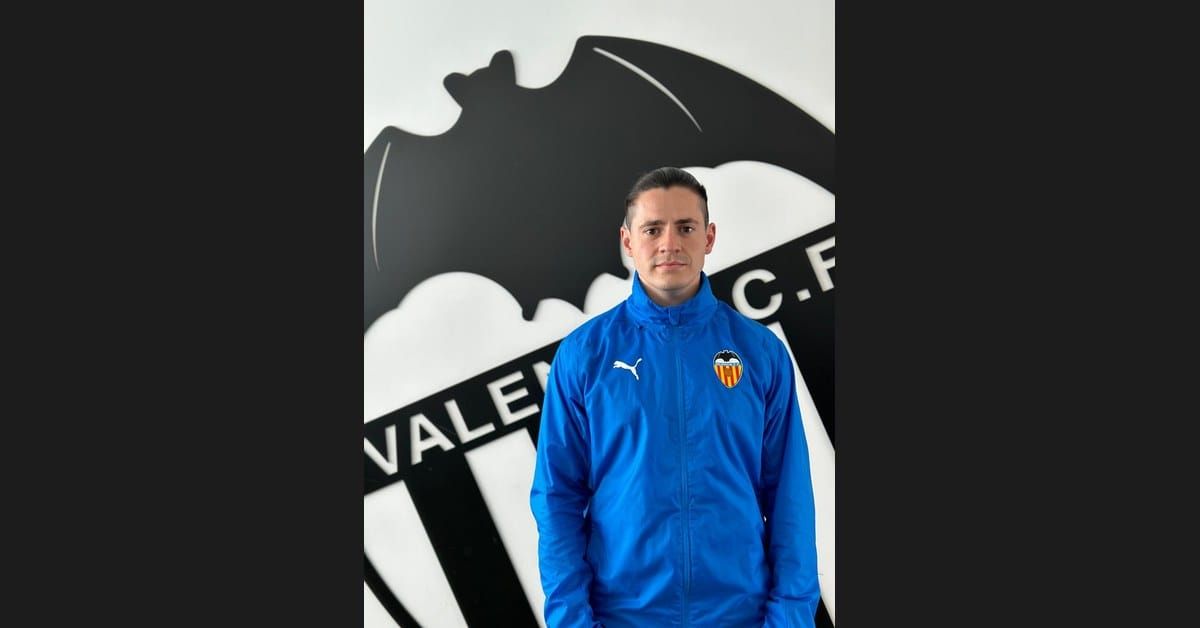
Nacho Alcaraz introduces himself under three names — coach, Head of Analysis, Technical Director. In 2017 he was running U-15 and U-17 sides in Valencia. By 2022 he was behind the screen at Valencia CF, cutting match video for the U-23 and U-19 sides on HUDL Sportscode. In 2024 he was Head Coach of Blacktown Spartans in Australia's NPL NSW and running the club's coaching staff on top of that. In 2025 he was Head of Analysis at Team Stopia FC in South Korea, learning to read and write basic Korean. In 2026 he is Technical Director at a club in Canada.
Five countries in nine years. He holds the UEFA A Licence through the Royal Spanish Football Federation, Technical Director and Video Analyst certificates from the Football Federation of the Valencian Community, and a Master's in Football Training Methodology and Performance Assessment from the Catholic University of Valencia. He added a Certificate in Psychology in Football Competition in 2025. His toolbox runs from HUDL Sportscode and Mediacoach to Instat and Power BI to a DJI drone he will fly over an amateur training ground when that is what the budget allows. He treats set pieces as a standalone discipline rather than a drill squeezed into the end of a session. He studies the local football culture before he plants his own ideas.
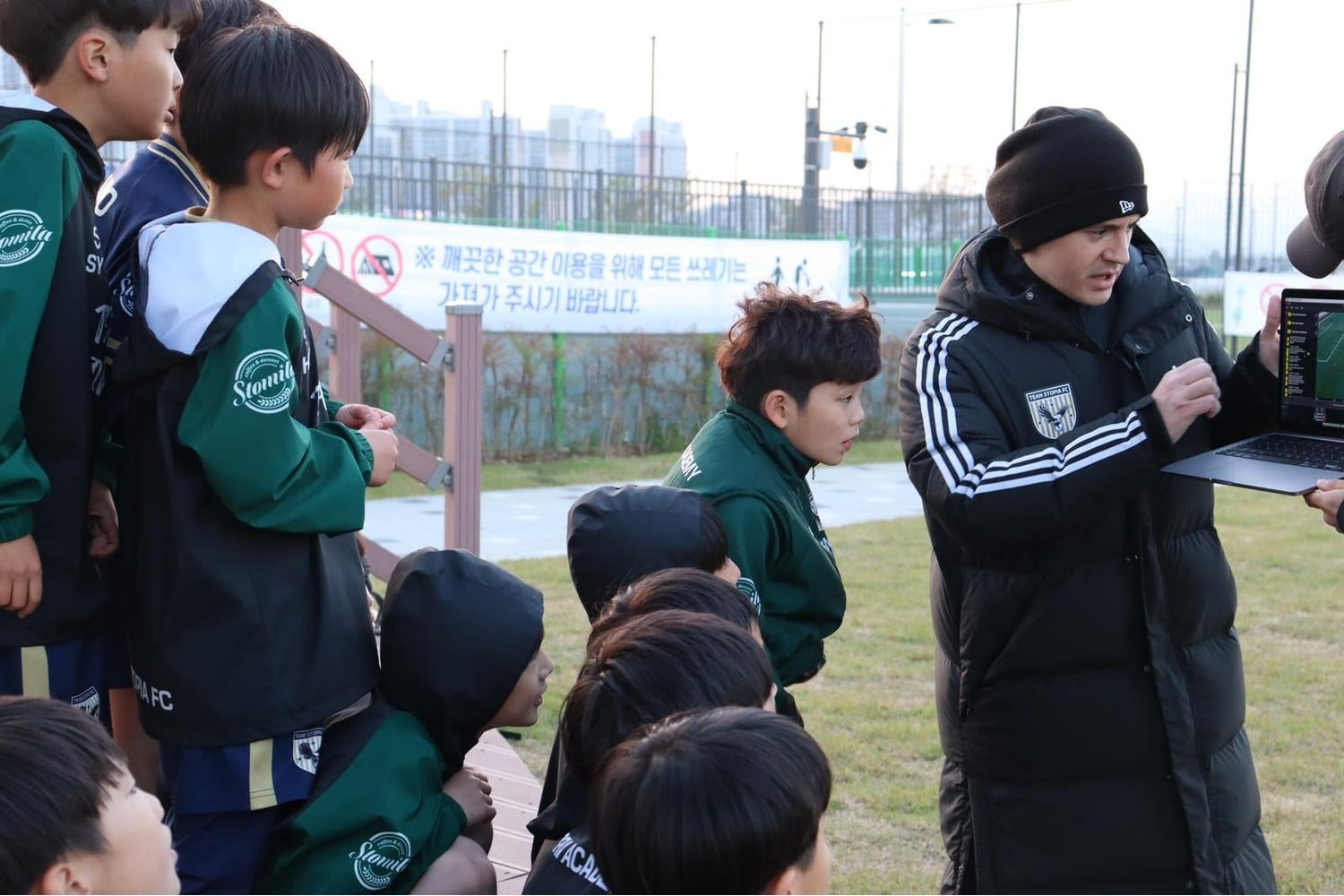
Among the five country stops, Korea is the one that reads with particular weight for Korean readers of this publication. In 2025 Alcaraz worked inside Team Stopia FC as Head of Analysis, and when we asked whether he would return, his answer was unambiguous: "If I had the opportunity to work in Korea again, I would know exactly how to understand and respect the positive foundations that already exist." K League clubs that are now building out live-match analysis desks, set-piece specialists, and youth-pathway design that reaches the first team will recognise the profile.
In the written exchange that follows, Alcaraz walks through how to prepare a corner routine with the same rigour as an open-play principle, how to label and sequence a High Press Recovery clip for a U-19 group, how to decide between "perfect but late" and "rough but immediate" information at halftime, and what he protects first — before any tool or methodology — when he enters a new football culture. The line that stayed with us is from Q13, where he draws the distinction that gives this piece its title: "On the tactics board, everyone wins. We place eleven markers against eleven markers, but football is not chess. Everything moves at the same time."
What follows is a written exchange, published in his own words and in the order he answered them.
Spanish coach · analyst · Technical Director
CURRENT ROLE
Technical Director at a club in Canada (2026–present)
COACHING EXPERIENCE
2025 · Team Stopia FC (South Korea) · Head of Analysis
2024 · Blacktown Spartans (Australia, NPL NSW) · First Team Head Coach · Head of Staff
2022–2023 · Valencia CF (Spain) · Video Analyst — U-23 (2ª RFEF), U-19
2021–2022 · Silla CF (Spain, 3ª RFEF) · Assistant Coach & Video Analyst
2021 · Poland International Camps · Head Coach
2019–2021 · U-19 National League · Analyst & Assistant Coach
2017–2019 · U-15 & U-17 · Head Coach
KEY WORK & ACHIEVEMENTS
Blacktown Spartans · developed the academy football strategy, led coaching across the club as Head of Staff, drove coach development, headed player education and the design of player pathways
Valencia CF · video analysis for the U-23 and U-19 sides — HUDL Sportscode and Studio, live match analysis, opposition reports, individual and set-piece videos, Keynote presentations, training recording and database management, on-pitch support for the coaching staff
Silla CF · co-designed sessions with the staff, ran pitch training tasks, took charge of attacking and defending set pieces, team tactical analysis, video analysis and opposition reports
Team Stopia FC · Head of Analysis in South Korea · basic Korean reading and writing in progress
CORE METHODOLOGY & EXPERTISE
Match analysis · Live match analysis
Set pieces (attacking and defending)
Opposition reports · Individual video feedback
Training session design
Player pathway design · Coach development
Data and performance analysis
CERTIFICATIONS & EDUCATION
UEFA A Coaching Licence — Royal Spanish Football Federation (2022)
Technical Director Certificate · Video Analyst Certificate — Football Federation of the Valencian Community (2021)
Certificate in Psychology in Football Competition — Catholic University of Valencia San Vicente Mártir (2025)
Master's in Training Methodology and Performance Appraisal in Football — Catholic University of Valencia San Vicente Mártir (2022–2023)
Bachelor's Degree in Human Resources — University of Valencia (2015–2019)
PART 1 · THE MAN BEHIND THE COACH
You introduce yourself under three different names — coach, Head of Analysis, and Technical Director. Most managers define themselves by a single identity, yet you're standing on three distinct stages at once: the pitch, the screen, and the drawing board of organizational design. If someone who knew nothing at all about football asked you, "What is football to you, and who are you within it?", how would you answer in a single sentence that threads all three together?
To me, football is a way of expressing each player's individuality. It is both an individual and a collective art that cannot be copied or imitated. It comes from the player, from their identity as a person, and is shaped by their own culture, allowing them to leave their mark and show their own way of understanding a sport that is loved all around the world. My role is always to recognize that this identity belongs to the player and to help them express it on the football field, while enhancing their strengths and minimizing their weaknesses.
"Football is both an individual and a collective art that cannot be copied or imitated. My role is always to recognize that this identity belongs to the player and to help them express it on the football field."
Your path began in Spain in 2017, leading U-15 and U-17 sides as a manager, but as you moved through Valencia's youth setup, Silla CF, and Valencia CF, your center of gravity gradually shifted toward becoming "someone who analyzes." Moving from the bench to a spot behind the screen looks like a retreat to some and, to others, a choice made to see the wider picture. For you, was this transition "setting the coaching aside for a while," or "sharpening your eyes first for the sake of better coaching"? If you could recall one moment when you made that decision, we'd love to hear it.
The decision to become an analyst wasn't actually mine. During my first coaching licence course, one of my classmates told me that I had a natural talent for analysing the game and encouraged me to invest more time in it in order to make the most of my abilities. As a coach, I believe you have to be good at everything you do and pay attention to every detail, including the relationships that surround us both on and off the pitch. Becoming an analyst while continuing to coach gave me a broader perspective of football. It allowed me to understand the details from a different point of view, to see players through a different lens, and even to step away from being the center of every decision in order to support my staff and coaches with more experience than me.
PART 2 · THE WEAPON OF THE SET PIECE
One of the credentials that defines you most sharply is being a "set-piece coach, offense and defense." Many teams treat set pieces as a secondary element, squeezed briefly into the end of a session, but you've prepared them as a standalone discipline. To you, is a set piece "a probability game that manufactures a few goals per match," or "a miniature of the team's entire game model, compressed"? Could you unpack that perspective for us in concrete terms?
I think it is important to make a distinction, as the impact of set pieces in amateur and professional football should not be the same as in youth development football. In my opinion, set pieces are highly offensive situations, where the risk of being punished for mistakes is very high because of the proximity to the opponent's penalty area and goal, creating greater opportunities within the game. I see set pieces as a strategic art, but one that depends to a great extent on high levels of individual technical and tactical quality in order to be successful. I also believe that set pieces should be clearly distinguished from open play, but we should never forget that open play always begins with a set piece.
At Silla CF, you were responsible for both attacking and defending set pieces at the same time. Yet attacking set pieces are an active domain — "executing exactly what I've drawn up" — while defending set pieces are a reactive one — "preparing for whatever the opponent might do." The very way you switch your brain on must differ between the two. If time to prepare in a given week were tight and you had to tackle one first, which would you reach for: the "set piece that scores one more goal" or the "set piece that concedes one fewer"?
From my point of view, attacking always begins with the decision-making of the players in possession of the ball. It requires creativity. As coaches and analysts, we can create contexts that increase the chances of success, but every situation we will face in the next match is still waiting to be discovered. On the other hand, when it comes to defending, I believe you must always consider the opponent's strengths while understanding your own weaknesses. Order and discipline are two essential elements that naturally emerge in defending, whereas they are not required to the same extent in attacking. I genuinely enjoy working in both contexts because the nature of football is to attack and defend.
We'd like you to paint us a single scene of what a set piece actually looks like when it unfolds on the pitch. Take a corner, for instance — the moment a routine you've prepared works to perfection. Could you describe in concrete detail how the players' movements, their positioning, and that first trigger appear on the screen? And when the routine breaks down, which cog in the machine tends to slip first?
Usually, the first thing to fail is the quality of the delivery. Football is a game of creating and exploiting advantages, and set pieces are no different. Before the delivery, a number of off-the-ball elements take place, such as blocks, runs, body positioning, the numbers in the box, and the delivery zone, all of which determine the probability of success before the ball is even played. However, without a high-quality delivery, everything that happened beforehand loses its value, as it cancels out everything that was created before. The players without the ball work to create a greater advantage, but that advantage ultimately comes from the player delivering the ball.
PART 3 · TACTICS AND THE GAME MODEL
In your football, "tactical analysis of your own team" and "rival reports" always sit side by side. In the end, every match is decided somewhere between "what we want to do" and "stopping what the opponent wants to do." If you had to choose between insisting on your team's identity to the very end and changing outfits for every match to suit the opponent, which way do you lean?
From my point of view, I believe that maximising your strengths and staying true to what defines us is always the best way to better express what we feel as individuals and as a collective. Adapting to the opponent can help in the short term, as it provides answers to specific situations within the game. However, your playing identity should be stronger than your opponent's. Understanding the opponent in order to neutralise them is necessary, but mastering your own identity will help you much more in the long term.
You've led both youth and senior football, from U-15 all the way to senior amateur NPL. In the youth game, "learning comes before winning," while on the senior stage "results are survival," so the guiding principles are bound to differ. Within the backbone of your game model, if you could separate the part that runs through both stages and never changes from the part you swap out wholesale depending on the stage, where does that dividing line fall?
In my opinion, for a child, winning must be a consequence of development; for a professional, winning is an objective. However, the game itself always remains true to what it is: eleven players against eleven players and one ball. Its principles do not change depending on the country or the age of the players. Therefore, the principles of how the game is played remain the same: to play the game. What does change is the way the game is taught. It must be adapted to the age and the person in front of you. The player you have in front of you tells you how they need to be taught. Coaching a 12-year-old girl is not the same as coaching a professional player in the Spanish first division, because their motivations, their way of expressing themselves, and their needs are different. But the purpose and the principles that belong to the game remain the same for everyone.
When you were responsible for Valencia's U-23 and U-19 sides, translating a match on the screen into your own "tactical language" must have been a daily task. Say you've captured a scene where your team presses the opponent's build-up and wins the ball back. What label do you attach to that clip, and what do you have the players see first? Could you picture one real scene in your mind and walk us through the order of that edit and explanation?
I would label the clip as High Press Recovery. First, I would pause the video just before the pressing trigger and ask the players what cues they can identify. Then I would show the synchronisation of the first defender, the cover provided by the second defender, and the distances between the lines.
When we teach these defensive situations, we decide whether to work individually or collectively depending on our objectives. We usually want to hear the players' thoughts before providing our own answers, encouraging a more reflective approach to learning. In some cases, we have even connected U-23 or U-19 players with first-team players, creating a form of mentorship that has had a significant impact on their development.
The analyst's role is to collect, filter, analyse, and present information through video. We work for the coaches and the players; we are there to support them. In my opinion, you cannot be a good analyst without first being a good coach.
You've coached players of entirely different habits — from Poland International Camps and Spanish youth to a Canadian club, and now Korea. Transplanting your own game model into an unfamiliar environment, with a different language and methodology, must be hardest in its very first phase. In your first month at a new team, are you the type to "plant my football first," or to "read their football first"? We're curious about the criteria that decide that order.
In my first month as a coach, I would focus on understanding the football culture and traditions of the place where I am working. That helps you get closer to the identity of the players. Personally, I like to first discover the strengths and qualities of my players and then integrate them into my own idea of the game. There has to be a balance between the coach's game model and the players' strengths, because that will always be more beneficial. I also pay close attention to the type of football that the local supporters enjoy, because over time they have developed a clear understanding of the football identity that represents their club.
PART 4 · THE WORLD OF DATA AND REAL TIME
You handle a vast array of tools — HUDL Sportscode, MetricaSports, Mediacoach, Instat, and Power BI, plus flying a DJI drone. Having many tools is a weapon, but it can become a trap where you're "buried in data and can no longer see the football." To you, are these tools "something that makes the decision for you," or "something that verifies your intuition"? Is there a line you've drawn for yourself to keep from crossing over?
Too much data creates too much noise. You have to know when it's time to close the laptop. We live in the age of technology and have access to an enormous amount of information. Ignoring it would be a mistake, but trying to follow every piece of it would be a mistake as well. Talking to the players, understanding people, and using information to complement specific situations is where data becomes truly valuable.
"Too much data creates too much noise. You have to know when it's time to close the laptop."
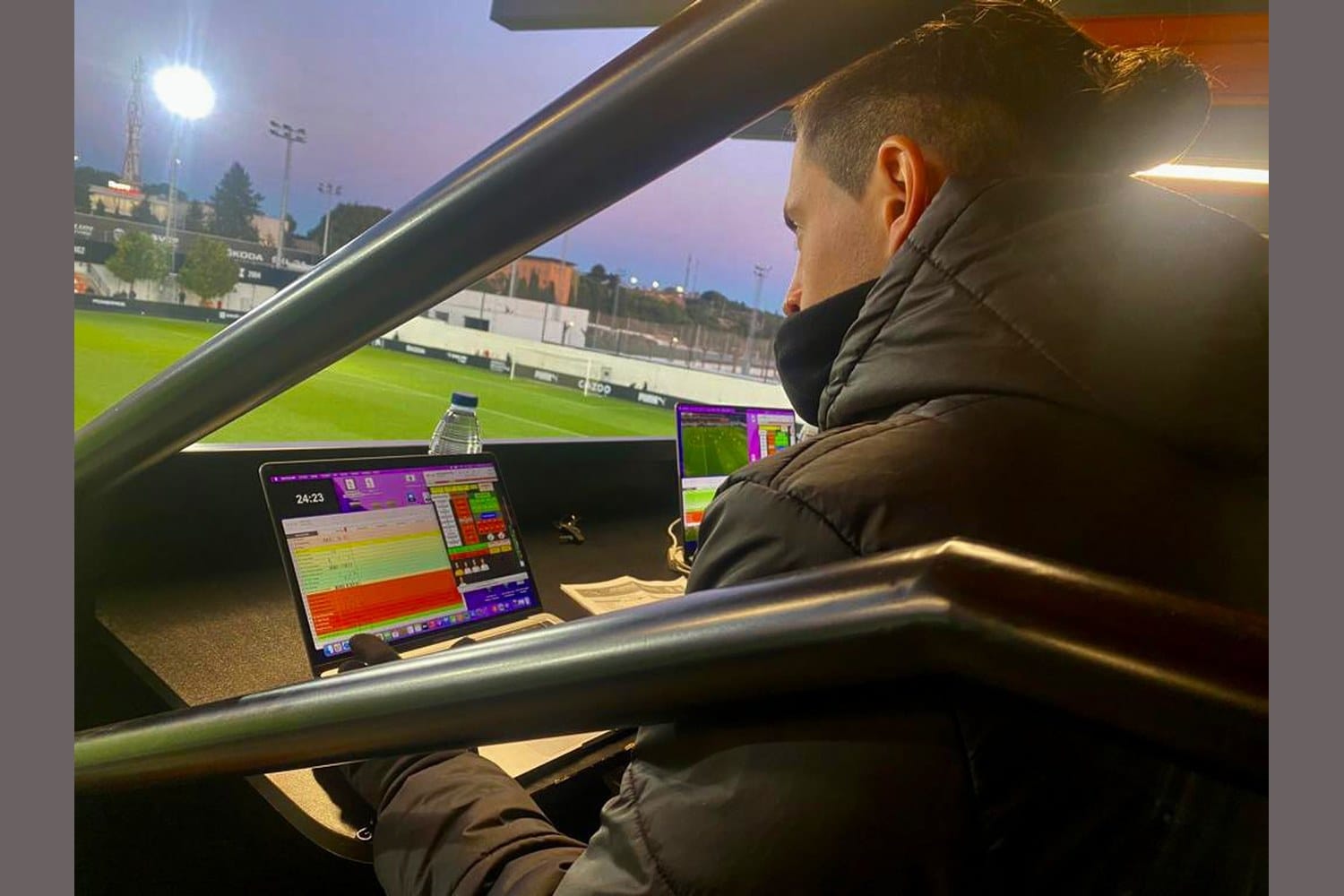
Another ability that defines you is "match analysis in LIVE." Calmly reviewing a match afterward and firing information down to the bench while ninety minutes are ticking away are two completely different worlds of pressure. In that split-second moment when the bench has to decide on a substitution or a tactical change right now, which do you hand them: "perfect but late information," or "rough but immediate information"?
In many situations, the pace of the match and the emotions involved are extremely high. As analysts, we have a great responsibility to observe the game from a certain distance compared to the coach and the players, and we also have more time to process what is happening. During halftime, we have 45 minutes to identify two key areas for improvement that reinforce the work carried out during the week. We must provide quality in a precise way: little information, but highly effective information. Sometimes, you only have 60 seconds to influence the coach in a way that can change the game or reinforce what is already working.
For that reason, I would always choose concise and immediate information over perfect information that arrives too late.
You've experienced stages of wildly different resource levels — the polished system at Valencia CF, third-tier Silla CF, and an amateur NPL side that has to rely on a drone and a laptop. Places rich in infrastructure and places starved of it must differ in the very way you prepare. When you're thrown into an environment short on both budget and equipment, what is the last line of defense in your analysis that you "will never, ever give up"?
The tool that would always stay with me is the personality required to give confidence and reassurance to everyone around me, both coaches and players. A mistake becomes less of a mistake when it is communicated with sincerity, and a success becomes less of a success when it is communicated with doubt. Because even without technology, observation, communication, and trust remain.
PART 5 · METHODOLOGY AND PEOPLE
On top of your UEFA A Licence and Technical Director qualification, you completed a "Master's in Football Training Methodology and Performance Assessment" at the Catholic University of Valencia. You hold both the feel of the field and academic methodology in hand — and we wonder whether the two have ever clashed. When you've faced a moment where "it's right in theory but it just doesn't work on the pitch," what did you ultimately trust when making your decision?
I have always said that on the tactics board, everyone wins. We place eleven markers against eleven markers, but football is not chess. Everything moves at the same time. We work with people, and every competitive environment is different. Experience is a very important factor, and knowing how to manage situations you have lived through before always gives you a broader perspective. However, there will never be two identical answers within the same match.
"On the tactics board, everyone wins. We place eleven markers against eleven markers, but football is not chess. Everything moves at the same time."
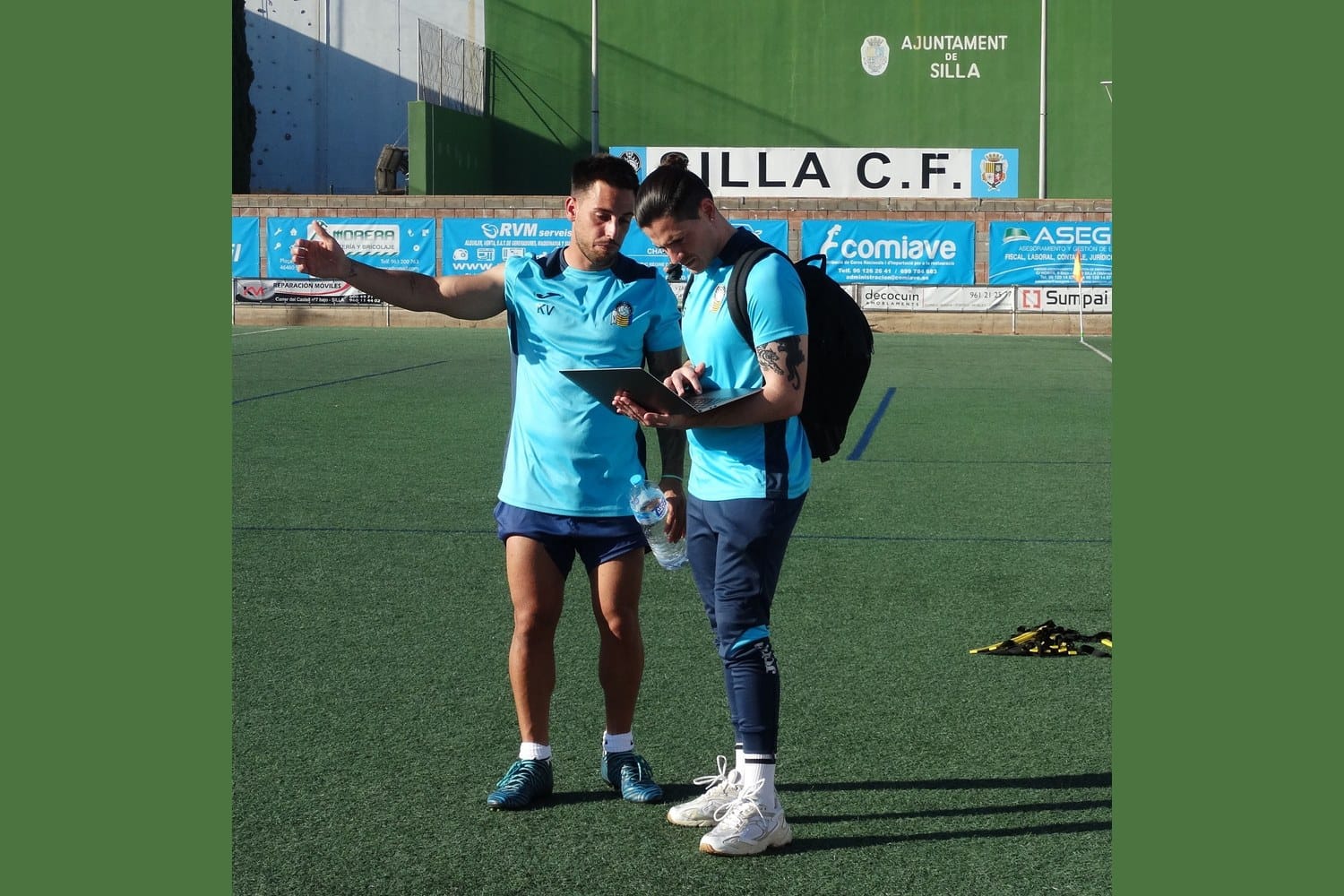
You didn't stop at finding problems on the screen — at Silla CF you designed sessions alongside the staff and personally managed the training tasks. The moment a single weakness spotted on video is born as an actual training drill may be exactly where the analyst and the coach part ways. From a weakness caught in last week's match to its arrival on the next training menu, could you walk us through, with one example, the stages that unfold in your mind?
If during a match we recognise a pattern of errors, we should go specifically to the players involved, creating situations that help these players return to the questions they face during the game. Through their responses, we can understand the reason behind the mistakes that happened during the match. The objective is simply to create favourable contexts for solving problems.
If the players cannot find the answers by themselves, we change the approach of the training session into something more guided, where the player can experience success more easily and understand that they were not wrong because of a lack of ability, but because of a lack of reading the opponent, understanding the opponent's level, their body positioning, or their position on the pitch. Ultimately, the player needs to create their own answers within the game.
Separate from the footage for the whole team, you produced "individual videos." Making a player confront his own weaknesses on screen carries the risk of denting his confidence. For a player to feel not that he's "been called out" but that he's "been handed a weapon to grow with," in what order do you think that video should be structured, and in what language should it be delivered? Adding a football psychology qualification in 2025 feels like an extension of exactly this concern.
The structure of the video is very important: first reinforce, then analyse, and finally create solutions. The player has to understand that the video is not an evaluation; it is a tool to help them improve. First, we reinforce what the player does well because we want to strengthen their identity and their resources. Then, we show situations where they have an opportunity to become more effective, always through reflection and questions such as: "What do you see here?", "What options did you have?", or "What information could you have used to find a better solution?"
PART 6 · DEVELOPMENT AND ORGANIZATION
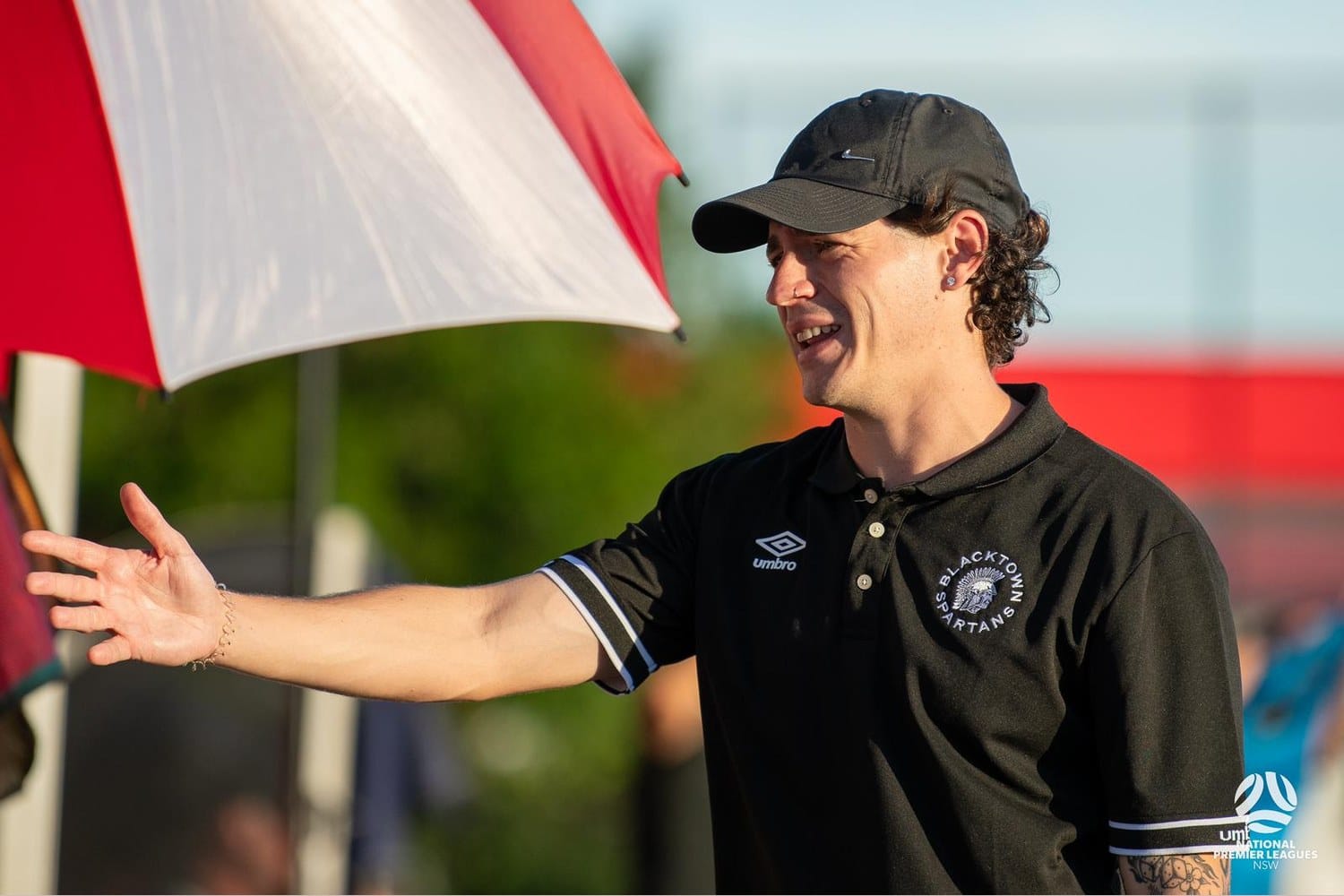
At Blacktown Spartans, you took charge of player education and established the player pathways. To "establish" a pathway is also to make the cold judgment of "this player goes this far, that player goes that far." When you're designing the future of a young player who isn't yet finished, where do you place more weight: "the ability visible right in front of you now," or "the potential that hasn't yet surfaced"?
I would always prioritise potential, because ability can sometimes be highly influenced by the context, especially when the level of the opponents is not demanding enough. We look at the person behind the player, not only their current abilities. We analyse their stage of maturation according to their age, which skills are already developed, and which ones can be developed through our process as coaches. We focus on how we can help the player grow and also support the families, who are a very important part of their daily environment.
In that same period, you also led coach development. Growing players and growing coaches must demand entirely different kinds of patience. When you're raising a younger coach, and you want to produce not "a coach who copies my methods exactly" but "a coach who judges for himself," how far do you think you should take him by the hand, and from where should you let go?
I would say this is the most challenging part, but everything depends on the approach you transmit. I do not aim to create coaches who follow me without questioning; I aim to inspire them to improve themselves and improve their players. I want to provide them with a wide range of tools and new frameworks of thinking, creating a common line of action within the club while also giving them freedom of expression with their players and their own learning methods.
Autonomy, progression and responsibility are the three pillars of learning. The objective is to create new transformational leaders: people who develop people, not just styles of play.
At Silla CF you co-designed sessions as "one of the staff," but at Blacktown you stood at the summit of the organization as Head of Staff. At the same meeting table, a change in position changes the weight of your words. When an opinion emerges within the staff that collides head-on with yours, are you the type to "settle it as the decision-maker and push it through," or the type to "keep the debate open to the very end"?
Listening to all perspectives does not mean that every decision has to be made by consensus. As a leader, my responsibility is to make the final decision when necessary, explain the reasons behind it, and ensure that everyone moves in the same direction.
As leaders, we must involve every part of the process, whether they are the players, the coaching staff, whose essential work helps us improve every day, or even the person responsible for keeping the changing rooms clean. Every person who contributes through their work to the player's development and performance deserves to be listened to and valued, because everyone has an impact on the player, whether through wellbeing or performance improvement.
PART 7 · POINTS OF CONTACT WITH KOREAN FOOTBALL
In 2025 you joined hands directly with the Korean football scene as Head of Analysis at Team Stopia FC, and you've been learning to read and write Korean at a basic level. For K League clubs rapidly building up their analytical infrastructure, there's plenty of room for your expertise to be grafted on straight away. Among the methodology you've built up in Europe and Canada, what's the one thing you think "I absolutely want to add to Korean football" — and conversely, what have you found in Korean football that you feel you'd "actually like to learn from"?
Through my experience in Korea, I have been able to understand its reality better. I have developed a deep admiration for its discipline, collective responsibility, commitment, and desire for continuous improvement. I believe that, like every context and every country where I have worked, there are always areas where we can continue improving.
My role as a football professional is to help players and coaches become better, through my leadership, my training sessions, my connection between game analysis and the training process, and my ability to develop football structures.
If I had the opportunity to work in Korea again, I would know exactly how to understand and respect the positive foundations that already exist, while integrating them with my own professional experiences to create something powerful for the development of future generations.
"If I had the opportunity to work in Korea again, I would know exactly how to understand and respect the positive foundations that already exist, while integrating them with my own professional experiences to create something powerful for the development of future generations."
PART 8 · CLOSING
You took your first steps as a youth manager, passed through a role as analyst at a storied club, and have now risen to Technical Director, drawing the big picture of a club. As a leader who has dissected teams and opponents in fine detail through analysis and methodology, what is the vision and the goal you're drawing up from here? And in years to come, how would you like to be remembered by your players and your younger coaches — "Nacho Alcaraz was this kind of leader" — what legacy do you hope to leave behind?
I believe that as coaches, we have the responsibility to teach football and educate people for life. From that perspective, I would like to be remembered for my energy and my ability to inspire people to pursue their dreams through the football I teach.
My vision is to create environments where methodology, analysis, and human development work together, creating spaces where players and coaches can continuously grow and become better versions of themselves: players who develop, coaches who learn, and clubs that evolve.
CLOSING
Across the twenty answers of this written exchange, what Alcaraz returns to most consistently is a very particular refusal: the refusal to let any single discipline inside football swallow the rest. Match analysis exists to serve the coaching decision, which exists to serve the player, who exists as a person before a performer. Set pieces are a strategic art, but their execution depends on the quality of an individual delivery that still belongs to a player on the pitch. Data is extraordinary, but you have to know when it's time to close the laptop. The theory from an academic methodology course is helpful, but football is not chess. The structure of an individual video is important — reinforce, then analyse, then create solutions — because the player on the receiving end has to feel handed a weapon rather than called out. Each of these is a small rebalancing. Together, they are the method of a coach who became an analyst in order to coach better, and a Technical Director who still speaks about the twelve-year-old girl and the first-division professional in the same sentence.
What gives the method its weight is the five-country arc that produced it. From U-15 and U-17 head coach in Valencia, to U-19 analyst, to Silla CF assistant and set-piece lead, to Valencia CF video analyst for the U-23 and U-19, to First Team Head Coach and Head of Staff at Blacktown Spartans in Australia, to Head of Analysis at Team Stopia FC in South Korea, and now Technical Director in Canada. Each stop extracted a different lesson; each is folded into a methodology that integrates rather than imports. The Korea chapter sits inside that arc rather than above it, but it is distinct in one respect for readers of this publication: Alcaraz is the only interviewee to date who has worked inside a Korean club in the same calendar year the piece runs, is actively learning Korean, and has said on the record that he would know exactly how to work there again. K League clubs are now building out live-match analysis desks, set-piece specialists, and youth-pathway design that reaches the first team. The profile fits.
Alcaraz's own answer to the question of legacy is characteristic. He wants to be remembered for energy and the ability to inspire people to pursue their dreams through the football I teach, and he wants to leave behind environments where methodology, analysis, and human development work together — players who develop, coaches who learn, and clubs that evolve. The three verbs matter in that order. Develop. Learn. Evolve. Football Agent Lab will be watching.
ABOUT THE AUTHOR
SEOK LIM — Editor · Football Agent Lab
FIFA-licensed football agent and steel market analyst with over a decade of experience in commodity research. Football Agent Lab publishes interviews and market reports at the intersection of football, agency work, and global markets.


