"Not Winning, but Never Stopping" — The Player-Development Philosophy of Manuel Sánchez
Chilean youth football director and U19 head coach at Slovakia's Redfox FC. UEFA A, CONMEBOL PRO, Chile Pro Licence. Manuel Sánchez on Tactical Periodisation, Real Madrid Foundation, protagonist football — and, on the record, what he would seek to plant in a Korean youth system.

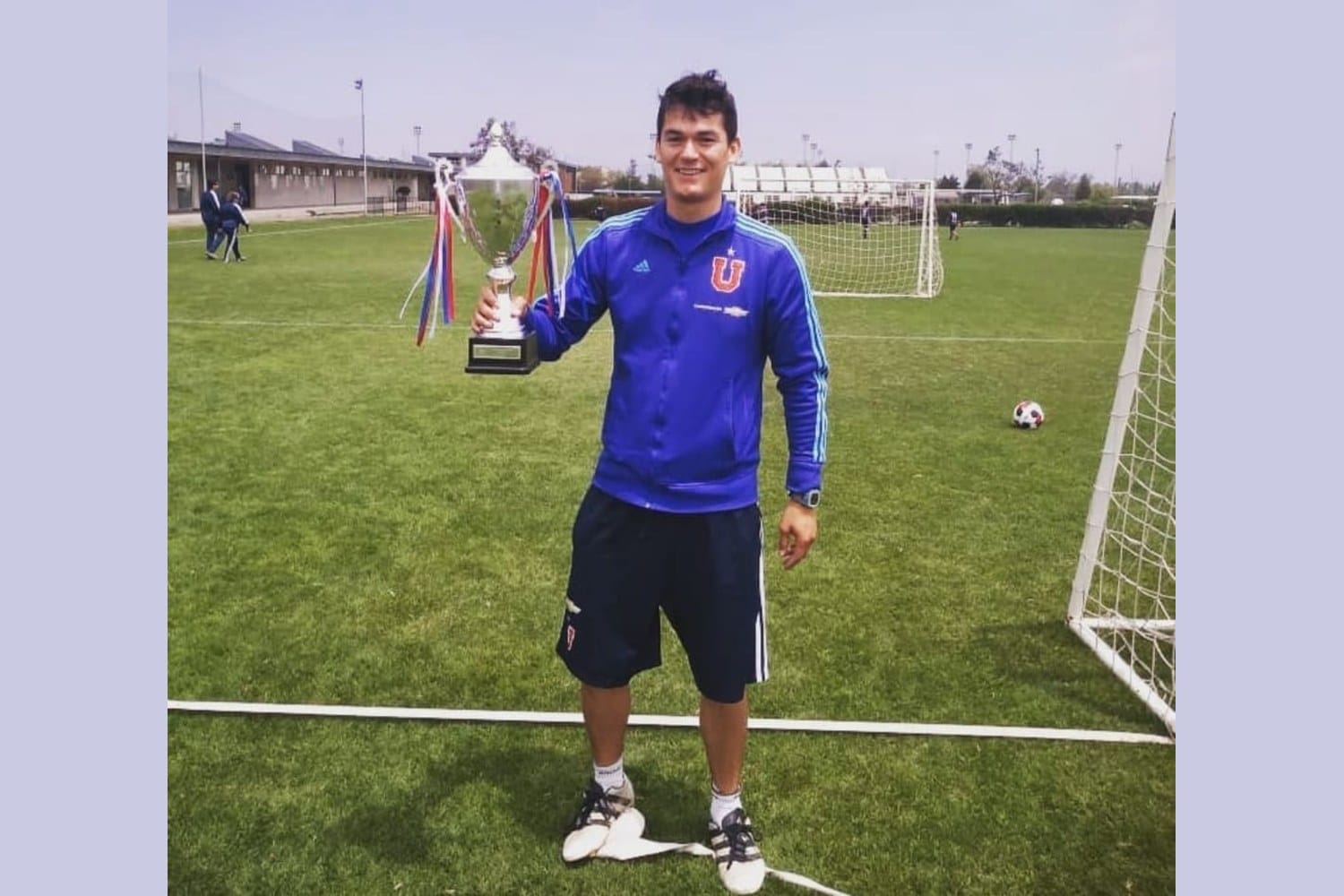
Manuel Sánchez studied business administration in Santiago before he found his way back to the football pitch. Today, at Stará Ľubovňa Redfox FC in Slovakia's second division, he is the youth football director and U19 head coach — a role that carries responsibility for the club's development philosophy from U9 up through U19, and one he took up in 2024. Asked to compress his coaching philosophy into a single sentence, he offers: "Develop brave, intelligent, and competitive players who understand the game, express themselves on the pitch, and never stop growing."
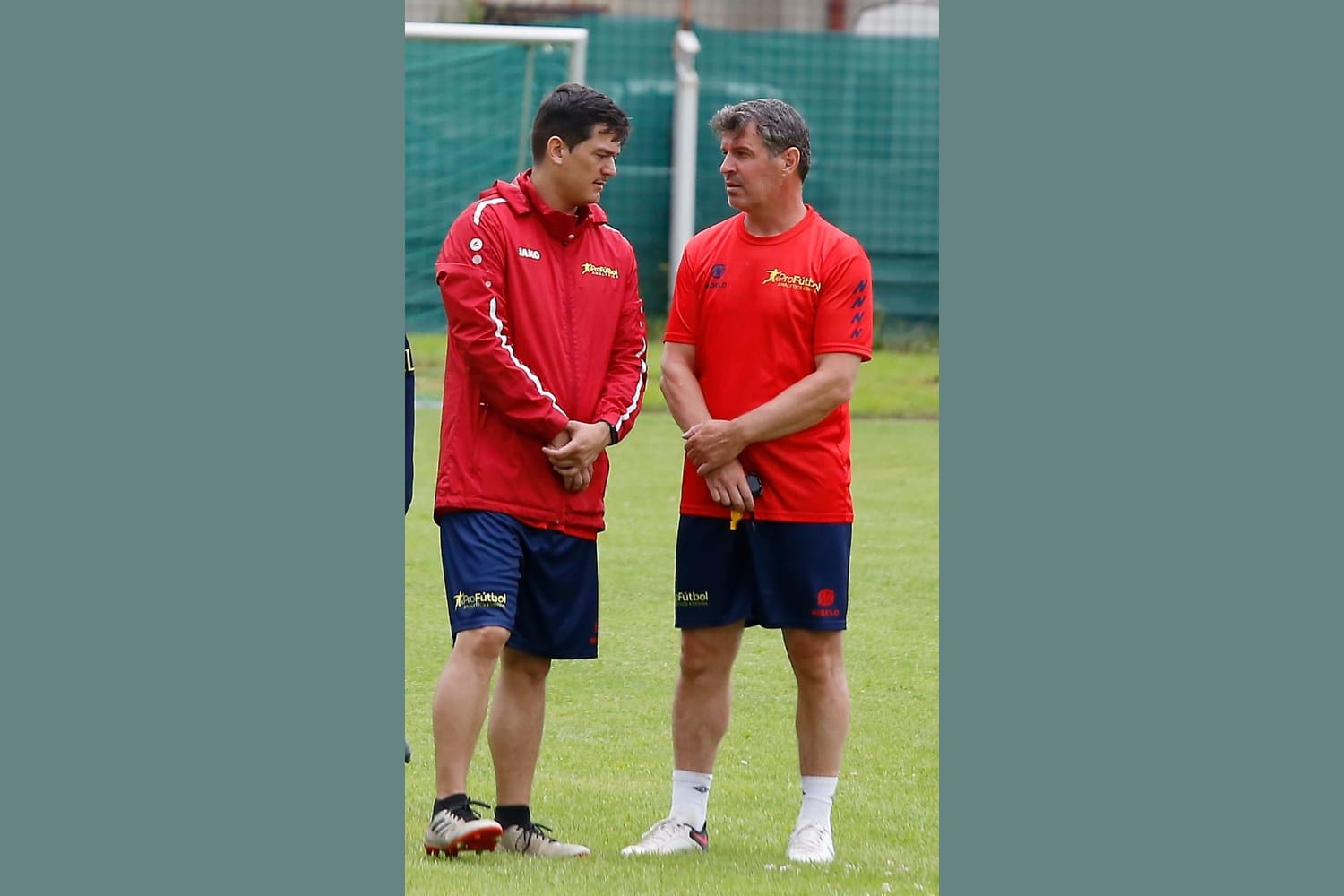
Behind that sentence lies a five-country, three-continent coaching path. He holds the UEFA A Licence through the Slovak Football Association, the CONMEBOL PRO through Chile, and the Chile Pro Licence. He studied Tactical Periodisation under the Vitor Frade lineage through INAF Chile in 2021, then Game Model Operation and Individual Tactics in 2023, then High-Performance Methodology and Planning through Coaches' Voices in 2025. He was head coach at Deportivo Masaya in Nicaragua's second division from 2023 to 2024, and at EF Macul in Chile's third division in 2022 — where he also served as sporting director. In 2025 he assisted the first team at CSD Cajón del Maipo in Chile. Alongside those roles, he has worked inside the Real Madrid Foundation's EFP Chile programme with U8, U11 and U15 groups, and inside Universidad de Chile's female academy at U8/U13 and the club's filial academy at U13. In 2024, he took part in an international project with Pro Fútbol Analytics spanning Spain, the Czech Republic, and Slovakia.
What runs through the twenty answers he gave to Football Agent Lab is a very specific relationship between structure and creativity. He speaks of tactical periodisation as a methodology that must be interpreted rather than copied. He speaks of building from the back as a tactical tool rather than an aesthetic choice. He speaks of rest defence in three layers — critical, containment, and support positions — and describes what he wants from each in the first three seconds after possession is lost. He speaks openly about a defining shift in his own methodology: the moment he stopped asking "What would this author do?" and started asking "What do my players need in this context?" And in PART 6, asked directly about the K League and its search for coaches who can adapt European and South American methodologies to Asian soil, he does not decline the invitation. He accepts it, and then names the two principles he would plant first.
Chilean coach · Youth Football Director & U19 Head Coach
CURRENT ROLE
Stará Ľubovňa Redfox FC (Slovakia, D2) · Youth Football Director · U19 Head Coach · U17 Assistant Coach (2024–present)
COACHING CAREER
- 2025 · CSD Cajón del Maipo (Chile, D3) · First-Team Assistant Coach
- 2023–2024 · Deportivo Masaya FC (Nicaragua, D2) · First-Team Head Coach
- 2022 · EF Macul (Chile, D3) · Head Coach & Sporting Director
- 2018–2021 · Atlético Central International Academy · U17–U23 Head Coach
YOUTH & ACADEMY WORK
- 2025 · Real Madrid Foundation, EFP Chile · U8, U11, U15
- 2024 · Pro Fútbol Analytics · Youth coaching across Spain, Czech Republic, Slovakia
- 2019–2020 · Universidad de Chile · Filial Academy U13
- 2018 · Universidad de Chile · Female Academy U8/U13
METHODOLOGY & EXPERTISE
- Game Model Methodological Operation
- Tactical Periodisation (Vitor Frade lineage)
- Individual Tactics
- High-Performance Methodology & Planning
- Build-Up & Rest Defence
- High Press · Counter-Pressing
- Small-/Medium-Sided Games
- Youth Talent Development
- Data & Performance Analysis
LICENCES & EDUCATION
- UEFA A Licence — Slovak FA (2024–27)
- CONMEBOL PRO (2024–27)
- Chile Pro Licence (2025–28)
- Youth Talent Development · High-Performance Methodology & Planning — Coaches' Voices (2025)
- Game Model Op. · Individual Tactics — INAF Chile (2023)
- Tactical Periodisation — Vitor Frade / INAF Chile (2021)
- BBA — Universidad de Santiago de Chile (2015)
PART 1 · THE IDENTITY OF A COACH
You studied business administration in Santiago, Chile, yet you found your way back to the football pitch in the end — and today you are raising young players across three continents. If someone were to ask, "What does coaching mean to you, and if you had to define your coaching philosophy in a single sentence, what would it be?", how would you answer? We'd also love to hear how that one sentence connects to a defining moment that shaped the coach you are today.
For me, coaching is about shaping people through football. In Latin America, football is more than a sport — it is identity, passion, sacrifice, and hope. That is why I believe a coach has the responsibility not only to develop players, but also to help young people become stronger human beings.
If I had to define my coaching philosophy in one sentence, I would say:
"Develop brave, intelligent, and competitive players who understand the game, express themselves on the pitch, and never stop growing."
I want my teams to play with intensity, personality, and intelligence, but also with joy and creativity. Development is not only about winning matches; it is about helping players build character, confidence, and the mentality to adapt to any challenge in football and in life.
"Develop brave, intelligent, and competitive players who understand the game, express themselves on the pitch, and never stop growing."
From CONMEBOL PRO to the Chilean pro licence, and all the way to UEFA A through the Slovak Football Association (SFZ), you hold coaching credentials from both South America and Europe side by side. It's often said that South American football prizes individual instinct while Europe emphasises structure and organisation. When these two cultures run through you at once, which instinct surfaces first in the heat of a training session? Could you recall one real scene where these two currents collided?
For me, one is a consequence of the other, and vice versa. In South America, the way football is understood places enormous value on individual quality and the ability to solve complex situations through talent and instinct. There is a special responsibility placed on the players who can make the difference — the number 10, for example, traditionally represents the player expected to change the game with creativity and personality.
In Europe, however, football is often approached through the logic of a complex and interconnected system, where every player fulfils specific roles depending on the situation of the game. Structure, organisation, and collective functionality create the framework that allows individual freedom to appear. It is a more controlled chaos compared to the battle-driven intensity that characterises much of South American football culture.
Personally, I believe both visions are deeply connected. Through structure, I try to create conditions where individual instinct and creativity can make the difference through freedom of decision-making — always understanding that the benefit of the team comes first.
What I especially value from the South American side is the passion with which training and competition are lived. That emotional intensity is part of the identity I want my teams to have.
I remember one moment in Slovakia after a double matchday with our U19 and U17 teams. After the games, a referee approached me and said he appreciated the passion and emotion with which I communicated with the players during the matches. He told me that football becomes special when everyone involved — players, coaches, referees, and spectators — can genuinely feel that emotion on the pitch. That conversation stayed with me because it reflected an important part of who I am as a coach.
PART 2 · GAME MODEL AND TEAM IDENTITY
I understand that the "Game Model Methodological Operation," which you make the axis of your coaching, is ultimately the work of binding scattered individuals into a single team identity. But the word "identity," however beautiful, rings hollow if it can't actually be seen within the 90 minutes of a match. If we were watching a team where your game model was working properly from the stands, in what moment would we feel, "Ah, that team has an identity"? Could you paint that picture for us?
From my perspective, a football team must have the ability to adapt quickly to different contexts within the game. In defence, the team must be organised, disciplined, and solid. In attack, it must be flexible, dynamic, and fast during transitions. What changes from one team to another are the patterns and structures used in defensive organisation, attacking play, and transitional moments. If a team fails in one of these areas, it will struggle throughout the season.
For me, identity is not only about aesthetics or possession statistics. It is about recognising clear behaviours repeated under pressure and in different match scenarios.
If a supporter watches a team that defends like a fortress, attacks bravely through multiple channels, and reacts aggressively and quickly in transitions, then they are watching the identity I want my teams to represent.
I want my teams to transmit the feeling that they are emotionally connected to the match, tactically prepared for adversity, and capable of competing with intensity in every phase of the game.
At Redfox in Slovakia you're responsible for several age groups under one roof, from U9 all the way to U19. Even under the same club philosophy, what you can ask of a nine-year-old and a nineteen-year-old must differ like heaven and earth. When you "translate" a single game model down through the age groups, which principles do you carry through untouched, never compromising, and which parts do you pare back to suit the age? Pick one specific principle and tell us in concrete terms how its U9 version differs from its U19 version.
It is important to understand that every stage of player development pursues a different objective.
In the early stages, the priority is to maximise the players' technical and motor development, including general athletic abilities before specialising too deeply in football itself. At that age, the focus should be on building coordination, creativity, confidence with the ball, and enjoyment of the game.
In the intermediate and youth stages, once the technical foundations are established and the player reaches a higher cognitive level, we progressively introduce the club's game model through basic attacking relationships, defensive organisation concepts, and tactical understanding, until eventually reaching a level of training intensity and detail similar to professional football.
At Redfox in Slovakia, we designed the developmental philosophy together with the club's management, connecting methodological elements with the history of the club and its long-term vision. One of the core pillars was a combinative and vertical style of play that would allow the teams to take initiative and become protagonists in matches.
Methodologically, this principle adapts according to the age group and level of demand. In the initiation stage, we begin with basic control and passing, then move into simple combinations such as wall passes and through balls. Later, players progress into rondos, third-man and fourth-man concepts, and eventually into complex positional dynamics in the final stages of development.
What never changes across the age groups is the message behind the methodology: we want our players to be protagonists, to impose themselves on the opponent through intelligent combinations, courage, and collective intention.
You are someone who has delved deeply into individual tactics, yet at the same time you emphasise a collective game model. And a player's individual tactical judgement and the discipline of the team structure often collide head-on. If a talented young player broke from the game model, backed his own judgement and produced a goal, would you praise that moment, or point out the departure from principle? We're curious where you draw that line.
I believe individual tactics and collective structure are complementary because the team's principles are ultimately expressed through the decisions made by each individual player.
In the situation you describe, I would praise the player. Creativity is part of our identity and an essential element of our game model. Not only in attack, but in every phase of the game, I value moments of intelligence or inspiration that solve complex situations. Football will always require players who can see solutions that others cannot.
That does not mean giving players unlimited freedom or exposing the team to unnecessary risk. Creativity must always serve the collective purpose.
The real issue is not a player making an unexpected decision that succeeds. The real issue would be a player who repeatedly shows a poor attitude towards the process — someone who consistently ignores the team's principles, refuses to learn, or lacks respect for the work being done. For me, discipline, humility, and respect for the collective come before everything else.
When those values are present, I want my players to have the confidence to express themselves. The game model should guide creativity, not suppress it.
How do you design the moment out of possession — especially the phase immediately after losing the ball? Coaches who follow tactical periodisation tend to label the finer principles of transition and drill them repeatedly. In the first three seconds after your team is dispossessed, what principle do you want each of the eleven players to move by? Could you replay one real match scene in your mind and walk us through it?
During the attacking phase, teams naturally become more flexible in their positioning. They overload certain areas of the pitch to create numerical or positional advantages over the opponent. The consequence is that, if possession is lost, the team is often exposed to defending larger spaces while running back towards its own goal.
That is why I place great importance on the concept of rest defence. For me, rest defence is the team's ability to anticipate the vulnerabilities created by its own attacking structure and to organise itself immediately in case possession is lost in a dangerous situation.
I organise this principle through three layers of responsibility: critical positions, containment positions, and support positions.
The critical positions provide the team's defensive stability. They are usually occupied by the centre-backs and the defensive midfielder. Their responsibility is to protect depth, control the most dangerous spaces, and prevent situations where an opponent can run through on goal.
The containment positions are occupied by the players closest to the ball at the moment possession is lost. Their mission during the first three seconds is clear: prevent the opponent from playing the first secure forward pass and recover possession as quickly as possible. Some immediately press the ball carrier, while others block passing lanes and anticipate potential outlets.
The final layer consists of the support positions. These are players who were indirectly involved in the attacking move and are usually farther away from the ball. Their role is to recover defensively at maximum speed, reinforce the defensive structure around the critical positions, and help restore numerical superiority behind the ball.
If the containment players cannot recover possession within those first three seconds, their objective changes. They delay the opponent's attack long enough for the support players to recover their positions and for the team to reorganise collectively.
This sequence happens many times during a match. By repeatedly training these behaviours, we have developed an effective counter-pressing pattern that frequently allows us to regain possession in advanced areas and immediately launch direct attacks before the opponent can reorganise.
When you took charge of first teams at Deportivo Masaya in Nicaragua and Cajón del Maipo in Chile, you had to carry the developmental language honed in the youth ranks into a senior arena where results are urgent. What parts of the youth game model worked as they were at senior first-team level, and what parts absolutely had to be torn up and rebuilt? Tell us about the moment that became a crossroads — did you lower your ideals, or did you lift the players up to them?
The first experiences as a head coach are usually the most challenging in every sense. Building a team from scratch is like writing a book on a blank page — it tests not only your convictions, but also your ability to understand the environment in which you are working.
At the beginning of my career, my philosophy was more rigid and closely tied to theory. With experience, I learned to respect timing and to understand how the different pieces of the puzzle fit together. Every player offers different qualities, and part of coaching is recognising those strengths and building a collective around them.
My core principles have never changed: discipline, respect, and building teams that are proactive, courageous, and willing to take the initiative. What has evolved is the path we take to reach those objectives. I adapt the methods, but never the soul of the idea.
The biggest difference between youth development and senior football lies in the nature of the demands. In youth football, I prioritise the process over the result because the ultimate objective is player development. In senior football, where results define the competition, the result naturally carries greater weight. That does not mean abandoning the philosophy — it means applying it intelligently within the realities of high-performance football.
I never saw it as lowering my ideals. Instead, I learned how to connect those ideals with the characteristics of the players in front of me. The destination remains the same; only the route changes.
We're curious how the "start of the attack" — the deep build-up phase — is structured by principle in your game model. Asking young players to play out from the back inevitably brings the risk of mistakes and conceded goals. Even so, how do you convince young players that this principle must be upheld? The day after conceding from a build-up error, what words and what training do you bring to that player on the pitch? Please paint it for us in concrete detail.
I place great importance on ball possession because I believe that when the ball is under our control, our chances of winning increase. However, the real question is not whether we want possession — it is how we manage it.
For me, building from the back is not an aesthetic choice; it is a tactical tool. Its primary objective is to attract the opponent's pressure, create larger spaces behind the defensive line, and exploit those spaces with speed, time, and numerical or positional advantage.
The structure of the build-up is based on the available passing lanes and on understanding how the opponent will attempt to block them. Our players must recognise corridors, heights, passing options, and, most importantly, identify where the opponent's weak side will appear. By constantly alternating positions, heights, and passing angles, we seek to manipulate the opponent's press before attacking the free space.
In youth football, I believe players must experience as many different game situations as possible. They should play in different positions and be exposed to different styles of play — from direct football to positional build-up and everything in between. These experiences expand their decision-making ability, prepare them for the demands of professional football, and increase their versatility and value as players.
That is why, after a mistake in the build-up, my first message to a young player is simple: "Never stop trying to solve the game the right way because of one mistake." Confidence is an essential part of development. If a player becomes afraid of making mistakes, he also becomes afraid of making good decisions.
At the professional level, my approach becomes more analytical. After conceding a goal, the first step is to identify the real cause of the mistake. Was it an inaccurate pass? A poor first touch? An incorrect movement? An excellent anticipation by the opponent? Every error has a different origin, and therefore every correction must be different.
I then speak with the player in an environment of trust, reinforcing my confidence in his ability while analysing the situation objectively. Finally, we recreate similar scenarios in training so that the player can understand the decision, correct the detail that failed, and leave the session with a solution rather than with fear.
For me, mistakes are not something to punish — they are opportunities to improve. The only unacceptable mistake is to stop learning from them.
"Never stop trying to solve the game the right way because of one mistake."
PART 3 · METHODOLOGY AND THE ROOTS OF KNOWLEDGE
You studied tactical periodisation in 2021 through Vitor Frade and INAF Chile, and you've said you make it the foundation of your training. Yet this methodology is famous for the wide gap between reading it in a book and actually implementing it on the youth pitch. When you design a week of training, could you paint us the scene of each day — how that weekly rhythm actually unfolds from Monday through to the eve of a match?
To plan a training week using Tactical Periodisation, every decision must respect its core methodological principles. The most important is the super-principle of Specificity, which means that everything we do in training must be directly connected to our game model and to the demands of competition.
To explain it simply, I often use the following analogy: the match is like a cake, and each training session cuts out a specific slice of that cake. Every exercise represents a particular game situation that we want to reproduce, train, and improve under controlled conditions. Rather than isolating technical, tactical, or physical elements, we recreate the reality of football through specific game contexts.
In a standard Tactical Periodisation microcycle, from Sunday to Sunday, Monday is usually a passive recovery day, allowing players to regenerate after the match.
Tuesday is dedicated to active recovery. The objective is to reactivate the players physically and cognitively through simple exercises with low cognitive demand, preparing them for the higher training loads later in the week.
The foundation of the week is based on the principle of Horizontal Alternation, which is widely recognised within Tactical Periodisation. Wednesday is the strength-oriented day, Thursday focuses on endurance, and Friday emphasises speed.
However, these physical qualities are never trained in isolation. The design of each exercise changes according to the objective of the day, but every activity remains football-specific and always reproduces situations that players will encounter during competition. The physical adaptation emerges naturally through solving tactical problems within the game.
Saturday is devoted to metabolic activation. The session is short, dynamic, and designed to prepare the players physically and mentally for the greatest load of the week: the competitive match on Sunday.
For me, this is the true value of Tactical Periodisation. It is not simply a way of organising physical loads; it is a methodology that ensures every training session has a clear connection with the football we want to play on match day.
In the "High Performance Methodology and Planning" course you completed in 2025, the word "Planning" is intriguing. Do you have your own way of drawing an entire season as a single blueprint? When that blueprint drawn up at the start of the season collapses under injuries or a run of poor results, which of the plan's bones do you protect to the very end, and which flesh do you boldly discard? We're curious about those priorities.
I once read an author who described football as a stochastic phenomenon — a system in which patterns repeat, but in unpredictable ways. He was referring to football as a game, yet I believe the same idea applies to everything that happens outside the pitch.
Over the course of a season, a team may experience injuries, suspensions, fixture changes, winning streaks, losing streaks, or many other unforeseen situations. Some teams will face only one of these challenges; others may face all of them. No coach can predict exactly how a season will unfold.
What we can do is prepare ourselves to adapt.
For me, planning is not about trying to control every detail of the future. It is about building a structure that is flexible enough to respond intelligently when reality changes.
The long-term framework of the season is largely determined by the competition calendar and the match schedule. Within that framework, however, every week requires constant adjustment according to the opponent, the physical condition of the squad, player availability, and the specific circumstances surrounding the next match.
That is why I consider pre-season to be one of the most important periods of the year. It is during those weeks that we establish the foundations of our game model, our collective behaviours, and our working culture. During pre-season, planning is necessarily more structured and demanding because the objective is to help the team acquire a shared identity as quickly as possible.
Once the competitive season begins, the planning becomes much more dynamic. The principles of the game model remain constant, but the weekly training process is adapted to the upcoming opponent and to the realities facing the team at that particular moment.
If injuries or poor results force me to change the plan, I protect the foundations until the very end: our identity, our principles of play, and our culture of discipline and commitment. What I am willing to modify are the methods, the training loads, the tactical details, and even the route we take to reach our objectives.
In football, flexibility is not the opposite of planning — it is proof that the planning was designed correctly from the beginning.
Frade's lineage, INAF Chile, Coaches' Voices, and the Real Madrid Foundation curriculum — several methodological roots are mingled within you. When you learn from different schools, you inevitably run into points where they contradict one another. How have you integrated these disparate bodies of knowledge into a single, coherent "something of your own"? If there was a defining moment when someone else's methodology finally became truly yours, we'd love to hear it.
Personally, I value what every methodology can contribute, and I do not see them as contradictory — not only the ones I have had the opportunity to study, but football methodologies in general. To me, they are all valid perspectives that reflect different ways of understanding the game.
As you learn and observe different approaches, you naturally begin to connect the ideas they share and strengthen the principles that appear consistently across them. As for the concepts that do not immediately make sense, I do not discard them. I simply set them aside. Football is a lifelong learning process, and our way of thinking evolves with experience. What does not fit my understanding today may become meaningful tomorrow because I will have changed as a coach.
I believe one of the most important qualities of a coach is intellectual humility — the willingness to keep learning without becoming trapped by a single doctrine.
Studying Tactical Periodisation, and later attending advanced seminars on the subject, was a particularly meaningful experience for me. As someone who has long admired José Mourinho, I was fascinated by the opportunity to study the methodology that influenced many of his ideas. At first, like many young coaches, I wanted to apply those concepts exactly as I had learned them.
Over time, however, I realised that methodology is not something to be copied — it is something to be interpreted. The moment those ideas truly became my own was when I stopped asking, "What would this author do?" and started asking, "What do my players need in this context?"
That shift changed everything. Today, I continue learning from many different schools of thought, but I no longer try to imitate them. Instead, I integrate what aligns with my philosophy, adapt it to my reality, and build something that reflects my own identity as a coach.
"The moment those ideas truly became my own was when I stopped asking, 'What would this author do?' and started asking, 'What do my players need in this context?'"
You've said you run "Youth Football Talent Development" alongside high-performance planning, but talent identification is about seeing potential in a distant future, while high performance demands competitiveness right now. With a young player in front of you, when "he's short of it now but he has a future" collides with "he wins games for the team right now," by what standard do you decide that player's place? If there's a case where you later confirmed that your judgement was right, please share it with us.
I believe one of the most important responsibilities in youth football is respecting each player's individual development timeline.
At younger ages, differences in biological maturation can have a significant impact on performance. Two players may be the same chronological age, yet be at completely different stages of physical and cognitive development. These differences often influence matches and training sessions, especially in the younger age groups.
For that reason, evaluating a player only by what he produces today can be misleading. My responsibility is to understand where each player is in his development and manage his progression according to his individual context rather than comparing him directly with others.
I have seen many cases where the player who started every match throughout youth football never became a professional, while another player who spent years alternating between the starting lineup and the bench eventually built a much stronger career because his development remained consistent over time.
That is why I try to separate current performance from future potential. Both matter, but they answer different questions. Current performance helps us compete today; potential helps us build tomorrow.
The players who consistently earn my trust are those who combine talent with the willingness to learn, resilience during difficult moments, and a strong work ethic. Physical advantages may change with time, but attitude towards development usually remains.
Ultimately, my role is not only to select the best player for the next match — it is also to recognise who can become the best player three, five, or even ten years from now. I believe a youth coach must have the courage to see beyond the present.
At the Real Madrid Foundation's EFP Chile — one of the world's finest clubs — you coached the U8, U11 and U15 directly and experienced their curriculum first-hand. What made you think "so this really is different," and conversely, what made you think "this doesn't fit our reality"? From that experience, pinpoint one element you have genuinely absorbed into your own methodology.
Experiencing the methodology of the Real Madrid Foundation has been one of the most enriching stages of my coaching career.
The first thing that impressed me was the coherence between the club's philosophy and what actually happens on the training ground. Studying and applying the Foundation's methodology allowed me to understand more deeply how Real Madrid develops its players and how that developmental philosophy is ultimately reflected in the first team and in the sporting decisions that the club makes. Many concepts I had previously observed from the outside suddenly made complete sense.
One aspect that particularly stood out to me is that, from a very young age, players are encouraged to develop a winning mentality. They are taught to compete with ambition while continuing to learn, demonstrating that development and competitiveness do not have to be opposing ideas.
I was also impressed by the importance given to Small-Sided Games (SSGs) and Medium-Sided Games (MSGs) as the central methodological resource. That experience reinforced beliefs I already held about the value of game-based learning. Well-designed game situations naturally integrate technical, tactical, physical, and cognitive development far more effectively than isolated exercises.
The biggest difference compared with many of our realities is not the methodology itself, but the profile of the players within the system. Real Madrid works with an exceptional talent pool, which naturally allows certain concepts to be introduced earlier and at a higher level of complexity than in many other environments.
That experience taught me an important lesson: excellent methodology is universal, but its application must always be adapted to the characteristics of the players you have in front of you. Above all, I adopted one principle that continues to guide my coaching today: the game itself should be the primary vehicle for learning.
PART 4 · BETWEEN DATA AND PEOPLE
In 2024 you took part in an international project with Pro Fútbol Analytics that spanned Spain, the Czech Republic and Slovakia, handling data and analysis alongside youth coaching. Data can be a powerful lens for examining a young player, but over-analysis carries the risk of killing a player's naturalness. Between what the numbers tell you and what only the eye can see, which do you trust more? If there's a real case where the data overturned your intuition, please tell us about it.
In football, just like in life, information is important, but information is only the starting point. The real difference lies in how that information is interpreted, managed, and transformed into decisions.
For me, the human eye will always be the most important analytical tool. Football is a game played by people, with emotions, context, personality, and behaviours that cannot always be fully captured by numbers.
Technology and statistical tools are extremely valuable, but I see them as complementary resources that support the decision-making process rather than replacing human judgement.
Data can help us identify patterns, confirm observations, or even challenge our initial perceptions. However, the role of the coach is to connect the information with the reality of the player: his personality, his learning process, his context, and his potential development.
The best decisions come when objective information and subjective observation work together. Data gives us another perspective, but understanding the person behind the numbers is what allows us to make better decisions.
You deal with the principles of the game model, the improvement of individual tactics, and the weekly rhythm of tactical periodisation separately, but on the training pitch all three must ultimately melt into a single session. Taking one 90-minute session where all three are contained at once as an example, could you walk us through how that time unfolds from beginning to end, scene by scene? We're also curious about the moment when your voice intervenes most loudly within it.
The three points mentioned are not separate elements in my training process. They are connected and, at the same time, they are part of the same structure. They influence each other constantly.
Tactical Periodisation is what guides the training process. Depending on the day of the week and the objective of the session, we decide how to design the exercises and which collective, group, and individual principles we want to develop.
For example, imagine a session where the main objective is progression: how we advance through the pitch and gain territory towards the opponent's goal.
From an individual perspective, we would begin with a technical activation focused on passing, which is the foundation of progression, and simple relationships between players, which represent the first microstructures of our attacking development.
After that, we would introduce more complex technical-tactical patterns of progression, allowing players to internalise the associative behaviours we want to develop. We would work on concepts such as the third and fourth player, ladder progression, direct progression, and progression through wall passes and combinations.
Moving into the main part of the session, and following the principle of recreating specific game situations, we would design a medium-sided game (approximately one quarter of the pitch): 4v4 + offensive joker.
Each team would defend three goals placed in the corners and the central area of the playing space. The objective is for teams to create advantages and score by applying the progression concepts previously trained. Players must recognise when to combine, when to accelerate, and how to exploit the spaces created by the opponent.
To finish the session, we would play a larger game from box to box, with marked progression zones that provide additional value if the team scores after successfully progressing vertically through those areas.
Regarding my intervention as a coach, I believe the most important moment is the explanation of the exercise. If the player truly understands the objective, the context, and the reason behind the task, the quality of learning increases significantly.
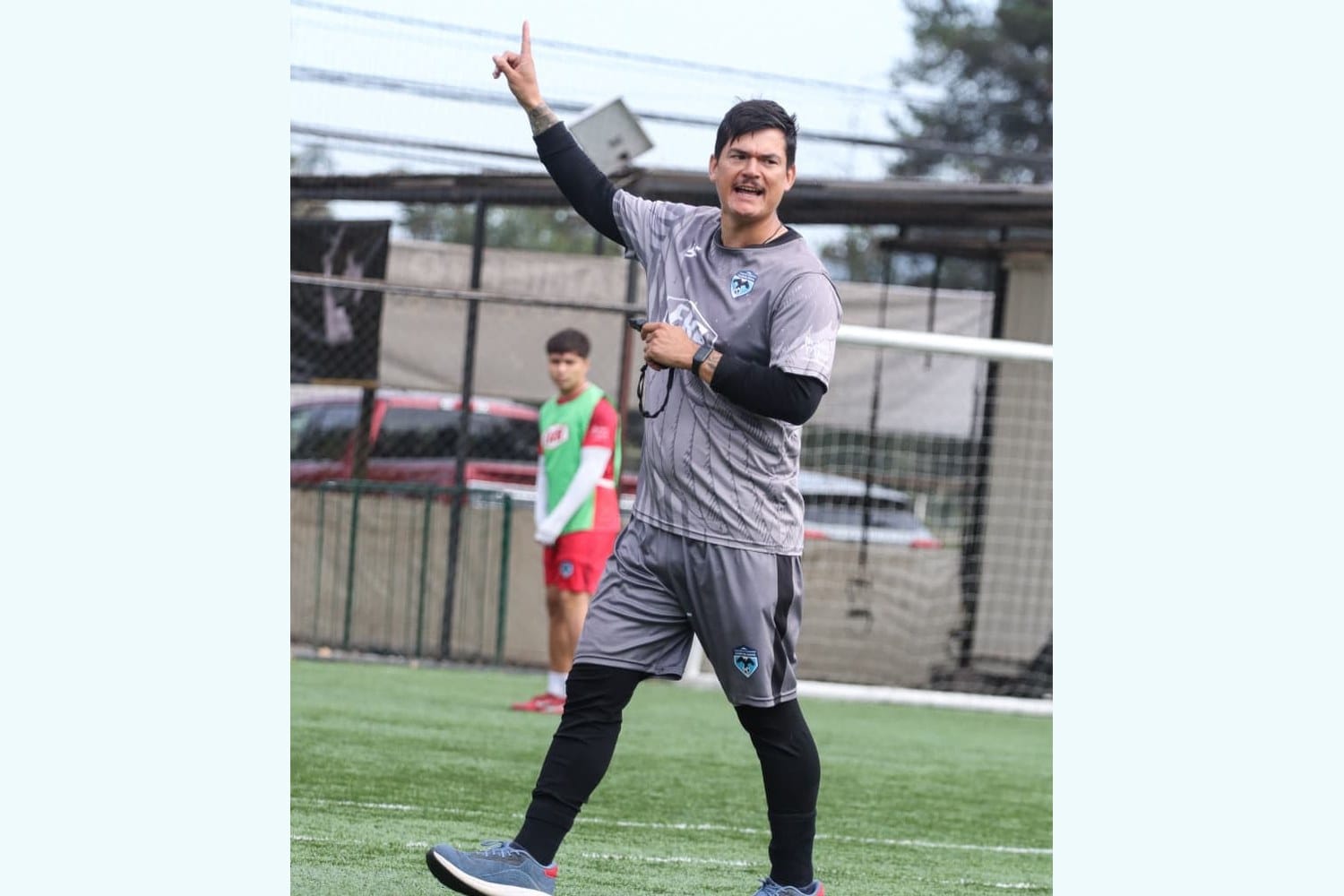
During the exercise, my interventions become more specific. I prefer guided coaching rather than simply giving answers. I do not want players to repeat behaviours mechanically; I want them to understand the game, analyse situations, and develop the ability to make better decisions independently.
For me, the ultimate goal of training is not only to improve what the player does, but to improve how the player thinks.
PART 5 · HOW YOU LEAD PLAYERS
You also have experience coaching the U8/U13 women's academy at Universidad de Chile. From the perspective of someone who has worked with both boys' and girls' youth football, were there parts of your coaching approach that genuinely had to differ? Or do you see an essence of development that stays the same regardless of gender and age? We're curious where that boundary lies.
My experience at Universidad de Chile was one of my first real experiences in football, so rather than being a moment where I had to modify my approach, it was primarily a year of tremendous learning at every level.
For me, the essence of football development remains the same regardless of gender or age. The objective is always to help players improve their technical, tactical, physical, and emotional capacities while guiding them through their individual development process.
What changes are the specific needs of each reality. Biological differences, age, maturity, and individual experiences all influence how we approach the learning process.
The principles do not change — the way we apply and communicate them does.
A young player, whether male or female, needs to develop confidence, decision-making, understanding of the game, and the ability to solve problems on the pitch. However, the coach must understand the context and adapt the methodology, communication style, and demands according to the characteristics of each group.
That experience reinforced an important belief in my coaching: we should not coach categories or genders; we should coach people. Each player has a unique development process, and our responsibility is to create the best environment possible for that process.
At the Atlético Central International Academy you coached the U17–U23, and now you coach players from many cultures in a multinational environment. Getting a single game model across to a player who differs in both language and culture is never easy. Do you have your own method for conveying your tactical intent to a player you can't speak to? Tell us about a moment when you actually broke through that language barrier.
Visual communication is always one of the most effective tools when dealing with situations that are difficult to manage. Football is a universal language, and many tactical concepts can be explained through demonstrations, movements, positioning, and repetition rather than only through words.
However, there are also other solutions. Sometimes the best way is to find a teammate or someone within the group who can help create a communication bridge and make the message clearer.
For me, there is no single method that solves every language barrier. The most important tools are passion, dedication, patience, and the willingness to understand the person in front of you.
During my time in the Czech Republic, I had the opportunity to work in football camps with children who did not speak English, while I did not speak Czech. At first, communication seemed like a major challenge, but through calmness, patience, demonstrations, and genuine commitment to helping them improve, we were able to create a positive learning environment.
That experience reinforced something I strongly believe: before being a coach who transmits tactical ideas, you have to be a person capable of connecting with others. Once players feel that you genuinely care about their development, communication becomes much easier, even when words are limited.
PART 6 · TWO SEATS AND THE ROAD AHEAD
At EF Macul you served as both first-team head coach and sporting director, and now at Redfox you carry both on-pitch coaching and organisational oversight as youth director. The coach on the ground and the director designing the system are often seats whose interests diverge. When you wore both hats at once, was there a moment when your priorities collided head-on? Please walk us through, in concrete terms, what standard you used to reach your decision.
Honestly, I have not experienced a situation where the priorities of both roles directly collided.
The main challenge I faced in both positions was not a conflict between the responsibilities of coach and sporting director, but rather managing projects with limited financial and material resources.
Working in those environments taught me the importance of creativity, organisation, and efficiency. When resources are limited, the coach and the sporting director must share the same objective: finding the best possible solutions with what is available.
In both roles, my decisions were always guided by the long-term development of the project. Sometimes that meant focusing on immediate sporting needs, while in other moments it required building structures that would create better conditions for the future.
Ultimately, whether sitting in the coach's seat or the director's seat, I believe the responsibility is the same: making decisions that benefit the growth of the club, the players, and the football environment as a whole.
Recently, K League clubs have shown a clear drive to transplant proven development systems into their academies, and in that process they are looking for someone who can adapt European and South American methodologies to Asian soil. As a coach who has passed through Frade's tactical periodisation, the Real Madrid Foundation curriculum, and the field on three continents, what is the one principle you'd most want to plant first in a Korean youth system? And conversely, what part do you expect you would absolutely have to learn anew on the Asian stage?
The first principle I would seek to introduce in South Korea is the importance of allowing children to experience a wide range of football and sporting activities from an early age. Building a broad sporting foundation helps players develop better coordination, adaptability, creativity, and the physical qualities needed to face the specific demands of football later in their development.
At the initial stages, I would also prioritise the game itself as the main method of learning. Children should experience football through playing, solving problems, making decisions, and developing their understanding of the game rather than through excessive repetition of isolated movements.
However, I also believe that methodology must always serve the context where it is applied. To work effectively in South Korea, I would need to deeply understand and learn about the cultural characteristics of Korean players and children: their educational environment, their relationship with competition, their communication styles, and their expectations around development.
The objective is not to simply bring a European or South American model and impose it. The methodology must be adapted to the culture and the players who will experience it.
For me, the real challenge and opportunity would be creating a synergy between my football ideas and the values, characteristics, and identity of Korean football. That adaptation process is what allows a methodology to truly become effective in a new environment.
"The methodology must be adapted to the culture and the players who will experience it."
This is the final question. Starting in Chile, you have raised young players across continents, through Nicaragua and all the way to Slovakia. What is the vision and the goal you envision going forward? And if the players and colleagues who once passed through your hands were to one day remember "Manuel Sánchez was this kind of coach" — as what kind of coach would you like to be remembered?
My vision is to become a coach who is actively involved in the global football market, continuing to learn, contribute, and develop in different football environments around the world.
At this stage of my career, my main objective is to lead a medium- and long-term project that allows a club to grow, establish a clear identity, develop players, and achieve important sporting successes.
Beyond results, I would like to be remembered as someone who did what he loved with passion, dedication, and humility. A coach who always tried to help players improve, who believed in the development process, and who contributed positively to the people and environments around him.
If one day players and colleagues remember me as "Manuel Sánchez was a coach who truly cared, who worked with conviction, and who helped people become better footballers and better individuals," that would be the greatest recognition I could receive.
CLOSING
Across the twenty answers of this written exchange, what Sánchez returns to most consistently is a very specific balance — structure that creates the conditions for creativity, not structure that suppresses it. Tactical periodisation is the framework, but methodology is something to be interpreted, not copied. Rest defence is engineered in three layers, but the layers exist so that individual freedom can appear further up the pitch. Building from the back is a tool for manipulating the opponent's press, not an aesthetic. Small- and medium-sided games sit at the centre of the training week because the game itself should be what teaches. And when a young player breaks the model and scores, Sánchez does not point out the departure from principle. He praises the moment.
What gives that balance its weight, read end to end, is a coach who has openly walked away from methodological dogmatism. He speaks of intellectual humility as one of the most important qualities a coach can carry. He describes the shift when Vitor Frade's methodology stopped being something to imitate and became something to interpret. He credits the Real Madrid Foundation for reinforcing a belief he already held — that development and competitiveness need not be opposing ideas. He says, plainly, that after a build-up mistake his first sentence to a young player is: never stop trying to solve the game the right way because of one mistake. The line is doing double duty. It is the message to the player, and it is the philosophy that gave this piece its title.
He holds three licences across two confederations. He has coached across five countries and three continents. He is designing a countrywide youth development philosophy at a Slovak second-division club. The next chapter, in his own words, is a medium- and long-term project that lets a club grow, establish a clear identity, develop players, and achieve important sporting successes. In PART 6 he accepts the invitation to think about the K League — and offers, unprompted, two principles he would seek to plant first: that children need broad sporting foundations from an early age, and that the game itself should be the primary vehicle for learning. He also names what he would have to learn anew: the cultural characteristics of Korean players, the educational environment, the relationship with competition. Football Agent Lab will be watching, with a quiet hope that the next chapter of Manuel Sánchez's coaching journey finds him with the room, and the time, to plant what he has been sharpening for a decade — and, when the moment is right, to plant it here.
ABOUT THE AUTHOR
SEOK LIM — Editor · Football Agent Lab
FIFA-licensed football agent and steel market analyst with over a decade of experience in commodity research. Football Agent Lab publishes interviews and market reports at the intersection of football, agency work, and global markets.


