Past the Final Whistle — What Marco Ragini Leaves Behind
Twenty-eight years, fourteen countries, three continents. Marco Ragini on legacy as a coaching principle, the FIFA U17 World Cup that put Tajikistan on the map, and what comes next.
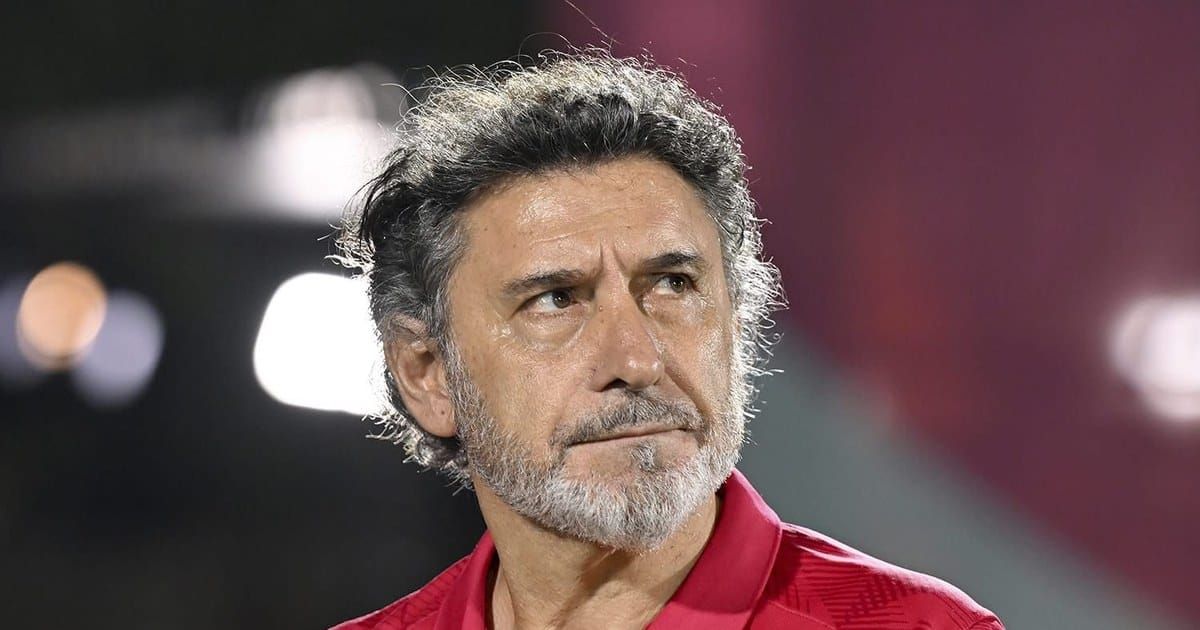
Marco Ragini calls himself a globetrotting coach. Most coaches at his level have a country. Ragini has fourteen.
The Italian-Sammarinese's career resists summary. UEFA Pro License. Twenty-eight years on the touchline. Head coach roles in Portugal, Mongolia, Nigeria, DR Congo, Lithuania, Switzerland, Slovakia, the Czech Republic, Greece, Malaysia, San Marino. Three UEFA Europa League campaigns with San Marino's national side. A Cup win at Tre Fiori. A technical collaboration with Feyenoord Rotterdam in 2012. Then, in 2023, the chapter that defined the next two years: technical supervisor at the Tajikistan Football Federation, technical director of the Juventus Academy in Tajikistan, and from 2024, head coach of the U17 and U20 national teams. Under him, Tajikistan qualified for the FIFA U17 World Cup in Qatar — the first time in the country's history — and topped their group at the AFC U17 Asian Cup. They held South Korea to a 2-2 draw in the quarter-finals before losing on penalties.
In this written exchange, conducted shortly after the close of his Tajikistan tenure, Ragini reflects on why he marks individually in the age of zonal defending, what 1v1 progressions teach a player about reading the game, the limits of methodology when transplanted across continents, and a phrase he keeps coming back to — legacy. Not as nostalgia, but as a working principle. A team he leaves should be better organized than the one he found. The detail that stays in his coaching, again and again, is what gets left behind.
Head Coach · UEFA Pro · 28 years across 14 countries
MOST RECENT
2024–25 Tajikistan U17 & U20 — Head Coach
FIFA U17 World Cup qualification (Qatar 2025)
AFC U17 Asian Cup group winners
CAFA U17 Champions · CAFA U20 3rd place
TECHNICAL DIRECTION
2023 Juventus Academy Tajikistan — Technical Director
2023 Tajikistan FF — Technical Supervisor
2022 Tre Fiori FC (San Marino) — Technical Director
2020 Lusitano FC (Portugal)
2017 Garden City Panthers (Nigeria)
2016 AC Ujana (DR Congo)
2015 MDK Dolný Kubín (Slovakia)
2013 FC Modena — Serie B (Italy)
2006 FC Modena — Serie A (Italy)
2005 FIGC Youth Department
2003 FC Riccione (Italy)
HEAD COACH (selected)
2022 TRW Kelantan FC — Malaysian Super League
2021 Tre Fiori FC — San Marino Cup Winner
2019–20 Lusitano FC (Portugal)
2018 FC Ulaanbaatar (Mongolia)
2017 Garden City Panthers (Nigeria)
2016 AC Ujana (DR Congo)
2015 MFK Dolný Kubín (Slovakia) · FC Locarno (Switzerland)
2014 FK Dainava (Lithuania)
2013 FK Varnsdorf (Czech Republic)
2012 Feyenoord Rotterdam — Technical Collaboration
2011 Paniliakos FC (Greece)
2008–11 AC Bellinzona — Swiss Super League
2002–11 San Marino National Team — World & Euro qualifications
LANGUAGES
Italian · English · French · Spanish
LICENSES
UEFA Pro · UEFA A · UEFA B · UEFA C · UEFA Youth · Athletic Trainer Pro · GK Pro Master
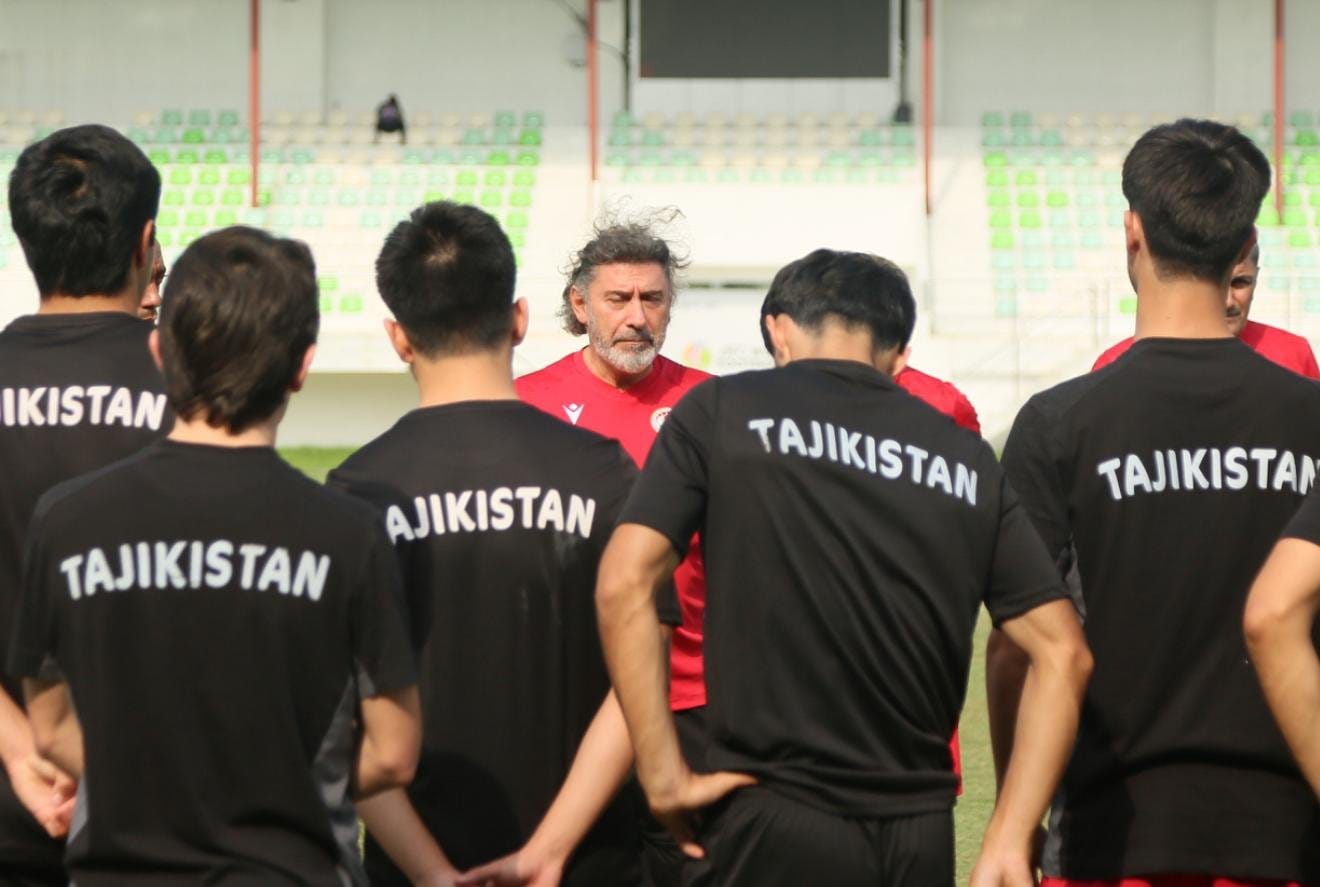
PART 1 — OPENING
Q1. You hold the UEFA PRO license and have spent 28 years working as a head coach and technical director across 14 countries on three continents. The breadth of your career — spanning the AFC Asian Cup, the UEFA Europa League, and the FIFA U17 World Cup — already sets you apart from most coaches in the world. How would you define yourself as a coach?
I define myself as a global coach and a "builder" of footballing identities. Thanks to my UEFA PRO license and nearly three decades of experience across 14 different countries, I have learned to be extremely adaptable without ever compromising the pursuit of organizational excellence. I am a coach who believes in field work, but I view the human element as the engine behind every tactical success. I am particularly meticulous — often obsessive — especially when evaluating the smallest details on and off the pitch, because they make the difference and provide that extra edge over opponents. My mindset is one of constant competition, which gives me the emotional boost to always remain at my mental and physical peak.
PART 2 — PHILOSOPHY & VALUES
Q2. Before any tactical principle, you place "honest, transparent, and respectful relationships — both on and off the pitch" as the most fundamental premise of your work. Where does this belief come from, and how does it concretely connect to results on the pitch?
This conviction comes from the realization that football is made of people before athletes. Transparency creates trust; when a player feels respected and knows exactly what the coach expects, they are willing to give 110% on the pitch. The link to results is direct: a team united by solid human values overcomes crises much faster than one built solely on talent.
Football is made of people before athletes.
Q3. Your stated goal is not simply to build a winning team, but to leave behind "a lasting and exemplary style of play and organization" at every club you work with. When short-term results and long-term direction come into conflict, what is the standard by which you make your decision?
My north star is always the legacy I leave behind: an exemplary playing style and organization. Although immediate results are vital in modern football, I never sacrifice structural principles for ephemeral success. I make decisions based on the coherence of the project; I firmly believe that a solid organization is the best guarantee for achieving consistent, winning results, both in the near future and over time.
PART 3 — TRAINING METHODOLOGY
Q4. Every training session is structured around progressive complexity — beginning with 1v1 and expanding gradually in numbers and space up to 7v7. How does this approach differ from more traditional training methods in terms of developing players' tactical understanding and their ability to adapt in real match situations?
Unlike traditional methods that often isolate technical gestures, my progression from 1v1 to 7v7 keeps the player constantly immersed in a real tactical context, both sectoral and global. Play several and different "small side games." This develops a superior ability to read the game at high intensity: the player doesn't just execute a task but learns to perceive spaces and teammates as the game expands, improving adaptability during high-speed match play. Naturally, tactical drills must conclude with situations as close to a real match as possible (10v10), also including a "neutral" player to create numerical superiority during the possession phase in diversified themed games.
Q5. Convinced that "improving the individual improves the team as a whole," you make individual technical training a central pillar of your weekly plan. Have you ever faced a situation where a highly talented player was difficult to integrate into collective training? How did you approach it?
I start from the principle that improving the individual elevates the entire group. If a talent struggles to integrate, I focus on individual technical sessions to enhance their specific qualities, then work to help them understand how their personal improvement can become added value for the team. The approach is always based on dialogue and practical demonstration of mutual benefit.
Q6. You use video analysis for four distinct purposes: studying your own matches, analyzing opponents, providing individual player feedback, and preparing training sessions. When using video to address a player's weaknesses in a one-on-one setting, what is your method for driving genuine change without undermining their motivation?
Video must be a support tool, not an indictment. In individual sessions, I show the player the error not as a failure, but as a growth opportunity. I always balance footage of weaknesses with clips of their strengths, establishing clear and achievable improvement goals, transforming the analysis into a shared coaching journey.
PART 4 — TACTICAL SYSTEM
Q7. In an era where zonal defending has become the dominant approach, you remain committed to a system built on numerical equality and individual marking, where each player carries a clearly defined responsibility. What is the tactical reasoning behind this choice?
The choice is based first on the characteristics of my players, then on individual responsibility and clarity. In a system of numerical equality and individual duels, every player knows exactly what their task is. This approach reduces the "gray areas" typical of zonal marking and forces the opponent to win direct duels, increasing defensive intensity and the constant concentration of my players.
Q8. You view the ultimate purpose of defending as recovering possession as quickly as possible and immediately triggering an attacking transition. How do you train your players to see defending not as a passive act, but as the very starting point of the attack?
I teach that defending does not mean "waiting," but rather "attacking the opponent's time."
Act... do not react. Every defensive drill ends with the obligation to immediately look for a vertical pass or a fast transition as soon as the ball is recovered. In this way, the mentality shifts: winning the ball becomes the psychological signal to strike the opponent at their moment of maximum vulnerability.
Act, do not react. Defending is attacking the opponent's time.
Q9. You prefer a vertical style of play, yet you say you "do not believe in a single model." How do you strike the balance between allowing individual creativity and maintaining the team's tactical structure in actual match situations?
While I prefer verticality, I do not impose a rigid model that stifles talent. The tactical structure provides the "map" and security during the non-possession and build-up phases, but once we reach the final third, I allow the instinct and creativity of the individuals to make the difference. Tactics should be a rail, not a cage.
Q10. Your build-up is structured in stages — starting from the goalkeeper and first defensive line, moving through the creation of midfield numerical superiority, and finishing with purposeful attacking in the final third. In training your players to read and execute this structure naturally in live situations, which stage proves the most difficult to develop?
The most complex phase is almost always creating numerical superiority in midfield. It requires perfect timing in off-the-ball movements and a rapid reading of the spaces that open up as the ball moves from the defense. It is the beating heart of the system and requires precise synchronization between departments.
Q11. You cite research suggesting that approximately 60 to 70 percent of goals scored by elite European teams originate from transitional situations. In your methodology, which trains both positive and negative transitions systematically, what is the core training principle that genuinely improves a player's speed of reaction and quality of decision-making?
The fundamental principle is the systematic training of "negative and positive transition phases" in every exercise. To improve reaction speed, we work on sudden visual and sound stimuli during possession, forcing the player to instantaneously reset their mental state from attacker to defender (and vice versa) without cognitive pauses.
Q12. Working from the statistic that set pieces account for over 35 percent of all goals scored, you dedicate specific sessions to both offensive and defensive set piece situations. Could you walk us through your approach to designing a set piece plan after analyzing an opponent?
I start by studying the opponent's vulnerabilities (whether they mark zonally, man-to-man, or mixed) and their best jumpers. I then design plays that exploit our screens and timing of runs, seeking to maximize that 35% scoring potential indicated by FIFA data. I dedicate specific sessions to repeating these movements until they become automatic and immediate.
PART 5 — GLOBAL EXPERIENCE & TALENT DEVELOPMENT
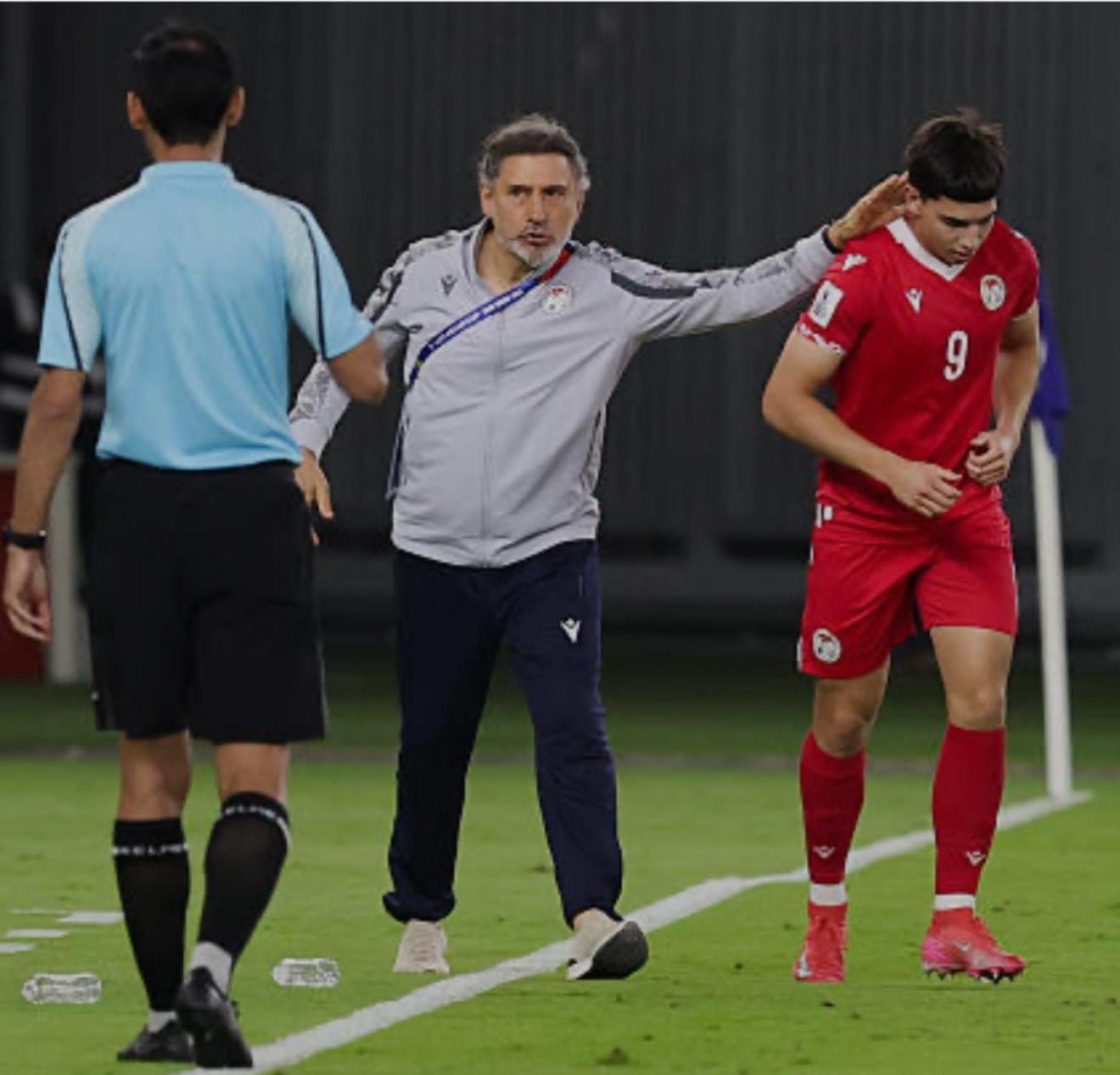
Q13. You led the Tajikistan U17 national team to qualify for the 2025 FIFA U17 World Cup and finished top of their group at the Asian Cup — remarkable achievements given the resource and geographical constraints of Central Asia. What were the decisive factors behind those results?
The key factor was the courage to believe in the process despite geographic and resource limitations — getting them to accept and improve upon a specific football culture change. We worked hard on tactical organization and mentality, making the boys feel part of an elite project. The discipline and hunger of these young players did the rest, allowing us to compete at the highest Asian levels.
Q14. Working in environments as different as Nigeria, DR Congo, Mongolia, and Malaysia, you have had to transplant your philosophy and methodology into entirely unfamiliar football cultures. What aspects of your approach required the most adjustment — and conversely, how did those experiences reshape your own philosophy?
In every country, across different continents, I had to learn to communicate with the heart before words. I adapted workloads and language, but I held firm to the principles of respect and professionalism. These experiences taught me that football is a universal language and made me a much more flexible and tolerant coach regarding cultural diversity.
Football is a universal language.
Q15. You served as Technical Director of the Juventus Academy in Tajikistan. In bridging the gap between a global club's academy system and local football realities, what did you find is truly necessary for an external methodology to take genuine root in a different environment?
It is essential never to approach it with arrogance or condescension. For my methodology to take hold in the realities where I have worked, I first had to understand and respect the local reality, both in terms of football and social culture. The secret is integrating global principles of excellence with the human and physical characteristics of the local players, making the method "theirs" rather than something imposed from above.
Q16. Is there a moment when you watch a player for the first time on a training pitch and sense that something is different about them? What does that instinct rest on — technique, attitude, or something else entirely?
It is a mix of technique and attitude, but above all, it is how the player "occupies time." I look at how they position themselves even before receiving the ball (posture and space) and their mental resilience in moments of error. Pure talent is seen in the touch of the ball, but I perceive the "difference" in their ability to stay in the game with an intelligence superior to others. Thinking, seeing, and acting a moment before everyone else.
Q17. You have led national teams like San Marino, where the pool of available players is inherently limited. In situations where you cannot rely on the volume of talent but must compete on the quality of development, how has your philosophy on youth coaching been shaped?
Working with a limited pool of players taught me that where the quantity of talent falls short, the extreme quality of development must take over. I learned that every single detail in training can make the difference between competing or being overwhelmed. It made me a perfectionist in technical and tactical instruction. Sometimes obsessive, but this is what makes the difference as a coach. It is said that a good coach can help a player to become a great player... but a special coach... changes a player's life. I want to be the latter.
A good coach helps a player become a great player. A special coach changes a player's life.
PART 6 — COMMUNICATION & LEADERSHIP
Q18. You speak Italian, English, French, and Spanish, and have worked with players of dozens of nationalities throughout your career. When you had to communicate complex tactical concepts in an environment where language was a barrier, what methods did you turn to?
In addition to the four languages I speak, I made heavy use of body language and visual tools. Boards, videos, practical demonstrations on the pitch, and even drawings. In football, a gesture is often worth more than a thousand technical explanations; I learned to simplify the message to make it immediate and universal, codifying gestures and words. In the end... the language of football is global.
Q19. You identify communication and empathy as your most important personal strengths. When a player is psychologically struggling or has lost confidence in themselves, what is your approach to bringing them back?
I use empathy. I sit down with the player and try to understand the man behind the jersey. Often, a loss of confidence stems from external factors or excessive pressure. I remove heavy tactical responsibilities for a period, focus on positive reinforcement of their strengths, and try to rebuild a serene environment around them until they find their balance again.
PART 7 — CLOSING
Q20. Twenty-eight years, 14 countries, three continents. In every role you have taken on, you have aimed to leave behind "a lasting and exemplary style of play and organization." At this point in your career, how do you hope the name Marco Ragini will be remembered in world football — and right now, what is the next challenge you are most hungry for?
I would like to be remembered as Marco Ragini, the "globetrotting" coach who brought organization, style, and humanity wherever he went, leaving clubs or Federations better than he found them.
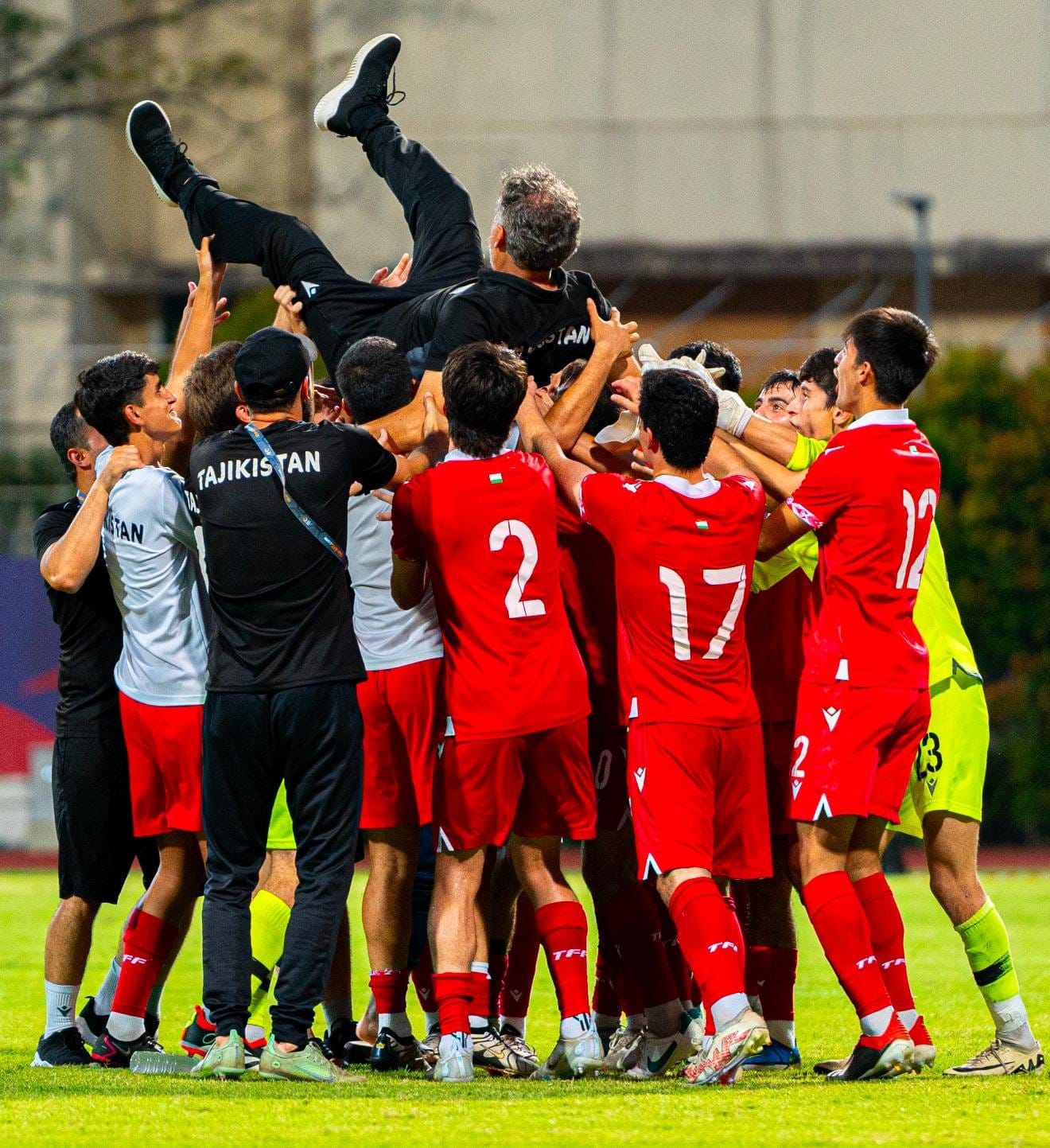
Among the achievements I am most proud of is reaching the quarter-finals of the Asian Cup, where we pushed South Korea — one of Asia's finest — to a 2-2 draw before losing on penalties in a match that left nothing on the pitch. That experience gave us the belief to go further, and having led Tajikistan — a small country with limited resources and infrastructure — to the FIFA U17 World Cup for the very first time in their history stands as the defining moment of my career. That moment, more than any other, represents what I believe a coach can truly accomplish when he commits fully to a project against all odds.
After 28 years across three continents, my hunger has not diminished. The next challenge I seek is a project where I can build something lasting, putting all my international experience at the service of an ambitious club or Federation that wants to stand out for identity and results. In my future, I would particularly welcome the opportunity to coach in East Asia (Japan or South Korea) because I believe there are many affinities between my approach to football and the sporting culture of those two countries.
CLOSING
Ragini's coaching vocabulary has a rare word at its center. Legacy. He uses it the way some coaches use system or identity — as an organizing principle, not a closing line. A team he leaves should be better organized than the one he found. A federation should sit higher in continental football. A young player should walk away with a different sense of what the game can ask of him.
It is what makes the Tajikistan moment difficult to read as a single result. Reaching the FIFA U17 World Cup for the first time in the country's history is a fact. Drawing 2-2 with South Korea in the Asian Cup quarter-finals before losing on penalties is a fact. But the thing Ragini keeps returning to, when asked, is the structural change — the culture — that made those moments possible. Results, in his framing, are the visible part of a longer architecture, and the architecture is what stays.
The Tajikistan chapter is closed. What comes next, by his own account, may be East Asia. Japan or South Korea, specifically — for affinity reasons that the Asian Cup quarter-final hinted at. What he is looking for, he says, is "a project where I can build something lasting." It is, predictably, a sentence about legacy. After fourteen countries, the word still does the work.
ABOUT THE AUTHOR
SEOK LIM Editor· Football Agent Lab
FIFA-licensed football agent and steel market analyst with over a decade of experience in commodity research. Football Agent Lab publishes interviews and market reports at the intersection of football, agency work, and global markets.


