Structured Freedom — Marco Gracia on the Football He Is Building
A Chilean coach with UEFA A from Scotland, UEFA B from Germany, and CONMEBOL A from South America. Author of Neurofútbol. Marco Gracia on coaching as cognition — and on building an identity that is structured, but never rigid.
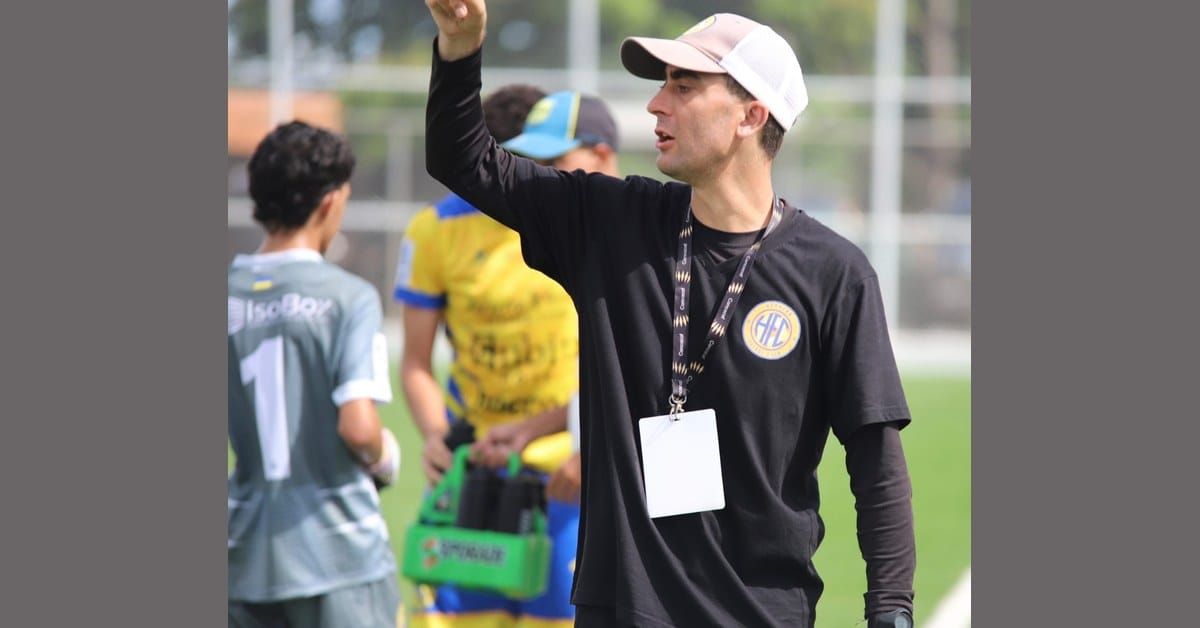
There is a phrase that returns again and again in Marco Antonio Gracia Rovira's vocabulary, and he uses it to describe the football he is building. Structured freedom. A clear and coherent game model, supported by intelligent players who understand the demands of the game and are capable of expressing their own solutions within that structure. It is not a slogan. It is the synthesis of a coaching education that has run, deliberately, through three of the most distinct footballing cultures in the world.
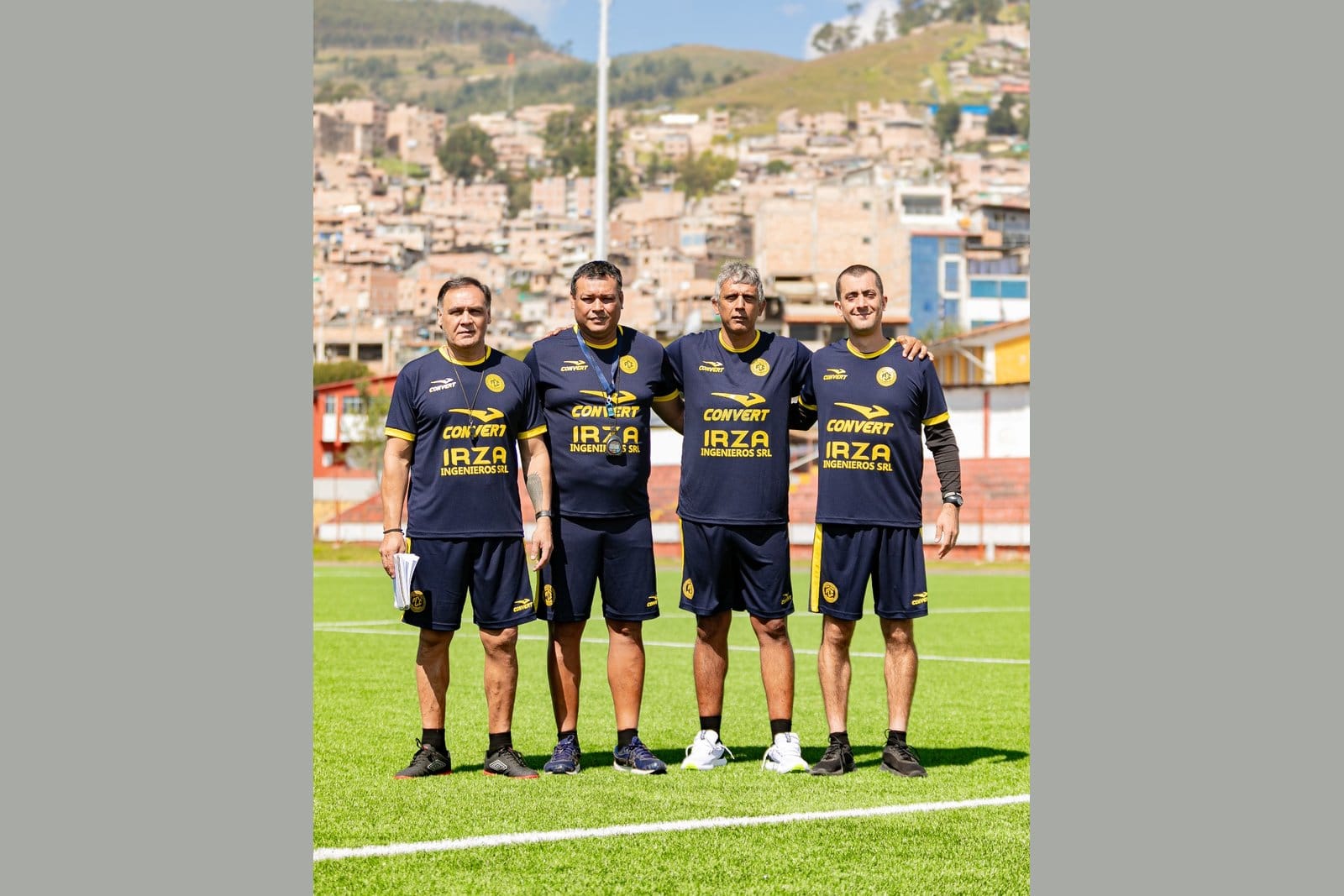
Gracia is Chilean. He earned his UEFA A licence with the Scottish Football Association, his UEFA B with the German DFB, and his CONMEBOL A in South America. He visited dozens of elite clubs from the inside — Real Madrid, Ajax, Athletic Bilbao, Benfica — and studied at Benfica through UEFA. He has worked professionally across Chile, Panama, Venezuela, Paraguay, and Peru, where he is now Assistant Coach at FC Cajamarca in the Liga 1. He authored Neurofútbol, which was awarded INAF's prize for best thesis of the year. His coaching record across age groups runs from U-8 to senior professional, including a stretch as Methodologist responsible for aligning philosophy across a club's entire structure. He holds a BBA, an MBA, and a CONMEBOL Sports Management Diploma.
In a written exchange with Football Agent Lab, Gracia frames football as a game of decisions made under pressure — perception, interpretation, and execution within a limited timeframe. He defines a well-coached team not by results but by what is visible inside a match. He draws his influences not from one figure but from six: Bielsa for purpose, Ancelotti for management, Guardiola for pressing, Klopp for transitions, Allegri for adaptability, Pellegrini for stability. Across two continents and five professional jobs, what does not change is the model. What changes is its expression.
Chilean Head Coach · Methodologist · Author, Neurofútbol
CURRENT ROLE
Assistant Coach · FC Cajamarca · Liga 1, Peru
PRIOR PROFESSIONAL TENURES
Herrera FC (Panama) · Multiple clubs across Venezuela, Paraguay, and Chile · CONMEBOL Sub-15 South American Championship qualification (Paraguay)
COACHING LICENCES
UEFA A (Scottish Football Association) · UEFA B (German DFB) · CONMEBOL A · INAF Coach
EDUCATION
BBA, MBA · CONMEBOL Sports Management Diploma · UEFA study visit, Benfica
PUBLICATION
Neurofútbol — neuroscience-based football coaching methodology · INAF Award, Best Thesis of the Year
CLUB STUDY VISITS (selected)
Real Madrid · Ajax · Athletic Bilbao · Benfica
AGE GROUPS COACHED
U-8 through senior professional, including Methodologist role across club structures
LANGUAGES
Spanish (native) · English · Portuguese (working)
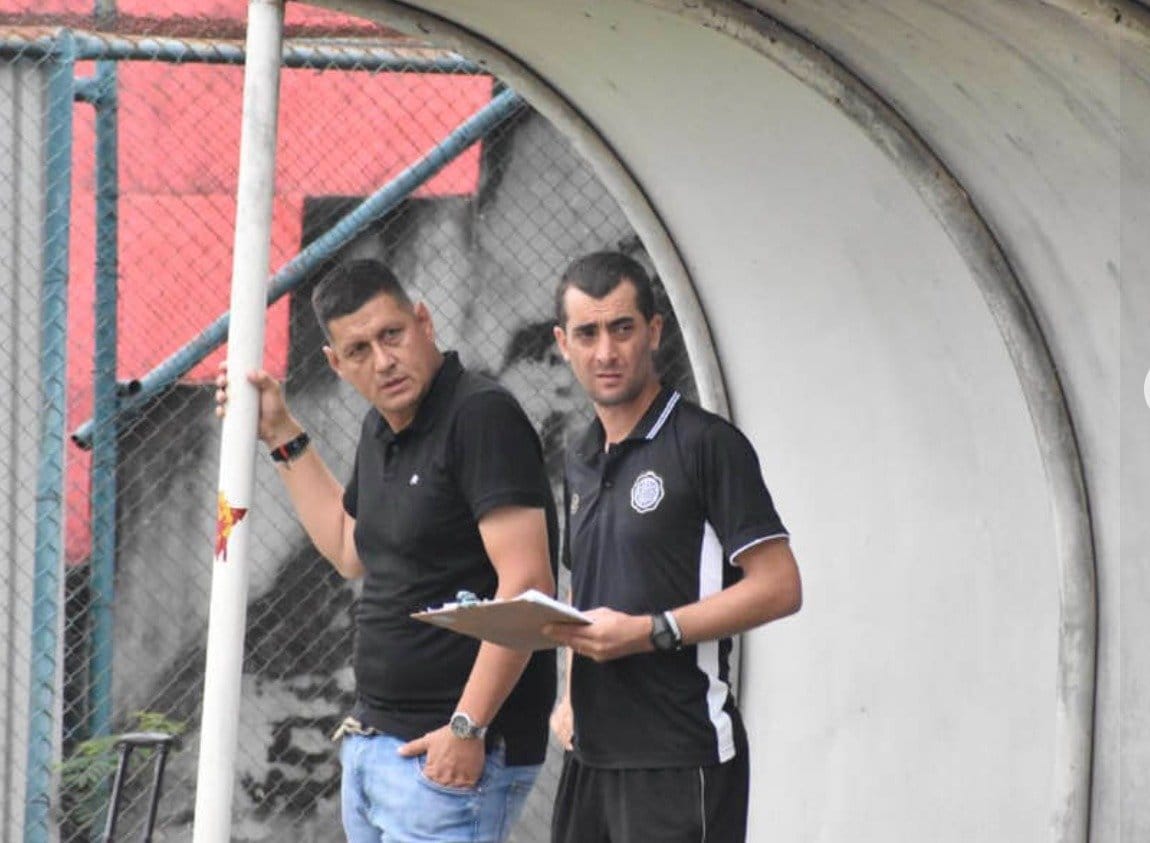
PART 1 · THE MAN
Rather than listing credentials, we asked who he is at this point in his life. What footballing convictions define him?
I see football as a game of decisions made under pressure. Every action is shaped by perception, interpretation, and execution within a limited timeframe.
My role is to develop players who can process information faster, make better decisions, and execute with precision. I am interested not only in physical output, but in cognitive efficiency — how effectively a player understands and solves the game.
My teams are organized but never rigid. Structure is essential, but it must allow adaptability and individual expression. I value intelligence over intensity alone, and intention over improvisation without purpose. Ultimately, I aim to build teams that think collectively and respond intelligently to the demands of the game.
You earned your UEFA A with the Scottish FA, your UEFA B with the German DFB, and your CONMEBOL A in South America. This was more than collecting licences — it was a process of immersing yourself in fundamentally different football cultures. How did that journey shape the philosophy you hold today?
My development as a coach has been shaped by exposure to very different footballing cultures, each of which contributed a key element to my methodology.
I began my education in South America, working with the Chilean Football Federation and CONMEBOL. That environment fostered creativity, adaptability, and a natural understanding of the game's fluidity.
In Germany, I was introduced to a highly structured approach — methodological discipline, detailed planning, and the importance of precision in every aspect of training. It reinforced the idea that performance is built through consistent and well-designed processes.
In Scotland, I experienced a football culture defined by intensity, competitiveness, and a more direct approach to attacking play. It highlighted the importance of mentality, tempo, and the capacity to compete under demanding conditions.
Through UEFA, I had the opportunity to study at Benfica, where I observed a highly sophisticated organizational model — from their training methodology to their talent identification and player development systems.
Today, my philosophy is the integration of all these influences. I define it as structured freedom — a clear and coherent game model supported by intelligent players who understand the demands of the game and are capable of expressing their own solutions within that structure.
Who has had the most decisive influence on your footballing philosophy — and what is the one thing you still actively practise on the training ground today?
My philosophy is not built around a single figure, but rather through the integration of multiple influences that have shaped my understanding of the game.
From Marcelo Bielsa, I take the intensity, clarity, and purpose behind every training exercise — the idea that nothing in training should exist without a direct connection to the game. From Carlo Ancelotti, I value the management of the squad, the ability to handle egos, maintain balance, and create a positive and functional environment. From Pep Guardiola, I incorporate the concept of immediate pressing after loss and a deep understanding of positional play, particularly the importance of reaction within the first seconds after losing possession.
From Jürgen Klopp, I take the organization of attacking transitions and the effective use of width to destabilize the opponent. From Massimiliano Allegri, I value tactical flexibility and the capacity to adapt during the match. And from Manuel Pellegrini, I take stability, emotional intelligence, and the ability to keep the entire squad engaged over time.
The most important influence, however, is not an individual, but a way of thinking — understanding football as a cognitive process. The principle I apply consistently in my daily work is that every exercise must involve decision-making and reflect real game situations. If the player is not required to think, interpret, and decide, then the learning process is incomplete.
Every exercise must involve decision-making and reflect real game situations.
PART 2 · EXPERIENCE
You visited dozens of clubs from the inside — Real Madrid, Ajax, Athletic Bilbao, Benfica. When you observed those elite environments, what did you see that confirmed what you had already believed? And what made you fundamentally reconsider something?
What most strongly confirmed my beliefs at the elite level was the absolute obsession with details. Every aspect of the environment is optimized — from pitch conditions and infrastructure to staff organization, training design, and performance support systems. Nothing is left to chance. There is a clear intention behind every decision.
However, what challenged my perception was the simplicity with which elite environments operate. At the highest level, success is not built on complexity, but on the consistent execution of simple principles at an exceptional standard.
Players and staff focus on fundamentals — recovery, nutrition, hydration, physical preparation, and daily habits. The difference lies in the level of discipline and consistency with which these elements are applied. The most effective environments are not necessarily the most complex, but the most clear, repeatable, and deeply understood by everyone within the organization.
Panama, Venezuela, Paraguay, Peru — entirely different infrastructure, different tactical cultures, different expectations. Across all that variation, what is the one principle you have never been willing to compromise on?
The non-negotiable element in my work is always the game model and the behavioral principles that support it.
Each context presents different characteristics. In Panama and Venezuela, the game tends to be more physical, with less structural organization. In Paraguay, football is highly structured, compact, and strategically focused, with set pieces playing a crucial role. In Peru and Chile, technical ability is a defining attribute of many players.
Despite these differences, the team must always have a clear identity. Without a defined model, the team becomes reactive rather than proactive, constantly adapting to the opponent instead of controlling the game.
My responsibility is to adapt the expression of the model to the context — considering the players, the league, and the available resources — but never to compromise the core principles that define how the team plays.
Without a defined model, the team becomes reactive rather than proactive — constantly adapting to the opponent instead of controlling the game.
When a foreign coach walks into a dressing room for the first time, the players' gaze is almost always skeptical. Do you break through that distrust through tactical conviction, or through the gradual building of human trust?
Trust is not established through words, but through coherence. Players are naturally skeptical at the beginning, particularly when working with a foreign coach. The only way to earn their trust is through clarity, honesty, and consistency in every aspect of your work. Players observe far more than they listen.
The decisive moment comes when there is full alignment between your message, your training sessions, and your decisions during matches. When players recognize that consistency — that what you say is reflected in what you do — trust begins to develop.
Beyond that, professionalism is fundamental. Maintaining high standards on a daily basis, treating players with respect, and demanding the same level of commitment from them creates an environment where trust can grow naturally.
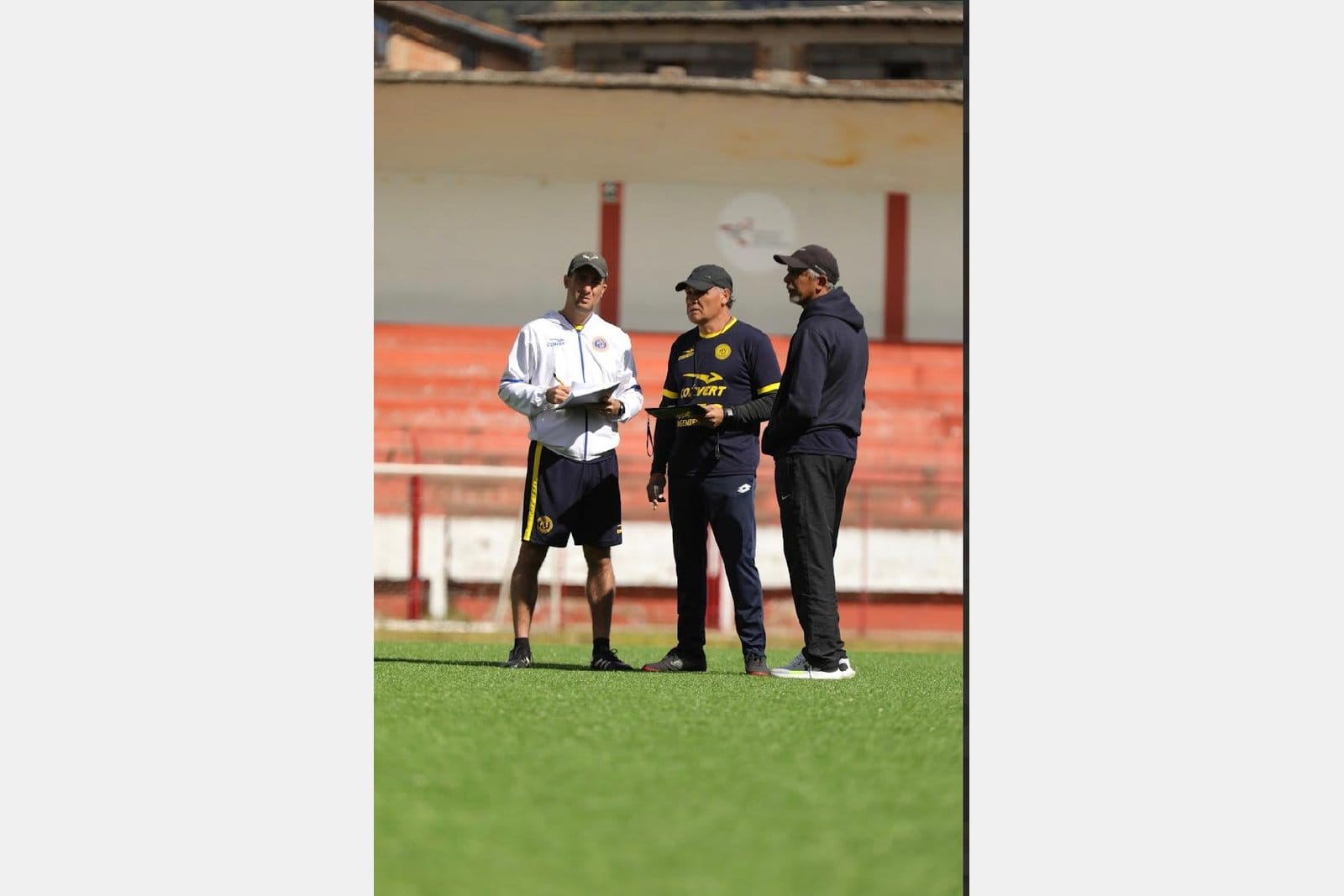
PART 3 · PHILOSOPHY
You authored Neurofútbol and were recognized with INAF's award for best thesis of the year. What does it actually look like on the training pitch to apply neuroscience to football coaching?
Neurofútbol is based on the principle that football performance is primarily cognitive before it is physical or technical.
It integrates key processes such as decision-making, attention, memory, concentration, and visualization, using a combination of visual, auditory, and kinesthetic stimuli to replicate the complexity of the game.
On the training pitch, this translates into designing exercises where perception, decision, and execution occur simultaneously. I do not isolate technical actions from context. Instead, I create game-realistic situations where players must interpret information, make decisions, and act under pressure.
The objective is to train the brain in the same way the game demands. The process is conceptually simple: first, you change how the player understands and perceives the game — and as a consequence, their movement and execution improve naturally.
First you change how the player understands and perceives the game. As a consequence, their movement and execution improve naturally.
Tactical Periodization subordinates every training stimulus to a single game model. When you applied this methodology in real environments, where did the gap between theory and reality show itself most sharply — and how did you bridge it?
Tactical Periodization is a fundamental pillar in how I structure my training process. In theory, it provides a clear and coherent framework where every stimulus is directly connected to the game model.
In practice, the gap appears when external factors disrupt that structure — injuries, limited training time, congested schedules, or significant differences in player profiles. These realities often challenge the ideal continuity and progression that the methodology requires.
The key, in my experience, is not to abandon the model, but to adapt its expression. The core principles of play must remain constant, but the way they are trained must be flexible enough to respond to the context. Each exercise still needs to integrate the four dimensions — tactical, physical, technical, and psychological — even if the design is adjusted.
Bridging this gap requires creativity and clarity. It means designing alternative training solutions that continue to reinforce the same ideas under different conditions. Ultimately, it is about maintaining the team's identity while adapting intelligently to reality.
How do you define a well-coached team? Not in terms of results, but in terms of specific moments visible inside a match.
A well-coached team is immediately recognizable, regardless of the opponent or the scoreline. It has a clear identity that is consistently expressed throughout the game.
You see coordinated movements, a shared collective intention, and players making decisions that align with the same idea. There is clarity in how the team attacks, how it defends, and how it reacts in transitions. Even in moments of disorder, the underlying structure remains visible.
I evaluate this through the five moments of the game — offensive organization, defensive organization, offensive and defensive transitions, and set pieces — the height and behavior of the defensive block, and the team's coherence both in and out of possession.
When all these elements are aligned, the team does not just play. It reflects a clear and internalized model. That, for me, is the true sign of coaching.
There are qualities in a player that data and GPS will never capture. As the author of Neurofútbol, how do you identify those qualities, and how do you develop them?
The qualities that data cannot fully capture are primarily cognitive and emotional — awareness, anticipation, personality, resilience, and the ability to make decisions under pressure.
These attributes reveal themselves in complexity: how a player interprets chaotic situations, how quickly they process information, and how they respond to adversity or error. They are not measured in isolation, but expressed in context.
To develop them, I design what I call controlled uncertainty within training. This means creating environments where players are constantly required to interpret, adapt, and decide — not simply execute predefined actions.
The objective is to challenge the player's perception and decision-making processes in conditions that replicate the unpredictability of the game. In doing so, the player develops not only technical capacity, but the cognitive and emotional tools required to perform consistently at a high level.
PART 4 · ON THE JOB
You have also worked as a Methodologist — a role that goes beyond designing individual sessions to maintaining philosophical consistency across an entire squad. When is that consistency most at risk?
In most of the countries where I have worked, my role has extended beyond coaching the team to supporting the club in building and maintaining a clear methodological structure.
The greatest risk to consistency usually appears during transitions — between age groups, between coaches, or when short-term results begin to take priority over long-term development. It is in these moments that clubs often lose alignment in their playing model, their training methodology, and ultimately their identity.
My approach is to create strong internal coherence across all levels of the club. This involves improving communication between departments, aligning training methodologies, and establishing a shared game model that is understood from the academy to the first team.
I detect potential breakdowns through observation — inconsistencies in player behavior, differences in training content, or a lack of clarity in decision-making during matches. When these signs appear, the solution is to re-establish clarity: reinforcing principles, standardizing processes, and ensuring that every coach within the structure is aligned with the same philosophy.
When you first observe a player, what do you look at first — technical quality, tactical decision-making, or attitude?
My evaluation is based on what I refer to as the four corners of player development: tactical, physical, technical, and psychological.
Within each of these areas, I apply specific parameters to build a complete and objective profile of the player. While all four dimensions are important, I tend to prioritize the cognitive and tactical aspects — how the player understands the game, how quickly they process information, and how they make decisions under pressure.
Of course, first impressions can sometimes be incomplete or misleading. That is why I do not rely on a single observation. A player must be assessed over time, in different contexts and under varying levels of difficulty.
In many cases, players who may not immediately stand out technically can demonstrate high levels of game intelligence or psychological resilience — qualities that are often more decisive in the long term.
When your team is losing during a match, what is the first thing you check?
The first step is always analysis. I begin by identifying where possession was lost and understanding the sequence of errors that led to the opponent's goal. This allows me to determine whether the issue is structural, individual, or related to decision-making.
From there, I evaluate the overall context of the game — how we are performing, whether the game plan is being executed correctly, and where the key imbalances are.
If we are losing, it is essential to shift from analysis to action. The team must adapt, whether through tactical adjustments, structural changes, or a more proactive approach to regain control of the match. Substitutions are not only about fresh legs, but about introducing profiles that can change the dynamics of the game.
Ultimately, it is about making clear, decisive interventions that allow the team to respond effectively rather than react emotionally.
You have coached across all age groups, from U-8 to senior professional. When communicating the same tactical concept to a youth player versus a professional, what fundamentally changes — and what must remain absolutely constant?
The fundamental difference lies in how the message is delivered, not in the essence of the idea itself.
At early ages, especially in categories such as U-8, my priority is that the player enjoys the game. At that stage, football should be about exploration, creativity, and developing a natural connection with the ball. While basic tactical elements can be introduced, I prefer players to experience different positions and situations rather than specialize too early.
As players grow, particularly from around the age of 12, I begin to introduce more structured tactical concepts, always adapted to their level of understanding and cognitive development. With professional players, the communication becomes more direct, detailed, and specific. The expectations are higher, and the level of precision required is significantly greater.
What must remain constant at every level is the core principle of learning through understanding. Whether it is a child or a professional, the player must not only execute, but understand why they are doing something. That cognitive engagement is the foundation of all meaningful development.
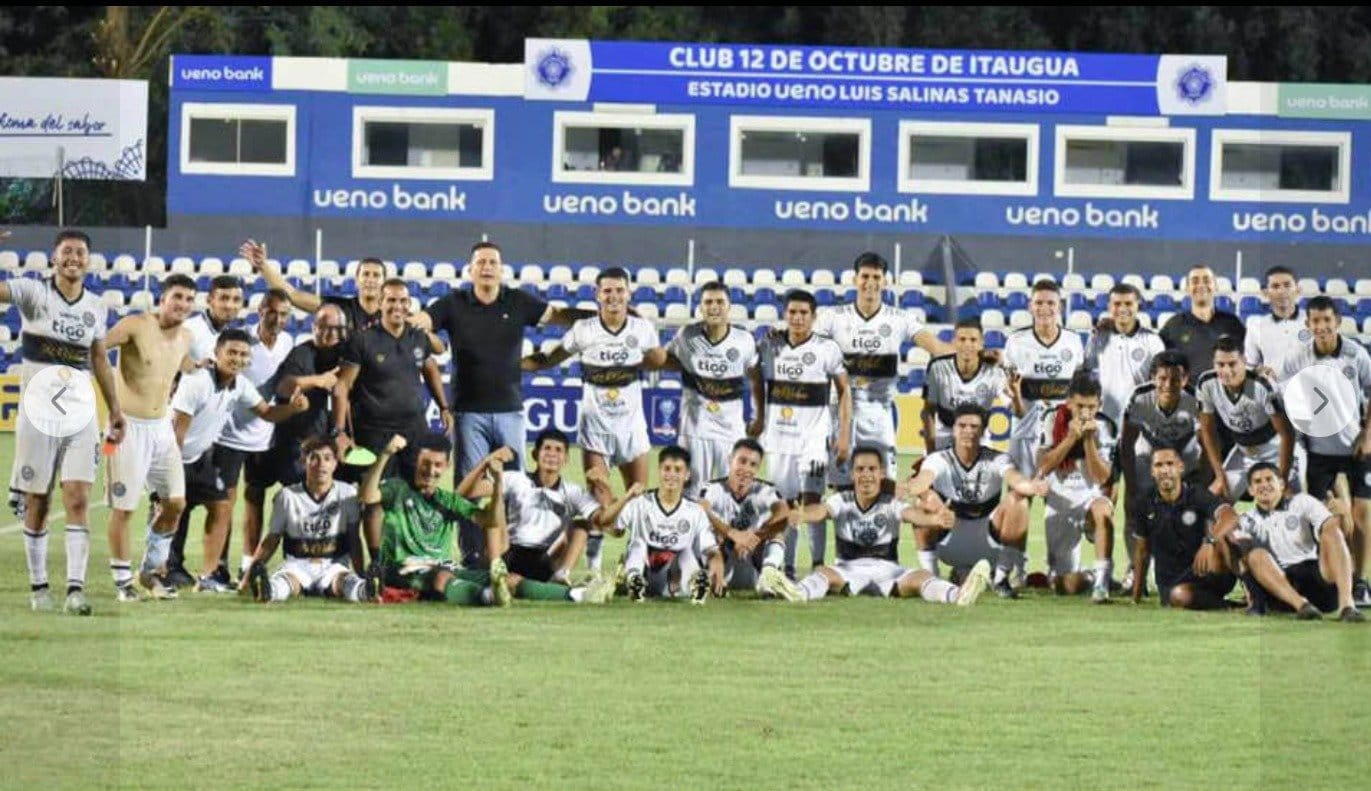
PART 5 · REFLECTION
Who was the most difficult type of player you have ever had to coach — not in terms of ability, but in terms of the structural difficulty of transmitting your philosophy and methodology to them?
The most challenging profile I have encountered is not related to talent, but to motivation — specifically, the young player who is pushed into football by external pressure, often from family, rather than genuine personal desire.
This creates a complex dynamic for everyone involved: the player, the parents, the coach, and the club. When intrinsic motivation is absent, it becomes significantly more difficult to transmit any methodology or long-term developmental process, because the foundation — the player's own commitment — is not fully established.
My approach in these situations is fundamentally human. Before thinking about the player as an athlete, I focus on the individual — understanding how they feel, whether they truly enjoy the game, and what their personal motivations are. I believe that without emotional connection and genuine engagement, no technical or tactical development can be sustained.
From there, I try to create an environment where the player can rediscover enjoyment and autonomy within the game. The objective is not only to develop better footballers, but to help individuals build a healthier and more authentic relationship with the sport.
Semi-final appearances, win rates in the 60% range — the numbers speak to a consistent level of performance. But setting results aside, which season made you feel, in hindsight, that it was the one that truly made you the coach you are?
The most defining moments in a coach's career are rarely the ones where everything goes according to plan, but rather those where expectations are not met.
It is in those periods — when results are negative and your ideas do not immediately translate into performance — that you are forced to question yourself at a deeper level. You reassess your methodology, your communication, and your decision-making.
Growth does not come from success alone. Success can validate your ideas, but it rarely challenges them. True development comes when your model is tested under pressure and you are required to adapt without losing your core principles.
I experienced this during a period in Panama, where results were not aligned with our expectations. Instead of changing our identity, we made specific adjustments in our defensive organization — focusing on structure, coordination, and collective behavior. Through consistent work, the team improved its performance and regained stability.
Those moments have been the most valuable in shaping who I am as a coach. They forced me to evolve, to become more flexible, and to better understand the balance between theory and reality.
If you were to take a young coach under your wing for a year, what would you teach them before anything tactical?
Before introducing any tactical concepts, I would focus on developing their ability to think and to observe.
Coaching is not only about knowledge, but about perception — the capacity to truly see and understand what is happening in the game, rather than what you expect or want to see. Without that, even the most sophisticated methodology becomes ineffective.
I would begin by understanding their personal and professional motivations — what they want to achieve, and what they are willing to sacrifice to get there. From that foundation, we would establish clear short, medium, and long-term objectives.
I would strongly encourage continuous development: learning languages, embracing technology, and maintaining a constant curiosity for knowledge. Football evolves rapidly, and the coach must evolve with it.
However, the most important aspect would be teaching them how to analyze the game deeply — to break it down, interpret it, and understand the underlying dynamics. Because ultimately, methodology is only as strong as the coach's ability to interpret the game it is applied to.
You hold a BBA, an MBA, and a CONMEBOL Sports Management Diploma. In the space between club management and the technical staff, what is the role a head coach must play — and where is the line that must never be crossed?
The head coach plays a central role in connecting the club's strategic vision with the daily reality of the team. He must translate long-term objectives into consistent, actionable processes on the training ground and in competition. This requires alignment — ensuring that the club's philosophy, recruitment strategy, and performance objectives are reflected in the team's identity and behavior.
However, there is a boundary that must remain clear. The coach is responsible for leading the sporting process — the methodology, the model of play, and the development of players. When that line becomes blurred, and external influences begin to interfere with technical decisions, clarity is lost. Without clarity, performance inevitably suffers.
A successful structure is one where there is strong communication and alignment between all departments, but also a clear definition of roles and responsibilities. In that context, the coach can operate with both accountability and autonomy — which is essential for sustained performance at a high level.
PART 6 · VISION
A South American coach building a career across multiple continents is still far from the norm. What is the most significant structural barrier — and how have you navigated it?
One of the primary barriers South American coaches face is a combination of language, cultural adaptation, and, perhaps most significantly, perception.
There is still, in many contexts, an underlying assumption that South American coaches rely more on instinct, emotion, or improvisation rather than on structured methodology and tactical rigor. While creativity is indeed part of our footballing identity, this perception can sometimes overshadow the depth of preparation and knowledge that many South American professionals possess.
To overcome this, I believe it is essential to consistently demonstrate clarity in ideas, methodological organization, and the ability to adapt to different footballing cultures. Credibility is not built through words, but through daily work — through the structure of your training sessions, the coherence of your game model, and your capacity to communicate effectively within diverse environments.
Language is another key factor. The ability to communicate fluently is not only a practical necessity, but also a sign of respect and integration within the club and its culture. For me, investing in language development has been a fundamental part of my professional growth.
There are already strong examples that have paved the way — coaches such as Manuel Pellegrini, Diego Simeone, Marcelo Bielsa, Mauricio Pochettino, Helenio Herrera, Fernando Riera, Luiz Felipe Scolari, and Wanderley Luxemburgo. They have demonstrated that South American coaches can succeed at the highest level through clear ideas, strong methodology, and the ability to adapt without losing their identity.
My approach has been to embrace these challenges as part of the process — continuously learning, adapting, and proving through my work that methodology, structure, and cognitive understanding of the game are universal languages in football.
A final question. You have written a book, walked the pitches of multiple continents, visited the world's finest clubs in person, and built your own footballing language from the ground up. In ten years' time, how do you want the name Marco Gracia to be remembered in world football?
I would like to be remembered as a coach who built his career from the ground up — starting in academies, youth football, and amateur levels, and progressively advancing step by step to reach professional football and eventually the first division abroad.
A coach whose work was defined by a clear and evolving methodology, grounded in neuroscience and cognitive training principles. My training sessions are designed to be intense, modern, and purposeful — integrating technology, decision-making processes, and game-realistic scenarios to maximize player development.
I want to be recognized for having a clear message, but also for the ability to adapt that message to the reality of each team, each culture, and each group of players. Football is never static, and neither should the coach be.
Professionalism has always been a cornerstone of my work, along with the ability to operate effectively in multicultural environments — understanding players not only as athletes, but as individuals shaped by different backgrounds, experiences, and mentalities.
Above all, my mission has always been to help players grow — not only as footballers, but as people. To give them tools to think, to understand the game, and to reach their full potential, both on and off the pitch.
To give players tools to think, to understand the game, and to reach their full potential, both on and off the pitch.
CLOSING
Marco Gracia's vocabulary, taken across the twenty answers of this conversation, reads almost like a compact glossary of where contemporary coaching is going. Cognitive efficiency. Structured freedom. Controlled uncertainty. The four corners. The five moments. Tactical Periodization. Neurofútbol. Some of those terms are inherited and well-known. Others he has named himself. What unifies them is a single conviction stated in his very first answer — that football is a game of decisions made under pressure, and that the coach's first duty is to develop the player as a thinking instrument before any technical or physical refinement can hold.
The path that produced this vocabulary is itself unusual. A Chilean who took his UEFA A in Scotland and his UEFA B in Germany. A working life spread across Panama, Venezuela, Paraguay, and now Peru. A book that won INAF's thesis-of-the-year prize, sitting on a shelf alongside a BBA, an MBA, and a CONMEBOL Sports Management Diploma. A list of mentors that draws from six different coaches because, as he says, his philosophy is not built around a single figure. And underneath all of it, the awareness that South American coaches still operate against a perception they did not earn — that creativity gets confused with improvisation, and that credibility, in the end, is only built through the daily work.
He is thirty-four. He is an Assistant Coach in the Peruvian first division. He has written the book he wanted to write and visited the clubs he wanted to visit. He says his mission has always been to give players the tools to think — and that the future he is working toward is to take that message into first-division football abroad, wherever the structure of the game permits it. Football Agent Lab will be watching, with a quiet hope that the structured freedom he has spent twelve years building finds the larger stage it deserves.
ABOUT THE AUTHOR
SEOK LIM Editor· Football Agent Lab
FIFA-licensed football agent and steel market analyst with over a decade of experience in commodity research. Football Agent Lab publishes interviews and market reports at the intersection of football, agency work, and global markets.


