The Eye Behind the Transfer — Forty Years of Luiz Greco's Method
Forty years across Brazil, Ukraine, Spain, Fiji, Japan, and India. Over €110 million in net transfer profit at Shakhtar Donetsk on three signings alone. Luiz Greco on the eye behind the transfer — and what data still cannot replace.
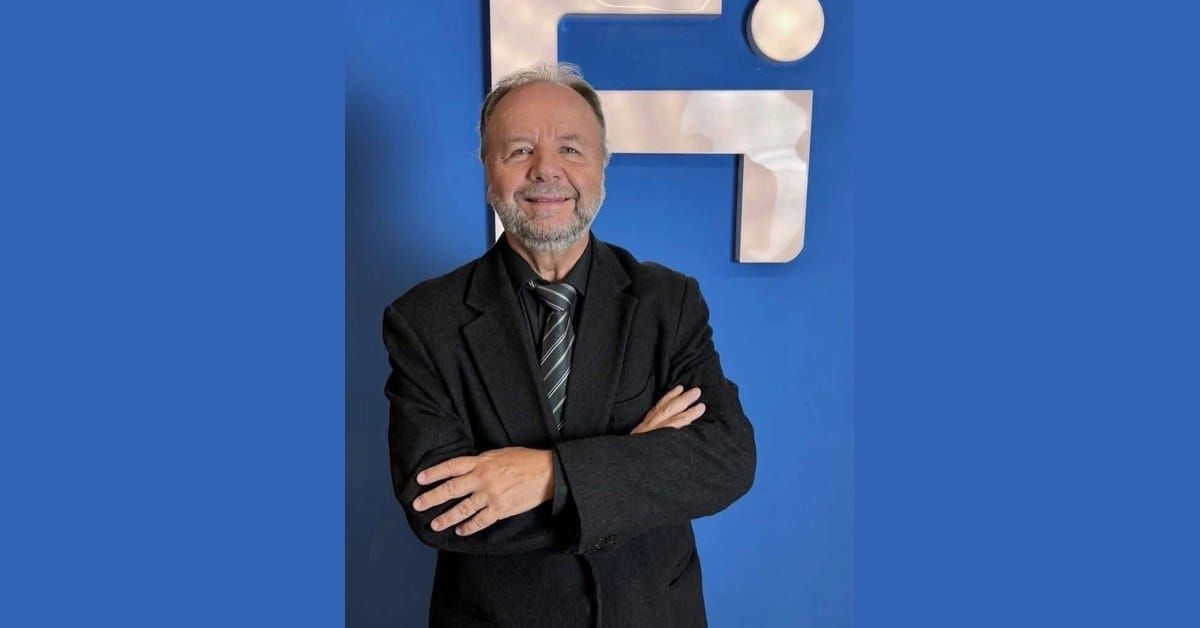
Three signings. Over €110 million in net profit. During his years at Shakhtar Donetsk in the late 2000s and early 2010s, the Brazilian football director Luiz Greco helped engineer a recruitment system that turned Fred (€15m → €59m to Manchester United), Alex Teixeira (€6m → €50m to Jiangsu Suning), and Douglas Costa (€8m → €30m to Bayern Munich) into the financial spine of the club's most successful era — alongside the UEFA Cup of 2009 and seven Ukrainian Premier League titles.
Greco's career began somewhere very different. He graduated in Physical Education from the Federal University of Minas Gerais (UFMG) in 1983, and a stage at Paris Saint-Germain in 1986 turned a conditioning coach into a methodologist. From there the route bent: through coaching and youth-development positions across Brazil, into International Affairs Director seats at Cruzeiro, América, and Club Athletico Paranaense — where he was a founding member of the Football Intelligence Department — onto the South American scouting beat at Shakhtar Donetsk, and into senior posts in India (Mohun Bagan, Gokulam Kerala, Punjab FC) and Japan (Toyama Prefecture). Spain's 2014 World Cup logistics. Fiji's Rio 2016 Olympic logistics. Recent CEO tenures at Betim FC and SC Aimoré. Five languages. Fourteen countries. Sixty-plus titles and podium finishes.
In a written exchange with Football Agent Lab, Greco speaks not as a man closing a chapter but as one looking for the next one. The thread that holds his answers together is a single conviction: in an industry now drowning in data, the eye of a scout — trained on a player's natural ball movements, body positioning, and posture in the three phases of his action — is what statistics still cannot replace. He calls it "a continuous exercise." And he is, in his own words, ready to the next challenge.
Brazilian/Italian Football Director · Forty-year career across fourteen countries
CURRENT STATUS
Open to senior football executive appointments globally
MOST RECENT (2021–2025)
SC Aimoré (Brazil) · CEO · 2024–2025 — Strategic oversight of the football department; integrated youth-to-senior structure; scouting, contracts, and technical staff operations
Betim FC (Brazil) · CEO · 2023 — Squad reconstruction and KPI introduction
Punjab FC (India) · Head of Scouting · 2021–2022 — Built the scouting department from scratch; raised trial conversion 25%
PRIOR SENIOR TENURES
Figueirense (Brazil) · Business Director · 2019
Gokulam Kerala FC (India) · Business Director · 2018–2019
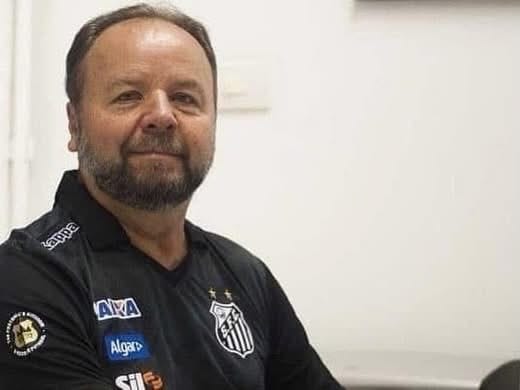
Santos FC (Brazil) · Technical Director · 2017
FC Shakhtar Donetsk (Ukraine) · Brazilian Scout · 2008–2017 — ~20 transfers including Fred, Alex Teixeira, Douglas Costa
Club Athletico Paranaense (Brazil) · International Affairs Director / founding member, Football Intelligence Department · 2012–2016 (Business Director, First Team, in the 2018 championship season)
Mohun Bagan (India) · Technical Director · 2007–2008
Cruzeiro (Brazil) · International Affairs Director · 2005–2007
América FC (Brazil) · Youth Director / International Affairs Director · 1997–2004
Toyama Prefecture (Japan) · Sports Exchange Advisor · 1995–1997
NATIONAL TEAM LOGISTICS
Spain (2014 World Cup) · Fiji (Rio 2016 Olympic Games)
TRAINING
Specialization in Sports Training, Stage at Paris Saint-Germain (1986) · B.A. in Physical Education, Federal University of Minas Gerais — UFMG (1980–83)
LANGUAGES
Portuguese (native) · English · French · Spanish · Italian · Japanese
HONOURS
60+ titles and podium finishes including 14 international trophies. UEFA Cup 2009 (Shakhtar) · 7× Ukrainian Premier League · CONMEBOL Sudamericana 2018 (Athletico-PR) · Copa São Paulo Junior 2007
BORN
Belo Horizonte, Minas Gerais, Brazil
PART 1 · REINVENTION
Q1. Let's start with the basics — who is Luiz Greco? After more than 40 years across Brazil, Europe, Asia, and South America, how do you make sense of the career you've built?
I have a great privilege to work through more than 40 years with the subject I always dreamed of, football. It is a great feeling to realize that all my dreams came true, working in the highest level in different countries, facing multicultural experience, relating with people and exchanging ideas, concepts and knowledge.
Q2. Going from conditioning coach to Football Director to Scouting Director — that's not a promotion, that's a complete reinvention, more than once. What was the hardest thing to let go of each time you made that leap?
Every period in my professional career was different since the beginning, starting with a physical trainer based on my PE Bachelor moving to Coaching positions and after almost 20 years, facing management and executive positions as TD for Pro and Youth Teams, International affairs management and Scouting management. And the big challenge of this reinvention is that every position offers you a different level of thinking about the game — and most important, how rich is the relationship between people involved on the beautiful game and how important is understanding the duty of every person attached to the club, and team spirit and harmony between all people.
Q3. English, French, Spanish, Italian, Japanese — five languages is a serious edge in this business. Where has that actually made the difference? At the negotiating table, in the dressing room, in the boardroom?
The economy has become globalized, and I think it was always my great differential to combine my expertise on football with language abilities. Gratitude to my blessed parents who educated me showing the importance of languages in your professional career.
PART 2 · THE SHAKHTAR YEARS
Q4. The scouting system you built at Shakhtar generated over €110 million in net transfer profit. Strip it down to its core — what was the one principle everything else was built around?
Since my hiring on March 2008 I was told by Manager Lucescu, President Akhmetov and CEO Palkin about the philosophy and playing style of the club, always very offensive and important to have skillful players on the sides and creativity as midfielders. Then most of my scouting job was concentrated on that kind of players, trying to be very assertive on the characteristics of the players to fit on the tactical system of the club.
Q5. Fred, Alex Teixeira, Douglas Costa — you saw them before anyone else did. What were you actually looking at? And what were you looking for that the data simply couldn't tell you?
I have followed them since their youth level, checking all characteristics — physically, technically, tactically and mentally. Of course, also collecting data from coaches who worked with them, on a period that you did not have the technology to get all statistics. At that time, your skills to use your eye and forecast them in terms of future, playing in the highest level, scouting live matches and collecting reliable info about the player in all aspects, including social life.
Your skills to use your eye and forecast them in terms of future.
Q6. The 2009 UEFA Cup was a once-in-a-generation achievement for Shakhtar. From where you were sitting, what was the one thing inside the club that made it possible — something outsiders never talk about?
For sure the great chemistry involving all members of the club, great relationship among players and coaching staff and management, on perfect harmony. Excellent conditions given to every sector of the team, safe defending system, and from middle to attack a great combination of creativity, fast and very offensive football.
Q7. Over 60 titles and podium finishes — which one do you still think about, and why that one?
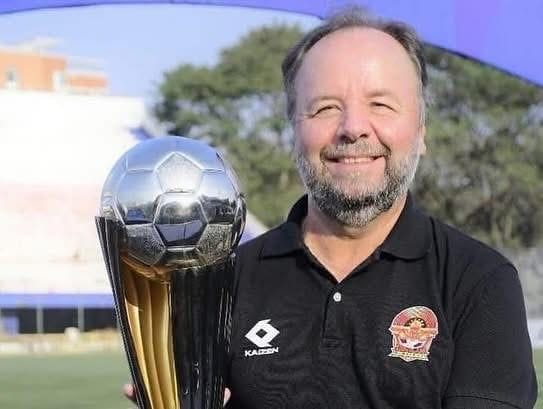
One title which I miss so much is the FIFA Club World Championship. Hope I can get it in the short future. But for sure I feel more than happy that through more than 40 years career, I have the chance to lift trophies in different countries, from youth to professional level. I feel I can contribute with all my expertise and experience to any club in the world. Ready to the next challenge!
PART 3 · GLOBAL OPERATIONS
Q8. You handled elite logistics for Spain at the 2014 World Cup and for Fiji at Rio 2016. How different is running a national team operation from running a club — and where does it actually catch people off guard?
For sure, every logistics demands a lot of professional attitude, taking attention to all details concerning the preparation of the team to the event they will take part. I see no big difference when you make your work trying to offer the best conditions to settle the team on the environment, to reach the best performance in the competition.
Q9. Cruzeiro, Athletico-PR, Santos — heavyweight clubs with serious pedigree and serious pressure. What has to be in place organizationally before a Football Director can even begin to deliver both on the pitch and on the balance sheet?
For sure, lots of pressure to achieve big results, as all these clubs have massive supporters and huge following of press. Main point is to build up a very professional team of professionals — very committed and ready to face all obstacles to work on these clubs. I feel very proud and happy that in all these clubs we were able to achieve great performance and titles, on national and international level.
PART 4 · THE EAST ASIAN BRIDGE
Q10. You've worked in Japan and India. How do you read the Asian football market right now — and where do you see East Asia in ten years?
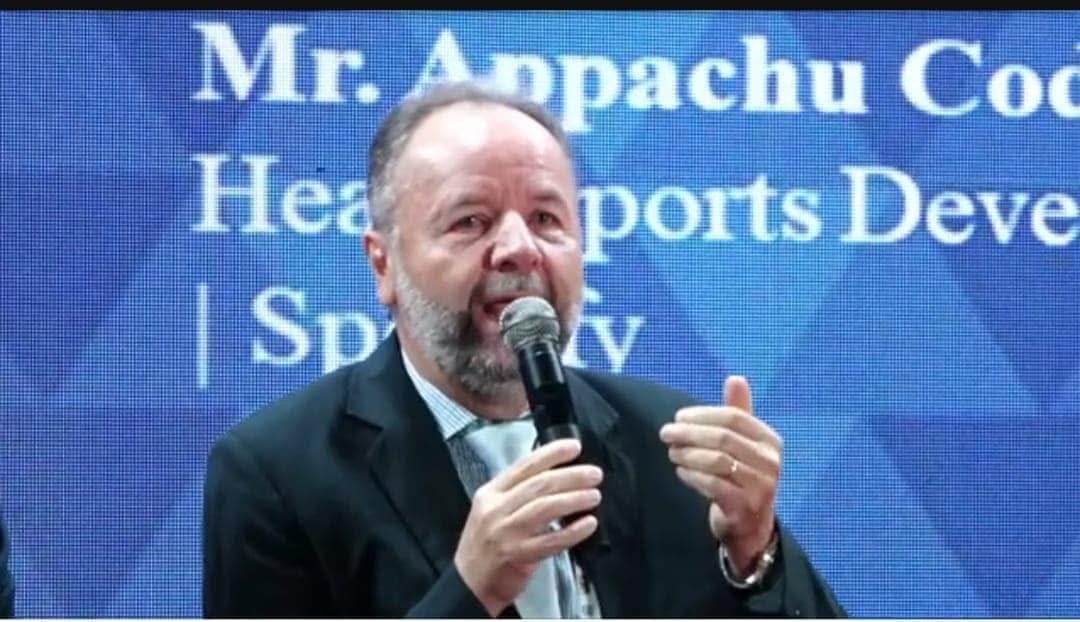
My first stint in Asia was more than 30 years ago, and through constant exchange of foreign professionals — especially in the youth sector in Asia — a new generation of players and coaches was created, and results have been achieved through these years. Of course, still a long way, but Asia is on the right track, and I hope the results will be seen in international competition like future World Cups.
Q11. How closely have you been watching the K League? And when you think about bridging the Brazilian player market with Korea, what does the real opportunity actually look like?
I had no chance to work in K League — I would love to. But through my experience with international exchange programs in pro clubs in Brazil, we hosted many young Koreans who went back to Korea and became professionals in K League. Hope I can have the chance to contribute to this bridge Brazil/Korea in the short future.
Hope I can have the chance to contribute to this bridge Brazil/Korea in the short future.
PART 5 · THE EYE
Q12. Day one at a new club as Scouting Director — what do you go after first? How do you figure out what the first 90 days need to look like?
First contact is with the TD and high management of the club to understand the club's philosophy and football culture. Then, to evaluate people involved with scouting at the club, from youth to senior level. Then, all together, to establish the scouting philosophy of the club, implementing all the concepts, talks, tools for an effective scouting service.
Q13. Scouting with an eye on resale value — treating players as assets — will always bump up against what the coach needs right now. How do you handle that friction without losing either side?
It must necessarily be a club policy that, after a player's effective performance during a specific period at the club, the club is able to make a new transfer for a value that allows the club to invest in new players to fill the positions of those who have left. Since this policy has always been clear to everyone involved, we have never had any problems in this regard.
Q14. Data and video have taken over. Everyone has the same tools, the same platforms, the same metrics. So what does a scout with 40 years on the ground still see that the screen simply can't?
Excellent question. And that's exactly where we leverage the vast experience gained over the years — because statistics alone aren't enough to make important decisions for the club about whether this or that player should be signed. That's where the great power of a detailed, in-person analysis of the player lies: their natural ball movements, their body positioning, and their posture in the three phases of a player's action — their search for the best space to receive the ball, their body positioning when receiving the ball, and their effective posture for executing the pass, control, dribble, or finish. All these points comprise a detailed and unique analysis of an individual player.
Statistics alone aren't enough to make important decisions for the club.
PART 6 · WHAT REMAINS
Q15. What was the hardest call you ever had to make? And what did it do to the way you make decisions now?
Through these years I can say I had hard decisions to make regarding firing or releasing players, after long discussion involving many people at the different clubs I worked. But to be very sincere, I had more positive than negative decisions in terms of the future of players. But this will always take part — players, they can change a lot by influence of many reasons, as body development, mental development, and also social circumstances. That's why it is so crucial and important — those decisions to have open discussion among the people involved on management of the club, without putting on only one person the responsibility of the decision.
Q16. Forty years in football means forty years of reinventing yourself. What is the biggest gap between who you are now and who you were twenty years ago?
The good professionals who stay more than 40 years on international market on any profession shall always be updated, investing in what is new and appears in your section, studying and learning all the time. I have always been very committed at this point, creating more and more credentials to be seen in the market. In short, it is the passion for your profession, always trying to be better as professional and human being.
Q17. Who taught you the most — coach, player, executive, anyone — and what did you actually walk away with?
The life is a continuous learning experience, and on every single day, you will get different things which will add to your own experience. I have been always very open to learn with everyone. Of course, I had through my career presidents of clubs, coaches, players and directors who I learned a lot from, and which qualities I have incorporated to my own way of thinking football and also relating with people. I feel very pleased with all these people who helped and inspired me a lot.
The life is a continuous learning experience.
PART 7 · TO THE NEXT GENERATION
Q18. Someone young wants to become a Scouting Director or Football Director. What is the one thing you'd tell them they cannot afford to skip?
To become an efficient scout, a major quality is the great importance in checking every detail on a movement of any player — his natural way of walking, running, and making every single fundamental of the game: dribbling, controlling, heading, passing and shooting. It is a continuous exercise of the eye, watching all these details and producing a real concept about his individual values, coming along with his movement on the pitch with and without the ball — to evaluate his/her tactical skills. Of course, other important points include how he/she relates to teammates, officials, opponents and public. Must pay attention on every detail of all these points.
Q19. What is the one blind spot the football industry simply refuses to address?
I believe it is the continuous pressure of quick performance and results — of the player and also as a team. With the high number of games and competitions through one season, and very short time for recovery and enough preparation for every match, it is not fair to put high pressure which affects a lot the results.
PART 8 · WHAT COMES NEXT
Q20. Last question — where are you headed? What does the next chapter look like for Luiz Greco?
As a passionate football professional, I will be always ready for the next challenge — in Brazil or any part of the world which would like to have a professional and committed person to contribute to the club. Would like to thank you so much for this opportunity to talk about myself, my ideas and plans for the future. My best regards!
CLOSING
Luiz Greco's forty-year career is, in the end, a study in continuity disguised as reinvention. The conditioning coach who became a Football Director, who became a Scouting Director, who became a national-team logistics architect — across each of those leaps, the same instrument remained at the centre: the eye trained to see what statistics could not. He still describes scouting in three phases of a player's body — the search for the best space, the body positioning to receive, the posture to execute. Forty years on, the language has not changed.
That eye produced the financial spine of Shakhtar's most successful era. It produced over sixty titles and podium finishes across fourteen countries. And it produced the methodology that Greco still believes — calmly, without nostalgia — outperforms the screen. "Statistics alone aren't enough to make important decisions for the club," he says. "That's where the great power of a detailed, in-person analysis of the player lies." The argument is not anti-data. It is anti-replacement.
Greco has lifted trophies in fourteen countries. He has not yet lifted the FIFA Club World Cup. He says he hopes to, in the short future. He has not yet worked in the K League either — but Korea is one of the doors he names, and the bridge between the Brazilian market and Korean football is the one he has, in his own quiet way, already begun building. "Hope I can have the chance to contribute to this bridge Brazil/Korea in the short future," he writes. He is, in his own words, ready to the next challenge. Football Agent Lab will be watching.
ABOUT THE AUTHOR
SEOK LIM Editor· Football Agent Lab
FIFA-licensed football agent and steel market analyst with over a decade of experience in commodity research. Football Agent Lab publishes interviews and market reports at the intersection of football, agency work, and global markets.


