Pressure Reveals the Real
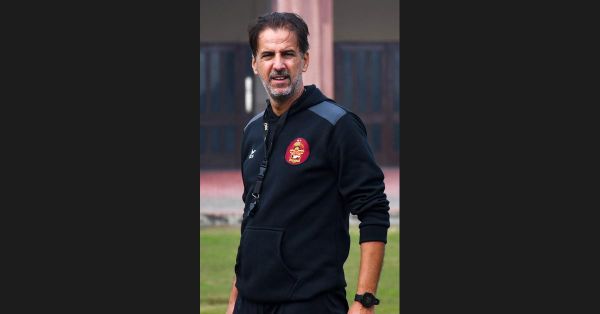
A Greek coach who spent a decade in the lower divisions before building academies in China, Lefteris Kalogirou teaches players to thrive when the plan breaks. He joins Football Agent Lab on "Organized Chaos," why youth promise stalls, and what Greece and China get wrong.
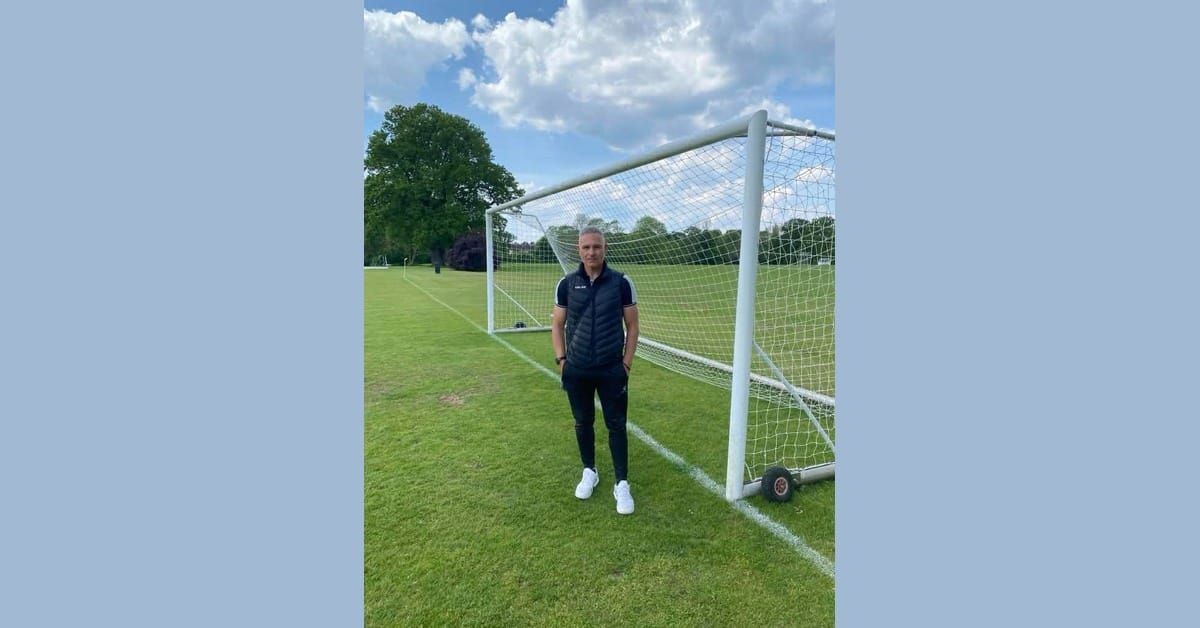
Lefteris Kalogirou coaches for the moment the plan falls apart. "Football is unpredictable by nature," he says, "so my role is to prepare players to deal with that unpredictability, not remove it." The Greek coach — clear in his ideas, deliberately flexible in how he applies them — has built a career and a proprietary method around that conviction, and it gives this interview its title: pressure reveals the real. He is currently academy director and head coach at Zhangjiajie FC in China, holds the UEFA A licence and is completing his UEFA Pro, and joins Football Agent Lab for his first written exchange with us.
The method has a name, "Organized Chaos," and his own one-line definition is the best summary of it: it starts where positional play ends. Structure gives players their spaces and reference points; chaos is what the opponent does to that structure; and a player has to be trained to solve both. The threshold for exposing him to it, Kalogirou insists, "is not age, but cognitive readiness." Underneath the concept is a teacher, and he is candid about where that came from — ten years almost entirely in Greece's third division, where "you cannot rely on talent" and precision in how you coach becomes the only edge you have.
From those lower leagues the path runs outward and back and forth: building an academy from nothing at Hunan Hangsheng in China, three seasons developing Volos' Under-19s, then the double role of first-team assistant and head analyst at the same club — evaluating players he had raised through a colder, results-first lens. It has left him with strong, unsentimental views on both systems he knows best; asked to compare Greek and Chinese football from the inside, he flatters neither. And it has left him, at this stage, less interested in trophies than in the thing he keeps returning to: developing people, developing coaches, and building teams with a clear identity — in an environment, above all, that is actually aligned.
Football Coach · Academy Director · Youth Development · Analyst
CURRENT ROLE
Academy Director & Head Coach · Zhangjiajie FC (China) · 2026–present
SELECTED CAREER
- Zhangjiajie FC (China) — Academy Director & Head Coach · 2026–present
- Volos FC (Greece · Super League) — Assistant Coach & Tactical Analyst · 2024–2026
- Volos FC U19 (Super League) — Head Coach · 2021–2024 (three seasons)
- Hunan Hangsheng FC (China) — Elite Youth Development Head Coach · 2018–2021 (built the academy, U10–U19, from scratch)
- KNVB (Royal Dutch FA) World Coaches Program — partnership coach · 2018–2021
- Earlier: head coach across Greece's lower divisions, largely the third tier, over roughly a decade
METHODOLOGY
- "Organized Chaos" — decision-making under competitive pressure
- Elite youth development & player-pathway design; academy-to-first-team transition
- Individual Development Plans (IDP); performance analysis & data-driven coaching
- Academy structure building; coach mentoring & performance-environment design
LICENCES
UEFA A Licence (2012) · completing the UEFA Pro Licence · certificates in performance analysis, training load and sports psychology
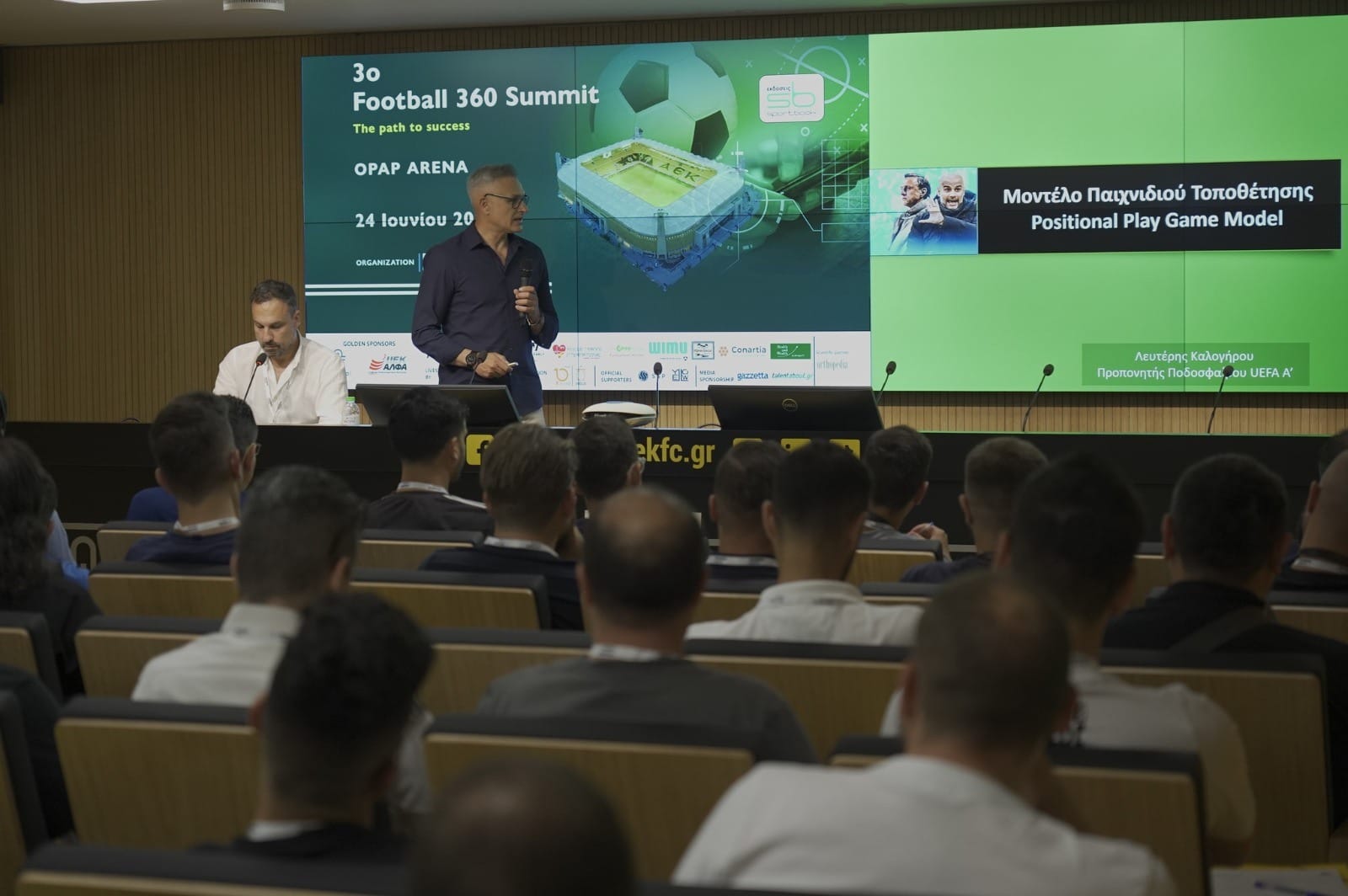
PART 1 · CLEAR, BUT FLEXIBLE
For those who are coming across you for the first time, how would you describe yourself — as a coach and as a footballing thinker?
I would describe myself as a coach who is very clear in his ideas, but flexible in how those ideas are applied. I believe in structure during training, but I don't try to control everything in the game.
Football is unpredictable by nature, so my role is to prepare players to deal with that unpredictability, not remove it. As a football thinker, I'm very focused on decision-making. For me, the game is not just about positioning or systems, but about how quickly and how correctly players read situations under pressure.
Over the years, I've moved away from telling players what to do and more towards creating environments where they learn how to solve problems themselves.
PART 2 · TEN YEARS IN THE THIRD DIVISION
You spent ten years exclusively in the third division. Looking back, do you see that as a long and necessary period of preparation — or is there a part of you that wishes you had pushed for more sooner? What did those years in the lower leagues actually make of you as a coach?
Looking back, I see those ten years as extremely valuable. At the time, of course, there were moments where I felt I should push faster.
But working mostly in the 3rd division forces you to develop things you don't always get at higher levels. You deal with limited resources, different types of players, and a lot of instability. That environment builds resilience.
More importantly, it made me a better teacher. When you don't have top-level players, you cannot rely on talent. You have to be very precise in how you coach, how you communicate, and how you build training.
So yes, maybe it was a long period, but it gave me a very strong foundation. I don't think I would be the same coach today without it.
When you don't have top-level players, you cannot rely on talent.
When you arrived at Hunan Hangsheng FC, there was essentially no academy infrastructure in place. Did you bring your European methodology and make it work in that environment, or did you find yourself adapting it more than you expected? And standing where you are now — do you think you made the right call?
First of all, you must respect and understand the culture of the country you are going to work in. When I arrived in Hunan, it was clear very quickly that I couldn't just copy-paste a European model.
The principles stayed the same, but the way I applied them had to change. The players had different backgrounds, different habits, and a different understanding of the game. So I adapted a lot, especially in how I introduced structure and how much guidance I gave. In some cases, I had to simplify things more than I was used to. In others, I had to be more patient.
Looking back now, I think it was the right approach. If I had insisted on doing things exactly the same way as in Europe, it wouldn't have worked. That experience helped me become more flexible as a coach, without losing my identity.
After three years with Volos U19, you moved into the first team at the same club as Assistant Coach and Head Analyst. You had personally developed a number of those players at youth level. When you started seeing them through an analyst's eyes, did things come into view that you'd missed as their youth coach?
Yes, definitely. When I was working with them at youth level, I was focused a lot on their development. You look at potential, habits, progression over time. You accept mistakes as part of the process.
As an analyst in the first team, the perspective changes. The same actions are now evaluated in terms of impact on the result. There is less tolerance for "development mistakes".
What became very clear to me is how small details matter at senior level. Tactical awareness, reading the game, decision speed, positioning, timing of actions. At first-team level, these things are decisive.
It helped me understand better what actually transfers from youth to senior football and what doesn't.
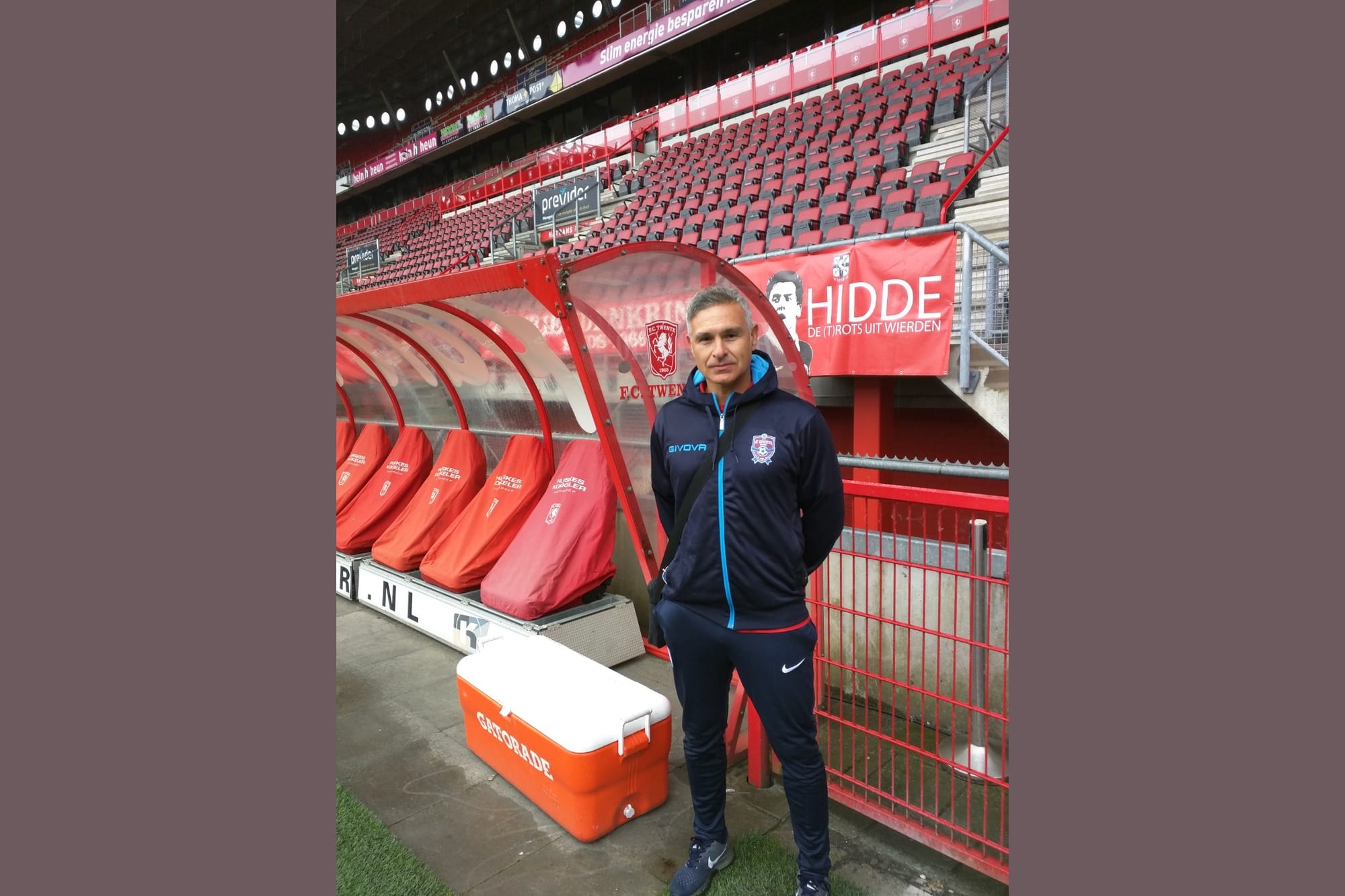
PART 3 · ORGANIZED CHAOS
"Organized Chaos" is a fascinating phrase. The idea behind it seems to be that players can find their own order within disorder — but younger players, more often than not, fall apart without structure to hold onto. From what age do you believe this approach genuinely works, and what is the threshold for you?
I don't think "Organized Chaos" works from a specific age. It works from the moment the player is ready to make decisions. For me, the key is not age, but cognitive readiness.
With very young players, you still need more structure because they are learning the basics of the game. But even there, I try to introduce small moments where they have to decide, not just execute.
As players grow, the balance shifts. You reduce control and increase responsibility. The mistake many coaches make is that they either give too much freedom too early, or too much structure for too long.
For me, the threshold is when the player can start to recognize game situations. From that point, you can begin to expose them to controlled chaos.
Positional play has become something close to the standard model in modern youth development — and at its core, it trains players to function within a defined structure. Doesn't that sit in direct tension with what "Organized Chaos" is trying to do? How do you bring the two together, or do you ultimately come down on one side?
I don't see positional play and "Organized Chaos" as opposites. I see them as complementary.
Positional play gives structure. It defines spaces, relationships, reference points. It helps players understand where they should be and why. But the game never follows the plan exactly.
"Organized Chaos" starts where positional play ends. It's about what happens when the structure breaks, when the opponent disrupts you, when the situation becomes unpredictable.
So in training, I use positional play to build the framework, and then I design situations where that framework is challenged. If you only train structure, players struggle when the game becomes chaotic. If you only train chaos, players have no reference. You need both.
"Organized Chaos" starts where positional play ends.
How does a coach actually verify that the decision-making built in training is carrying over into matches? When a player makes the right call under pressure — is he consciously applying what he's learned, or simply reacting on instinct? Do you believe a coach can tell the difference?
This is one of the most difficult things to measure. You can see behaviors in matches that reflect training, but it's not always clear if the player is consciously applying something or reacting instinctively.
For me, the key indicator is consistency under pressure. If a player repeatedly makes good decisions in similar situations, especially under time and space constraints, then you know something has transferred.
Another important factor is the speed of the decision. When learning is internalized, the player doesn't hesitate.
As a coach, you also look at patterns across the team, not just individuals. If multiple players respond correctly in similar moments, then your training design is working. In the end, you cannot control every decision, but you can influence the quality of decisions over time.
PART 4 · WHAT ACTUALLY TRANSFERS
For an individual development plan to really work, the player has to genuinely accept it. Sitting a seventeen-year-old down and showing him through data exactly where he's falling short — that's not always a straightforward conversation. How do you handle the ones who push back?
It's never just about showing the data. It's about how you present it. If you go straight to a 17-year-old and tell him where he is failing, the first reaction is usually defensive. That's normal.
So I try to build the conversation differently. First, I ask him how he sees his own performance. I want him to speak first. That already tells me a lot about his awareness.
Then I use the data to support the discussion, not to attack him. I connect it with his goals. If you want to reach this level, this is what needs to improve.
When a player pushes back, I don't force agreement. I give him time, but I stay consistent. In most cases, when the environment is honest and the feedback is clear, they come around.
A talented player with an unstable attitude, or an average player who is completely committed in training — at youth level, which one do you invest in more? And does that answer change between U13 and U19?
At youth level, I invest more in the player who is committed. Talent is important, but without the right attitude, it rarely reaches its potential.
That said, the answer does change depending on the age. At younger ages, like U13, I'm more patient with attitude. Players are still developing as people, not just as footballers.
At U19 level, the standards are different. If a player is not committed, it becomes very difficult to justify investing in him, especially in a high-performance environment.
Ideally, you want both. But if I have to choose, I choose the player who is willing to work every day.
You've studied sports psychology formally. You must have seen players with every technical quality needed to go professional who simply couldn't cross that threshold when the moment came. Is that a failure of the coach, or a limit of the player? And where do you draw the line on how far a coach can actually intervene?
It's a mix of both, but I wouldn't call it a failure in a simple way. Some players reach a point where the technical and physical level is enough, but the psychological side becomes the difference.
Handling pressure, consistency, decision-making in key moments — these things separate players who make it from those who don't.
As a coach, you can support, guide, and create the right environment. You can help players build confidence and resilience. But there is also a limit.
At some point, the player has to take responsibility. I think the mistake is when coaches believe they can control everything. You can influence a lot, but you cannot replace the player's internal drive.
When you watch players you've developed competing at professional level, can you see which parts of what you taught them genuinely held up — and which parts didn't?
Yes, you can see it very clearly. The things that usually hold up are the fundamentals. Decision-making, understanding of space, timing, and game intelligence. Players who develop these qualities at youth level adapt much better to senior football.
What doesn't always transfer is anything that depends too much on time and comfort. In youth football, players often have more time on the ball. At senior level, that disappears.
So if a player was successful mainly because of physical advantage or time on the ball, you can see the gap immediately.
That's why, in development, I focus less on the outcome and more on the context in which the action happens.
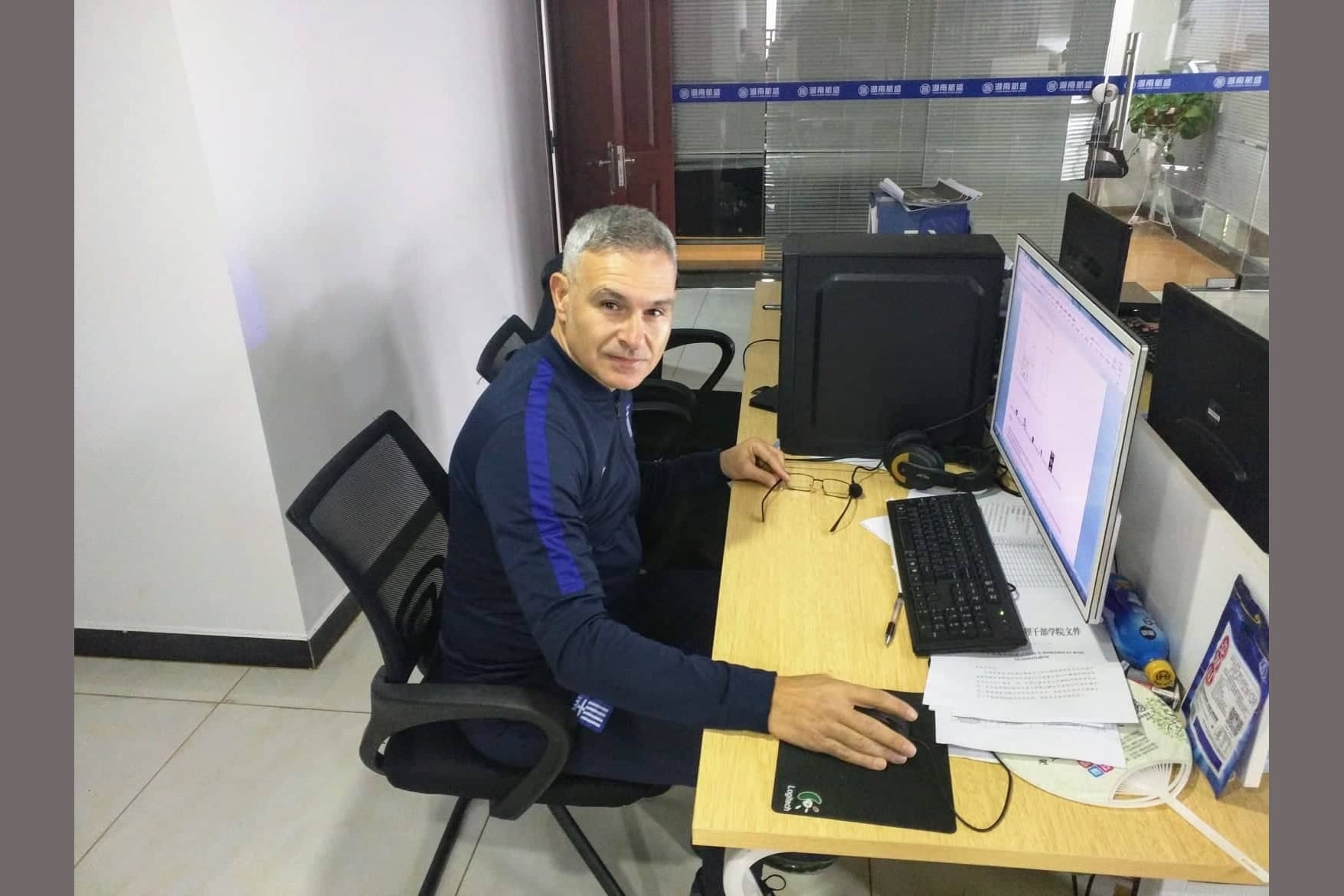
PART 5 · TWO SETS OF EYES
You were simultaneously Assistant Coach and Head Analyst — two roles that are fundamentally in tension. An analyst has to look at the data coldly and honestly. A coach has to believe in his players and keep them motivated. When you were watching the same match through both sets of eyes, how did you manage that conflict?
It's true, those two roles can pull you in different directions. As an analyst, you have to be objective. You see things as they are, without emotion. As a coach, you need to support the players and keep belief high.
For me, the key was timing. In analysis, especially post-match, I was completely honest. I focused on facts, patterns, and what needs to improve.
But in the coaching environment, the message had to be adapted. Not softer, but more constructive. The goal is not just to point out problems, but to move the team forward.
So I didn't see it as a conflict, but as two perspectives serving the same objective.
When the data is pointing in a different direction from the head coach's instinct, how does an analyst communicate that? And when that situation arose, what did you actually do?
This is about trust and communication. If you go directly against the head coach's instinct, especially in front of others, it can create resistance. So the way you present the information is crucial.
I always tried to frame the data as support, not contradiction. For example, instead of saying "this is wrong," I would say, "this is what we are seeing consistently in the data."
There were moments where the data and intuition didn't align. In those cases, I shared my analysis clearly, but I respected the final decision.
The important thing is that the coach has all the information. After that, it's his responsibility.
Instead of saying "this is wrong," I would say, "this is what we are seeing consistently in the data."
Working as a first-team analyst, you must have seen players who produced strong numbers at youth level fail to develop as expected in the senior game. Is that gap visible in the data beforehand? Are there specific things you now notice in youth metrics that you know won't translate to the next level?
Yes, over time you start to recognize patterns. There are certain indicators in youth football that don't always translate. For example, players who rely heavily on physical dominance or who perform well only when they have time and space.
At senior level, the game is faster and more demanding tactically.
What I look at more now is how players perform under pressure. How quickly they make decisions, how they scan, how they react when the situation is not ideal. Those are the indicators that usually carry over.
So the gap is not always visible in basic statistics, but it becomes clearer when you analyze the context of actions.
PART 6 · GREECE AND CHINA
You've coached players in both Greece and China. In terms of tactical understanding, physicality, and attitude in training — how were those players different, and how did those differences actually shape the way you worked?
The differences were quite clear. In Greece, players generally have a better natural understanding of the game. They grow up in a football culture, so their decision-making and tactical awareness are more developed from an early age.
In China, I found players to be very disciplined and willing to work, but with less game understanding initially.
This influenced my coaching a lot. In Greece, you can work more on refining decisions and details. In China, you often need to build the foundation first. More repetition, more guidance, more structure in the beginning.
But one thing I appreciated in China was the openness to learn. If you create the right environment, players improve quickly.
The problems in Greek youth football are no secret, even to the people inside the system. But having experienced both China and Greece from the inside — does the problem look different to you than it does to those who've only ever seen one side? And why do you think it doesn't change?
Yes, the perspective changes when you see both systems from the inside. In Greece, the talent is there, but the environment is often inconsistent. Short-term thinking, lack of structure, and limited long-term planning.
In China, there is more organization and investment, but sometimes the development lacks depth in terms of game understanding.
The frustration in Greece is that people know the problems, but change is slow. Often because of mentality and priorities.
I think real change requires alignment. Club structure, coaching education, and long-term vision. Without that, progress is always partial.
PART 7 · THE ENVIRONMENT FIRST
You're currently working toward your UEFA PRO licence. For a coach with eighteen years of hands-on experience, is there something genuinely new you're learning through that process — or does it feel closer to a confirmation of what you already know? And what do you think this licence actually opens up for you at this stage of your career?
There are definitely new things, but maybe not in the way people expect. It's not that everything is completely new, but the process challenges you to look deeper into what you already do. It forces you to justify your decisions, to structure your thinking more clearly.
At the same time, being exposed to different perspectives from other coaches is very valuable. You see different ways of solving the same problem.
For me, it's both. It confirms certain ideas, but it also pushes me to refine them.
In terms of career, the licence opens doors, especially at first-team level. But in the end, what matters is still your work on the pitch.
You identify mentoring coaches as one of your core strengths. Is developing a coach fundamentally the same process as developing a player — or something different altogether? What is the first habit you find yourself having to undo when you work with coaches?
There are similarities, but it's not exactly the same. With players, you develop performance. With coaches, you develop thinking.
The biggest challenge with coaches is that they already have habits — sometimes deeply ingrained ones.
The first thing I usually try to change is the need to control everything. Many coaches feel they have to give all the answers. I try to shift them towards asking better questions and designing better environments. Not just telling players what to do, but helping them understand why.
Once that shift happens, everything else becomes easier.
With players, you develop performance. With coaches, you develop thinking.
When you're evaluating your next position, what comes first — the club's philosophy, the playing squad, or the staff environment around you? If you had to choose just one, which is it?
If I had to choose one, it would be the environment.
You can work with different squads, and you can adapt to different philosophies to a certain extent. But if the environment is not aligned, it becomes very difficult to build anything meaningful.
By environment, I mean people. The way the staff works together, the level of trust, the clarity in roles. Without that, even good ideas struggle to survive.
So for me, the first thing is always the environment. Everything else can be developed from there.
PART 8 · COMFORT IN CHAOS
What kind of environment do you want to work in going forward, and what kind of football do you want to build? And when it's all said and done — how do you want to be remembered as a coach?
I want to work in an environment where there is clarity, ambition, and consistency. A place where development is not just a word, but something that is actually implemented every day. Both for players and for staff.
In terms of football, I want to build teams that are aggressive, intelligent, and adaptable. Teams that can play with structure, but are also comfortable in moments of chaos.
In the end, I don't want to be remembered just for results. I want to be remembered as a coach who helped players improve, who developed people, and who built teams that had a clear identity on the pitch.
CLOSING
The title is the man: pressure reveals the real. Almost every answer Lefteris Kalogirou gives circles back to it — the decision made under time and space, the youth metric that evaporates at senior speed, the player whose technique is enough until the psychological moment is not. His method is honest about its own limits. "Organized Chaos" does not discard structure; it begins where structure breaks, which is why he trains both and trusts neither alone. And he is unusually clear about what he cannot do: influence a great deal, but never replace a player's internal drive, never control everything — the very habit he spends most of his time coaching out of other coaches.
What grounds the philosophy is a teacher forged in unglamorous places. Ten years in Greece's third division taught him to coach without leaning on talent; an academy built from nothing in Hunan taught him to keep his principles and change their delivery; a spell judging his own former youth players through an analyst's colder eyes taught him exactly what carries from one level to the next and what does not. He compares Greek and Chinese football without softening either verdict, and when he looks ahead he asks first not about the squad or the system but about the people around him. His ambition, in the end, is not a trophy but a standard of development lived every day — and teams, wherever they are, that are comfortable when the game turns to chaos. Football Agent Lab will be watching where he builds it next.
ABOUT THE AUTHOR
SEOK LIM Editor · Football Agent Lab
FIFA-licensed football agent and steel market analyst with over a decade of experience in commodity research. Football Agent Lab publishes interviews and market reports at the intersection of football, agency work, and global markets.