A Dog on a Leash Won't Catch a Rabbit — An Interview with Gert Engels
A J.League founder-era coach. Park Ji-sung's first head coach. Borussia Mönchengladbach golden-era graduate. Vissel Kobe with Iniesta. Mozambique national team. Sixty-nine, between roles, and unmistakably still drawn to the pitch.
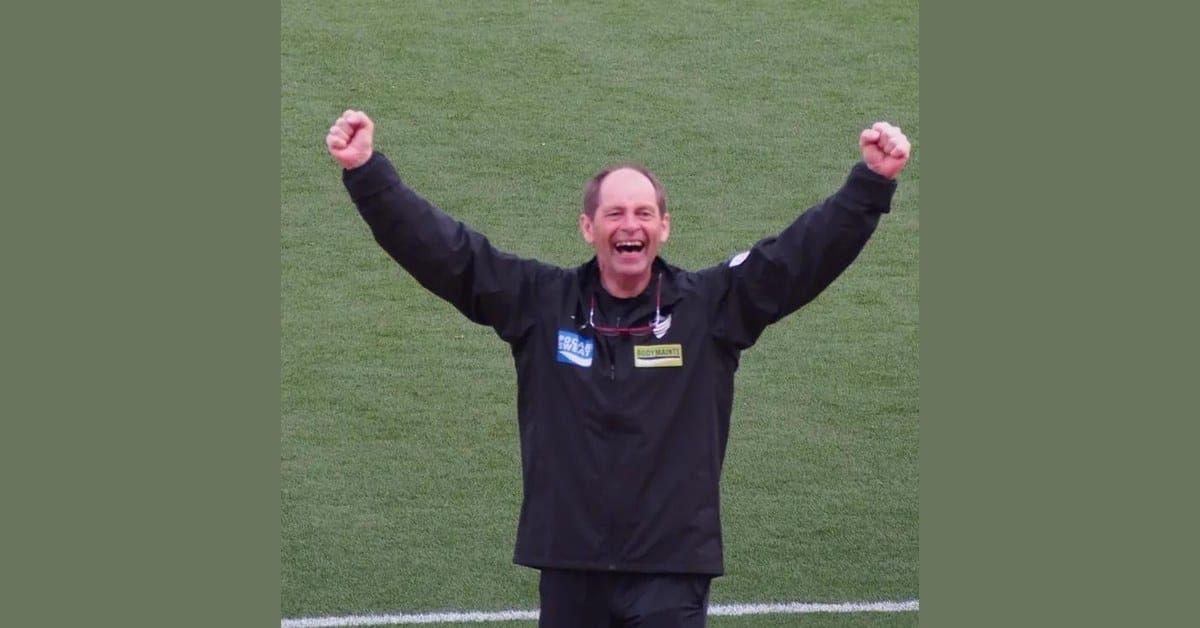
Gert Engels arrived in Japan at thirty-two, in 1990, three years before the J.League formally began. He stayed. Across the next thirty-three years he won five Emperor's Cups, a J.League championship, and an AFC Champions League title across stints as head coach and assistant. He coached Park Ji-sung at Kyoto Sanga in Park's first professional club, lifting the Emperor's Cup together. He worked at Yokohama F. Marinos for six years, Urawa Reds for five, Kyoto Sanga for four, Vissel Kobe alongside Iniesta. He served as Mozambique's national team head coach. He took the INAC Kobe Leonessa women's team into a season of his life he had never imagined. In 2018 the German Football Association named him Football Ambassador.
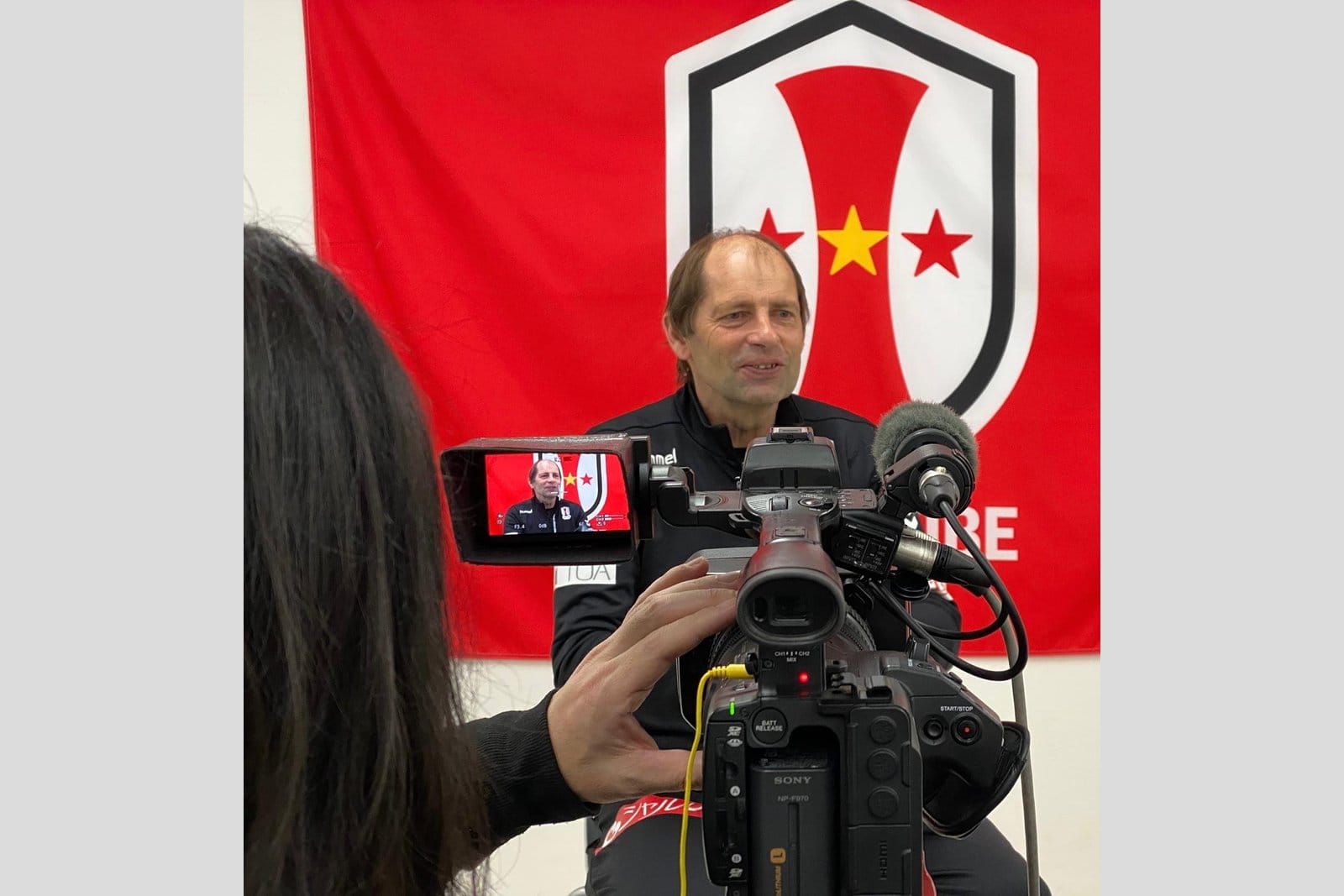
At sixty-nine, with the Tokushima Vortis chapter recently behind him, Engels writes to Football Agent Lab from Germany — between roles, but unmistakably still drawn to the pitch. "I like to move on," he says, "and even though I turned sixty-nine in April, I would love to stand on the pitch again somewhere. Maybe a 'new' country as well." The questions for this conversation were sent during his tenure in Tokushima; the answers arrived after. He does not dwell on what closed. He moves on.
In the written exchange that follows, Engels uses two proverbs to compress thirty-three years of cross-cultural coaching. From Europe: A dog on a leash won't catch a rabbit. From Japan: A nail that stands out needs to be hammered down. He frames coaching as gardening — plant seeds and make things grow — and the defining attribute of a great coach as the human being passionate, empathic and respectful to his players. He calls Borussia Mönchengladbach's golden era his most important schooling, not for the methods but for proximity to greatness. And underneath all of it, repeated in different forms: Mentality over Talent. But you need to enjoy it as well.
German Head Coach · Assistant Coach · Club Director · German Football Ambassador (2018)
MOST RECENT ROLE
Tokushima Vortis (J.League 2) · Head Coach · 2026
NOTABLE TENURES
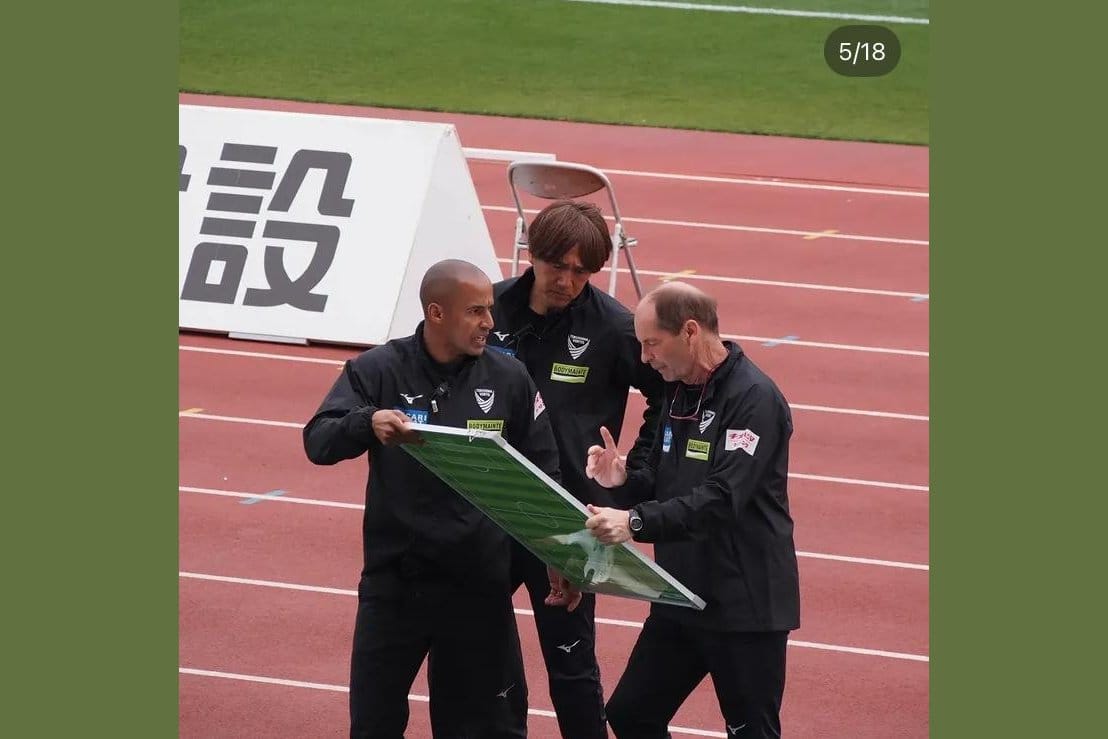
Yokohama F. Marinos (6 years) · Urawa Reds (5 years, Assistant under Guido Buchwald) · Kyoto Sanga (4 years, Head Coach) · Vissel Kobe (Assistant) · Mozambique National Team (Head Coach) · INAC Kobe Leonessa (Women's, Head Coach)
HONOURS (selected, across roles)
J.League Championship · 5× Emperor's Cup · AFC Champions League · German Bundesliga Championship × 2 (as squad member, Borussia Mönchengladbach 1976, 1977)
PROJECTS
SoccerLife — long-running project connecting Japanese players with German clubs
HONORS
German Football Ambassador (DFB / Klub der Fußballbotschafter), 2018
PART 1 · INTRODUCTION
Your career has taken you across Germany, Japan, and Africa, yet you remain relatively unknown to Korean audiences. How would you introduce yourself as a coach?
Relatively unknown in Korea might be correct, although I coached quite some Korean players during my career in Japan, including Park Ji-sung at his first professional club, and winning the Emperor's Cup together with him at Kyoto Sanga.
Actually, I didn't coach in Germany, because after university and my playing career I went right away to Japan and it became my second home country.
PART 2 · THE MAKING OF A PHILOSOPHY
You were part of Borussia Mönchengladbach during their golden era, watching top-level football up close every day in training. Looking back, how did that experience shape you when you eventually became a coach?
More than coaching methods and coaching theories, my most important experience was to be together with top-level players and a top-level coach (Udo Lattek), which showed me what personality, passion and mentality it takes to become a world-class player or a top-level professional.
And I also learned that even with a bunch of high-quality players it takes a certain team spirit to go all the way to the top level.
When you first arrived in Japan at thirty-two and stepped onto the training pitch, what was the first thing you thought needed to change about Japanese players — and what surprised you by being something Europe could actually learn from?
I ask you not to judge by this first impression I had, but first of all I missed the winning mentality, in the game, but also in training.
And definitely I felt from the beginning that almost every Japanese player had an astonishing discipline and an outstanding training mentality.
I missed the winning mentality — in the game, but also in training.
Your journey took you from Japan to Africa and back to Japan again. Along the way, there must have been moments that made you stop and rethink certain things. What experience pushed you to reflect the most?
After coaching in two different countries and being German and having seen quite a few countries in Europe, I realized that there are definitely quite a few differences between countries and their approach to life and to football. But more than the differences, I felt that humans have so many things in common, and also that football is so plain and simple, so that most of the basics apply to every culture.
Since I have been in so many countries, I focus only on the things we have in common — that helps.
PART 3 · TACTICAL IDENTITY
Is there a formation you feel most comfortable working with? And honestly — are you the kind of coach who imposes your own football on the opponent, or do you tend to adapt to what's in front of you?
I think that the formation counts less than the style, but I prefer to play with three backs and two wingers, or at least two permanent wide players deep in front.
Of course I like to focus on my team, on our strong points and on our philosophy. But it depends a bit on the status and the level of the team you coach. It's difficult for a lot of teams to impose their game on teams like Barça, Man City, etc.
But basically I very often use the words: "Let's go out and play our football, let's go out and do what we did in training!"
Five Emperor's Cup titles, a J.League championship, an AFC Champions League. The trophy cabinet is impressive — but looking back, were those wins tactically different from one another, or was there one consistent principle running through all of them?
These titles were taken at different times, with different teams, and I was not always the manager (Head Coach).
But for me the three most important things are transition, organization and active defending. On top of that I encourage players to be creative and courageous in decision making.
From watching your teams, there's a strong sense that you place enormous importance on transition moments — those three or four seconds when the game switches from attack to defence or vice versa. How do you actually coach that on the training pitch?
Thank you for mentioning it.
Of course it's about coaching and telling the team about your ideas, but we play almost every part of training with directions and targets. So it's never over once you win or lose the ball.
PART 4 · THE CRAFT OF COACHING
Many coaches say the first month with a new team is everything. How do you spend that month? Do you go to the data and footage first, or do you look the players in the eye first?
I do not agree with that. Of course the first impression is important, and especially if you take over during the season and maybe during a crisis — even the first day can mean a lot then.
But the first month doesn't count anymore if you do not continue. For me stability and steady growth, even with small steps, is most important in coaching and team building.
Coaching is more like gardening — plant seeds and make things grow and become big and lasting.
Coaching is more like gardening — plant seeds and make things grow.
You've worked as an assistant under Carles Rexach, Guido Buchwald, and Holger Osieck — three very different coaches. Which of them did you learn the most from tactically? And was there ever a moment where you thought, "I'd have done that differently"?
I learned a lot from everyone and each of them was at a top level, but as soon as you have to make decisions on your own, you will realize that with copying you will not make it.
So I applied a lot, but also went my own way.
You've stepped back from head coach to assistant coach more than once in your career. Some people might have raised an eyebrow at that. Were those deliberate decisions, or did they just happen naturally in the moment?
I never switched in the same team from Head Coach to assistant, and the opposite is quite normal in football.
However, I became an assistant under Guido Buchwald with Urawa Reds after being the Head Coach of Kyoto Sanga and winning the Emperor's Cup. That might have raised eyebrows, as you put it.
But for me it was on the other hand the chance to work together with a World Champion and with a team at the highest level in Japan. And I never regretted it, because Guido is not only an outstanding professional, but also a very passionate footballer, coach and human being, and we really became close friends.
Is there a principle on the training pitch that you absolutely never compromise on? And when it comes to tactical discipline versus player autonomy — which side do you lean toward?
Motivation, passion, professionalism — without these attributes you will not make it. Simply put: Mentality over Talent. But you need to enjoy it as well.
My leadership philosophy can be explained very well with a proverb (a Romanian proverb, I think): A dog on a leash won't catch a rabbit.
You need to educate decision makers and to encourage players to do the special things — within a certain framework. Top-down coaching doesn't produce special players. You cannot give only manuals to the players.
Mentality over Talent. But you need to enjoy it as well.
You've seen a great many coaches over the years. What do you think is the defining difference between a truly great coach and a merely good one?
Basically the results.
But if you look deeper it's the know-how of course, and for me, at the end of the day, it is the human being passionate, empathic and respectful to his players. The coach that makes every player a better player and a better human makes the difference.
PART 5 · MAN-MANAGEMENT & LEADERSHIP
You coached Iniesta at Vissel Kobe — a man who had won everything with Barcelona and Spain. Is it even realistic to talk about "coaching" a player like that? How did that relationship actually work in practice?
Indeed you cannot call it coaching in the sense of teaching football. And secondly, I was the assistant coach at that time.
But what you can do is to help him adapt to a totally different country, language and culture. You can tell him about Japanese football, about Japanese players and of course about the team and how the team likes to approach the game. Make it as easy for him as possible.
Japanese, European, African players — when you explain the same tactical concept to these three groups, do they genuinely process it differently? Have you ever encountered a football idea that simply couldn't be translated, even with an interpreter in the room?
They might process it differently, but as I said, football is simple and a lot of principles apply all over the world of football. So I think that you can translate it and they will understand it. But you need to know to whom you talk.
I say this with a smile: the outcome might be different if you say to a British player "play more aggressively" than if you say it to a Japanese player.
PART 6 · COACHING IN EXTREME CONTEXTS
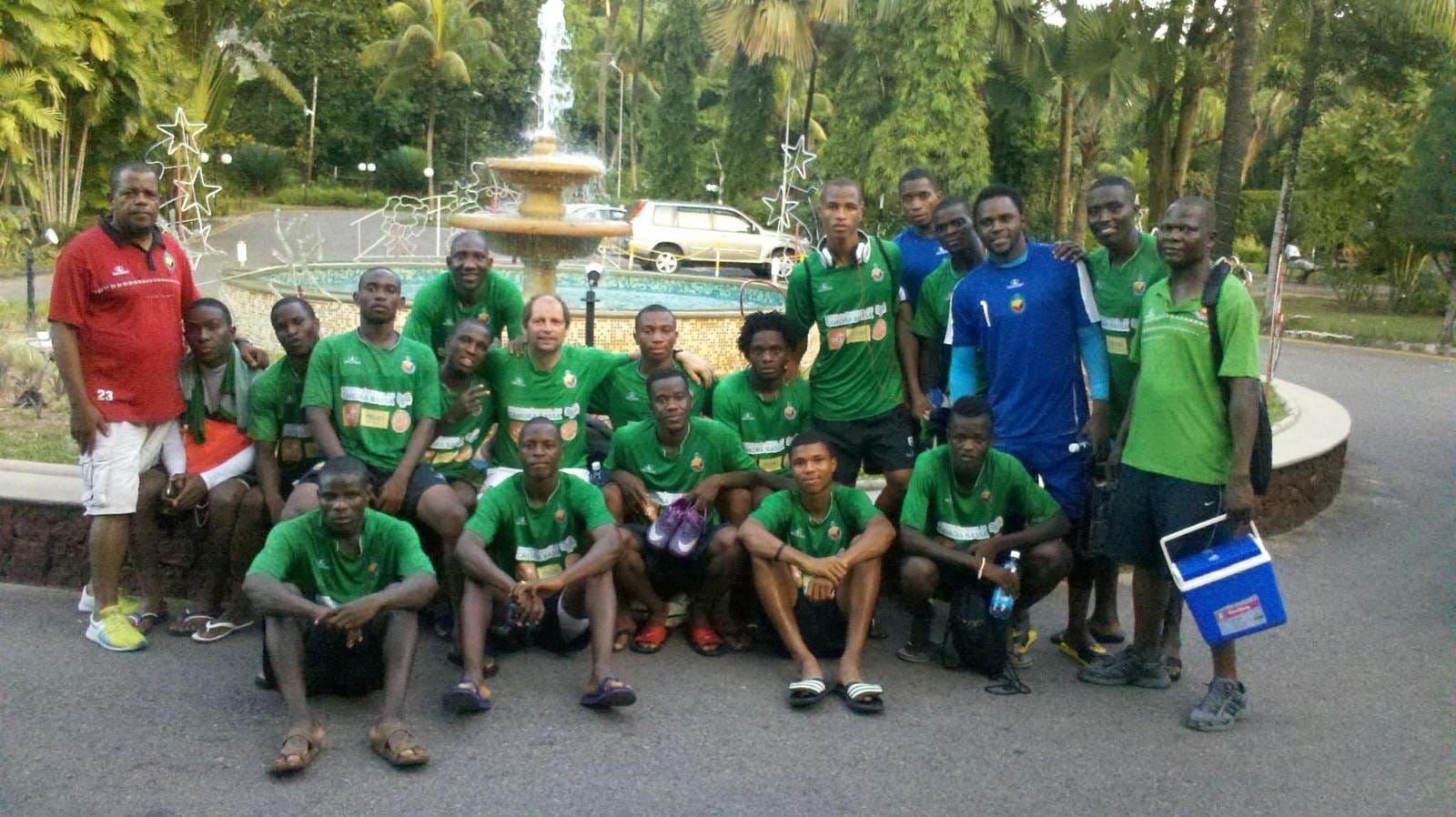
Mozambique had almost nothing — infrastructure, budget, player pool. What could a coach realistically hold onto in that environment? And if I may ask — what was the real reason you left after two years?
You should never complain too much about the conditions. What you can do is make the best of it and try to improve the conditions together with the other stakeholders.
I left — by the way, the first time by my own choice — because I promised that if we didn't qualify for the World Cup I would leave. So I kept my promise.
By the way, Mozambique has huge potential as a football nation and I hope that they will compete in the World Cup one day.
INAC Kobe Leonessa was your first time coaching a women's team. What was the first difference you noticed when you walked into that training ground on day one? Were there things you had to rethink tactically?
Nothing. And again, my philosophy to focus on the common things was helpful. The football is the same.
But I need to admit that women expect a bit more communication and especially more explanation than maybe men.
I respected very much at that time the professionalism of our players. Top-level players, World Champions, low salary, but highly professional.
PART 7 · ASIAN FOOTBALL — AN INSIDER'S VIEW
Very few people who were there at the birth of the J.League are still active in the game today. Comparing Japanese football then and now — what has changed most dramatically, and what has stayed surprisingly the same?
It's been about thirty-three years since the J.League started and Japanese football has developed rapidly. They are constantly not only participating in the World Cup but also reaching the final tournament.
The coaches are improving because most of them now are former J.League players and have much more experience in professional football than their predecessors. And the world finally acknowledges the quality of Japanese players. Most of the national team players are playing at a high level in Europe.
But what we need is a star — what we need is a bit more creativity and decision making on the pitch. Discipline and creativity.
Another proverb. In Japan they say: A nail that stands out needs to be hammered down. Quite different to the dog without a leash, isn't it?
We, the coaches, must try to find these nails and appreciate that they are special — and develop that speciality.
A nail that stands out needs to be hammered down. Quite different to the dog without a leash, isn't it?
Through SoccerLife you've spent years connecting Japanese players with German clubs. What do you think European scouts most consistently miss when they assess Asian players? Is it bias, or is there a genuine technical gap?
In my opinion they should focus a bit more on really quick players, on character in terms of individuality, and on effectiveness in the game — not only on discipline and technique. And they should take the risk and try to bring them to Germany or Europe at a slightly younger age and educate them.
PART 8 · THE ROAD AHEAD
Looking at your career, you've rarely stayed in one place for long — always moving toward something new. At this point in your life, what is the one thing you haven't done yet that you still want to do?
I think for a coach I stayed quite long at some places — and very long in one country. I was six years in Yokohama, five years with the Reds and four years with Kyoto. But as a Head Coach you must know that your average time is limited.
But you are right, I like to move on, and even though I turned sixty-nine in April I would love to stand on the pitch again somewhere. Maybe a "new" country as well.
I love football and I love to be with people and to find out about different cultures.
Finally, a word for the young people who look at your journey and dream of following a similar path — especially those in Asia with their eyes set on European football.
Whatever you do, do it with passion and fun. Work hard, be patient, and never, never be afraid to fail. Failure and continuing is the way to success.
And never forget: first you are a human — then a footballer.
CLOSING
There are very few people who were there at the founding of the J.League and are still drawn, at sixty-nine, to standing on a pitch. Engels is one of them. He arrived in Japan at thirty-two and stayed for the next three decades and more, accumulating the league championship and the five Emperor's Cups and the Champions League trophy not as a man building a CV but as a coach steadily becoming part of the country's football culture. He worked under Carles Rexach, Guido Buchwald, and Holger Osieck. He coached Park Ji-sung at Park's first professional club. He helped Iniesta adapt to Japan. He led Mozambique. He coached women.
What is most striking across his twenty answers is not the trophy cabinet but the temperament. He frames his most important learning at Borussia Mönchengladbach as being together with top-level players, not the methods he absorbed. He defines a great coach as the human being passionate, empathic and respectful. He calls coaching gardening. He has two proverbs, one from each side of his footballing life, and he uses them to describe the same thing seen from opposite cultures — the European insistence that constraint kills creativity, and the Japanese insistence that what stands out must be flattened. We, the coaches, he says, must try to find these nails and appreciate that they are special.
He is sixty-nine. He writes from Germany, between roles, with the Tokushima Vortis chapter recently behind him. He says, plainly, that he would love to stand on the pitch again somewhere — maybe a new country. Three decades after he first coached Park Ji-sung at Kyoto Sanga, with the K League visibly looking outward and Korean football carrying more confidence than at any point in its history, the new country could well be this one. Football Agent Lab will be watching, with a quiet hope that the next chapter finds him soon.
ABOUT THE AUTHOR
SEOK LIM Editor· Football Agent Lab
FIFA-licensed football agent and steel market analyst with over a decade of experience in commodity research. Football Agent Lab publishes interviews and market reports at the intersection of football, agency work, and global markets.


