I Am Demanding Because I Care
A Dutch football architect on academies, attacking principles, and why being demanding and being empathetic are the same thing. From Feyenoord to Riyadh, by way of Pep Guardiola's Bayern Munich.
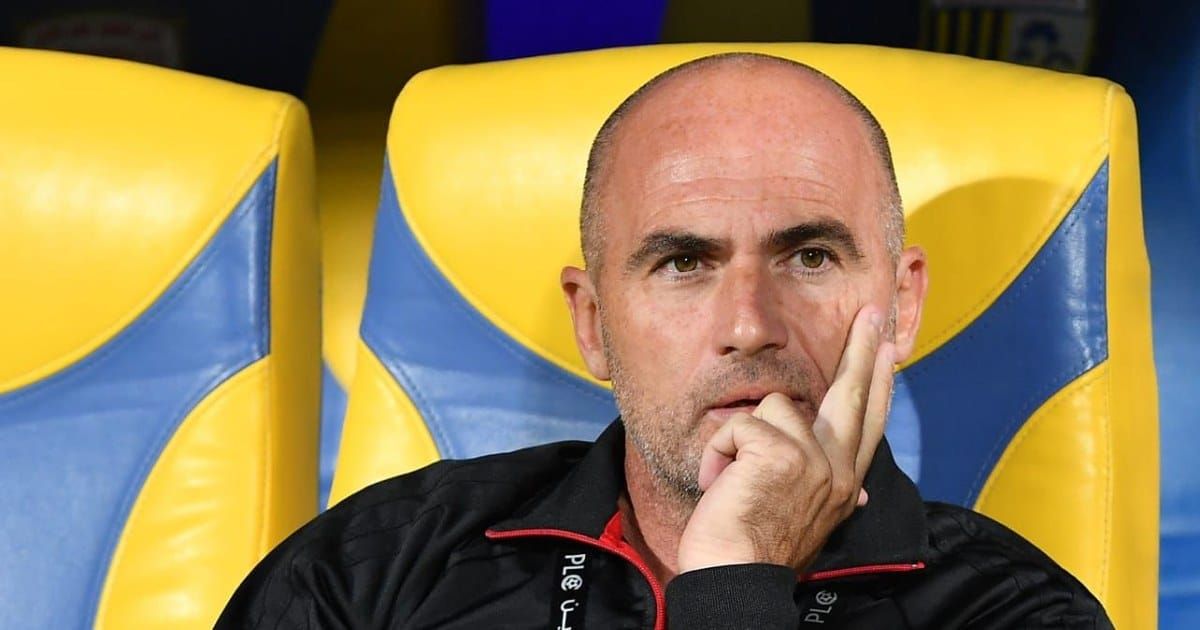
Damien Hertog calls himself a football architect. The phrase is unusual — coaches usually speak of philosophy, system, identity. Hertog reaches further back, to what makes those words possible in the first place: structure.
His career has traced an unusual arc. Born and trained at Feyenoord, where he came up alongside Giovanni van Bronckhorst, he played professionally for over a decade before retiring in 2008 and moving immediately into coaching. Within five years he was leading Feyenoord's U-19 and directing the club's academy — which was named the best in the Netherlands five consecutive seasons. Then came the international detour: Cyprus, the UAE, three years as head coach of Saudi Arabia's U-20 national team, Spain. Today he is Technical Advisor at CD Castellón in the Segunda División.
In this conversation, Hertog talks about positional play and recruitment, the limits of data, the difference between coaching in Rotterdam and in Riyadh, and what twenty years of work across academies, dressing rooms, and boardrooms have taught him about human beings. He speaks about empathy as a coaching principle — not a soft virtue but a hard prerequisite. "I am demanding because I care," he says. The phrase, repeated, becomes a kind of organizing key.
Technical Advisor · CD Castellón (Segunda División, Spain)
MANAGERIAL CAREER
2024– CD Castellón (Spain) — Technical Advisor
2023–24 Al-Shabab FC (Saudi Arabia) — Assistant Coach
2019–22 Saudi Arabia U-20 — Head Coach (3 years)
2018–19 Al Jazira (UAE) — Head Coach
2017–18 APOEL Nicosia (Cyprus) — Assistant Coach
2016–17 Feyenoord U-19 (Netherlands) — Head Coach
2013–16 Feyenoord — Academy Director (5× Best Academy in Netherlands)
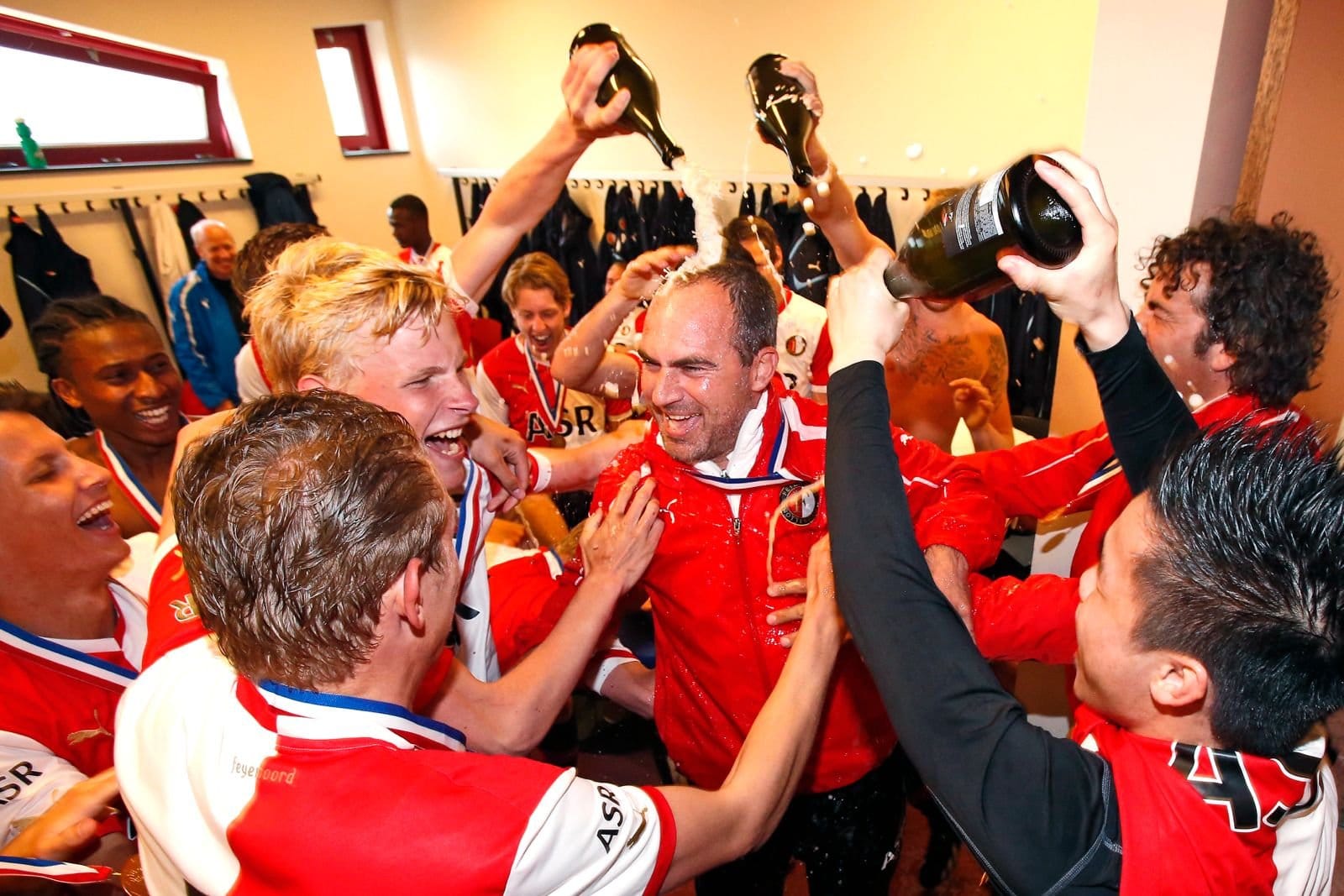
2011–13 Feyenoord U-19 — Head Coach · National Champion · 20+ first-team debuts
2010–11 Excelsior Maassluis (Netherlands) — Head Coach
2008–10 Excelsior Maassluis U-15 — Head Coach
INTERNSHIPS
Bayern Munich (Pep Guardiola) · Borussia Dortmund (Peter Bosz) · Bayer Leverkusen (Bosz)
PLAYERS DEVELOPED
Orkun Kökçü (Benfica) · Rick Karsdorp (AS Roma) · Oussama Idrissi (Sevilla)
PLAYING CAREER
Feyenoord youth · Excelsior · RBC Roosendaal · 270+ pro appearances · 1991–2008
CREDENTIALS
ALO Bachelor (Dutch Academy for Physical Education) · UEFA Pro License
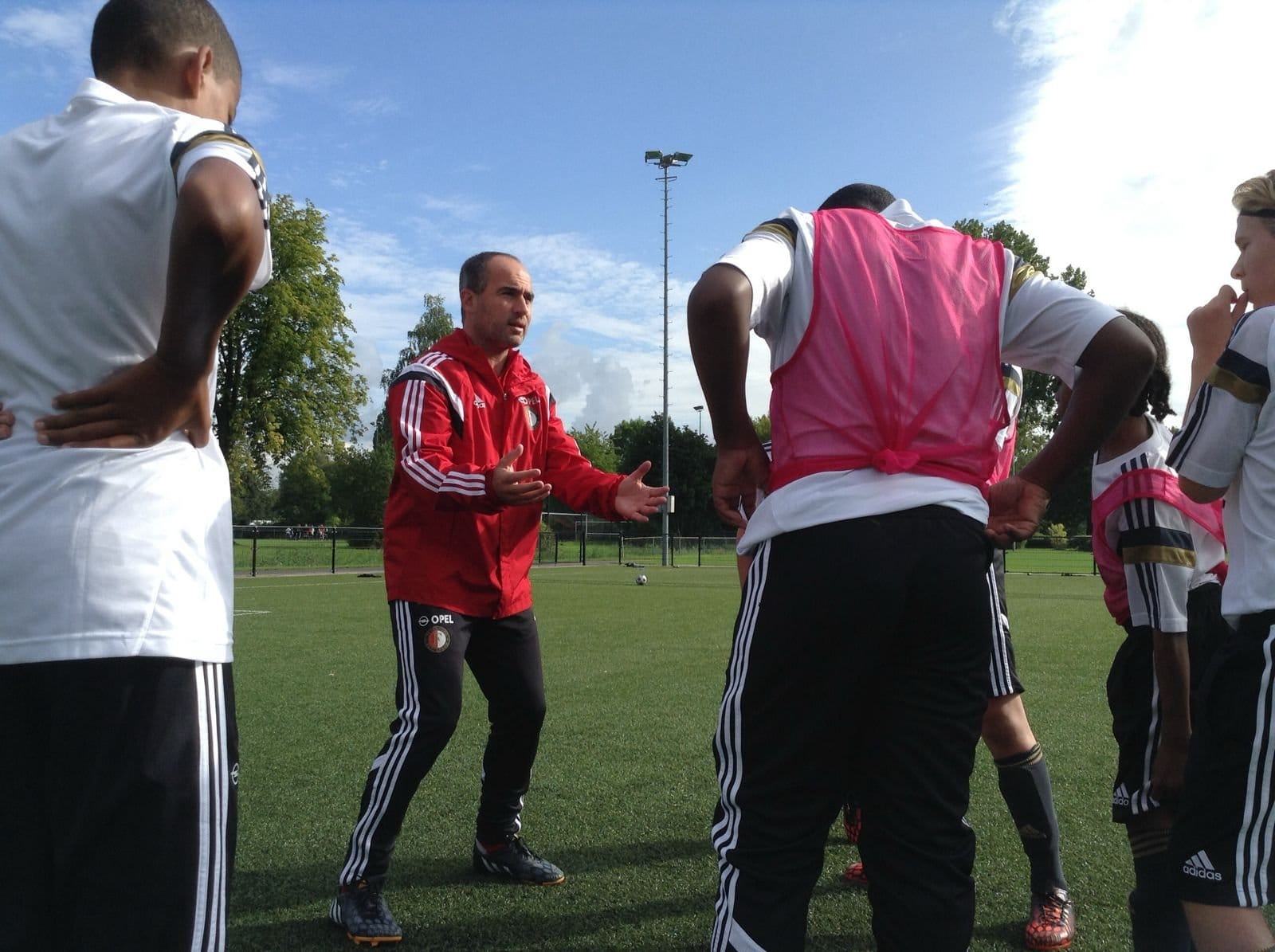
OPENING — SELF-INTRODUCTION
Q1. Please introduce yourself to Korean readers. Who is Damien Hertog as a football professional?
I see myself as a football architect.
I started my journey as a professional player, which gave me an understanding of performance from inside the dressing room — the daily standards, the pressure, the dynamics of winning and losing. But very early on, I became fascinated not just by the game itself, but by what sits behind it: structure, leadership, methodology, and long-term development.
Over the years, I have evolved from player to coach, from coach to academy leader, and from academy leader to strategic football consultant. My strength lies in connecting performance with structure. I look at a club holistically — identity, recruitment, academy pathway, financial sustainability, culture — and make sure all pieces are aligned.
I strongly believe that success in football is never accidental. It is the result of clarity in vision, stability in leadership, and discipline in execution. If the technical organization lacks structure or continuity, talent will not reach its full potential. My role is to build that structure.
I work long-term. I focus on sustainable growth. I believe in individual development plans, clear playing philosophies, and strong integration between academy and first team. And I am comfortable operating both on the pitch and at board level — because modern football demands both.
Ultimately, I am driven by one question: how do we build an environment where players, staff, and the club as a whole can consistently outperform their current level?
That is what defines me as a football professional.
PART 1 — FOUNDATION: FROM PLAYER TO COACH
Q2. You came through Feyenoord's youth academy and went on to make over 270 appearances for clubs including Excelsior and RBC Roosendaal. How did the Dutch football philosophy you absorbed during your youth years influence your tactical perspective as a coach?
My foundation was laid very early. I joined the elite academy of Feyenoord Rotterdam at the age of six, and growing up in that environment — surrounded by ambition, discipline, and high standards — shaped me deeply. Training alongside top talents like Giovanni van Bronckhorst grounded me in a culture where professionalism wasn't taught — it was expected.
In my younger years we were also educated in the philosophy of the famous Total Football — the Dutch tactical blueprint that revolutionized the game by teaching players to understand space, fluidity, and positional intelligence. That ideology was a hallmark of Dutch football inspired by Johan Cruyff and one of the key building blocks of modern football tactics.
Q3. Immediately after retiring in 2008, you started as U-15 coach at Excelsior Maassluis and became Feyenoord U-19 head coach in just two years, while also working as an opponent analyst for legendary coaches like Ronald Koeman and Giovanni van Bronckhorst. What were the key factors behind this rapid progression, and how did analyzing opponents at the highest level shape your coaching philosophy?
I believe I came into coaching with a very solid foundation long before I ever stepped into that role. I completed my studies at the Academie voor Lichamelijke Opvoeding (ALO) — the Dutch Academy for Physical Education — which is a four-year HBO bachelor programme focused on sport, movement and pedagogy. Famous Dutch coaches such as Guus Hiddink and Louis van Gaal also followed this education.
There you don't just learn sport skills — you master how to educate, motivate, lead, communicate, structure training, and understand human movement, physical development, and behaviour. It's designed to prepare you to teach, guide, and develop people in sport and education in a highly professional way.
That educational background gave me a strong theoretical and practical expertise in physical performance, teaching methodology, human development and coaching principles — skills that became invaluable when I transitioned into football coaching and leadership.
Analyzing opponents should be mandatory study for every coach. In my view, it is one of the fundamental pillars of high-level coaching.
In my case, I had the privilege not only to analyze opponents thoroughly, but also to test my analysis and discuss my conclusions with coaches operating at the highest level. That process sharpened my thinking, challenged my assumptions, and elevated my understanding of the game.
PART 2 — FEYENOORD PEAK: YOUTH DEVELOPMENT EXCELLENCE
Q4. From 2013 to 2016, you served as both Feyenoord Academy Director and U-19 head coach. What was your proudest achievement during this period, and how did you reform the academy system?
In an academy, the core mission is player education and long-term development — especially at an elite club like Feyenoord. During my tenure as Head Coach of the U-19, over 20 players made their first-team debut, with several progressing to the Dutch National Team.
Winning the national league with the U-19 was a major sporting achievement. Even more significant was Feyenoord Academy being awarded Best Academy in the Netherlands five consecutive times — a strong confirmation and recognition of the quality, consistency, and impact of our development work.
Q5. You developed several players who are now succeeding at the highest level — Orkun Kökçü at Benfica, Rick Karsdorp at AS Roma, and Oussama Idrissi at Sevilla. What were the key factors in their success, and what aspects did you emphasize when coaching them?
Every player — and every person — is unique. Therefore, each player's pathway should be tailor-made. Every individual brings different characteristics, personality traits, learning capacities, beliefs, and qualities. One of the most challenging and important responsibilities for coaches and development staff is to truly understand these differences and translate them into the right approach, methodology, and guidance for each player.
It is interesting that you mention these three specific players, because they are completely different in many aspects — technically, physically, mentally, and in personality — yet all of them achieved fantastic careers. This perfectly illustrates that there is no single pathway to success, but rather the importance of creating the right environment and providing support that is tailored to the individual.
There is no single pathway to success.
Q6. The Netherlands is renowned for youth development. What are your specific criteria for identifying talent, and what are your core principles in developing young players?
There are many criteria to consider when identifying talent, always taking into account the full context — such as age, family environment, the level of the player's own team and opposition, and whether a player is early or late maturing. Important evaluation areas include technical ability, game intelligence, physical potential, mentality, personality, and learning capacity.
However, for me, the most important aspect is identifying what makes a player unique. Every top-level player possesses at least one distinguishing quality — something that sets them apart from others. Recognizing and nurturing this unique strength is often the key to unlocking a player's highest potential.
The core principle in developing players is to steer and support them towards self-regulation, within an individualized, tailor-made pathway. Ultimately, the goal is to create players who take ownership of their own development, decisions, and performance.
Q7. While serving as both U-19 head coach and Academy Director, how did you balance the tension between 'immediate results' and 'long-term development'? Particularly, how did you respond when the pressure to win conflicted with player development goals?
As mentioned before, the principle itself is not complicated — the main priority is to develop players to reach a world-class level. An essential part of development is learning how to compete and play to win. In the U-19 age category, it is about combining both objectives: development and winning at the same time.
For a coach, it is important to always keep this balance in mind and to align internally with the staff and the club on priorities, expectations, and decision-making. Only with clear internal communication and shared understanding can both player development and performance be optimized.
PART 3 — TACTICAL PHILOSOPHY: PLAYING STYLE AND PRINCIPLES
Q8. Your CV describes your approach as a "strong, winning and attractive play style." Could you explain what this means in concrete tactical terms? What does your ideal football look like on the pitch?
Winning without attractive football is empty, and attractive football without winning is pointless. True excellence lies in the combination of both.
My approach is rooted in the Dutch football philosophy, inspired by Johan Cruyff, where dominant, proactive, and creative football is combined with a strong winning mentality and the ambition to achieve results at the highest level.
In concrete terms, this philosophy should translate into producing the highest number of goal attempts in the league, as this is one of the most reliable predictors of consistent success. Dominating chance creation reflects proactive football, attacking intent, and control — all essential elements of the Dutch philosophy.
Winning without attractive football is empty, and attractive football without winning is pointless.
Q9. What is your preferred formation and why? Do you maintain traditional Dutch systems like 4-3-3 or 4-2-3-1, or do you adapt flexibly based on the situation and available players?
I use a clear system as a foundation to accelerate team development and the implementation of our playing principles. Our style of play is principle-driven, with formations that remain fluid and adaptable. The system creates structure and clarity, but the players' understanding of space, timing, and decision-making is always more important than the formation itself.
Q10. What principles do you consider most important in attacking organization? I'd like to hear your specific philosophy on build-up play, space utilization, tempo control, and so on.
My attacking philosophy is built on two fundamental objectives: dominance with the ball, and unpredictability for the opponent. These two ideas are not in tension — they reinforce each other. We want to control the game through possession, positioning, and initiative, but at the same time remain difficult to defend by creating constant movement, variation, and creative solutions.
The structure we use is not an end in itself. It serves as a foundation that enables creative expression from the players. The principles provide orientation, timing references, collective coordination, and stability in possession — but within this structure, players are encouraged to recognize moments, take initiative, use creativity, and solve situations autonomously. The objective is not robotic positional play, but intelligent football with initiative and imagination inside a collective framework. Football is a dynamic game, therefore solutions cannot be fully scripted.
One of the most important objectives is to constantly force the opponent to adjust their positioning, turn their body, lose orientation, and make decisions under pressure. We achieve this through ball circulation with purpose, positional rotations, third-man combinations, switching sides, and depth movements. If the opponent needs to think and adjust continuously, defensive stability decreases. Football is easier when the opponent is disorganized.
Closely connected to this is the principle of play and move. Passing and standing still makes the game predictable. Every pass must be followed by movement — players create new passing lines, support angles are constantly refreshed, and dynamic positioning replaces static positioning. Movement creates options, options create solutions.
Rotations are essential to create confusion and unpredictability. They can occur between a fullback and winger, a midfielder and winger, a striker and attacking midfielder, interior midfielders, or central defenders stepping into midfield. The goal is not rotation itself, but to disrupt defensive references and create new spaces — increasing positional superiority, passing options, and penetration possibilities.
The third-man principle is a key mechanism to break lines and accelerate play. Player A to Player B to Player C, who is forward-facing. It allows us to escape pressure, progress forward, and attack disorganized opponents. This principle is fundamental because football is rarely solved with one pass alone.
Finally, we aim to attack in multiple ways: short combinations, positional play, direct depth when space exists, dribbling to eliminate opponents, switches of play, runs behind the defense, and overloads in wide or central areas. If the opponent cannot anticipate our next action, defensive organization weakens.
Q11. What aspects do you emphasize in defensive tactics? Please explain your principles regarding pressing triggers, defensive line height, transition speed after winning the ball, etc.
My defensive principles are directly connected to our attacking philosophy. I strongly believe that the quality of our attacking organization determines the amount and type of defending we are required to do — in other words, the better we attack, the less we have to defend.
Our objective is not only to create many scoring opportunities when we have the ball, but also to attack in a way that allows us to recover the ball as quickly as possible when possession is lost. This approach creates a game model where we spend the majority of time in offensive phases, which aligns with our ambition to dominate matches.
Q12. It's been about 10 years since you obtained your UEFA Pro License. How do you think football tactics have evolved during this period, and how have you developed as a coach?
Football has always evolved throughout history, and it will continue to evolve. As a coach, I believe it is essential to stay up to date with the latest developments in elite football, to learn from different environments, and to constantly reflect on your own work.
At the same time, I don't believe in simply copying what others do. By nature, I am a creative person, and I enjoy thinking in solutions and new ideas. I like to explore concepts and then adapt them to the specific context of my team and players.
For me, coaching is about finding the right balance between learning from the best, thinking independently, and having the courage to implement ideas that can improve performance.
In the end, I want to evolve with the game — but also contribute to it through creativity and innovation.
Q13. Data analysis is essential in modern football. Based on your experience as Head Scout at Sparta Rotterdam, how do you utilize data in tactical analysis and match preparation?
Data analysis is very important in modern football because it provides objective insights that support decision-making. During my time as Head Scout at Sparta Rotterdam, I worked a lot with data in player identification and opponent analysis, which helped me understand how valuable it can be when used correctly.
In match preparation, I mainly use data to identify patterns and tendencies of opponents — for example their build-up structure, pressing behavior, chance creation zones, and transition moments. This allows us to prepare training sessions more specifically and focus on the situations that are most relevant for the upcoming game.
At the same time, I believe data should always support football knowledge, not replace it. The combination of data, video analysis, and tactical understanding gives the most complete picture.
Ultimately, data helps us make better decisions and improve performance, both individually and collectively.
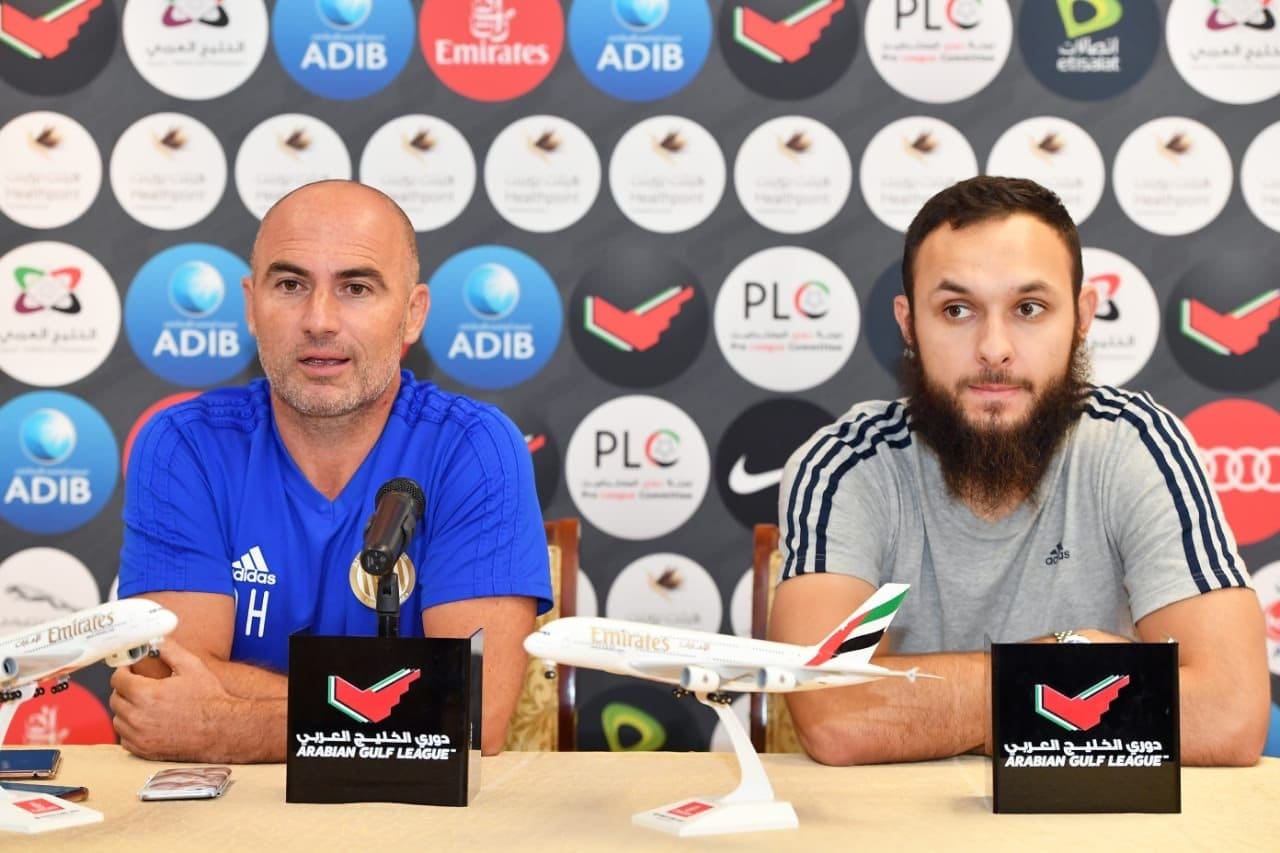
PART 4 — INTERNATIONAL EXPERIENCE: GERMANY AND THE MIDDLE EAST
Q14. You completed internships at Bayern Munich, Borussia Dortmund, and Bayer Leverkusen. What were the most important tactical elements you learned from German football, and what are the biggest differences compared to Dutch football?
During my internships in Germany, I had the opportunity to observe Pep Guardiola at Bayern Munich and Peter Bosz at both Borussia Dortmund and Bayer Leverkusen. Both coaches are strongly influenced by the philosophy of Johan Cruyff, which was very interesting to experience within the German football context.
One of the biggest learnings for me was how they were able to influence and evolve the mentality around the game. Traditionally, German football has been associated with physical strength, discipline, and hard work. What they showed is that you can introduce a more ball-dominant, positional style of play without losing those cultural strengths.
They didn't replace the culture — they integrated new ideas into it. The intensity, work ethic, and mentality remained, but were combined with more control, structure in possession, and tactical sophistication.
That experience confirmed for me that successful coaching is not only about tactics, but also about changing the way players think about the game. When you can influence mindset, you can change behavior — and that ultimately changes performance.
Q15. Between 2017 and 2024, you worked in various cultural environments — Cyprus (APOEL Nicosia), UAE (Al Jazira), Saudi Arabia (U-20 national team, Al-Shabab), and Spain (CD Castellón). How did you adjust your tactics and communication methods to fit each culture?
Despite all the data, tactics, and knowledge in modern football, I truly believe the most important thing for a coach is the relationship with the players. Football is played by people, not by systems or numbers. If you cannot connect with the human being behind the player, you will never reach the highest level together.
Players need to feel that you genuinely care about them — that you are there to help them, support them, and guide them. Not only when things go well, but especially when they struggle. When a player feels that trust and sincerity, he will give you everything.
For me, empathy is essential. It means understanding their emotions, their doubts, their ambitions, their personal situations — both inside and outside football. Sometimes a conversation off the pitch is more important than a tactical meeting.
I always try to create an environment where players feel safe to express themselves, to make mistakes, and to grow. Because when players feel understood and supported, they play with more freedom, more confidence, and more courage.
In the end, success is built on human connection.
Football is played by people, not by systems or numbers.
Q16. Your three years as Saudi Arabia U-20 national team head coach was a significant achievement. What are the characteristics of Middle Eastern players, and what challenges did you face when applying European-style tactics? How did you solve them?
From my experience, the characteristics of players in Saudi Arabia are not very different from European players in terms of their passion for football. They love the game, they enjoy attacking football, and they want to improve and compete. In many ways, there are similarities with the Dutch philosophy, which is based on initiative, creativity, and offensive thinking.
However, as a foreign coach, you must understand that performance is always connected to culture. There are differences in lifestyle, daily rhythm, communication styles, and values, influenced by religion, geography, and social traditions. Successful leadership in this context requires the ability to adapt without losing your own identity and principles.
For me, empathy is the key. You need to invest time in understanding people — who they are, where they come from, and what motivates them. When players feel respected and understood, trust develops. And once trust is there, you can challenge them, guide them, and push performance to a higher level.
Leadership abroad is not about imposing your ideas. It is about connecting your football vision with the local culture and creating a shared understanding. When you achieve that balance, cultural differences become a strength rather than an obstacle.
Q17. You're currently working as Technical Advisor for CD Castellón in Spain's Segunda División. What are the specific responsibilities of this role, and what are the differences, advantages, and disadvantages between being a head coach and a technical advisor?
I am responsible for the overall development, performance, and strategic direction of the football department, overseeing all sporting activities within the club.
The role focuses on monitoring, supporting, and continuously improving the football organization to ensure alignment with the club's vision, identity, and long-term objectives.
This is more a strategic role and less operational. One example is developing and structuring the new high-performance elite centre to be built for our performance teams (1st team, B-team and U-19).
PART 5 — COACHING PHILOSOPHY AND LEADERSHIP
Q18. You completed the KNVB Academy's "Perform Under Pressure" course. How do you teach players mental management and coping methods for pressure situations in crucial matches?
I focus on two things.
First, practical coping strategies — focus routines, visualization, and resetting after mistakes. We integrate these methods into training so they become automatic during matches.
Second, creating realistic training environments — we simulate pressure situations in training through competition, time constraints, scoring consequences, or specific match scenarios. Players learn to perform under stress because they experience it regularly.
But the most important factor is the environment. Players perform better under pressure when they feel trust, clarity, and confidence. As coaches, we must create psychological safety while still demanding high standards.
Ultimately, mental strength is not about eliminating pressure — it's about performing despite pressure.
Q19. Your CV lists both 'DEMANDING' and 'EMPATHIC' as personality traits. As a leader, how do you balance being strict with being empathetic?
For me, being demanding and being empathetic are not contradictions — they actually reinforce each other. Players accept high standards when they feel that the coach genuinely cares about them and wants to help them improve.
Empathy means understanding the person behind the player: their situation, their personality, and what they need to perform. But understanding someone does not mean lowering expectations. On the contrary, when you understand players well, you can challenge them more effectively.
I am very clear about expectations, discipline, and professional behavior. The standards are non-negotiable. But the way you communicate and support players can differ depending on the individual. Some players need encouragement, others need confrontation, and leadership is about recognizing those differences.
I always try to create an environment with trust and honesty. Players know where they stand, they know what is expected, and they know that I will support them if they are willing to commit.
In the end, the balance comes from one principle: I am demanding because I care.
When players feel that, they are much more willing to push their limits.
I am demanding because I care.
PART 6 — CLOSING: FUTURE PLANS
Q20. Please share your future career goals and ambitions. What dreams do you have — managing in a top European league, coaching a national team, returning to academy director role? Also, if you have any interest in or evaluation of Korean football (K League, national team, youth development), please share your thoughts.
My ambitions are very clear. I am highly motivated to work in an ambitious and competitive football environment where there is a strong focus on development and performance. Korea is a very interesting country in that respect, with a rapidly growing football culture, strong infrastructure, and high standards both at national team and club level.
I am open to a role within a highly rated national team environment — for example with a senior national team or U-23 team — where I believe my experience in player development, tactical organization, and high-performance environments can contribute.
At the same time, a position as a head coach in the Korean league is also very attractive to me. The league is competitive and evolving, and it offers the opportunity to implement a clear playing identity and develop players within a structured methodology.
In addition, a role as a technical advisor also has my strong interest. Supporting the broader football strategy — such as player development pathways, methodology, organizational structure, and long-term performance planning — is an area where I can add significant value based on my experience across different clubs and environments.
For me, the most important factor is the project: an environment with ambition, professionalism, and the willingness to grow. In that context, I am confident I can contribute both on and off the pitch.
Hertog comes back, repeatedly, to a single architecture. Structure on the outside — clear methodology, honest standards, principles that hold under pressure. Empathy on the inside — the patient work of understanding individual humans inside the system. Without one, the other does not function.
It is why his most cited phrase is unusual for a coach to say out loud. "I am demanding because I care." Most leaders treat the two halves as opposites, and balance between them. Hertog treats them as the same act.
Where the next architecture gets built, he leaves open. Rotterdam and Riyadh and Castellón have already had him. Korea — its national team, its leagues, its development pathways — has caught his attention. What he is looking for, in his own words, is "an environment with ambition, professionalism, and the willingness to grow." The phrase, like the rest, sounds like an architect speaking.
ABOUT THE AUTHOR
SEOK LIM Editor· Football Agent Lab
FIFA-licensed football agent and steel market analyst with over a decade of experience in commodity research. Football Agent Lab publishes interviews and market reports at the intersection of football, agency work, and global markets.


