A World Cup Veteran's Vision for Sustainable Football — Tibor Selymes
A left-back of Romania's golden generation — a World Cup semifinalist and once Europe's best in his position — Tibor Selymes now builds players and academies at FC Politehnica Iași. He joins Football Agent Lab for an exchange on development, discipline, and what he makes of the K League.
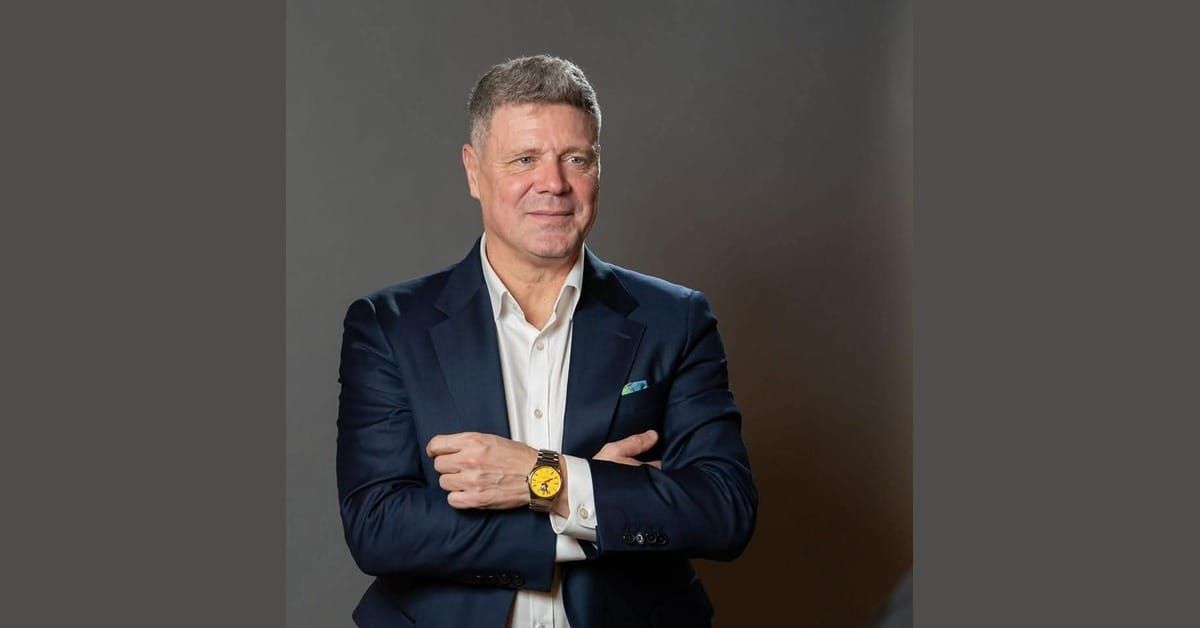
Tibor Selymes states his philosophy in nine words, and then spends the rest of the conversation earning them: "Build the player before the result, and the result will follow on its own." He has standing to say it. As a left-back he won 48 caps for Romania, played at the 1994 and 1998 World Cups and Euro '96 at the heart of the country's golden generation, lifted a UEFA Cup and a Belgian title with Anderlecht, and was rated the best left-back in Europe in 1996. Today he is head coach and academy technical director at FC Politehnica Iași, running the first team and the youth pathway at the same club — and this is his first written exchange with Football Agent Lab.
What comes through across the conversation is a coach who has replaced a player's hunger with an organiser's patience. He treats development not as a rival to results but as the engine that produces them; he leans on defensive organisation and transition because, as an eighteen-year full-back, he lived inside them and because discipline is easier to guarantee than inspiration. He is unsentimental about the business around football — he can tell a real club vision from a slogan by "what they are willing to fund and defend when results dip" — and clear about the one thing he never trades away: "I adapt the shape to the players, but I never adapt the standards to the players."
Late on, the questions turn to Korea, and he answers them with genuine interest. He admires the development system behind players like Son Heung-min and Lee Kang-in — arriving in Europe, as he puts it, "tactically educated, physically prepared and mentally professional" — and, asked what he would change first if he took a K-League job, he does not reach for tactics: he would adjust his communication to local expectations around hierarchy and feedback, "so that my methodology is delivered in a way the players and staff can fully receive it." It is the answer of a man whose stated ambition is no longer a trophy but a standard — one, in his words, that continues after you have gone.
Football Coach · Academy Technical Director · Former International
CURRENT ROLE: Head Coach & Academy Technical Director · FC Politehnica Iași (Romania) · 2025–present
AS A PLAYER
- 48 caps for Romania — World Cup 1994 & 1998, Euro 1996
- Left-back of Romania's golden generation; 5th at the 1994 World Cup
- RSC Anderlecht (Belgium) — Belgian champion, UEFA Cup winner
- Cercle Brugge, Dinamo București and others — 350+ top-flight appearances across four countries
- Best Left-Back in Europe & European Team of the Year (1996)
COACHING CAREER (selected)
- FC Politehnica Iași — Head Coach & Academy Technical Director · 2025–present (Technical Manager, 2019–2020)
- New Diamonds Academy Iași — President & Sporting Director · 2024–2025
- Știința Miroslava — Head Coach · 2022–2024
- Petrolul Ploiești · Oțelul Galați · Astra Ploiești · Sportul Studențesc — Head Coach (Romania)
- Kaposvár Rákóczi FC · FC Sopron — Head Coach (Hungary)
METHODOLOGY
- Defensive organisation & transition phases
- Academy-to-first-team integration; one playing philosophy across age groups
- Microcycle & full-season planning
- Talent identification & long-term potential (trainability); data + video evaluation
- Stabilising clubs in decline; building under limited resources
LICENCES & HONOURS: UEFA Pro Licence (2012) · Best Left-Back in Europe (1996) · Belgian champion, Anderlecht (2000) · UEFA Cup winner, Anderlecht · Romanian champion, Dinamo București (1992)
LANGUAGES: Romanian · Hungarian · English · French
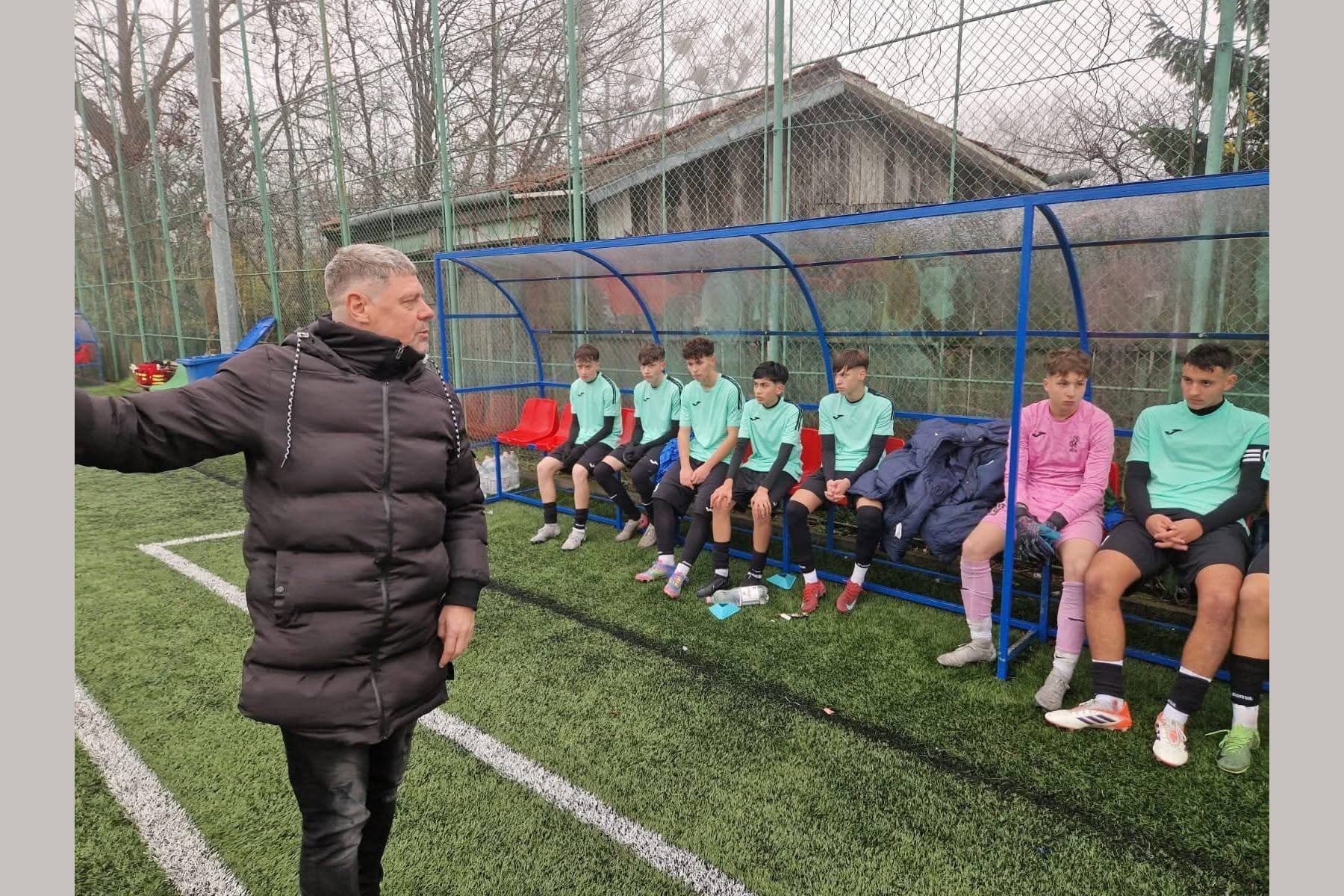
PART 1 · THE GOLDEN GENERATION
It's a pleasure to meet you. To begin, could you introduce yourself to Korean readers? And if you had to distil your football philosophy into a single sentence, what would it be?
My name is Tibor Selymes. I am Romanian, Belgian and Hungarian by nationality, a former left-back who played 48 times for Romania and appeared at two World Cups and one European Championship, and today I am a UEFA Pro-licensed head coach and technical director. I currently lead the first team and the youth academy at FC Politehnica Iași in Romania. If I had to put my philosophy in one sentence, it would be this: build the player before the result, and the result will follow on its own.
Ninety appearances and ten goals for Dinamo București, Belgian champion and UEFA Cup winner with Anderlecht, rated Europe's best left-back in 1996 — your playing career is already a complete story in itself. What first motivated you to begin a coaching career after retirement? And what is the essential difference between what you achieved as a player and what you want to achieve as a manager?
As a player, everything I earned was measured in my own legs — my speed, my reading of the game, my discipline on the pitch. When I stopped playing, I realised I still had that same hunger, but I no longer had the body of a twenty-five-year-old to satisfy it. Coaching gave me a way to keep competing, except now the "performance" I am responsible for belongs to twenty or thirty other people at once. As a player I only had to master myself. As a manager I have to understand each individual well enough to make the whole group better than the sum of its parts. That is a completely different discipline, and it took me years to build it properly.
Romania's fifth place at the 1994 World Cup in the United States, Euro '96, France '98 — three consecutive major tournaments at the heart of Romania's golden generation. Among the team culture you shared with teammates like Gheorghe Hagi, Gheorghe Popescu and Ilie Dumitrescu, what element do you still try to recreate in your dressing room today?
What I remember most from that generation is not the talent — although there was enormous talent — it is the collective responsibility. Nobody hid behind another player's mistake, and nobody carried the team alone either. Every dressing room I have led since, from Astra to Politehnica Iași, I have tried to build that same balance: individual accountability inside a genuinely shared project. It is easy to say. It takes years of consistent daily standards to actually create it.
PART 2 · SHAPE AND STANDARDS
The principle that football philosophy must align with club vision and long-term objectives — yet club visions are sometimes vague and long-term goals change when owners change. When you first meet a new club and they tell you "this is our club vision," how do you distinguish whether it is a genuine vision or merely a slogan? And when it is a slogan, how do you respond?
I listen less to what they say and more to what they are willing to fund and defend when results dip. A real vision survives a bad November. A slogan disappears after three defeats. In the first meetings I ask very concrete questions — about the academy budget, about how much patience they will give a young player who makes mistakes, about who has the final word on transfers. The answers tell me more than any mission statement. If it turns out to be a slogan, I do not fight it publicly; I simply build the most professional, most disciplined structure I can within the time I am given, because that structure has value regardless of how long the project lasts.
A real vision survives a bad November. A slogan disappears after three defeats.
You design a team's tactical identity to fit the squad profile and club objectives, which ultimately means the manager adapts to the players. Yet there must also be times when players need to adapt to the manager's system. Where is the boundary between a manager fitting the squad and a squad fitting the manager?
I start every project by adapting to what I have — the squad's physical profile, its technical strengths, its psychological state. That is simply realism. But once the foundation is set, certain principles are non-negotiable: defensive organisation, discipline in transition, communication on the pitch. Those principles do not bend to any individual player, however talented. So the boundary is this — I adapt the shape to the players, but I never adapt the standards to the players.
Your emphasis on defensive organisation and transitional phases — does this stem from the judgement that defence and transitions are more controllable than attacking organisation, or does it reflect a perspective formed during your playing career as a full-back? I would like to hear the background to that emphasis.
Both, honestly. As a full-back for eighteen years, I lived inside transitions — the half-second between losing the ball and organising again decided most matches I played in. That experience never left me. But there is also a coaching logic to it: creativity in the final third is harder to coach consistently than discipline in defensive shape. If I can guarantee my team is compact, well-positioned and dangerous on the counter, I have already removed a large part of the uncertainty from a match, even on a night when our attacking football is not at its best.
A player who made over 350 appearances and scored more than 45 goals as a left-back — what is the first role you now demand from your own full-backs? If you had to name one greatest similarity and one greatest difference between your own play in the 1990s and the full-backs you want today, what would they be?
The first thing I demand is defensive reliability before anything else — a full-back who cannot be trusted one-on-one is a liability no matter how well he attacks. The similarity with my own generation is exactly that: positional discipline never goes out of fashion. The difference is physical output. Today's full-backs are asked to cover far greater distances at far higher intensity, essentially playing as auxiliary wingers for large parts of the match. My generation attacked in bursts; this generation attacks continuously.
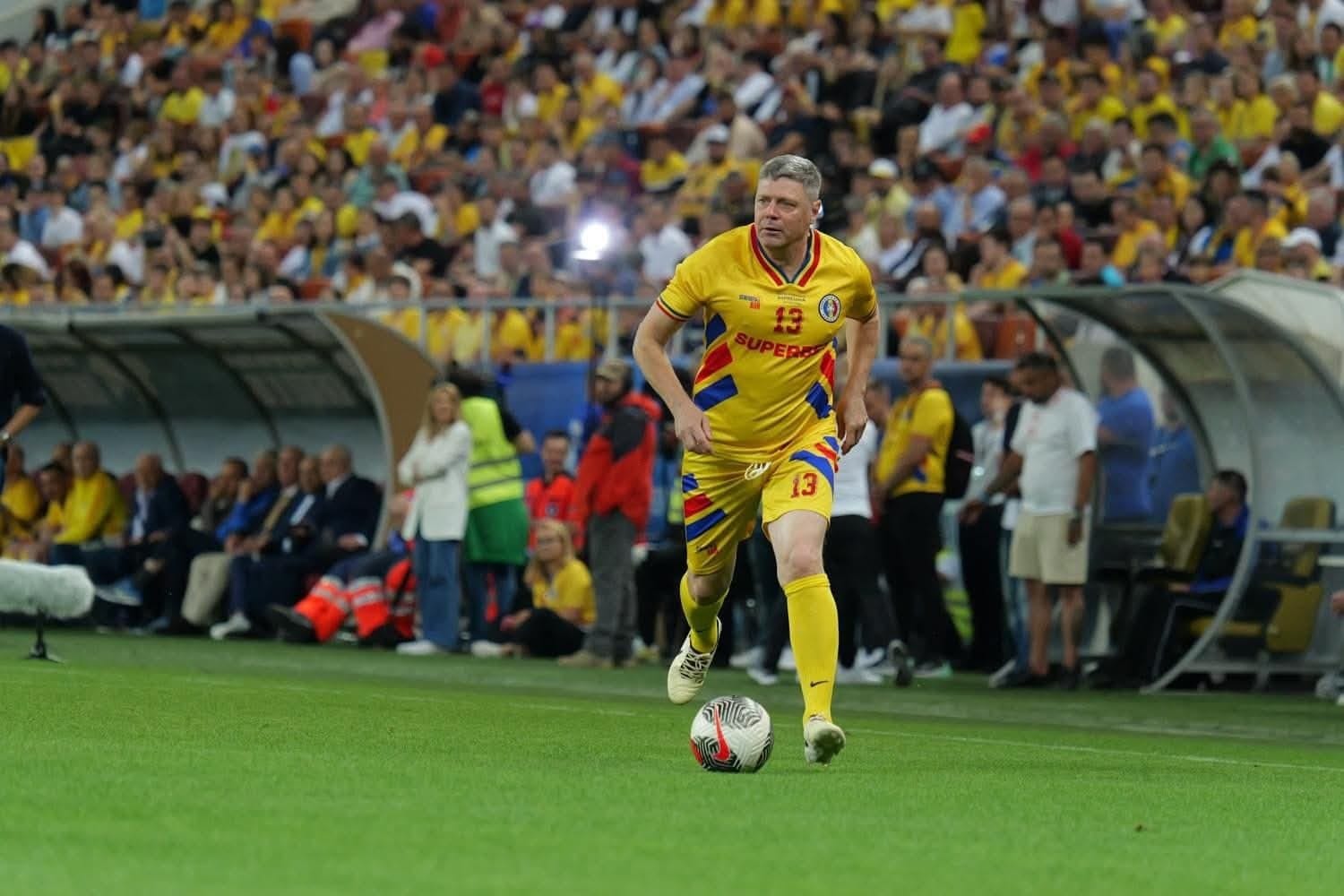
PART 3 · THE LONG-TERM CEILING
The principle of applying an integrated playing philosophy across all age groups and ensuring continuity between youth and first team — but in a structure where Under-15 coaches are judged on development outcomes and first-team coaches on points, doesn't aligning the two require changing the evaluation system itself? By what criteria do you actually evaluate coaches at each age group in your academy?
You are right that the incentives are different by nature, and pretending otherwise creates confusion. At youth level I evaluate coaches primarily on individual development — technical progress, tactical understanding, character — supported by objective data and match analysis, not only by the scoreline. At first-team level, results matter more directly, because that is the nature of senior football. What connects the two is the playing model: every age group is required to work within the same core principles, so that a young player's technical habits do not have to be relearned when he is promoted. The evaluation criteria differ; the footballing language does not.
You say true development means integrating young players into the first team under competitive pressure, which is a decision that accepts short-term performance risk. When you face an important league match and must choose between an experienced 28-year-old and a high-potential 19-year-old, what conditions make you pick the 19-year-old — training attitude, tactical understanding, mentality, or something else?
All three have to be present together, but mentality decides it for me. I have seen technically gifted young players freeze in big matches, and I have seen more modest talents rise because they were mentally ready. Before I trust a 19-year-old with an important match, I need to see, in training and in smaller games, that he takes responsibility rather than hides, that he recovers quickly from a mistake instead of carrying it into the next action, and that he already understands the tactical demands of the role — not perfectly, but well enough not to break the team's structure. Attitude gets him close. Tactical understanding and mentality make the final decision.
You lead talent identification and recruitment processes at regional and national level, performing clear profiling and long-term potential assessment. If you have two 17-year-old wingers, one fast and flashy right now but with uncertain growth potential, the other ordinary now but with high physical and technical growth capacity — which do you choose? And what is the most important indicator when making that judgement?
At academy level, I choose the one with the higher long-term ceiling far more often than most people expect, because at 17 the flashy, physically mature player is often already close to his peak, while the "ordinary" one still has years of growth ahead. The indicator I trust most is not a single physical or technical test — it is trainability: how quickly a player absorbs correction, whether he improves week to week, and how he behaves when things are not going his way. A player who learns fast will eventually outgrow a player who is simply ahead of his biological age today.
A player who learns fast will eventually outgrow a player who is simply ahead of his biological age today.
During your time as Dinamo București II manager, you focused on elite youth development and first-team transition preparation, preparing players for the demands of professional football. What criteria told you when a player was ready to be sent to the first team? Could you illustrate that moment using one player as an example?
I looked for three things before recommending a player upward: technical consistency under fatigue, tactical discipline without needing constant instruction, and the ability to handle a bad training session or a public mistake without his confidence collapsing. When a player showed all three over a sustained period, not just in one good week, I knew he was ready. I prefer not to single out individual players by name in an interview context, out of respect for their own career narratives, but that three-part standard has guided every promotion decision I have made since, including at Politehnica Iași today.
PART 4 · FORGET WHAT THE CLUB WAS
Oțelul Galați had competed in the Champions League, but by the time you arrived the club had already descended from that peak. Transition periods after success bring financial pressure, the departure of key players and high fan expectations all at once — what was the first message you delivered to the players in the dressing room, and what change did that message actually create in their attitude or performance?
My first message was simple: forget what this club was two years ago, and let's decide together what it is going to be from today. Comparing the current squad to the Champions League team only created pressure without direction. Once the players stopped measuring themselves against a past they had not built, they were able to focus on realistic, daily standards — discipline in training, accountability in matches — and performance stabilised because expectations became honest rather than nostalgic.
Your experience at Petrolul Ploiești establishing tactical discipline and developing young players despite financial and structural constraints — building a team under limited resources demands creativity whilst also forcing compromise. Could you name one thing you absolutely refused to give up at the time, and one thing you had no choice but to surrender?
What I refused to give up was tactical discipline and defensive organisation — those cost nothing but time and repetition, and they are the first thing to erode when a club is under financial stress. What I had to surrender was squad depth. With a limited budget, we simply could not carry cover in every position, which meant accepting more risk from injuries and suspensions than a wealthier club would tolerate. You learn to protect what training and culture can provide for free, because that is the one resource that limited budgets cannot take away from you.
After designing the youth-to-first-team pathway and contributing to a sustainable transfer strategy as Politehnica Iași technical manager in 2019–2020, you have held the dual role of first-team manager and academy technical director at the same club since 2025. What results is the pathway you drew five years ago producing now? Could you name one aspect that has worked as expected and one that has surprised you?
Returning to the same club years later, in a dual role covering both the first team and the academy, has been a rare opportunity to see a long-term project through rather than hand it to someone else halfway. What has worked as expected is the alignment of playing philosophy across age groups — young players arriving in the first-team environment now require far less tactical re-education than they once did. What has genuinely surprised me is how much faster the mentality gap closes when a player has grown up inside a single consistent culture from a young age; players are ready for senior competitive pressure earlier than the old development timelines assumed.
PART 5 · CLARITY OVER VOLUME
Planning and coordinating the entire training process from weekly microcycles to seasonal macro-planning is a principle, but during the season fixture schedules are irregular and injuries and fatigue dismantle plans. When you have a cup match on Wednesday followed by an important league match on Saturday, how do you distribute tactical training and recovery training across three days? And if there is a tactical element you must address even in that short week, what is it?
In a three-day week between two matches, Thursday is almost entirely recovery and regeneration for those who played Wednesday, with only light activation work; Friday is where I concentrate the tactical content, kept short and specific rather than broad, because fatigue limits how much a player can genuinely absorb; and Saturday is the pre-match activation and final adjustments. The one tactical element I insist on addressing regardless of how little time we have is the team's shape in defensive transition — losing that discipline for even one match can undo weeks of work, so it is never sacrificed, even when everything else is compressed.
When your scout and video analyst, who oversee opposition observation, player observation, prospect scouting, opposition tactical analysis and training monitoring, bring you a complete breakdown of the last five matches, what do you convey to the players and what do you filter out? And why do you stop the volume of opposition information you give players at a certain point?
I convert their full report into a small number of decisive points — usually no more than three or four principles the players must execute, plus one or two specific patterns to exploit or avoid. Everything else stays with the coaching staff. Players who receive too much information lose clarity and hesitate in the moment of decision; a defender thinking about six different scenarios reacts a fraction of a second slower than one who has internalised two. I would rather my players execute three principles with total conviction than half-remember fifteen.
I would rather my players execute three principles with total conviction than half-remember fifteen.
You have an objective player evaluation system that monitors progress through data, match analysis and performance indicators, but data easily misses context and there are clearly values that numbers do not capture. When evaluating an attacking midfielder, what is the respective weight of statistical indicators and what you see with your own eyes? And when the two contradict, which takes priority?
For an attacking midfielder, I would say the numbers give me perhaps forty percent of the picture — progressive passes, chances created, pressing data — and my own eyes and those of my staff give me the remaining sixty, because so much of that role is about timing, body orientation and decision-making under pressure that statistics simply do not register well. When the two disagree, I trust what I see, but I use the data to check my own bias before I commit to that judgement. Numbers are a discipline against my instincts, not a replacement for them.
An organisational structure in which the main assistant coach, fitness coach, goalkeeper coach, video analyst and scout all work full-time with clear performance criteria and responsibilities — when mid-season the assistant coach says the team is tactically prepared and the fitness coach says it is physically dangerous, how do you make the final decision? And when such a decision proves wrong during the match, how do you respond?
Physical risk takes priority over tactical ambition, because an injured or exhausted player helps nobody, tactically or otherwise. I will always lean toward the fitness coach's assessment when there is a genuine safety concern, even if it means simplifying our tactical plan. The final decision is always mine, and I take responsibility for it publicly — I do not let staff disagreements become visible to the players or the press. If the decision proves wrong during the match, I adjust immediately rather than defend the original plan out of pride, and afterward I review it honestly with the staff member involved so the same misjudgement is not repeated.
PART 6 · WHAT KOREA GETS RIGHT
You speak four languages — Romanian, Hungarian, English and French — played in four countries as a player — Romania, Belgium, Hungary and Cyprus — and have worked as a manager in Romania and Hungary. How did the football cultures of those four countries differ? And as a manager navigating multicultural environments, could you illustrate a specific moment when understanding that difference helped you?
Romanian football has always carried strong individual technical quality alongside a fighting spirit; Belgian football, at least in my era at Anderlecht, was built on tactical structure and professionalism at every level of the club; Hungarian football combines discipline with real technical tradition, though the resources are often more modest; Cypriot football was smaller in scale but intensely competitive and community-driven. Managing in Hungary after my Romanian upbringing, I learned to communicate more explicitly and directly, because assumptions I could safely make with Romanian players about unwritten standards did not always translate. That adjustment — being more precise rather than assuming shared understanding — has stayed with me in every multicultural squad since.
At the 1994 World Cup in the United States, Romania achieved fifth place, the best result in the nation's history, and you were central to it. Thirty years later, how has Romanian football changed compared to that era? And what impression do you have of Asian football, particularly Korean football, which consistently sends players like Son Heung-min and Lee Kang-in to Europe's major leagues? If you were to take charge of a K League club, what part of your methodology would you need to adjust first?
Romanian football today is more structured and more data-driven than it was in my playing days, though we still lean heavily on individual talent rather than on the systematic academy pipelines that some countries have built. What I admire about Korean football is precisely that discipline — the players who reach Europe, like Son Heung-min or Lee Kang-in, arrive tactically educated, physically prepared and mentally professional, which tells me the development system behind them is excellent. If I took charge of a K League club, the first thing I would adjust is not my footballing principles but my communication style — learning the specific cultural expectations around hierarchy, feedback and dressing-room dynamics, so that my methodology is delivered in a way the players and staff can fully receive it.
The players who reach Europe, like Son Heung-min or Lee Kang-in, arrive tactically educated, physically prepared and mentally professional.
PART 7 · A STANDARD THAT OUTLASTS YOU
Your slogan — build players, build teams, build the future — these three operate on different timescales and sometimes collide. When a club owner demands only short-term results such as promotion next season, how do you protect the long-term vision? Or is there a way to find compromise between short-term and long-term?
I do not treat it as a choice between the two — I treat development as the engine that produces short-term results, not something that competes with them. A well-organised, disciplined team built on clear principles wins matches now and produces better players later; those are not contradictory outcomes. Where genuine tension exists, I protect the long-term vision by being transparent with ownership from day one about what is realistic and what is not, so that promotion demands are grounded in the squad's actual level rather than in wishful thinking. Honesty at the start prevents most of the conflict later.
What is the vision and objective you are working towards? From member of Romania's golden generation to UEFA Pro Licence manager and technical director across more than thirty years in football — how do you want to be remembered as a manager, as a leader? And what is the legacy you want to leave for the next generation?
My objective now is to build sustainable structures — at Politehnica Iași and wherever my career takes me next — that outlast my own presence, where young players are developed with the same seriousness I once received as a young international, and where clubs depend less on outside recruitment and more on what they grow themselves. I do not need to be remembered for a single result. I would rather be remembered as someone who left every club and every player better organised, better prepared and more disciplined than he found them. That, to me, is the real legacy — not a trophy, but a standard that continues after you have gone.
Not a trophy, but a standard that continues after you have gone.
CLOSING
For a man who played at the summit of the game, Tibor Selymes is strikingly uninterested in nostalgia. Asked what he keeps from the golden generation, he names not the talent but the collective responsibility; arriving at a fallen Oțelul Galați, his first instruction was to forget what the club used to be. The thread is the same one his opening sentence promises — build the player before the result — and he defends it with a veteran's economy: standards over slogans, defensive discipline that costs nothing but repetition, three principles executed with conviction rather than fifteen half-remembered. Even his data has its place and knows it: forty percent of the picture, "a discipline against my instincts, not a replacement for them."
What gives the conversation its reach for readers here is how openly it turns toward Korea. He does not flatter and he does not overreach: he admires the Korean development system precisely because its graduates — Son Heung-min, Lee Kang-in — arrive in Europe already educated, and he answers the K-League question with the humility of someone who has coached across four football cultures, promising to change how he communicates rather than what he believes. Coming from a World Cup semifinalist who now builds academies, it reads less as a pitch than as a considered readiness. His stated legacy is not a trophy but a standard that continues after he has gone; on the evidence of this exchange, the K League is one of the places he can imagine leaving it. Football Agent Lab will be watching where the road runs next.
ABOUT THE AUTHOR
SEOK LIM Editor · Football Agent Lab
FIFA-licensed football agent and steel market analyst with over a decade of experience in commodity research. Football Agent Lab publishes interviews and market reports at the intersection of football, agency work, and global markets.


