The Coach Who Builds People Before Athletes — Simone Canepa
An "educator through sport," Italian coach Simone Canepa builds people before athletes. From an AC Milan academy in Kuwait to the Juventus Academy in Riyadh, he joins Football Agent Lab for a written exchange on coaching under-tens, brand academies, and the Gulf's fast-rising football scene.
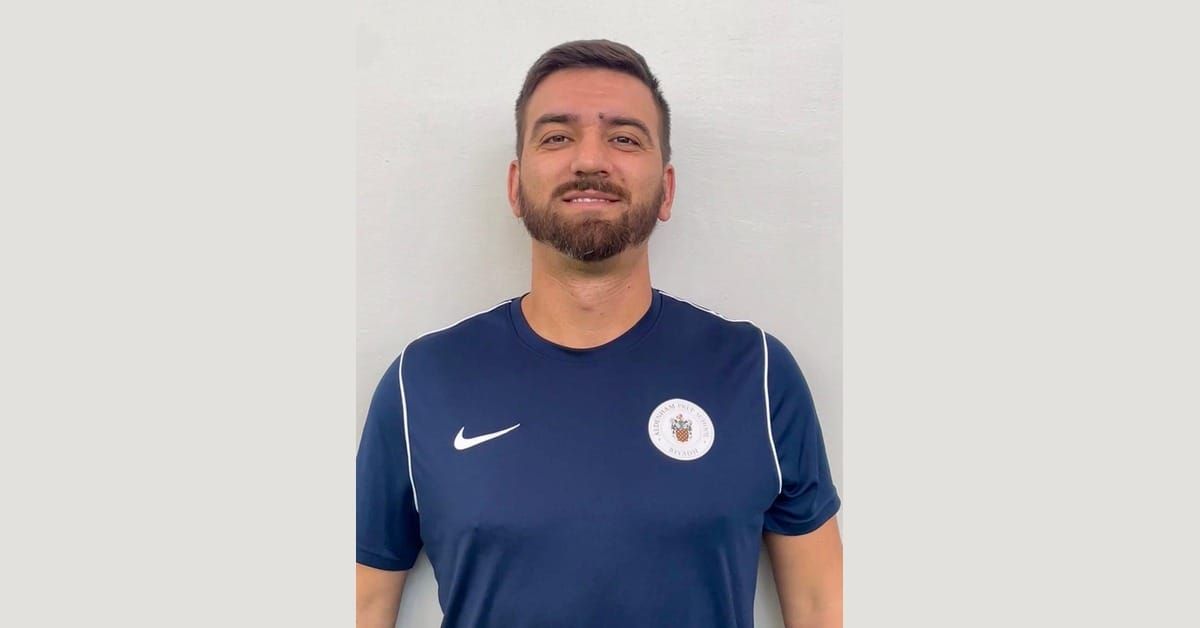
Ask Simone Canepa what he does and he will not lead with football. "If I had to keep it simple," he says, "I would define myself today as an educator through sport." The Italian holds a UEFA B licence through the FIGC and has since added the FA's coaching and safeguarding pathways; he studied Sports and Movement Science at the University of Turin; and he has coached inside two of the biggest academy brands in the game. But he treats the sports scientist, the schoolteacher and the football coach as one person doing one job — developing people, in his phrase, before athletes. He joins Football Agent Lab for his first written exchange with us.
The work itself is unusually specific for someone who spends his days with children. He takes tactical periodisation — built for elite adults — and brings it to under-tens by "putting the game at the centre" and stripping away the complexity. He coaches by designing situations and asking short questions rather than issuing corrections, and he deliberately lets patterns cross between his school PE classes and his football sessions, so that a solution discovered in one turns up, unprompted, in the other. Running under all of it is a comparative idea he has thought hard about: that Italy tends to start from the game and build the person through performance, while England starts from the person to develop the player — and that a modern coach needs both.
His map is a Gulf one. He coached AC Milan Academy under-10s in Kuwait — under the mentorship of Patrizio Billio, whom he remembers as a friend as much as a director — before moving to Riyadh, where he now runs the Juventus Academy through an international prep school and teaches PE by day. He is clear-eyed about the Saudi surge he is standing inside, and about what hasn't changed beneath it: the kids still just want to play. His ambition points toward leadership — an academy of his own one day, affiliated with a major brand, "somewhere in the world." But the line he ends on is smaller and warmer than that. He started a project two years ago with six children; today there are more than fifty, and what he wants, most of all, is to help people fall in love with football again.
Educator Through Sport · Youth & Grassroots Coach · PE Teacher
CURRENT ROLES
Soccer Coach · Juventus Academy Riyadh · 2024–present
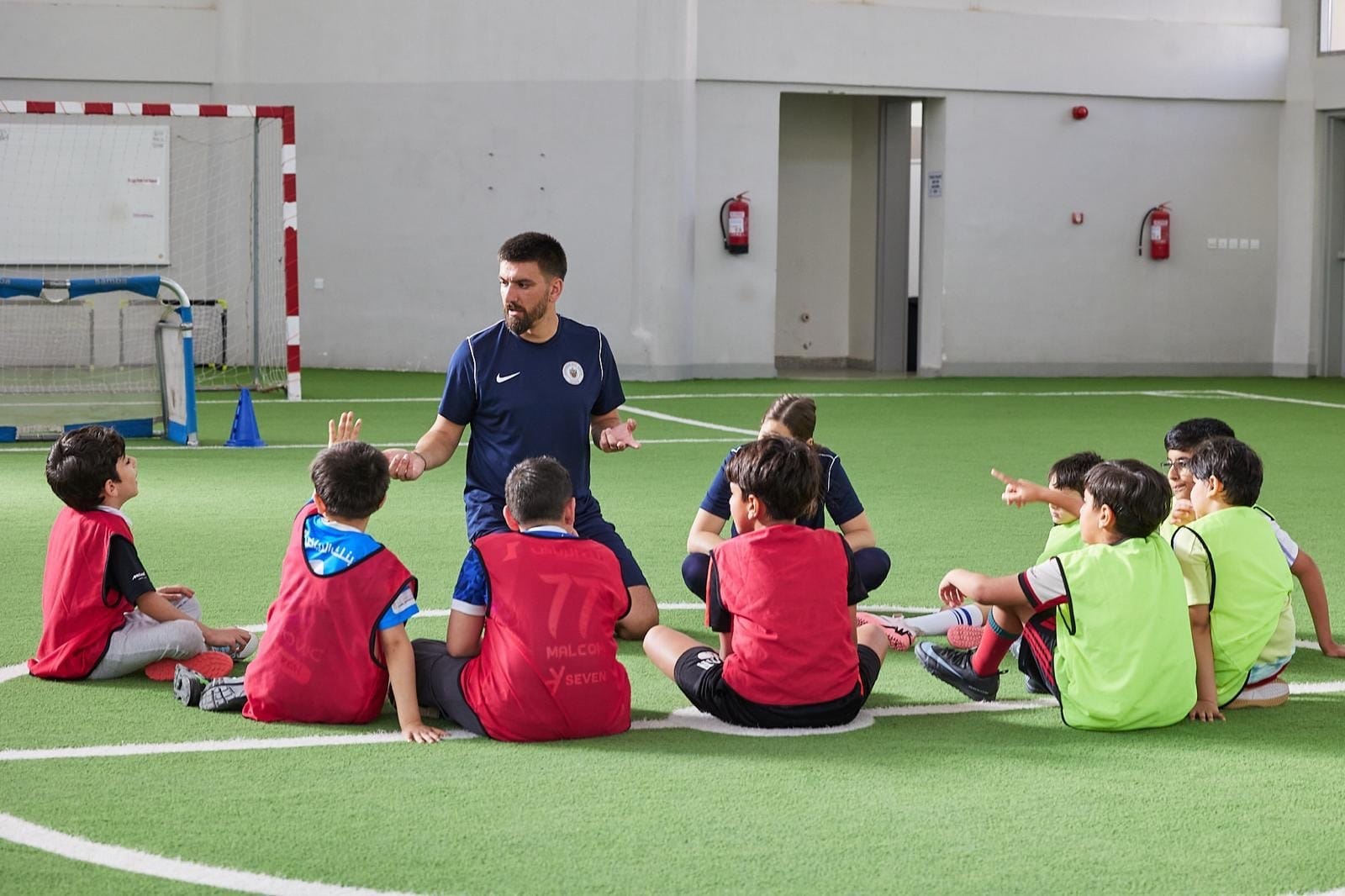
PE Teacher · Aldenham Prep School Riyadh (Saudi Arabia) · 2024–present
SELECTED CAREER
AC Milan Academy (Kuwait City) — U10 coach · 2020–2021
G.S. San Cassiano, Alba (Italy) — grassroots head coach · 2020–present (8 seasons)
PE teacher & sports operator across Italian schools · 2015–2024
EDUCATION
First-Class Master's, Sports Management & Marketing (Pegaso, 2024)
Master's, Management of Sport & Sporting Activities (Pegaso, 2021)
BSc, Sports & Movement Science (University of Turin, 2018)
QUALIFICATIONS
UEFA B (FIGC) · FA IFAiF · FA Safeguarding Children
LANGUAGES
Italian (native) · English · French · German (basic)
PART 1 · EDUCATOR THROUGH SPORT
Sports scientist, PE teacher, Juventus Academy coach — you're carrying a lot of hats at once. How do you introduce yourself these days?
If I had to keep it simple, I would define myself today as an educator through sport.
My journey started as a football coach — with a UEFA B license and experience in international youth environments such as AC Milan Academy and Juventus Academy — but over the years it has evolved into something broader. Today I work as a PE teacher in an international school, while continuing to coach on the field, always with a scientific approach rooted in sports science.
These different "hats" are not separate roles for me, but part of the same identity. In my daily work, I draw on the methodology and analytical mindset of a sports scientist, the educational values and pedagogy of a teacher, and the intensity and specificity of a football coach.
In short, I don't see them as separate roles, but as three complementary dimensions of the same profession: developing people — before athletes — through sport.
Developing people — before athletes — through sport.
PART 2 · THE PERSON AND THE PLAYER
You studied Sports and Movement Science at the University of Turin, then walked into a room full of three-year-olds. What's the first thing the textbooks told you that real life just tore up?
What university taught me was structure, theory, and a solid scientific foundation. Studying Sports and Movement Science at the University of Turin gave me the tools to understand how the body works, how to plan training, and how to analyse performance.
But the moment you walk into a room full of three-year-olds, you realise that theory alone is not enough.
Textbooks don't fully prepare you for the unpredictability of real environments — especially when you work with different age groups and in international contexts. Every group is different, every culture brings its own dynamics, and every child responds in a unique way. That's where everything changes. You have to adapt constantly, experiment with new teaching methods, try new ideas, and be willing to step out of your comfort zone. What works in theory might not work in practice — and what works with one group might fail completely with another. Over time, you learn that the key is not to follow a fixed method, but to build your own methodology, shaped by experience and by the children or players in front of you.
In the end, real learning doesn't come from textbooks — it comes from the field, from interaction, and from your ability to evolve every single day.
You already had your FIGC UEFA B. You didn't need the FA's IFAiF on top of it. So why go after it? And where do those two systems actually part ways when it comes to developing young players?
For me, pursuing additional qualifications has never been about necessity — it's about curiosity and professional growth.
I already held my UEFA B through FIGC, but choosing to also complete the IFAiF pathway with The Football Association was a deliberate decision. I'm constantly looking to expand my knowledge and expose myself to different coaching cultures around the world.
What really interested me is how differently these two systems approach player development.
In the Italian model, the focus is strongly on tactical and technical development. There is a deep attention to structure, game understanding, and precision — everything is built around improving the player's performance within the game.
In the English approach, by contrast, there is a much stronger emphasis on the emotional, relational, and psychological side of the player. The connection with the child, the ability to create an engaging environment, and the development of confidence and decision-making are central.
Where they really part ways is in priorities: Italy often starts from the game and builds the person through performance, while England often starts from the person to develop the player.
For me, both approaches are essential. If you want to grow as a coach today, you need to be able to integrate them — combining the tactical depth of the Italian system with the human and emotional awareness of the English one.
A lot of coaches quietly bypass the Safeguarding Children course if it isn't compulsory. You did it anyway. Did it change anything about the way you actually behave around kids on a daily basis — or is it more of a framework that sits in the background?
For me, it was never something to "tick off" — it was a conscious choice.
Understanding the personal, human, and relational aspects of working with children can only make us better coaches and educators. The Safeguarding Children course gave me a much deeper awareness of my responsibility, not just in terms of safety, but in how I communicate, how I observe, and how I build trust with each child.
Over time, I realised that this is one of the most important areas for a child's development — not only physically, but also psychologically and emotionally.
So yes, it definitely changed the way I behave on a daily basis. It's not just a framework sitting in the background. It influences how I speak to players, how I manage group dynamics, how I react in sensitive situations, and how I create boundaries that are clear but also supportive.
At the same time, it provides a structure — a professional standard that guides your decisions, especially in more complex situations.
In the end, a safe and positive environment allows everyone to perform better. When children feel secure, understood, and respected, they learn more, express themselves more freely, and enjoy the process. And as a coach, you also work with greater clarity and peace of mind.
PART 3 · GUIDED DISCOVERY
A three-year-old walks into your PE session and kicks a ball for the very first time. What are you looking at? What does that one kick tell you?
At that age, I'm not really looking at "football" yet — I'm looking at the child.
Three-year-olds are in a phase where they need to explore and discover everything around them, and sport is just one part of that process. That's why in my sessions I use a multi-disciplinary approach, giving them different types of movement experiences rather than focusing on a single skill.
That first kick can tell you many things — not in a technical sense, but in terms of attitude. It can show curiosity, willingness to try, engagement, and sometimes even the first signs of passion.
What matters most is not how they kick the ball, but how they approach the activity: Are they excited? Are they confident enough to try? Do they want to repeat the action?
At that stage, my role is to create an environment where they feel free to explore, make mistakes, and enjoy movement. Because that's where real development starts — not from technique, but from discovery.
Tactical periodisation was designed for elite adult football. You've brought it into sessions with children under ten. What made you think it belonged there — and what did you have to take apart and rebuild before it actually worked at that age?
Tactical periodisation has its roots in the Iberian context, but in my view it's not something limited to elite adult football — it's a way of thinking about the game that can be adapted to any level, including children.
What convinced me it could work with younger players is one key principle: putting the game at the centre of the learning process.
Even with under-10s, when training is built around real game situations, you can achieve incredible results — not just in technical and tactical growth, but also in decision-making, game understanding, and overall enjoyment. It becomes a learning process that is natural, engaging, and meaningful for them.
Of course, I had to adapt and simplify a lot.
With adults, tactical periodisation can be very structured and detailed. With children, you need to "take it apart" — reduce the complexity, use simpler language, create more playful and dynamic environments, and allow more freedom within the structure. The focus shifts from rigid organisation to guided discovery.
I also had to change my own approach as a coach. Instead of directing too much, I learned to design situations, observe more, and intervene at the right moment. That was probably the biggest shift.
Over time, by experimenting with different methodologies and adapting them to the age group, I found my own balance. When done properly, this approach is not only effective, but also fun, engaging, and highly educational — both for the individual player and for the team.
Let's get into the detail of it. Take us through one real session you ran with seven-year-olds — how it opened, what you asked them to do, and the moment something happened that made you stop and intervene.
A typical session with my seven-year-olds lasts around 90 minutes and is built around four key moments: activation, first game phase, a second phase to reinforce concepts, and a final game.
I always try to maintain a flexible, open-ended approach during training. I don't stop the session too often — especially at that age — because I want the game to flow and the learning to come through experience. When I intervene, I do it with simple and direct questions, helping them reflect rather than giving answers.
For example, one session started with an activation phase based on movement and coordination with the ball — simple tasks, lots of touches, but always with a playful element.
Then we moved into a small-sided game, something like 3v3 or 4v4, where the main focus was on creating space and recognizing options when in possession. I didn't explain too much at the beginning — I let them play and explore.
At one point, I noticed a recurring situation: one player kept dribbling into pressure, even when a teammate was free in a better position. That was my moment to intervene.
I briefly stopped the game and asked a couple of simple questions: "What did you see in that moment?" "What else could you have done?" "Where was your teammate?"
The goal wasn't to correct him directly, but to make him aware of the situation. After that, we restarted immediately — and within a few minutes, he began to look up more and made a pass in a similar situation.
That's the kind of intervention I look for: short, clear, and based on questions that stimulate their thinking.
In the third phase, I slightly modified the game to reinforce that behavior — for example, giving extra points for passes that break a line or lead to a goal. And then we finished with a free game, where they could express themselves without constraints.
For me, the key is that learning happens inside the game, not outside of it. My role is to guide, observe, and ask the right questions at the right time.
Learning happens inside the game, not outside of it.
You're designing psychomotor programmes in schools and coaching football separately. Is there a point where those two worlds deliberately feed each other — a pattern a child developed in your PE class that showed up on the pitch in a way you hadn't quite expected?
Absolutely — and for me, that connection is one of the most valuable parts of my work.
Very often, I deliberately blend what I do in PE with what I do in football, and vice versa. Psychomotor development in school creates the foundation, while football becomes one of the environments where those skills are expressed and refined.
It's important to always observe both motor and cognitive development. For example, a simple situation like a 2v1 is not exclusive to football — it appears in basketball, handball, rugby, and many other sports. What really matters is how the child perceives and solves that situation.
I've seen many cases where a child explored certain movement patterns or decision-making processes during a PE session — maybe through a game that had nothing to do with football — and then, unexpectedly, applied the same logic on the pitch.
That's when you realise the transfer is happening.
When a child independently recognises a situation and finds a solution, that becomes extremely valuable. It's something I observe carefully, reinforce positively, and then try to replicate across different contexts.
In the end, we are not just teaching a sport — we are developing adaptable, thinking movers. And when those connections start to appear naturally between different environments, it means the learning is truly meaningful.
U6 ends. U13 is next. Same afternoon, same coach. How does your thinking shift between those two sessions — and what's the thing that changes most fundamentally?
The first thing that changes is the objective.
Before every session, I ask myself: What do I want to achieve today? Where do I want to focus my attention? Those questions stay the same whether I coach U6 or U13 — but the way I get there changes completely.
Sometimes even the objective can be the same — for example, finishing or shooting. But the context around it is what I adapt: the size of the space, the number of players involved, the speed of the game, the intensity, the timing of interventions, even the type of questions I ask.
With U6, the focus is much more on exploration, basic coordination, and simple decision-making. Everything is more open, more playful, and less structured.
With U13, by contrast, the game becomes more complex. I can demand more in terms of tactical understanding, intensity, and responsibility within the team structure. The players are more ready to process information, so I can be more specific and detailed in my coaching.
What changes most fundamentally is not just the level — it's the way I communicate and design the environment around them.
I constantly adapt my sessions to the players in front of me. That's the real challenge of coaching — and also what makes it so interesting every single day.
Tell us about a real situation where a parent had a completely different read on their child's playing time or position than you did. How did that conversation go?
Situations like this are quite common in our environment, and over time I've learned to approach them in a positive and constructive way.
I remember a case where a parent felt their child should be playing more minutes and in a more offensive position, while I was using the player in a different role with more defensive responsibilities. From the parent's perspective, it looked like a limitation. From mine, it was part of the child's development.
The key was the conversation.
I always try to keep it calm, respectful, and based on objective reasoning. I explained clearly what I was observing: the player's current strengths, the areas we were trying to develop, and why that specific role could help him grow in a more complete way.
At the same time, I listened carefully to the parent's point of view. That's important — because in the end, we all want the same thing: to support the child in the best possible way.
When there is a different perspective, I believe it's essential to sit down, talk openly, and share ideas without creating conflict. Not everything has to be resolved immediately — sometimes it's about trusting the process.
Then, over time, through consistency and dedication, the player's development will show whether the path was the right one.
In the end, it's not about being right as a coach or as a parent — it's about working together to give the child a positive, constructive experience.
PART 4 · NO BORDERS
First session with the AC Milan Academy U10s in Kuwait. Did you coach it the same way you would have in Italy — or did something stop you before you even got going? What was the moment you knew you had to adjust?
I went into that first session with the same methodology I was using in Italy — but with an open mind, ready to adapt if needed.
I was very fortunate to have the support of Patrizio Billio, who was the technical director at the time. I have a truly special memory of him — he was a mentor and, above all, a friend.
What made a real difference is that he gave me complete trust and freedom from the very beginning. He let me lead that first session independently, face the challenges on my own, and then afterwards we reflected together — discussing what worked well and where I could improve.
That approach was incredibly valuable for my growth.
Interestingly, the methodology I brought from Italy proved to be effective also in Kuwait. That was an important moment for me, because it showed that a solid coaching philosophy can travel — it's not limited by geography.
Of course, there are always small cultural and contextual adjustments to make, especially in communication and group dynamics. But I didn't feel the need to completely change my approach before starting.
If anything, the real moment of awareness came after the session — when, through feedback and reflection, I realised that what truly matters is not where you are, but how well you can observe, adapt, and stay consistent with your principles.
That experience confirmed something I strongly believe: good methodology has no borders — but good coaches must always be ready to adjust within it.
You're in the KAFA Championship, coaching Kuwaiti kids through an Italian club's methodology. Where did those two things pull hardest against each other — and how did you manage it?
To be honest, I didn't experience it as a clash as much as I expected — and that was mainly because of the players.
The Kuwaiti boys were incredible. Some of them were travelling two hours by bus to come to training, and then another two hours to go back home. That tells you everything about their mindset. There is a real desire to grow, a strong passion, and a deep respect for football.
Because of that, they adapted very quickly to a more structured and professional environment. Also, the work done in previous years helped — they were already prepared to absorb this kind of methodology.
If there was any "tension," it was more about balancing structure with their natural expressiveness. But instead of forcing one over the other, I tried to guide them within the structure, leaving space for their creativity inside it.
What I appreciated most was their approach to the game: serious, focused, and aligned with the objectives we set as a team. Everything we worked on during the training period was reflected in matches.
In the end, it wasn't about managing a conflict between two worlds — it was about bringing them together. And thanks to their attitude and commitment, that process became much more natural than expected.
You don't speak Arabic. A child on the training ground doesn't understand what you're asking — or reacts in a way you didn't see coming at all. How do you actually get through that moment?
It does happen sometimes, especially in an international environment — but in sport, and particularly in football, communication doesn't rely only on words.
Very often, demonstration is more powerful than explanation.
If a child doesn't understand what I'm asking, the first thing I do is show them. I use my body, the ball, positioning — I recreate the situation instead of over-explaining it. That immediately makes things clearer and removes the language barrier.
I also keep my language as simple as possible: a few key words, clear gestures, and consistent cues that they can start to recognise over time.
What helps a lot is the group itself. Children naturally support each other — sometimes just through a look, a movement, or by copying what a teammate is doing. That shared understanding builds very quickly.
And if a player reacts in an unexpected way, I see it as feedback. Maybe my message wasn't clear, or maybe they interpreted the situation differently. Either way, it's an opportunity to adjust.
In the end, connection comes before language. If the environment is positive and the message is clear through action, you can communicate effectively even without speaking the same language.
PART 5 · THE PLAYER AT THE CENTRE
AC Milan Academy, Juventus Academy — you've been inside both. Where do you feel the two clubs split most clearly when it comes to actually developing a single player, day to day?
Both are top-level environments, and being part of both has been incredibly valuable for my development as a coach.
Where I feel they differ most is in their day-to-day focus and identity.
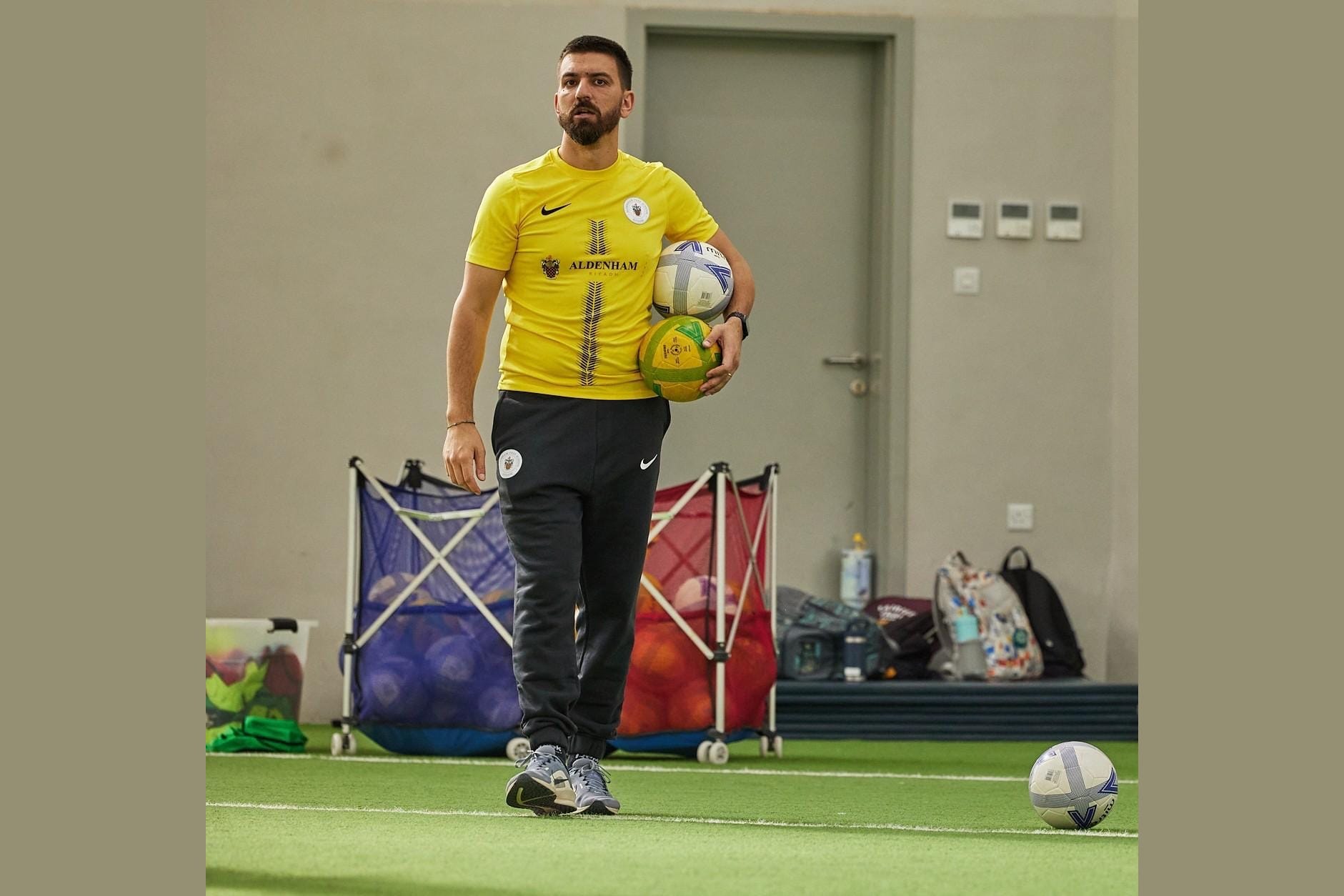
Juventus FC has built an incredibly strong global brand. There is a clear attention to structure, image, and consistency across all its international projects. The strength of the club's history and the champions who have played there has allowed Juventus to expand worldwide, and this is reflected in how well they promote and organise their methodology. There is a strong sense of identity that is carried consistently across every project.
On the other side, AC Milan has, in my experience, a very deep sense of attachment to the shirt and a strong focus on youth development pathways. There is great attention to the individual player, with detailed programmes and modern training environments designed to support long-term growth.
In practical, day-to-day terms, Juventus stands out for its global consistency and organisational strength. Milan, on the other hand, places a slightly stronger emphasis on the individual player's developmental journey — tracking their growth within each project more closely.
That said, both environments have given me a complete and high-level grounding. Experiencing both has allowed me to take the best from each — combining structure, identity, and organisation with a strong focus on player development and personal growth.
There's always a tension between carrying a club's methodology and trusting your own eyes. Has there been a moment at Juventus where those two things pointed in opposite directions? What did you do?
At Juventus FC, the methodology is very clear. Coaches are given strong guidelines, modern tools, and well-structured training plans designed to support player development.
But within that structure, there is always space — and responsibility — for the coach.
There have been moments where what I was seeing on the pitch didn't perfectly match what was on paper. Maybe the group needed more time on a certain concept, or a different type of exercise to truly understand it.
In those situations, I don't see it as a conflict, but as part of the job.
The key is adaptation.
The methodology gives you direction, but your eyes — what you observe every day — tell you how to apply it. I've learned that you can follow the club's principles while still adjusting the way you deliver them, based on the players in front of you.
For me, there is one priority that guides every decision: the player.
We can follow every guideline, we can apply every tool available — but always with balance, awareness, and the child's best interest at the centre. That's where methodology and coaching instinct come together.
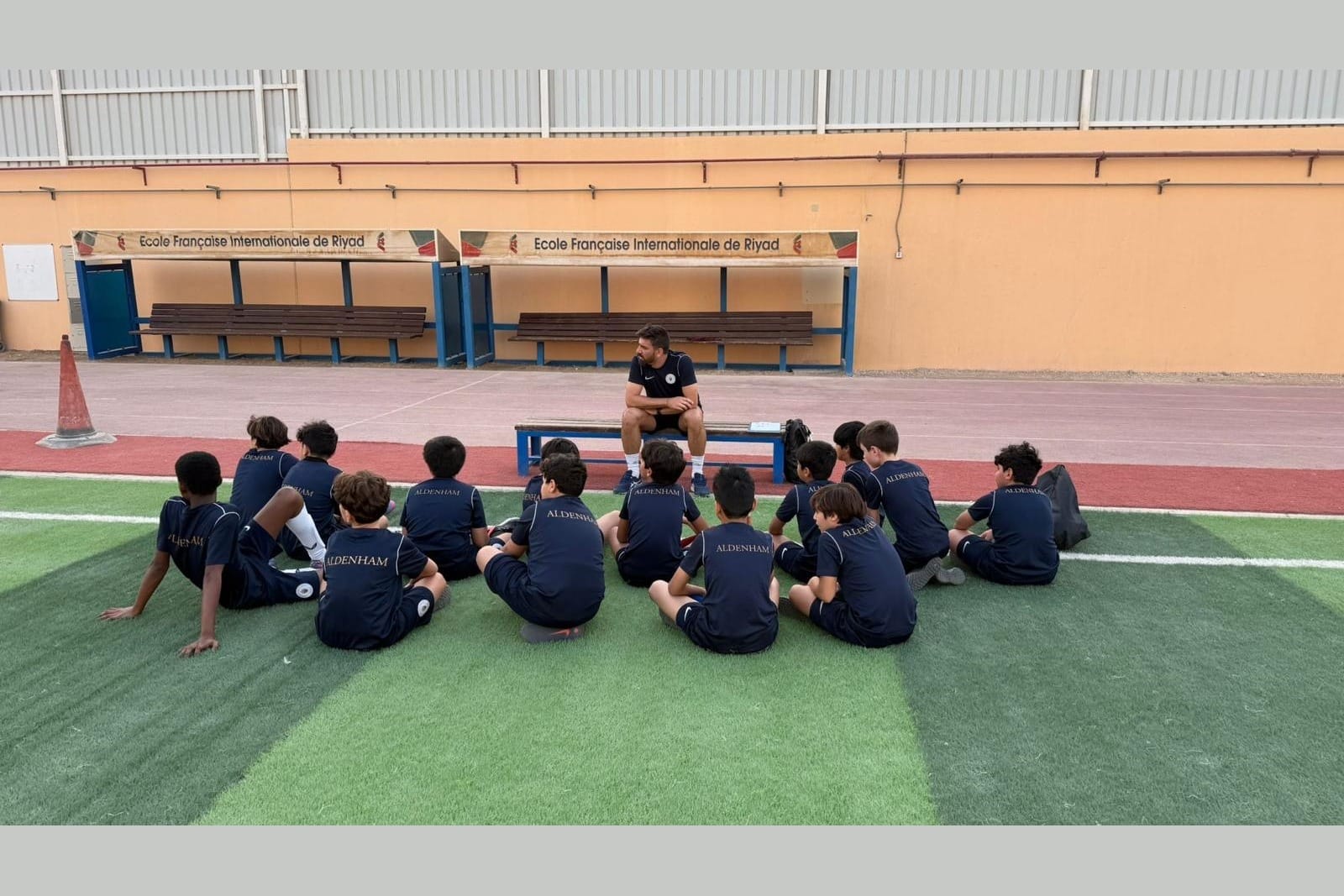
The Juventus Academy in Riyadh sits inside a prep school. A kid finishes their last class, changes out of their uniform, and walks onto your pitch. What do you do with that transition time before the session properly begins?
That transition is a very important moment for me — those first five minutes can shape the whole session.
I like to interact with them straight away. I ask simple questions: How was your day? How are you feeling?
It helps me understand their mood, their energy, and their willingness to train that day. In that short time, I'm already observing a lot.
My goal is to help them shift focus, but in a light and natural way. Football should never feel like stress — it has to remain something they enjoy. Many kids arrive with the energy of the school day still inside them, and my role is to guide that energy into the session.
There is also a clear change of environment and role.
In the morning, I am their teacher. In the afternoon, I am their coach. Some aspects are similar, but the objectives are different. At school, it's often "I try to do" — learning through attempt. On the pitch, it becomes "I commit to improving" — a more focused, intentional effort.
Helping them make that mental switch — from classroom to pitch, from student to player — is a key part of my job. And it starts with connection, not instruction.
In the morning, I am their teacher. In the afternoon, I am their coach.
The Saudi investment in sport is hard to miss right now. But how does it actually feel at ground level — in youth football, with the kids in front of you? Think about three years ago versus today. What's genuinely different, and what's still the same?
In the last few years, the investment in sport in Saudi Arabia has been very visible — not only at the top level, but also in youth football.
Three years ago, the environment was already developing, but today you can clearly feel a different level of energy and ambition. The whole football ecosystem has grown: more people attending matches, more media attention, stronger marketing and commercial activities, and the presence of more international — especially European — professionals within clubs and academies.
This has had a direct impact even at ground level.
With the upcoming 2034 FIFA World Cup, there is a real sense that the country is building something long-term. Facilities are improving, opportunities are increasing, and the overall standard is rising.
But at the same time, some things haven't changed — and that's the most important part.
The passion of the kids, their desire to play, to improve, to be on the pitch — that is exactly the same. The enthusiasm, the smiles, the willingness to learn: those are constant.
So while the context around them has evolved significantly, the essence of youth football remains unchanged. And in the end, that's what matters most — because all these investments only have real value if they continue to support the development and experience of the children on the pitch.
PART 6 · KEEP EVOLVING
Out of everyone you've coached, is there a child you look back on and feel you got it wrong — that you didn't give them what they needed? What did you miss?
That's a very honest question — and I think every coach who reflects on their work will have that feeling at some point.
I wouldn't point to one specific child, but I am aware that earlier in my career there were situations where, with the experience I have today, I would have acted differently.
This profession doesn't allow you to stand still. You have to keep evolving.
If I had coached 10 or 15 years ago the way I coach today, I'm sure I would have reached certain outcomes more effectively, or simply managed some situations in a better way. Maybe I would have understood a player's needs earlier, or chosen a different approach to support their development.
What I might have missed at times was timing — recognising sooner what a child really needed, whether that was more confidence, more freedom, or a different kind of challenge.
But that awareness is also part of growth.
I see it as a continuous learning process. Every experience, even the ones where you feel you could have done better, becomes part of your development as a coach and as a person.
The new generations evolve very quickly, and we have to keep up — not only with methodologies, but with how we understand and connect with them.
That's why, for me, the most important thing is to keep improving every day. Because the better we become, the more we can give to the people we work with.
You've got a First Class Master's in Sports Management now. In practical terms — what are you actually building toward over the next five years beyond the training ground? Academy director, project developer — what's the target?
In the last few years, I've been investing a lot of energy into exploring new opportunities worldwide — both in sport and specifically in football.
Alongside coaching, I've gained experience in managing teams, planning seasonal activities, organising tournaments and training programmes, as well as dealing with budgets and sponsorships. That has given me a broader professional perspective beyond the pitch.
Over the next five years, my goal is to move toward a leadership role.
I see myself developing into an academy director or a project developer — someone who not only coaches, but also designs and manages football programmes from a strategic point of view.
My long-term ambition is to lead my own academy, ideally affiliated with a major international brand, somewhere in the world. I want to build a structured environment where everything is planned with a clear vision: seasons, competitions, training methodologies, and staff development.
But above all, I want to create a team — a group of young, motivated professionals who share the same passion and desire to grow.
For me, it's about combining what I've learned on the field with a broader organisational and managerial vision. Not just developing players, but building a system that can develop people, coaches, and opportunities over time.
PART 7 · FROM SIX TO FIFTY
Ten years from now — what do you want written next to your name? And what's the one thing you're doing right now, today, that's actually moving you toward it?
The work I'm doing both at school and with the Juventus Academy is opening many doors for me. I'm very proud of the path I'm on, and in Riyadh I've definitely found an environment where I feel respected and valued.
My goal is clear: to stay in the world of football and continue developing projects in Saudi Arabia, while also keeping a strong connection with Italy, my home country.
I genuinely believe we need to help people fall in love with football again — to bring back passion, enjoyment, and a genuine connection to the game.
I started my own project two years ago with just six children. Today, we have more than fifty. That growth is not by chance — it comes from consistency, commitment, and dedication.
For me, that's the key message: with the right mindset, clear values, and serious work, goals can be achieved over time — but, most importantly, they can be achieved with quality and purpose.
We need to help people fall in love with football again.
CLOSING
The word Simone Canepa keeps coming back to is not a formation but a person. He is an "educator through sport," and the phrase is not modesty — it is a method. He watches a three-year-old's first kick for attitude, not technique; he teaches seven-year-olds by asking three short questions and getting out of the way; he lets a pattern learned in a PE class resurface, unbidden, on the pitch. Even his most technical move — bringing tactical periodisation down to under-tens — is really an argument that the game itself, kept at the centre, is the best teacher a child can have.
He has thought seriously about where coaching cultures diverge, and refuses to choose between them: Italy building the person through the game, England building the player through the person, and a coach worth the name integrating both. What he carries between countries is a conviction he tested in Kuwait and confirmed in Riyadh — that good methodology has no borders, provided the coach stays humble enough to adjust inside it. The mentor he names, Patrizio Billio, gave him the freedom to fail and reflect; it clearly stuck.
His horizon is a managerial one — an academy of his own someday, affiliated with a major brand, "somewhere in the world" — and he is candid that he is still learning, still sure he would coach some earlier players better today. But he does not end on ambition. He ends on a count: six children two years ago, more than fifty now, and a wish that reads less like a career plan than a calling — to help people fall in love with football again. Football Agent Lab will be watching where that takes him.
ABOUT THE AUTHOR
SEOK LIM Editor · Football Agent Lab
FIFA-licensed football agent and steel market analyst with over a decade of experience in commodity research. Football Agent Lab publishes interviews and market reports at the intersection of football, agency work, and global markets.


