ScoutDecision — Where Your Data Meets Football (Part 1 of 2)
ScoutDecision began as a Portuguese university project and is now a football-operations platform its team says is used by 180-plus scouts, agents and clubs. In part one of two, business developer Miguel Gouveia tells Football Agent Lab why football's scattered work needs one structured home.

This is the first of a two-part conversation. ScoutDecision (https://www.scoutdecision.com/) is a football-operations platform that began, according to its team, as a university Decision Support Systems project in Portugal and has since grown into a subscription software environment for scouting, recruitment, coaching and administration — with a "Connect" marketplace and a set of WhatsApp communities bolted alongside it. Guiding Football Agent Lab through it is Miguel Gouveia, the company's Portuguese business developer, who describes his own role as the bridge between the product and the football market.
The problem the platform sets out to solve is a familiar one to anyone who works in the game: important information scattered across spreadsheets, folders, chat threads and memory. ScoutDecision's pitch is to pull that into a single structured place. The company frames the stakes in numbers — Miguel cites figures it uses publicly, that a majority of clubs overspend on transfers and that injury treatment eats into revenue — and argues the pain is sharpest not at the top of the game but in its middle and lower tiers, where a single bad decision carries more weight. Those claims are ScoutDecision's own; what this interview does is let the company make its case and explain how the software is meant to work.
Part one stays with the foundations: where the idea came from, the philosophy behind it, what the platform actually does, the community that has formed around it, and the "professional operating system" ScoutDecision says it wants to become. It ends where part two begins — with Asia. In the second conversation, Miguel takes the platform east: first into Japan, then toward Korea and the wider region, and toward the agents and scouts for whom, he argues, structure and access matter most.
Football-operations platform · scouting · recruitment · player management · transfer community
WHAT IT IS
An integrated software environment that aims to connect scouting, recruitment, coaching, medical and administrative work in one place — plus "Connect," a club-and-agent marketplace, and WhatsApp communities linking clubs, agencies and professionals.
ORIGINS & MILESTONES (per ScoutDecision)
2021 — began as a university Decision Support Systems project
2022 — first platform release, focused on scouting
2023 — expanded to full club operations, then to agency workflows
End of 2024 — launched Connect and Club Requests
2026 — first in-person Football Matchmaking event
REACH (per ScoutDecision)
180+ active subscribers · data imports from Excel and Wyscout · transfers reported through Connect and the marketplace
STATED PHILOSOPHY
"Listen to the field first, and build technology from genuine need." · Save time, improve decision-making · Go beyond information management to connect people
THIS ARTICLE
Part 1 of 2 — Part 2 covers ScoutDecision's move into Japan and the wider Asian market.
PART 1 · FOOTBALL MEETS ENGINEERING
Miguel, let's start with something personal. Who were you before ScoutDecision? Were you someone who played football, or did you come from a completely different background?
Before ScoutDecision, we were already deeply connected to football, but also to engineering and structured thinking. What really defined us early on was not just a passion for the game, but a curiosity about how decisions are made inside it — how clubs evaluate players, how information flows, and why some decisions succeed while others don't.
ScoutDecision actually started as a university project. We wanted to combine those three things: football, engineering, and decision-making. The idea was simple at first — can we build something that helps people in football make better, more structured decisions?
That project became the foundation. Over time, it evolved from an academic concept into a real platform, but the core idea hasn't changed. It was always about bringing clarity and structure to a space that is still very fragmented.
And then ScoutDecision came along. You joined as a Business Developer — what does that actually mean day to day? What kind of person are you in this team?
For me, business development at ScoutDecision means being the bridge between the product and the football market. Day to day, that can mean speaking with scouts, agents, clubs, and partners, understanding how they work, where their problems are, and how the platform can genuinely help them.
Inside the team, I'd say I'm someone focused on connection and translation. I translate market needs into opportunities for the company, and I also translate the product into language that football professionals immediately understand. In a space like this, people don't buy software just because it has features — they buy it because they feel it solves a real problem in their daily work.
You now have over 150 active subscribers and the growth numbers look strong — but getting there couldn't have been easy. Was there a moment where things felt really hard? How did you get through it?
Yes, definitely. And just to update that number — we're now at over 180 subscribers, which is great to see (and a bit surreal when you remember where we started).
But getting here wasn't easy. One of the hardest parts was earning trust in a very traditional industry. You're asking people to change the way they work, to centralize important information, and to rely on something new — that doesn't happen overnight. There were moments where progress felt slow, where conversations didn't convert, or where people liked the idea but weren't ready to change. That's probably the most challenging phase.
The way through it was consistency. Keep listening, keep improving the product, and keep showing real value. At some point, things start to click — one user becomes two, two become ten, and suddenly you look back and realize you've built real momentum. And now, seeing over 180 clients using the platform, it feels like those difficult moments were just part of the process — even if they didn't feel like it at the time.
PART 2 · WHERE IT HURTS MOST
The way ScoutDecision framed the problem was interesting. You came out with data showing that 58% of clubs overspend on transfers, and that injury treatment eats up 13% of revenue — and you pointed at the middle and lower tiers of football as where this really hurts. Why there first, before the big clubs?
Because that is where inefficiency hurts the most. Big clubs can survive bad decisions more easily. Smaller and mid-level clubs usually can't. One wrong signing, one poorly managed process, one lack of coordination between departments — these things have a much bigger impact when budgets are tighter.
That is why this problem matters so much there. ScoutDecision is very aligned with the reality that many football organizations still rely on spreadsheets, scattered files, WhatsApp messages, and disconnected workflows. The value of structure is often even higher in those environments because every decision has more weight. ScoutDecision's public messaging consistently focuses on replacing scattered information and helping football organizations centralize reports, databases, planning, and communication.
"Where your data meets success" — that line stayed with me. But I'd imagine success means something different to a scout, an agent, and a coach. What does it mean to you, in your own words?
To me, success is better decisions made with more clarity.
For a scout, that can mean identifying the right player faster and presenting that case clearly. For an agent, it can mean organizing opportunities properly and acting at the right moment. For a coach, it can mean connecting planning, feedback, and player monitoring in a way that improves daily work. But underneath all of that, success is the same thing: reducing noise, reducing wasted time, and increasing the quality of decisions.
That's what I think the platform is really about.
Success is better decisions made with more clarity.
Football is still very much a world of gut feeling and personal relationships. When you first walked into that world with a data tool, how did people respond?
At first, some people were cautious — which is normal. Football is a relationship-driven environment, and many professionals are understandably skeptical of anything that sounds too technological or too rigid.
But I think the important point is that ScoutDecision was never built as something that fights football culture. It works with it. The platform doesn't try to remove relationships or intuition; it tries to give them structure. You still need experience, context, and football knowledge. What the software does is make sure important information doesn't get lost, and that the work around those decisions becomes more organized and repeatable.
PART 3 · ONE ENVIRONMENT
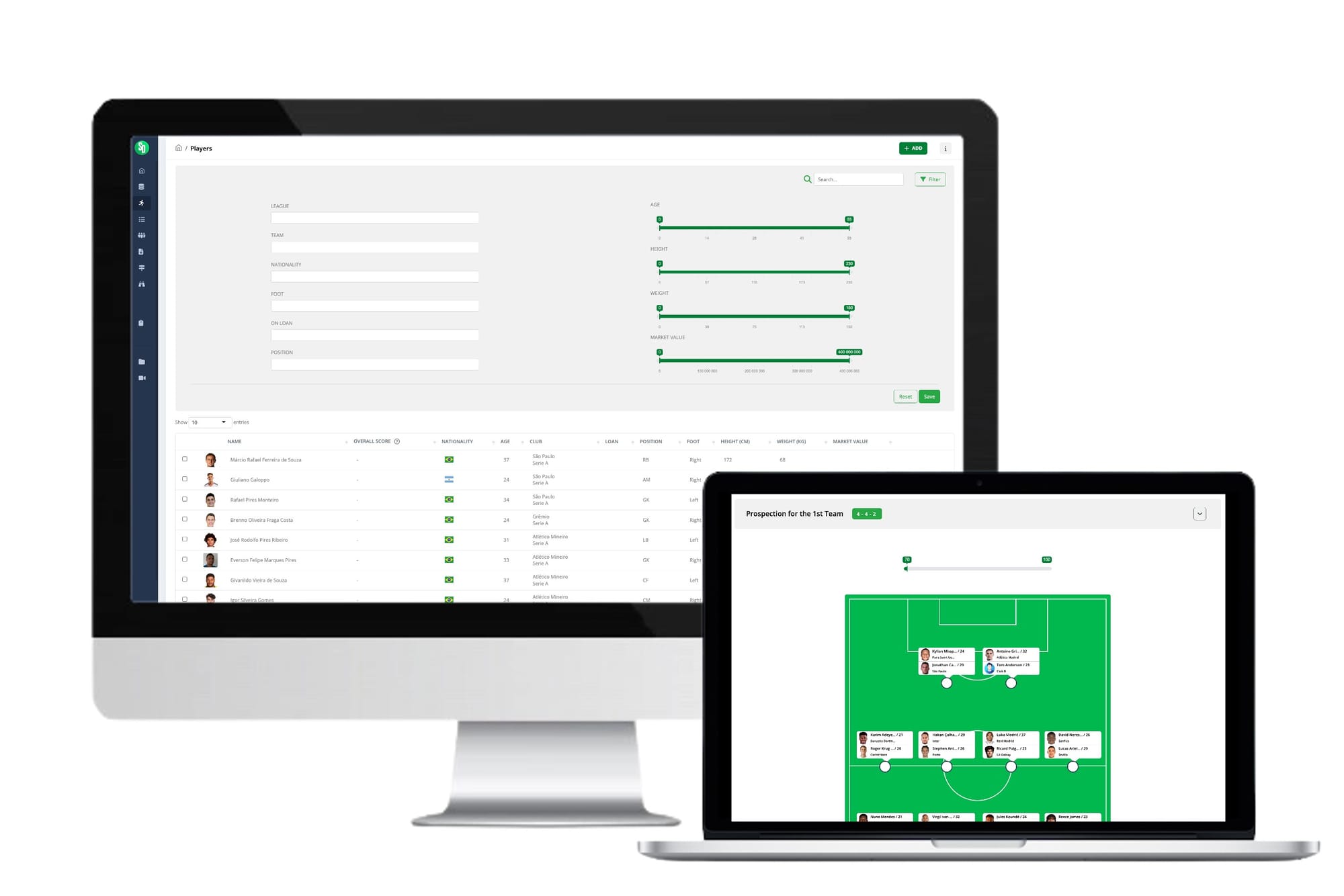
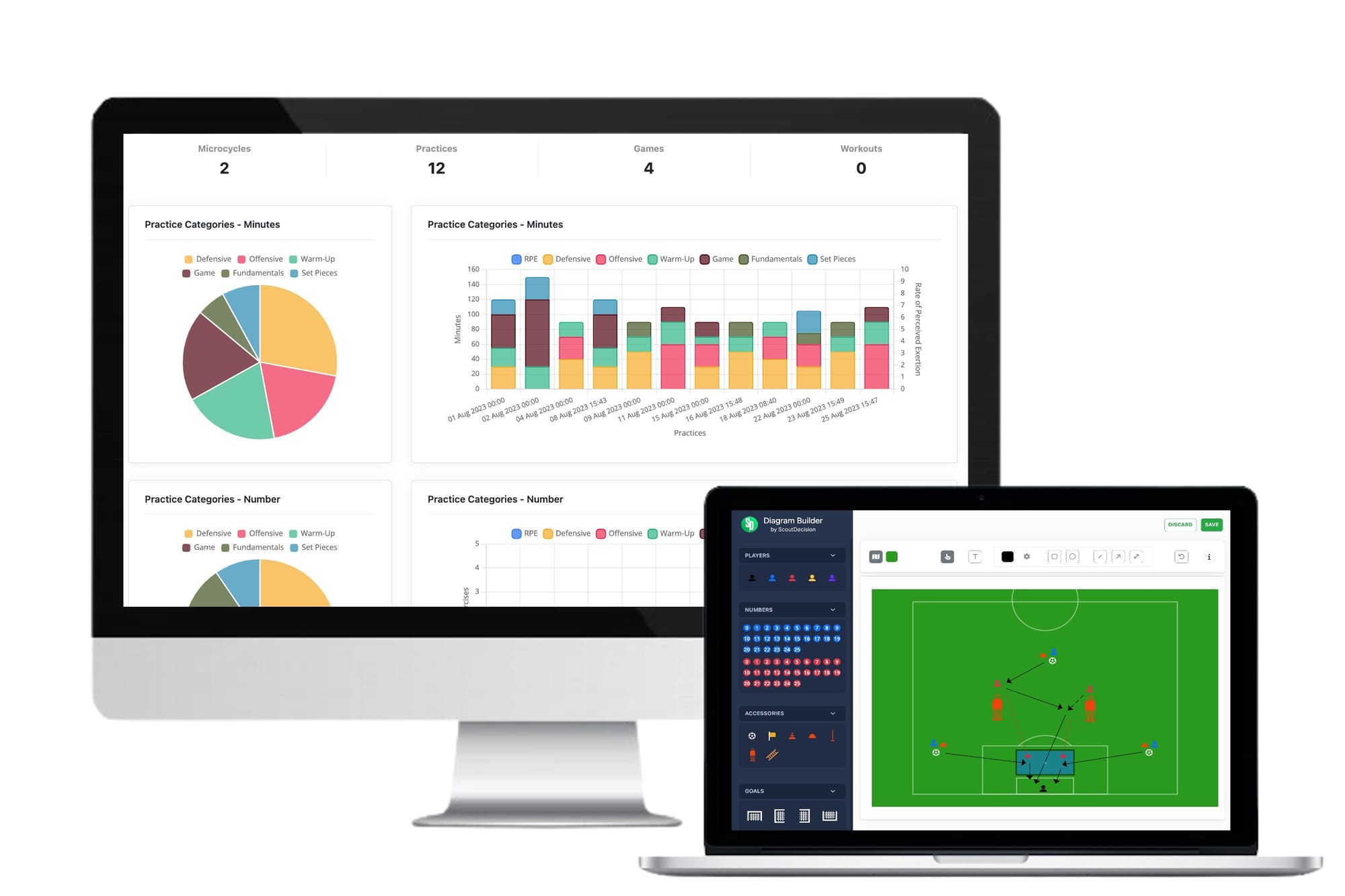
ScoutDecision tries to cover a lot of ground — player databases, scouting reports, training planning, wellness monitoring, transfer marketplace, all in one place. With that kind of scope, you sometimes hear "does everything, masters nothing." How do you think about that?
That criticism is fair in general, but I think the key question is whether the platform is broad in a disconnected way or in a structured, connected way.
ScoutDecision is broad because football work is broad. In reality, scouting, recruitment, coaching, communication, and decision-making are all interconnected. The goal is not to do "everything" just for the sake of it — it's to bring those pieces into one coherent environment so people don't have to jump between tools or lose information along the way.
At the same time, we don't expect every user to use everything. In fact, many of our clients only use one part of the platform, for example, just the scouting database. The platform is designed so that each part is strong and useful on its own.
The idea is to be valuable at every level of use, not only when you adopt the whole system, and, over time, some users naturally expand into other areas, but it's never forced.
Scouts, agents, coaches — they can all use the platform. But in practice, who gets the most out of it? And is there a type of user who you expected to engage more but didn't?
In practice, the users who get the most immediate value are usually the ones dealing with volume and constant follow-up — scouts, agencies, and clubs managing recruitment workflows. They feel the pain of disorganization very quickly, so they also feel the value quickly.
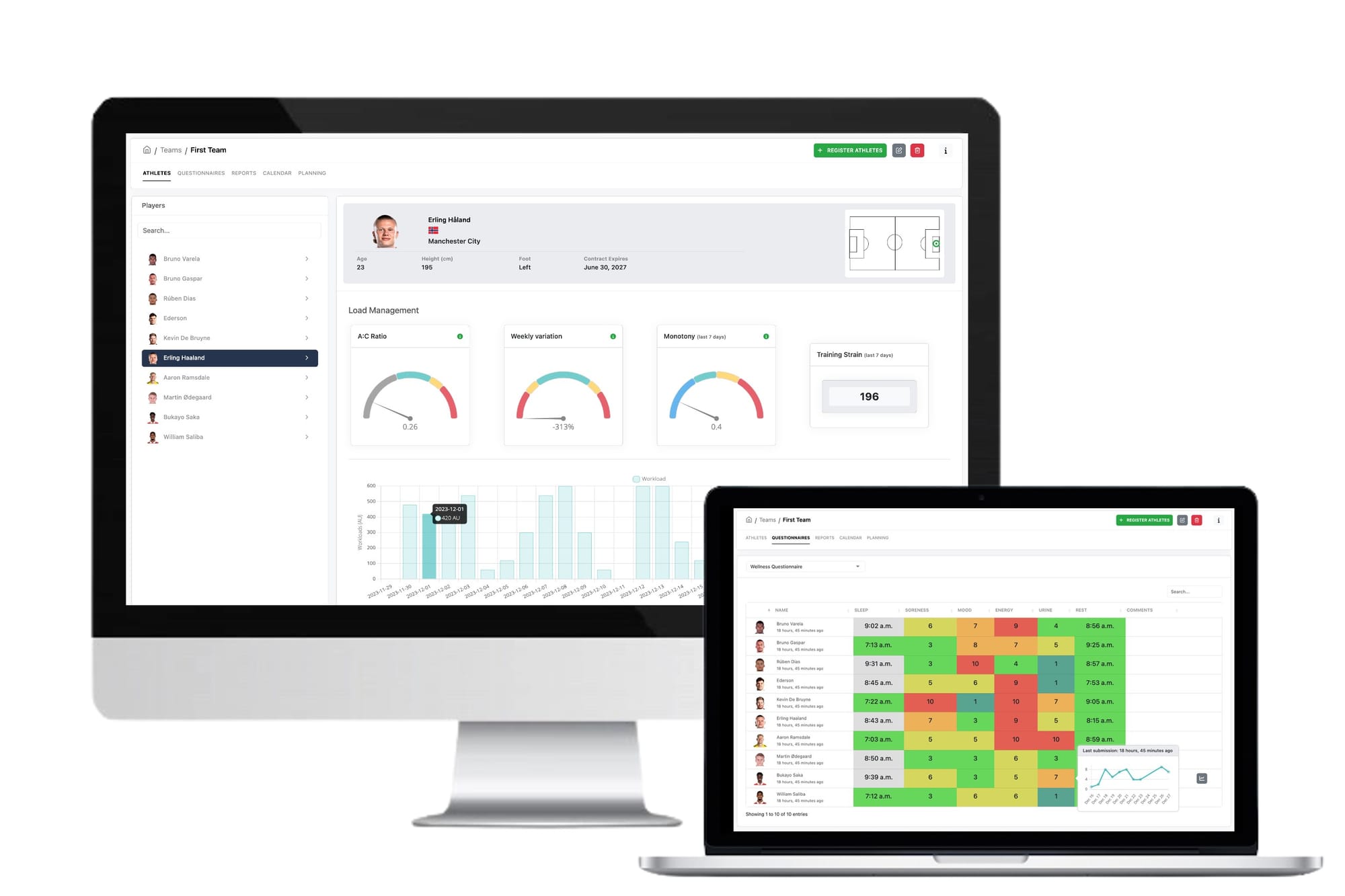
Coaches also benefit, especially with training planning and wellness monitoring, but their relationship with software can depend more on the club context and existing habits. So I'd say the strongest immediate fit is often with people working closest to player recruitment, talent identification, and portfolio management. That matches how ScoutDecision publicly describes its scouting, club, and agency workflows.
What happens when someone who already uses Wyscout or StatsBomb sees ScoutDecision for the first time? You can import data from those platforms — how does that actually work in practice?
Usually the first reaction is that ScoutDecision is not trying to replace those tools in their core strengths. Wyscout and StatsBomb are powerful data and video environments. The role of ScoutDecision is different: it helps professionals take that information and turn it into an organized internal process.
Publicly, ScoutDecision highlights imports from Excel and Wyscout, and third-party descriptions also note imports from providers like Wyscout and StatsBomb. In practice, that means users can bring player information into a workspace where they manage reports, comparisons, shortlists, contacts, requests, and decisions in a more structured way. So it is less about "either/or" and more about "how do we operationalize the information we already have?"
Customization is one of your strengths. But scouts, agents, and clubs all want different things — what parts of the platform do people actually touch the most? Any requests that caught you off guard?
The most-used areas are usually the ones closest to daily workflow: player databases, reports, filters, shortlists, sharing tools, and transfer-related communication. For agencies, contact tracking and player presentation are important. For clubs, it's often database organization, cross-department visibility, and recruitment planning. For coaches, it's training organization and wellness monitoring.
What tends to stand out is how specific football people can be about workflow. They don't just want software; they want software that reflects how they think. That's why customization matters so much. Publicly, ScoutDecision emphasizes customizable departments, permissions, player/report sharing, training drill libraries, wellness questionnaires, and collaboration across roles.
A club recently adopted ScoutDecision as its official scouting database — a very different conversation from an individual subscription. How did that come about? And once a club is actually using it, what's the first thing that changes on the ground?
From our side, club adoption usually starts when there is a clear recognition that important work is too scattered. A club may already have good people and good intentions, but if information is spread across files, messages, and separate tools, decision-making becomes slower and less consistent.
Once a club starts using ScoutDecision, the first visible change is usually structure. Reports become easier to find, player information becomes searchable, and collaboration becomes more aligned.
PART 4 · THE HUMAN LAYER
You're a software company, but you're also running a WhatsApp community. How did that even happen? Was it something you set out to build, or did users just start gathering and you found yourself in the middle of it?
I think it came from the reality of football. This industry moves through relationships, trust, and conversations. So while software solves a structural problem, community solves a human one.
ScoutDecision publicly presents multiple WhatsApp communities for scouts, agents, coaches, and licensed agents, and frames them as places to exchange ideas, opportunities, requests, and knowledge. That suggests the community is not just accidental — it has become a real extension of the platform's mission.
Software solves a structural problem, community solves a human one.
What kind of conversations actually happen in there? Are people sharing player information, talking transfers, or is it something else entirely?
It's a mix. Some conversations are practical — player requests, profiles, transfer needs, market opportunities. Others are more professional and relational — questions about scouting, career development, contacts, and how people work in different markets.
That balance is important. If a community is only transactional, it becomes cold very quickly. If it's only social, it loses business value. The strength is in combining useful football conversations with real networking. ScoutDecision's agent communities are publicly described as places to propose players, share requests, make more deals, and exchange knowledge.
The Matchmaking Event — you're bringing clubs and agents together online for one-on-one meetings. How did the football world take to that? Was it what you expected?
I think people responded well because the idea is simple and practical. Football networking is valuable, but it is often informal, hard to access, or dependent on being in the right place physically. Matchmaking makes that more structured.
ScoutDecision describes the event as a full day of online one-on-one meetings for clubs, agents, scouts, and analysts, aimed at helping them expand networks, prepare for transfer windows, and meet decision-makers directly. That speaks to a real need in the market: faster, more direct, more organized access to relevant people.
As the community grows, it feels like business could naturally start flowing through it — agents sharing players with each other, collaborating, maybe splitting fees down the line. Is that a direction you've thought about?
Naturally, when you bring professionals together in a structured environment, business starts to emerge from that. That's almost inevitable. But for us, the priority has always been to build the right conditions first: trust, relevance, and useful interaction.
What's interesting is that we're already seeing that happen organically. We've received multiple accounts from community members saying they've closed deals through the connections and conversations that started inside ScoutDecision's WhatsApp communities. That's not something we forced — it's something that came from people finding value in being connected in the right environment.
In football, collaboration can take many forms — sharing players, making introductions, working together on opportunities, sometimes even co-operating across markets. So yes, it's definitely a direction we're aware of, but we believe it works best when it grows naturally from real interaction, not when it's artificially pushed.
PART 5 · DEMAND MEETS SUPPLY
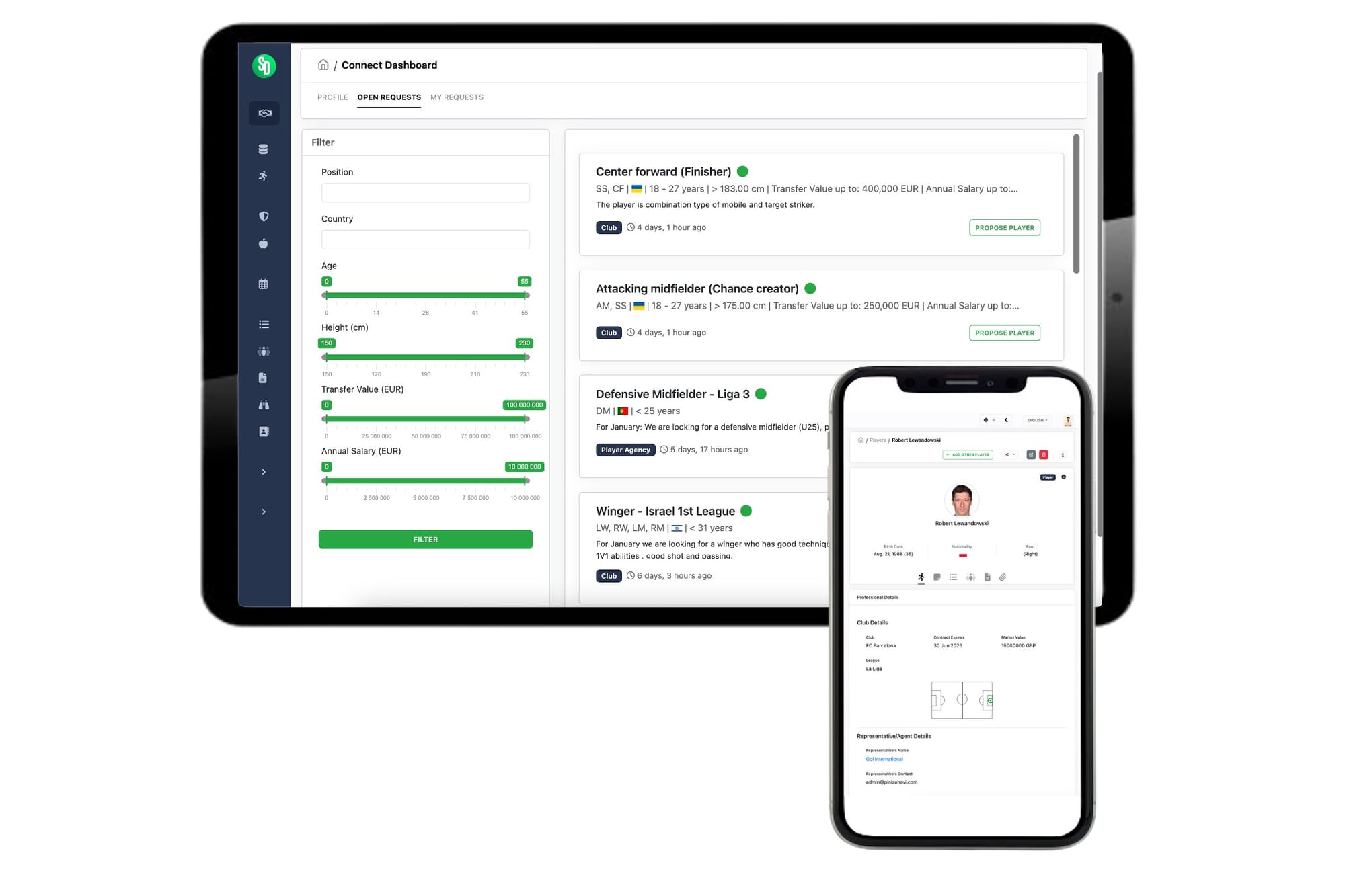
On the Transfer Marketplace — clubs post what they're looking for, agents propose players. Has there actually been a transfer that came through it? What was that moment like?
Yes, we've been informed of deals that have come through the marketplace, which is a very important milestone for us.
One example that stands out is a connection between a club and an agency, both using ScoutDecision. The club was looking for a specific player profile, the agent proposed a player through the platform, and from there the club was able to access the agent's contact directly and review the player's profile in a structured way.
That initial connection led to a transfer, and today that player is performing as a key player in a Portuguese club.
For us, that moment is important not just because of the deal itself, but because it validates the idea behind the marketplace — creating a direct, structured bridge between demand and supply in football. It shows that when the right information and the right people are connected in the right way, real outcomes can follow.
Transfermarkt built something valuable by putting a statistical model behind player market values. Has ScoutDecision thought about going in that direction — moving beyond user-inputted evaluations toward something more data-driven? What would that look like?
I think that is a very interesting direction, but for me the key is not replacing human evaluation — it is enriching it. ScoutDecision already comes from a mindset of structure, analysis, and decision support, and its history page mentions an automatic data analysis tool quite early in the company's development. So a more data-driven layer would feel consistent with the platform's DNA.
What that could look like is not one universal number that pretends to solve football. More useful would be contextual intelligence: profile similarity, squad fit, market fit, developmental pathways, risk indicators, and decision support based on role, league, age, and budget. In football, context matters too much for a single abstract valuation to tell the whole story.
In football, context matters too much for a single abstract valuation to tell the whole story.
Taking it further — imagine a model that groups players with similar physical profiles, playing styles, and developmental backgrounds, and shows you the career paths they're most likely to follow. Which league, which role, what timeline. How do you think something like that would change what ScoutDecision means to clubs and agents?
We're already moving in that direction, but in a very practical way.
Our focus is on continuously improving how our users make decisions. That means developing better workflows, clearer dashboards, and faster ways to visualize and compare information. The goal is always to reduce complexity and help people act with more clarity.
We're also integrating AI-driven features to support their work — not to replace their judgment, but to make their processes more efficient and structured.
So instead of thinking about one big model that predicts everything, we focus on building tools that improve decision-making step by step. If we do that well, the impact is the same: better choices, made faster, with better information.
PART 6 · A PROFESSIONAL OPERATING SYSTEM
ScoutDecision's vision is to change the way sport is managed. That's a big statement. Ten years from now, what does that actually look like in practice?
To me, ten years from now it means that football organizations of all sizes operate with much more structure, much less friction, and far better visibility across departments. Recruitment, coaching, player follow-up, communication, and planning will no longer be fragmented across random tools and disconnected people.
In practical terms, that means better decisions, less waste, faster workflows, and more opportunities for the right people to connect. ScoutDecision already publicly positions itself around centralization, collaboration, permissions, and cross-functional workflows for scouts, coaches, agents, and clubs. The long-term vision is that this kind of professional operating system becomes standard, not exceptional.
The long-term vision is that this kind of professional operating system becomes standard, not exceptional.
Last question — if you were talking to an agent or scout working in Asia right now who's never heard of ScoutDecision, what would you say to them?
"If you work in football and you still feel that too much of your work is spread across spreadsheets, chats, folders, and memory, ScoutDecision can help you bring that into one professional environment. It helps you organize your player information, scouting work, reports, contacts, and opportunities with much more clarity. And beyond the software itself, it also gives you access to a network — people, requests, conversations, and events that can open real doors.
For professionals in Asia, that matters even more because strong work is often not enough on its own — visibility, structure, and access matter too. ScoutDecision is built to support all three."
CLOSING
Stripped of its numbers, ScoutDecision's argument in part one is a simple one: football's work is scattered, and scattered work makes for slower, weaker decisions. Miguel Gouveia returns to that idea from every angle — the database that replaces the folder, the marketplace that replaces the cold call, the community that replaces the lost contact — and is careful, each time, to frame the software as a scaffold for football's instincts rather than a replacement for them. How much of the reach he describes proves durable is not something a single interview can test; what part one establishes is the shape of the pitch, in the company's own words.
It stops, deliberately, at the threshold of the more interesting question for readers of this publication: what any of it means outside Europe. That is where part two goes. In the second conversation, Miguel takes ScoutDecision into Japan — its first real foothold in Asia — and then turns toward Korea and the wider region, the markets where agents and scouts are multiplying and where, he argues, visibility and access are as decisive as the work itself. Football Agent Lab continues that story in Part 2.
ABOUT THE AUTHOR
SEOK LIM Editor · Football Agent Lab
FIFA-licensed football agent and steel market analyst with over a decade of experience in commodity research. Football Agent Lab publishes interviews and market reports at the intersection of football, agency work, and global markets.


