Building the Intelligent Player
A Portuguese coach on tactical periodization, the Ekkono Method, and a single conviction: that the most valuable thing you can teach a young footballer is how to understand the game.
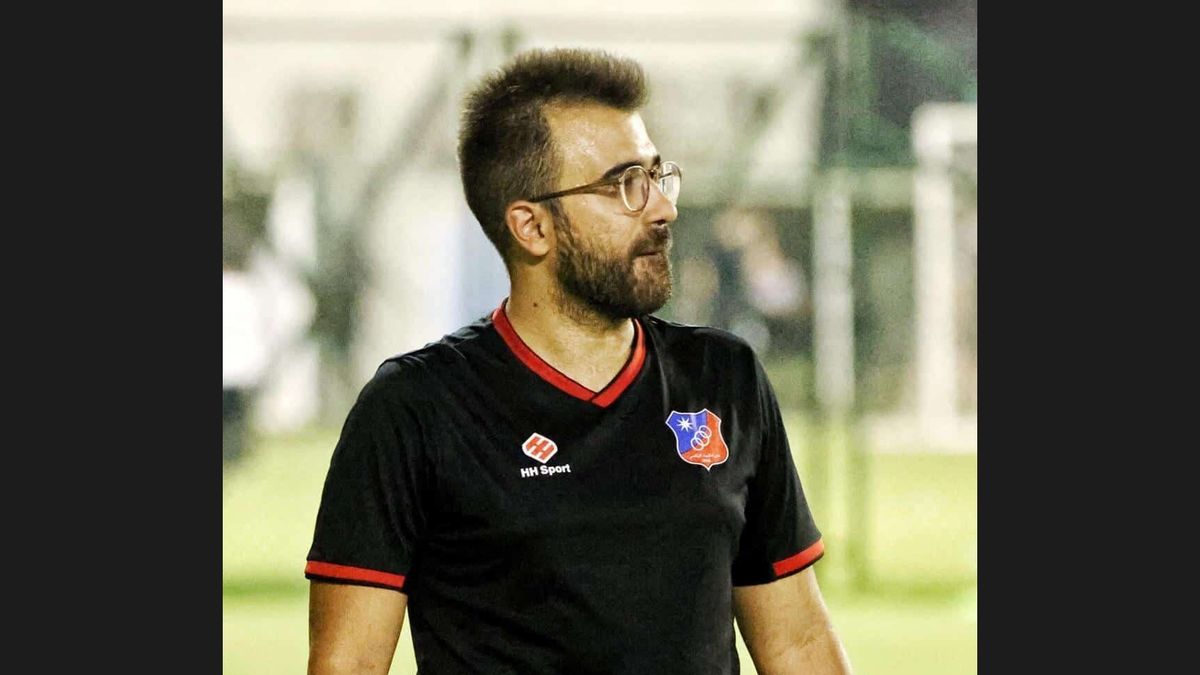
Rui Gomes defines himself, in his own first sentence of this written exchange, as a coach who develops intelligent players by linking individual understanding to collective behaviour. The compression is deliberate. Behind it sits a Portuguese coaching education that has run, by design, through some of the most thought-through methodologies in European youth football: Tactical Periodization as the underlying framework, the Ekkono Method for the cognitive process, the Barça Coach Academy for positional play. None of these are absorbed as fixed models. He calls them references, not fixed models — a phrase that returns, in different forms, throughout the twenty answers.
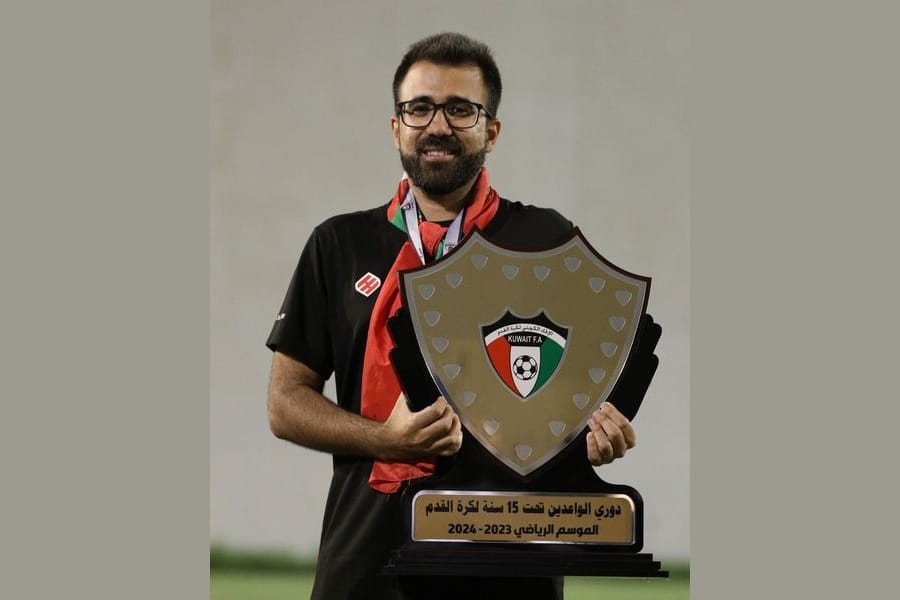
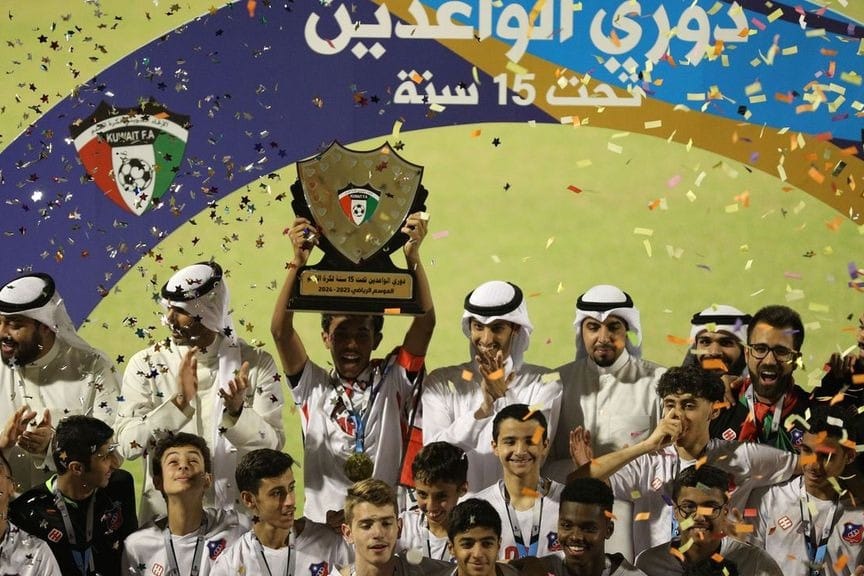
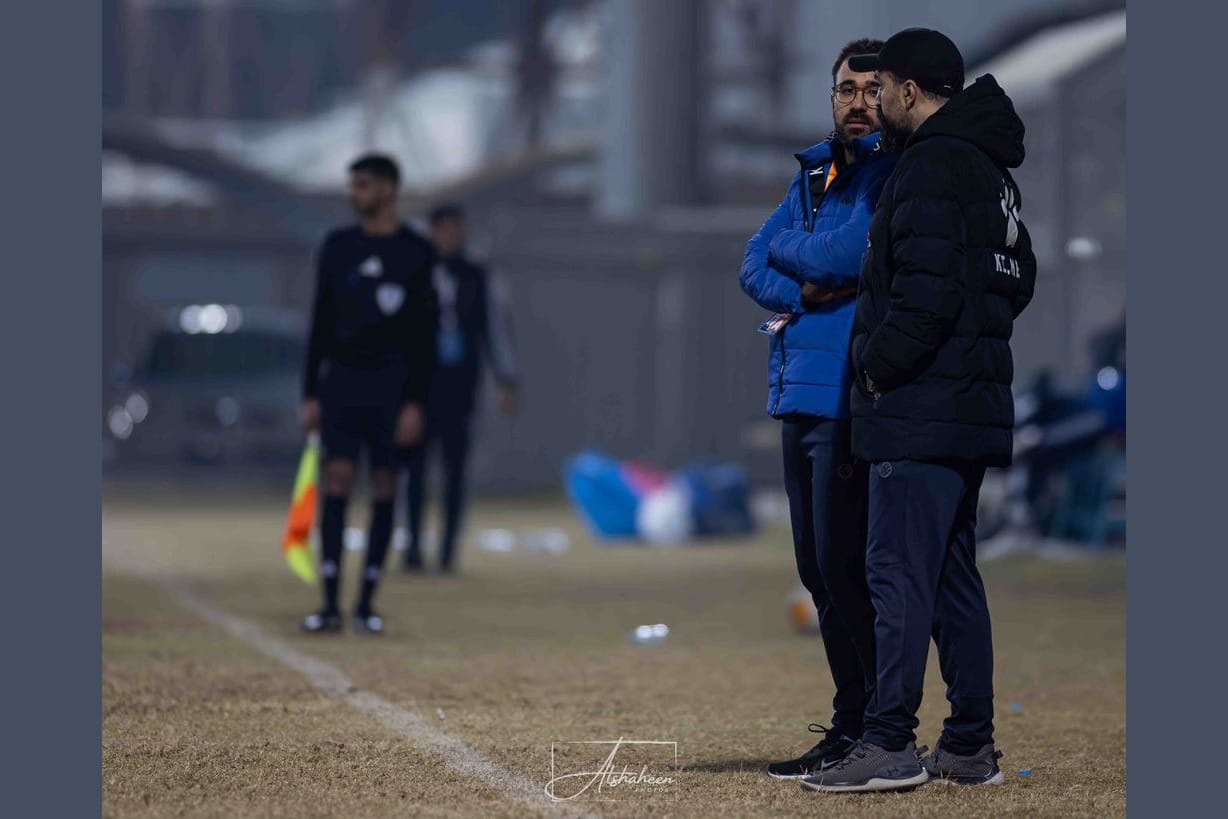
He holds the UEFA A Licence. He has worked across youth and first-team development, and as both opposition analyst and performance analyst — sometimes simultaneously. He has had players called up to national-team camps. He has published written analysis of Finland's Euro qualification campaign. In 2023–24, he was part of a Kuwait FA U-15 league championship. His current coaching context is built around a familiar but rare combination: a clear game model, communicated to players through training environments that reflect the complexity of the game, with positional structure used as a guide, not a limitation.
In a written exchange with Football Agent Lab, Gomes is at once intellectually direct about what he believes and openly self-critical about where he has fallen short. He names a moment of his career when he felt he had clearly failed — when his ideas were running ahead of the players' reality — and he describes how that experience reshaped him. He names a gap he is still actively working on: the psychological side, understanding each player as a person, not just as a footballer. He calls himself a young coach. And he closes the conversation with a sentence that is, in this series, unusual for its restraint: I would like to be seen as a coach who helps players grow — not only as footballers, but also as people.
Portuguese Football Coach · Youth Development · Performance Analysis · Opposition Analysis
COACHING LICENCE
UEFA A Licence
METHODOLOGICAL TRAINING
Tactical Periodization · Ekkono Method · Barça Coach Academy
RECENT HONOURS
Kuwait FA U-15 League Champion · 2023–24 season
AREAS OF PRACTICE
Youth team head coaching · First-team assistant work · Performance analysis · Opposition analysis · Coaching education
PUBLISHED ANALYSIS
Articles on Finland's UEFA Euro qualification campaign · Tactical analysis writing
PLAYERS DEVELOPED
Multiple national-team callups across youth categories
PART 1 · INTRODUCTION
Could you briefly introduce yourself? If you had to define yourself as a coach in one sentence, how would you put it?
I am a UEFA-licensed football coach with experience in both youth and first-team development, as well as performance analysis, having worked closely with players in training and competitive environments. My work has been strongly influenced by tactical periodization and methodologies such as the Ekkono Method, while always adapting these ideas to the specific context and the players I work with.
If I had to define myself in one sentence: I am a coach who develops intelligent players by linking individual understanding to collective behaviour.
PART 2 · FOOTBALL PHILOSOPHY
What is the fundamental direction you pursue as a coach? What does "good football" look like to you?
The fundamental direction I pursue as a coach is to develop a team that understands the game, not just executes actions. I want my players to be able to read situations, make better decisions, and adapt collectively to what the game demands.
For me, good football is not defined only by possession or results, but by the quality of decisions and the coherence of the team's behaviour in all moments of the game. A good team is one that is organised, but at the same time flexible enough to adapt to different contexts, always maintaining clear principles.
I value a style of play where the team is proactive, capable of controlling the game with and without the ball, and where every player understands their role within the collective structure. Ultimately, good football is about intelligence, connection between players, and the ability to consistently solve the problems the game presents.
Good football is not defined only by possession or results, but by the quality of decisions and the coherence of the team's behaviour.
Attack versus defence, organisation versus individual brilliance — where do you tend to fall on these spectrums, and why?
I don't see these as opposites, but as interdependent elements of the game. Attack and defence are always connected, just as organisation should enhance, not limit, individual talent.
That said, I tend to prioritise collective organisation as the foundation. A well-structured team creates the conditions for individual players to express themselves in the right moments and spaces. Without that structure, individual brilliance often becomes inconsistent and less impactful.
In the same way, I want my team to be balanced between attacking and defending. I value teams that are proactive with the ball, but equally prepared and organised without it. For me, the key is not choosing one side, but ensuring that all moments of the game are connected through clear principles.
Ultimately, I believe the highest level of performance comes when strong collective organisation and individual quality complement each other.
You have studied Spanish football methodology deeply through the Ekkono Method and the Barça Coach Academy. How have these philosophies fed into your own? Did you adopt them as they were, or did you critically reinterpret certain parts?
Both the Ekkono Method and the Barça Coach Academy had a strong impact on the way I understand the game, especially in terms of how to develop players who can think, perceive, and decide within the complexity of football.
From Ekkono, I took a deeper understanding of the importance of the cognitive process in player development — how perception, decision-making, and execution are constantly connected. From the Barça methodology, I absorbed the value of positional play, the use of space, and the idea of a collective structure that gives meaning to individual actions.
However, I didn't adopt these methodologies in a rigid way. I see them as references, not as fixed models. I believe every context — team, level, culture, and even competition demands — requires adaptation.
So over time, I have reinterpreted certain aspects to fit my reality. For example, while I value positional structure, I also recognise the need for flexibility and adaptation depending on the characteristics of the players and the dynamics of the game.
Ultimately, these methodologies helped shape my foundation, but my approach is built on continuously questioning, adapting, and connecting ideas rather than simply applying them.
When "individual player development" and "collective tactical refinement" come into conflict, what principle guides your decision on which takes priority?
For me, the key principle is understanding the context — especially the age, level, and objective of the team.
In youth development, I tend to prioritise individual development, because the main goal is to prepare players for the future, not just for immediate results. However, I still believe that individual growth should happen within a collective framework, as the game itself is collective.
At higher levels, where performance and results become more decisive, the balance shifts slightly towards collective tactical refinement. Even then, I don't see it as a complete trade-off, because improving the collective often enhances individual performance as well.
What guides my decision is always the long-term development of the player and the team. Ideally, I try to design training environments where both aspects grow together, rather than putting them in direct conflict.
Ultimately, I believe the best solutions are those where individual development is aligned with the needs of the collective game.
Is there a particular footballing value or habit that you believe must be instilled during a player's youth years above all else? Why do you consider it decisive even at the professional level?
If I had to highlight one key value, it would be the ability to understand the game.
From an early age, players should develop the habit of constantly observing, interpreting, and making decisions based on what the game is asking. This capacity to read the game influences everything — from positioning and timing to technical execution.
I consider it decisive because, at the professional level, the difference is often not technical ability, but how quickly and effectively players can perceive situations and make the right decisions under pressure.
Players who understand the game can adapt to different systems, teammates, and contexts. They are more consistent, more reliable, and ultimately more valuable for any team.
For that reason, developing intelligent players who can think and solve problems on the pitch is, for me, the most important objective during the youth years.
Players who understand the game can adapt to different systems, teammates, and contexts.
PART 3 · TACTICAL APPROACH & GAME MODEL
When you take charge of a new team, can you walk us through the process by which you build your game model? Where do you begin?
When I take charge of a new team, the first step is always to understand the context — the players, their characteristics, the competitive level, and the club's objectives.
From there, I define a set of clear principles for each moment of the game: attacking organisation, defensive organisation, and transitions. These principles serve as the foundation of the game model.
I usually begin with the idea of how I want the team to behave with the ball, as it often provides structure to the rest of the game. However, I make sure that all moments are connected, so the team can react coherently when possession is lost or regained.
At the same time, I analyse the players' profiles to adapt the model to their strengths, rather than forcing them into a rigid structure. The goal is to create a model that is clear, but flexible enough to evolve over time.
Finally, everything is translated into the training process, where exercises are designed to reflect the game's reality and reinforce the principles we want to see in competition.
In the build-up phase, what is the principle you design most rigorously as a coach? And what is your perspective on positional play?
In the build-up phase, the principle I design most rigorously is the creation and occupation of space in a way that allows the team to progress with control.
This means ensuring proper positioning to provide clear passing lines, numerical or positional superiority around the ball, and the right distances between players to facilitate circulation and progression. More than fixed movements, I focus on giving players references that help them interpret where and when to position themselves.
Regarding positional play, I see it as a fundamental tool to organise the team and give structure to the game. It helps players understand how to occupy space collectively and how their positioning influences both teammates and opponents.
However, I don't see positional play as something rigid. For me, it should serve as a guide, not a limitation. Players must be able to adapt their positioning based on the context, the opponent, and the dynamics of the game.
Ultimately, the objective is to create a team that can build in a structured way, but with the flexibility and understanding to solve the problems that emerge during the game.
Which transitional moment do you consider the most tactically decisive, and how do you translate that into training sessions?
I consider the moment of defensive transition — immediately after losing the ball — as the most tactically decisive.
This is often the moment when teams are most unbalanced, and the ability to react quickly can determine whether you regain control or become vulnerable. A strong reaction in this phase can prevent counter-attacks and even create opportunities to recover the ball in advantageous positions.
In training, I try to replicate these moments by designing exercises with immediate transitions, where players are constantly exposed to losing and regaining possession. The focus is on reaction time, positioning after loss, and collective behaviour, especially the coordination between pressing the ball and covering spaces.
I emphasize clear principles, such as immediate pressure on the ball, compactness around the zone of loss, and collective responsibility in reacting together.
The goal is to develop a team that doesn't just react instinctively but responds in an organised and coordinated way in these critical moments.
When making in-game adjustments in response to the opposition, what decision-making framework do you rely on? How does your approach at half-time differ from adjustments made during the run of play?
When making in-game adjustments, I rely on a clear reference: our game model and principles. The first step is always to identify whether the problems we are facing come from poor execution or from a structural issue.
If it's an execution problem, I tend to reinforce the existing ideas. If it's structural, then I look for adjustments that can help the team better cope with the opponent's behaviour.
During the game I prefer to make small, clear, and simple corrections and adjustments that players can immediately understand and apply without overloading them with information. These are often related to positioning, pressing triggers, or specific behaviours in certain zones.
At half-time, the approach is different. There is more time to reflect, so I can provide a more complete analysis of what is happening in the game. This may include structural adjustments but always keeping the message clear and focused on key points.
In both cases, the objective is the same: to help the team better understand the game and respond in a more organised and effective way.
PART 4 · PLAYER DEVELOPMENT & COACHING COMPETENCIES
Do you have your own criteria for distinguishing a player with genuine potential from one who is simply ready to contribute now? What does that framework look like?
Yes, I believe there is a clear difference between a player who is ready to perform now and a player who has long-term potential.
When I evaluate potential, I focus less on current performance and more on the player's ability to understand and adapt to the game. I look closely at how quickly a player learns, how they react to new tactical concepts, and how they solve problems during training and matches.
At the same time, I believe it is very difficult to predict a player's future potential with certainty. If that were the case, player development would be much more linear, and we would clearly know which players will reach the top level. The reality is that development is complex and influenced by many factors over time.
That's why I pay close attention to decision-making, game intelligence, and the consistency of behaviour in different situations. Players with genuine potential usually show a strong capacity to learn, adapt, and improve as the demands increase.
A player who is ready to contribute now may rely more on physical maturity or current confidence, but that doesn't always guarantee long-term progression.
So my framework is based mainly on learning capacity, decision-making, adaptability, and long-term development, while recognising the uncertainty that is always part of the process.
A number of players you have coached have been called up to national team camps. Are there common characteristics you have noticed in players who go on to reach that level?
From my experience, every player is different, and it's difficult to define a fixed pattern that applies to all of them.
However, if there is one common characteristic I have consistently observed, it is their passion for the game. These players truly love football, and that is reflected in their level of commitment, both in training and in matches.
They show a strong willingness to improve, which allows them to evolve more consistently over time. This commitment often becomes a key factor in helping them reach higher levels, such as national team selection.
At the same time, they tend to have a very good understanding of the game. They can read situations, make effective decisions, and adapt to different contexts, which is essential at that level.
So while each player has a unique path, the combination of passion, commitment, and game understanding is something I often see in those who manage to reach that stage.
How do you approach a player who is technically gifted but shows issues with attitude or mentality?
My first step is always to understand the player as a person, not just as a footballer. Attitude and mentality issues often have underlying reasons, so I try to identify what is behind that behaviour before making any judgment.
From there, I focus on building a relationship based on trust and clear communication. It's important that the player understands both their potential and the responsibility that comes with it.
At the same time, I am very clear about the standards and values of the team. Talent alone is not enough — commitment, respect, and consistency are non-negotiable. The player needs to understand that their behaviour affects not only their own development, but also the collective.
I try to guide the player by showing how improving their mentality can help them reach a higher level, rather than just correcting them. But if there is no response over time, I believe the collective must always come first.
The goal is to help the player grow, but without compromising the team's values and environment.
What are the core principles you never compromise on when designing a training session? What does your ideal session structure look like?
When designing a training session, the first principle I never compromise on is that everything must be connected to the game. Every exercise should have a clear purpose and relate directly to the behaviours we want to see in competition.
I also value the idea that training should reflect the complexity of the game. This means including decision-making, perception, and interaction between players, rather than isolated or purely mechanical actions.
Another key principle is maintaining a clear objective for each session, aligned with our game model. The players need to understand not just what they are doing, but why they are doing it.
In terms of structure, I usually organise sessions in a progressive way, starting with more controlled situations that introduce the key concepts, and then moving towards more complex and realistic game scenarios.
I prioritise exercises that involve opposition, direction, and decision-making, ensuring that players are constantly engaged and challenged.
My objective is to create training environments that develop both the individual and the collective, always guided by the demands of the game.
PART 5 · ANALYSIS
You have worked simultaneously as an opposition analyst and a performance analyst. In your view, how do each of these two forms of analysis influence actual coaching decisions — and how do you weigh the two?
Both forms of analysis are essential, but they serve different purposes in the coaching process.
Performance analysis is mainly focused on our own team. It helps us understand whether our game model is being applied effectively, identify areas for improvement, and guide the training process. It gives us a clear reference of who we are and how we are evolving.
Opposition analysis, on the other hand, is more contextual. It allows us to understand the opponent's behaviours, strengths, and weaknesses, and to prepare the team for the specific challenges of each match.
In terms of decision-making, I see performance analysis as the foundation, because it defines our identity and long-term development. Opposition analysis then adds an extra layer, helping us make more precise adjustments without losing our core principles.
So the balance is always in favour of maintaining our identity, while being flexible enough to adapt to the opponent when necessary.
In an era where data and video analysis have become highly sophisticated, what role should a coach's intuition still play? Have you ever had a moment where you felt the data was simply wrong?
Data and video analysis are extremely valuable tools, but they should support the decision-making process, not replace it.
I believe a coach's intuition still plays a crucial role, especially because football is a complex and dynamic game that cannot always be fully captured by numbers or isolated clips. Intuition is often built through experience, observation, and a deep understanding of the game.
There are moments where the data may suggest one conclusion, but the reality on the pitch feels different. This doesn't necessarily mean the data is wrong, but rather that it might be incomplete or lacking context.
For example, I have worked with players who had nearly 100% passing accuracy in a game, but most of their passes were sideways or backwards, without real impact. On the other hand, some players may have a lower passing percentage, but they are the ones attempting more difficult actions — breaking lines, creating chances, or making decisive assists.
This shows that numbers alone can be misleading if they are not interpreted with a critical perspective.
For me, the key is to combine both — using data to inform decisions, while relying on intuition to give meaning and context to that information.
Numbers alone can be misleading if they are not interpreted with a critical perspective.
You have written published articles analysing Finland's Euro qualification campaign. How does combining writing with analysis shape your thinking as a coach?
Combining writing with analysis has had a strong impact on the way I think as a coach.
Writing forces me to organise my ideas clearly and structure my thoughts in a logical way. It's one thing to observe the game, but when you have to explain it to others, you need a deeper level of understanding and clarity.
It also pushes me to be more critical and reflective. When analysing and writing, I constantly question my interpretations, which helps me avoid superficial conclusions and develop a more detailed understanding of the game.
Another important aspect is that it improves my communication. Being able to express complex ideas in a simple and clear way is essential, both in writing and in coaching players.
Overall, this process has helped me become more precise in my analysis, more structured in my thinking, and more effective in the way I communicate my ideas.
PART 6 · SELF-AWARENESS AS A COACH
What has been the moment in your career where you felt you had most clearly failed? How did that experience reshape the way you coach today?
Probably one of the moments where I felt I had clearly failed was when I realised that I was prioritising my ideas more than the players' needs and the reality of the context.
At that stage, I had a very clear vision of how I wanted the team to play, but I didn't adapt enough to the characteristics of the players. As a result, the team struggled to perform, and I understood that clarity of ideas is not enough if they are not aligned with the people who have to execute them.
That experience forced me to reflect deeply on my role as a coach. I learned that it's not about imposing a model, but about building one that fits the context and helps players express themselves within it.
Since then, I have become much more attentive to the players, more flexible in my approach, and more focused on finding the right balance between my ideas and the team's reality.
Clarity of ideas is not enough if they are not aligned with the people who have to execute them.
You hold the UEFA A Licence. Even at this stage of your career, are there areas of coaching where you feel genuinely lacking? Could you speak honestly about that?
Yes, absolutely. I believe that coaching is a continuous learning process, and there are always areas where we can improve.
One area I am particularly focused on developing is my ability to better understand the psychological side of players. Each player is different, with their own personality, motivations, and way of responding to challenges.
I believe that improving this aspect can have a direct impact on my leadership and communication. As coaches, it's not enough to know the game — we need to know the players, and how to reach them in the most effective way.
The better we understand them, the better we can support them, challenge them, and help them perform at their highest level.
So for me, this is a key area of growth: becoming more aware, more adaptable, and more effective in connecting with each individual in order to get the best out of them.
PART 7 · VISION & AMBITIONS
How do you want to be remembered as a coach? Alongside your ultimate career goal, how do you hope to contribute to the game of football itself?
Honestly, I don't think too much about that yet, because I still see myself as a young coach. Thinking about how I want to be remembered almost feels like I'm close to the end of my career, and I hope there are still many years ahead of me.
However, I would like to be seen as a coach who helps players grow — not only as footballers, but also as people.
Someone who creates an environment where players can develop their understanding of the game, express themselves, and reach their potential within a strong collective structure.
In terms of my career goals, I aim to work at the highest level possible, constantly challenging myself and competing in demanding environments. More than the level itself, what drives me is the opportunity to develop players and build teams with a clear identity.
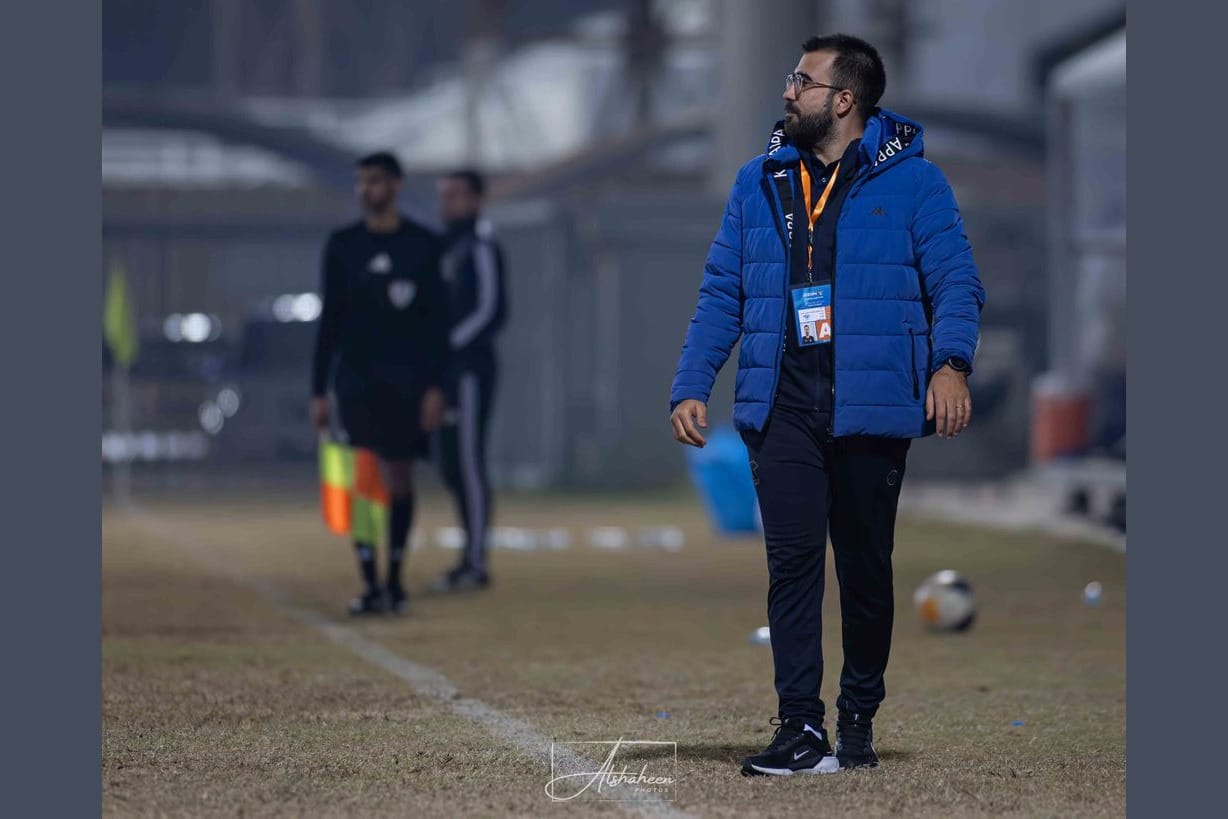
CLOSING
Across the twenty answers of this written exchange, what Gomes returns to most often is not a system or a method, but a posture toward the system and the method. The Ekkono Method, the Barça Coach Academy, Tactical Periodization — all of them, he insists, are references, not fixed models. Positional play is a guide, not a limitation. The game model should be clear, but flexible enough to evolve over time. Training environments should reflect the complexity of the game. Across page after page, the structure is the same: an organizing concept introduced, then immediately qualified by the context that must adapt it.
What gives this its weight is that Gomes has tested the limits of his own clarity in real conditions and is willing to say so. The moment of failure he names in the conversation is not a defeat or a sacking, but a quieter and more lasting kind of failure — a season in which his ideas were running ahead of what his players could carry. Clarity of ideas is not enough, he writes, if they are not aligned with the people who have to execute them. He says it once, without theatre, and then moves on. The same restraint shapes his answer about the gap he is still working on. He does not list eight strengths and a polite weakness. He simply names the psychological side — the work of understanding each player as a person — and stops there.
He calls himself a young coach. He says, plainly, that thinking about how he wants to be remembered feels premature. He wants to work at the highest level, but what drives him, in his own words, is the opportunity to develop players and build teams with a clear identity. In a series that has covered J.League founder-era veterans and forty-year scouting careers and coaches across five continents, his answers are the most disciplined and the most patient. Football Agent Lab will be watching, with a quiet hope that the road he is building proves to be a long one.
ABOUT THE AUTHOR
SEOK LIM Editor· Football Agent Lab
FIFA-licensed football agent and steel market analyst with over a decade of experience in commodity research. Football Agent Lab publishes interviews and market reports at the intersection of football, agency work, and global markets.


