"Principles Are Not Handcuffs": Creativity Built on Structure — Mark Jackson
A rising Namibian coach who leads by serving, Mark Jackson believes structure is what sets a player free. From a street-kids programme to the Celtic FC touchline, he joins Football Agent Lab for a written exchange on possession, the honesty of six defeats, and coaching that aims beyond the game.
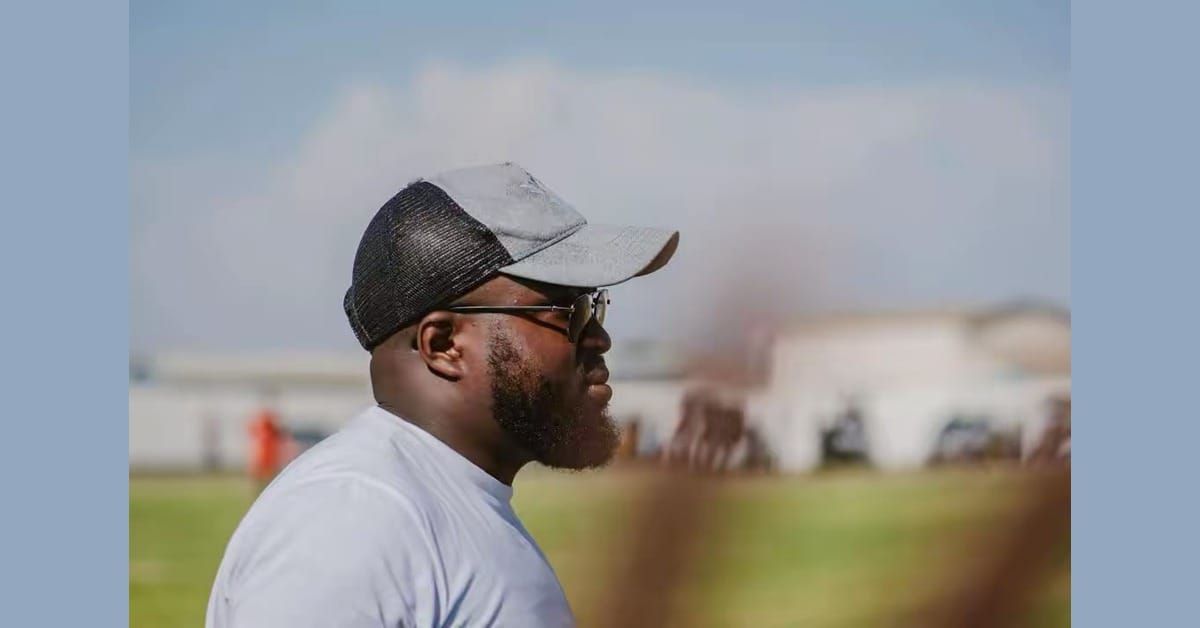
The first line of Mark Jackson's coaching CV is not a formation or a trophy. It is a purpose: to help people "recognize and maximize their potential so that they can live better lives." That is an unusual place for a football coach to begin, and it tells you most of what you need to know about the Namibian, who joins Football Agent Lab for his first written exchange with us. A second-division playing career around the Erongo coast ended in 2018 when injury forced him out; he found his way back through a street-kids under-17 programme, and coaching has held him ever since — through the girls' school teams, the regional men's sides, and now a co-head-coach role at Celtic FC.
His football has a clear idea and an unusually honest relationship with reality. He wants possession-based build-up and high pressing; he holds the CAF D Licence and has since worked through England FA courses in futsal and inclusive coaching. But he is the first to tell you when the ideal met the ground and bent: the unbeaten run at Chief Santos, he says, "wasn't built primarily on possession football" but on mentality and adaptability; his current side dominates games and then draws a blank in front of goal for want of a natural striker. What holds it together is a single conviction, and it gives this interview its title — principles are not handcuffs. Structure, for Jackson, is not a cage but the platform a player stands on to create.
The rest is a matter of values he states without embarrassment: authenticity, servanthood, ownership, equal value. He speaks plainly about his faith as the foundation that carried him through the silence after retirement. He is proud, quietly, of the women's teams he took to school titles and of former players who have since worn Namibia's colours. And he is candid about where he wants to go — a professional men's league in five years, and, in ten, to be measuring himself at Champions League level, "whether that is the CAF Champions League, UEFA Champions League, or the Asian Champions League." When players look back, he says, he wants them to say one thing above the rest: that he helped them become better human beings.
Football Coach · Player Development · Servant Leadership
CURRENT ROLE
Co-Head Coach · Celtic FC (Namibia) · 2026–present (newly promoted)
SELECTED COACHING CAREER
Chief Santos FC — Head Coach · 2025 (finished 2nd; 9-game unbeaten run) Western Spurs FC — Head Coach · 2024–2025 KSS U17 Girls — Head Coach · School League winners KSS U15 Girls — Head Coach · School Cup winners The Dome Changers U17 — Head Coach · 2023 Blue Waters FC — Volunteer first-team coach · 2024 Playtime Namibia — Girls' league admin & coach · 2024–2025 Bucks Buccaneers FC — First-team intern (with Ronny Kanalelo) · 2025
QUALIFICATIONS
CAF D Licence (2024) · CAF Safeguarding (2024) · FIFA Guardians Safeguarding Essentials (2026) · England FA — EE Playmaker (2025) & Introduction to Futsal (2025) · coaching workshops with Ronny Kanalelo (2025) · CAF/COSAFA coaches programme (2024)
APPROACH
Possession-based build-up · high pressing · compact defensive organisation · four phases of play · dynamic centre-backs · build from the back · player-centred and holistic Values: authenticity · servanthood · ownership · equal value
PART 1 · UNLOCKING POTENTIAL
When I first picked up your CV, I was genuinely surprised to find that the very first line wasn't about tactics or your record — it was the phrase "unlocking potential so that people can live better lives." That's quite a different starting point for a football coach. In your eyes, what kind of stage does the football pitch provide for that purpose? Could you define it in a single sentence?
The football pitch is a space where human potential is revealed and developed under the pressure of competition.
You captained Blue Birds FC from 2015 to 2017 and had your playing career cut short by injury in 2018. An involuntary retirement can leave a long silence in a player's life. How did you find your way through that period? And what unresolved question — one you never quite got to answer as a player — ultimately drew you towards coaching?
That period was difficult because football was a major part of my identity, so when it stopped, there was a real sense of loss and uncertainty.
What carried me through was my relationship with God, which became my foundation during that transition. I stepped away from the game, focused on rebuilding myself, and also started developing a small business, which gave me structure and discipline outside of football.
My return came through a street kids U17 programme where I started coaching again. That experience showed me the impact coaching can have beyond results. It made me realise I did not just want to be involved in football; I wanted to coach long term.
PART 2 · THE PLATFORM FOR CREATIVITY
Looking at the playing model you pursue, possession-based build-up and high pressing appear side by side. Yet these two elements are inherently different in the direction they demand energy — one asks players to advance calmly in possession, the other demands an immediate counter-reaction the moment the ball is lost. That combination can create real confusion for players within a single match. Could you recall and walk us through one specific moment during Chief Santos FC's 9-game unbeaten run when those two elements actually clicked together as intended?
To be honest, our unbeaten run at Chief Santos wasn't built primarily on possession football. The reality was that the playing surfaces often made it difficult to consistently execute the type of build-up play I ideally want.
What I was most proud of during that run was the team's mentality and adaptability. The players understood that football isn't always about imposing your ideal game model. Sometimes it's about finding solutions within the environment you're in. We became very difficult to beat because the players were mentally strong, disciplined, and willing to adapt to different conditions. That unbeaten run taught me that mentality can sometimes be just as important as tactics.
You've listed the "dynamic centre-back" as a distinct item in your coaching principles — the concept of a centre-back who directly participates in the build-up phase. I'm curious whether that's primarily a matter of identifying and selecting players who already possess those qualities, or whether you believe it can be developed through training. How did the centre-backs at Celtic Football Club or Western Spurs FC initially respond when that role was first asked of them, and what specific training mechanisms did you put in place to support that process?
It can absolutely be developed. While some players naturally possess those qualities, I believe most can improve significantly through training. Initially, many centre-backs are uncomfortable carrying the ball because they've spent years being told to play safe. The process starts with confidence. I use positional games, build-up exercises, and game-like scenarios where centre-backs repeatedly solve problems under pressure. Over time, they begin to see themselves not only as defenders but as initiators of attacks.
Your playing model explicitly includes "creativity in the final third," and creativity is something that tends to grow through permission rather than instruction. At the same time, there are clearly moments when that creativity begins to destabilise the team's structure. In training sessions, how do you signal to a player that this is a moment to express themselves freely? And what is your benchmark for deciding that the freedom has crossed the line into breaking team principles?
I always tell players that principles are not handcuffs. Structure provides the platform for creativity. If a player is in a position where they can create an advantage for the team, I want them to express themselves. The line is crossed when individual actions consistently reduce collective effectiveness. I ask one simple question: "Did your decision improve the team's chances of success?" If the answer is yes, I encourage it. If not, we reflect and learn from it.
Structure provides the platform for creativity.
You beat Walvis Bay Academy 8–1 with Western Spurs FC. And yet the training session after a result like that can sometimes present a harder challenge for a coach than the match itself — whether it's confidence tipping into overconfidence, or the squad beginning to take the next opponent too lightly. What was the very first thing you said to your players after that game?
I do not remember the exact words, but the message in that moment was shaped by the context we were in as a team.
At Western Spurs, I joined in the second half of the season whilst the team was in a relegation battle, so results carried a lot of weight. At the same time, I knew that a result like that could easily create a false sense of security if it was not managed properly.
So the focus was not on celebrating the scoreline, but on controlling the emotional response after the game. We acknowledged the performance, but very quickly shifted attention back to standards, consistency, and the next match.
The message was essentially that we could not afford emotional swings based on one result. In our situation, every game mattered, so the priority was to stay grounded and understand that performance habits are what keep you alive in a relegation fight, not isolated scorelines.
You've defined your defensive organisation as "a structure that controls space and limits the opponent's options," and your attacking transition as "an immediate reaction to exploit space the moment the ball is won." In practice, both phases need to be executed by the same players in almost the same instant. If there were moments at Chief Santos FC when the opposition targeted that transition window with a counter-attack, how did you diagnose what had gone wrong — and what adjustments did you make before the next match?
We first analysed our positioning before losing the ball. In most cases, the issue was rest defence structure rather than the transition itself.
We corrected spacing, improved balance in attacking moments, and trained transition scenarios repeatedly. The goal was to make the reaction automatic so the team responded immediately when possession changed.
Your philosophy of "developing strategic thinkers" essentially means delegating judgment to your players. But there will inevitably be moments in a match when a player's in-game decision flies in a completely different direction from what you intended. In those moments, do you read it as a tactical failure, or as data for growth? If there's a specific instance that comes to mind, could you walk us through it in concrete terms?
I see it primarily as data for growth, but it depends on whether the decision breaks our principles or simply offers a different solution to the same problem.
The way I approach it is that I do not want players who are just executing instructions. I want players who are reading the game and making decisions in real time. So when a player makes a different choice from what I expected, the first step is not frustration but understanding the context behind that decision.
For example, there have been moments when a player chose to play forward into pressure instead of recycling possession. On the surface it might look like a poor decision, but when you review it, sometimes the player has seen something I did not see, or is reacting to a cue in the game that justifies the risk.
In those cases, we analyse it collectively. We ask what information the player was working with, what the team structure looked like at that moment, and whether the decision helped or harmed our overall organisation. If it aligns with our principles, we refine it. If it breaks our structure, we correct it through training and repetition.
So I would not call it a failure first. I see it as part of building intelligent players. The goal is not uniform decisions, but consistent understanding of the game model so that even different choices still serve the team.
PART 3 · TWO SCHOOLS
You hold the CAF D Licence and have since completed a series of courses with the England FA. Absorbing both an African confederation framework and a European methodology feels like a deliberate choice. Where did you feel the sharpest difference in perspective between those two educational systems? And how has that gap been integrated into the way you now design your sessions — could you give us a specific example?
For me, the biggest difference is what each system exposes you to in reality.
CAF basically showed me the realities of African football: the conditions, the environments you work in, the level of resources you have, and how you constantly have to adapt. It is very practical and very grounded in what actually happens on the field in our context.
The English FA side was more about creating environments — how you design sessions so that players from different backgrounds and different levels can still learn and enjoy the game. There was also a big focus on inclusion and communication, and the futsal part helped a lot with understanding tight spaces and quick decision-making.
But most of my real learning honestly came outside of courses. It came from research, watching, and building my own case studies on different coaching methodologies and trying to understand how top coaches actually structure their work.
In my own coaching now, I try to combine both. I keep the CAF reality of adaptability because in our environment you cannot ignore that, but I also try to create FA-style learning environments where players are involved, thinking, and not just repeating instructions.
The workshop under Ronny Kanalelo focused heavily on microcycle and pre-season design. When you first applied those concepts on the ground at Celtic Football Club, were there points where theory and reality collided? Could you also speak to the specific variables that a newly promoted club added to the challenge of designing a microcycle?
The workshop under Coach Ronny was really valuable for me. I took a lot from it and applied it directly when I started at Celtic.
There were moments when theory and reality did meet, yes. But it was not a complete clash; it was more about adjusting in real time. For example, you can plan a session around speed endurance in large areas or a large-sided game, but then you arrive and only a smaller group of players shows up, maybe 12 players. In that moment, you have to quickly adapt the content, the space, and even the physical objective without losing the purpose of the session.
So it became less about changing the idea and more about changing the delivery.
In terms of challenges as a newly promoted club, the biggest factor was exposure. Most of the players were not used to structured microcycles at that level. They were more familiar with simple training sessions like running, basic passing drills, and then playing.
So introducing a more structured weekly plan was a process. It took time for them to understand the rhythm of training, recovery, and intensity.
But overall, I would say it worked well. About 90 to 95 percent of the time, we were able to execute the microcycle properly, even with those adjustments.
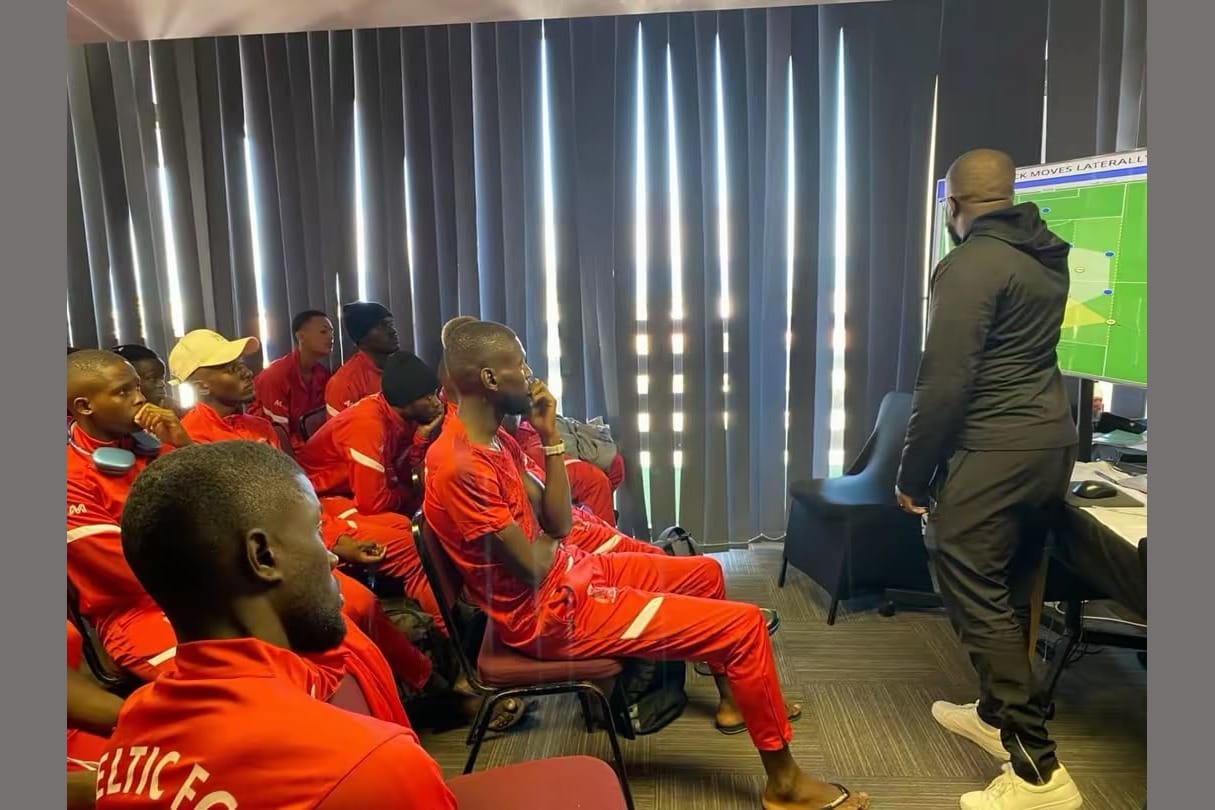
Among the five coaching strengths you've identified, "deliberativeness" and "command" pull in opposite directions — one is the inclination to think things through carefully, the other is the impulse to decide and act immediately. In a time-pressured moment like a substitution decision mid-match, what happens when those two tendencies conflict? Do you have a personal method for resolving that tension in real time?
It depends on what the situation requires in that moment.
Deliberativeness means I naturally want to think things through properly before I act, especially in a high-pressure game situation where a wrong decision can affect the team. Because of that, I don't rely only on my own view during the match. I actively involve my assistants and the technical team on the bench.
I quickly bounce the situation off them and compare what they are seeing with what I am seeing, and that helps me build a clearer picture of what the team actually needs in that moment.
At the same time, before matches we already prepare for this. We go through possible game scenarios for each player and each position, so in-game decisions do not start from zero. That preparation narrows the decision-making in the moment, because we have already thought through most situations in advance.
So when command comes in, it is not a rushed emotional reaction. It is a decision made after preparation, information from the staff, and clarity on what the team needs in that moment. Once I have gathered enough information, I commit to the decision confidently and communicate it clearly to the players and staff. In that way, deliberativeness and command complement each other rather than compete: deliberativeness ensures the decision is well-considered, while command ensures it is made decisively and without hesitation when time is limited.
The EE Playmaker course centres on creating inclusive and psychologically safe environments, while the Introduction to Futsal addresses the tactical principles of the five-a-side game. At first glance, neither seems directly tied to the competitive eleven-a-side environment. If concepts from either course have genuinely found their way into your on-field sessions, could you walk us through a specific training exercise where that influence is visible?
EE Playmaker strengthened my understanding of creating psychologically safe environments. Players perform best when they know mistakes are part of learning. Futsal improved my grasp of tight spaces, scanning, quick decision-making, and technical repetition. Many of our small-sided games are influenced by concepts I learned through futsal.
PART 4 · THE DECISIVE MOMENTS
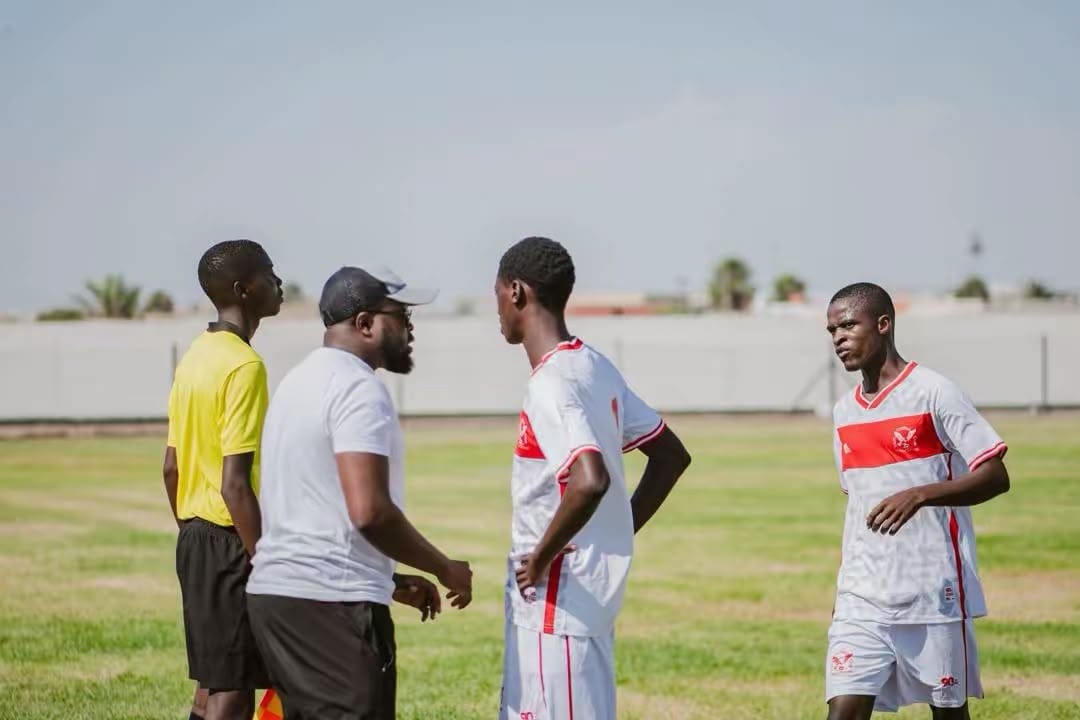
At Celtic Football Club you operate within a co-head coach structure. I imagine there's an interesting tension between that arrangement and the value you place on "being authentically, genuinely yourself." When you and your co-coach reach different tactical conclusions, how do you arrive at a resolution? And what internal agreements do you have in place to ensure that two distinct voices don't visibly contradict each other in front of the players?
Communication is everything. Before presenting anything to players, we discuss it privately. Disagreement isn't a problem. Unresolved disagreement is. The players must see one united coaching team. Different perspectives often lead to stronger decisions as long as mutual respect exists.
Disagreement isn't a problem. Unresolved disagreement is.
I'd like to ask you honestly how you're reading the 6 losses within your current record of 8W 2D 6L. If you set aside the context of being a newly promoted club and look at those six defeats purely as a pattern, is there a common thread running through them? And when it comes to translating that diagnosis into training sessions, where does the work get hardest?
Yes, that was actually the most games I have lost in a single season. Before that, my worst was around three losses, so six gave me a lot to reflect on.
Looking at it beyond the "newly promoted team" context, I would say the main pattern is not that we were outplayed. In most of those games, we dominated large parts of the match in terms of possession, territory, and chances created.
We also have a very young squad, with an average age of around 23, so there is a lot of potential, but also a natural lack of consistent experience in key moments of games.
The real issue was in decisive moments. We created enough to win games comfortably, but we were not efficient enough in front of goal. We missed too many clear-cut chances, and we also did not have a natural out-and-out striker who consistently finishes those moments.
I remember one home game where, in the first two minutes, we already had four one-on-one situations. By the end of that match, we probably created 14 to 15 chances and still only won 1–0. That became a pattern across several games.
We also train finishing, so it is not a case of not working on it. But what became clear is that in match situations, especially under pressure, the problem is often psychological. The football pitch exposes players in those moments. So it is not only technical or tactical; it becomes about composure, decision-making, and mentality when it matters most.
So the hardest part in training is not creating chances in practice, but transferring that calmness and efficiency into real game pressure.
PART 5 · SERVE THE PEOPLE YOU LEAD
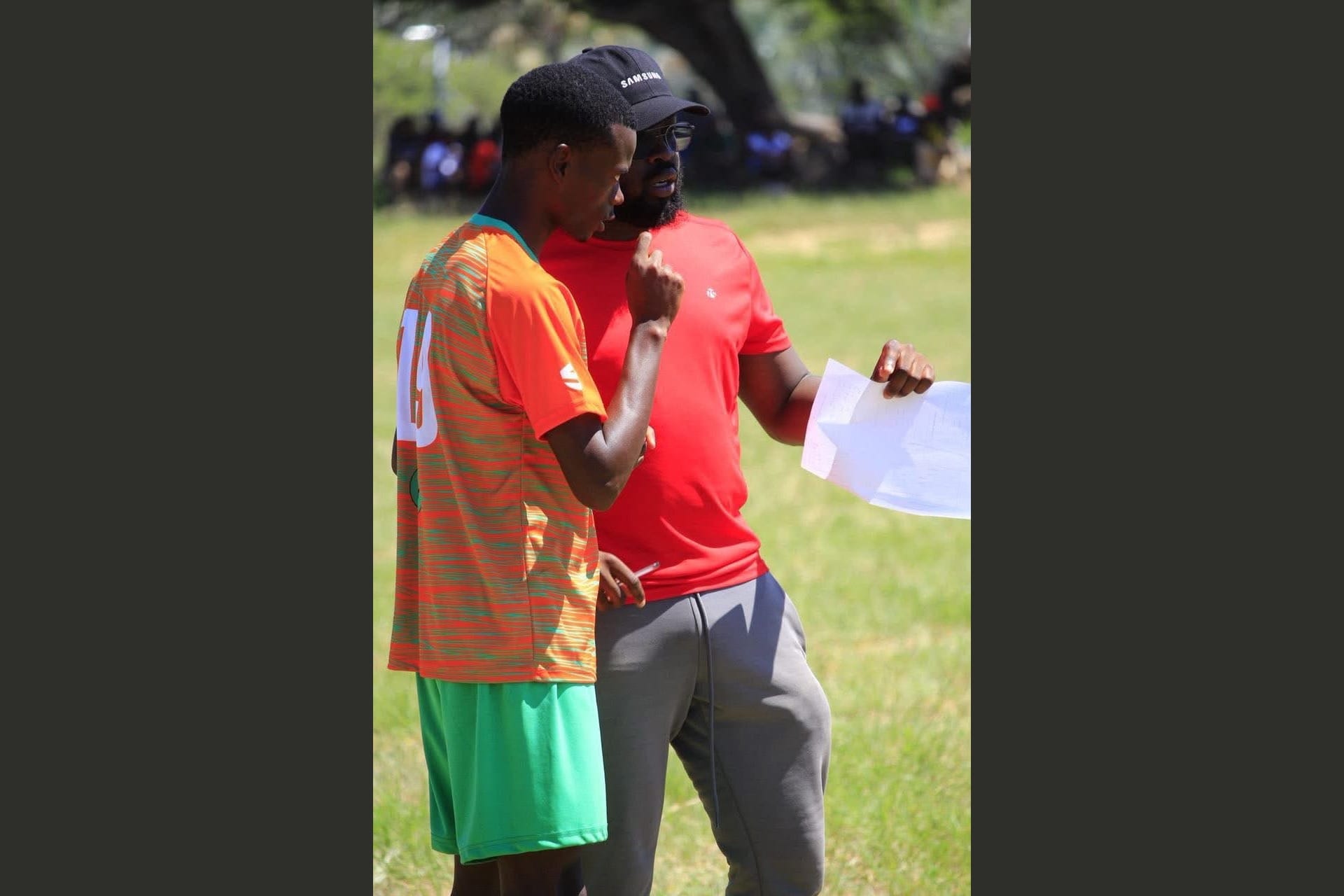
You place "serving those you lead" at the core of your leadership values. Servant leadership, though, tends to reveal its authenticity most clearly in the moments when a player directly challenges a coach's decision. Did a moment like that arise when you were working with The Dome Changers U17 or the KSS women's team? If so, could you describe how you handled it — in as specific and concrete terms as you can?
No, I have not really had that type of direct challenge at The Dome Changers or KSS.
But I did experience a moment at Celtic when a player did not want to come off after being substituted. What made it interesting is that it came from a senior player, and it happened in a context where we had actually spoken about this type of behaviour before.
Two weeks earlier, we had watched one of our rivals, and a player from that team reacted in a similar way when substituted. At the time, our own players were very clear in saying they would never respond like that.
So when it happened in our own group, it became a real moment of reflection.
In that situation, we did not escalate it. We called the player to the sideline, reminded him of what he had said previously, and kept the communication calm. He eventually accepted the decision and came off, although he was still disappointed.
After that, we moved on quickly as a group. For me, the important part was not punishment, but consistency in standards and helping the player understand the gap between intention and behaviour in the moment.
Your experience in women's football is substantial — winning titles with the KSS U15 and U17 Girls teams and running the Playtime Namibia women's league. Were there ways in which a player-centred approach had to work differently when coaching female athletes compared to male players? And what traces has that experience left on the way you now engage with the squad at Celtic Football Club?
Women's football taught me communication and emotional clarity. It made me more patient and more intentional in how I build trust. That carries into everything I do now.
From a coaching point of view, one of the biggest areas we had to work on was coordination and basic movement efficiency. Simple actions like receiving the ball, body orientation, and movement to the ball needed a lot of repetition. In our context, for example, we had to correct habits like players running around the ball instead of moving directly into it and receiving it cleanly.
Once those basics improved, the biggest change was confidence. As soon as they started to feel comfortable with the ball and understood structure, their performance level improved quickly.
Some of those players have gone on to represent Namibia at national level, including the senior women's national team and U17 setups, and some have even won competitions like the COSAFA Cup, which is something I am proud of.
In terms of what carried over to my work at Celtic, I would honestly say there was not a direct tactical transfer. But what it did improve for me was patience, communication, and how I introduce structure to players who are learning it for the first time.
PART 6 · WHAT WON'T BEND
You list "adaptability" as a stated coaching principle, and yet holding firm to possession-based build-up and high pressing simultaneously within the realities of the Erongo regional league cannot have been straightforward. Faced with constraints in infrastructure, training frequency, and squad composition, what was the most pragmatic adjustment you designed in order to protect your principles? And where is the line — what are you willing to bend, and what will you simply not touch?
The principles stay. The methods adapt. I may adjust formations, training exercises, or tactical details depending on available players and resources. What I won't compromise on is the commitment to proactive football, player development, and collective responsibility. Those principles define who I am as a coach.
The principles stay. The methods adapt.
Across the Asian football market, including South Korea, there has been growing interest in African youth development models in recent years. Having experienced both the CAF system and the England FA curriculum, what do you see as the most practically useful insight that the African coaching environment could offer to league administrators and coaches in Asia? And, conversely, are there aspects of Asian footballing systems that you think African coaches could genuinely learn from?
African football environments often develop resilience, adaptability, and creativity because coaches frequently operate with limited resources. There is tremendous value in learning how to maximise player development regardless of circumstances. From Asia, I believe African football can learn a great deal about infrastructure, long-term planning, organisational consistency, and investment in coach education. The best future lies in combining the strengths of both environments.
PART 7 · OWN IT
You've stated "accountability: own it" as a core value. I'd like to ask about the single heaviest moment in your coaching career — a decision you had to carry entirely on your own shoulders, regardless of how the result turned out. Whether it came during your time leading Chief Santos FC through a season, or within the co-head coach structure at Celtic Football Club — how did you get through it, and what mark has it left on the way you coach today?
One moment that stands out for me was at Celtic, when I made a late tactical adjustment in a tight game by changing our structure to chase the result. The intention was to increase attacking presence and win the game, but it also left us more open in transition than I would normally accept.
We ended up conceding in a phase where the team was stretched, and we lost the match. In that moment, I knew the decision was mine, not the players' or the staff's.
What made it heavy was not the loss itself, but the fact that I had to sit with the consequence of a choice I made under pressure, knowing I had shifted us away from our usual balance.
I got through it by reviewing it properly with my staff, not emotionally but honestly. We broke down the exact moment of the decision, what information I was working with, and what I ignored in that situation.
It has stayed with me because it improved how I handle pressure decisions. Now I am more controlled in how I change structure mid-game, and I make sure any adjustment is always aligned with our core balance, not just the scoreline or emotion of the moment.
At this point in your journey, what does the vision ahead actually look like? Where should Mark Jackson be standing five years from now — and ten years from now? And when a player you once coached looks back on their time with you, long after it's over, how do you want to be remembered?
In five years' time, I want to be coaching in the professional men's league, working at a stable level where I can fully implement my ideas with consistency and stronger resources.
In ten years' time, I want to be coaching at Champions League level, whether that is the CAF Champions League, UEFA Champions League, or the Asian Champions League. That is the level I want to measure myself against.
And when players look back, I want them to say that I helped them become better human beings. I helped them understand the game better, helped them win trophies, and pushed them to grow beyond the borders of the game.
I want them to say that I helped them become better human beings.
CLOSING
Read straight through, the striking thing about Mark Jackson is how little he oversells. He will tell you the unbeaten run was mentality more than method, that six defeats humbled him, that his team keeps making chances and missing them for want of a striker. In a genre that rewards the confident system-seller, he keeps choosing honesty instead — and it is exactly that honesty that makes the tactical thinking underneath it credible. He knows what "rest defence" cost him; he knows what he ignored the night he chased a game and lost it; he owns the decision rather than the alibi.
Holding it together is a conviction he states without flinching: principles are not handcuffs. Structure, for him, is not a cage but a platform — the thing that lets a centre-back become an initiator, a young player express himself, a squad stay difficult to beat on a poor surface. His methods will bend to whatever the Erongo coast throws at him; the principles — proactive football, player development, collective responsibility — will not. And the whole enterprise sits on a purpose he wrote at the very top of his CV, long before any tactics: to help people live better lives.
He is unusually clear about where he is pointed — a professional men's league, then Champions League football, "whether that is the CAF, UEFA, or the Asian" one, the strengths of different footballing worlds worth combining rather than ranking. But the line he ends on is not about levels at all. When his players look back, he wants them to say he helped them become better human beings — and, given the women he has already sent on to Namibia's colours and the street-kids programme that first drew him back, it does not read as a slogan. Football Agent Lab will be watching how far the road takes him.
ABOUT THE AUTHOR
SEOK LIM Editor · Football Agent Lab
FIFA-licensed football agent and steel market analyst with over a decade of experience in commodity research. Football Agent Lab publishes interviews and market reports at the intersection of football, agency work, and global markets.


