Until I Can Say: That's My Team
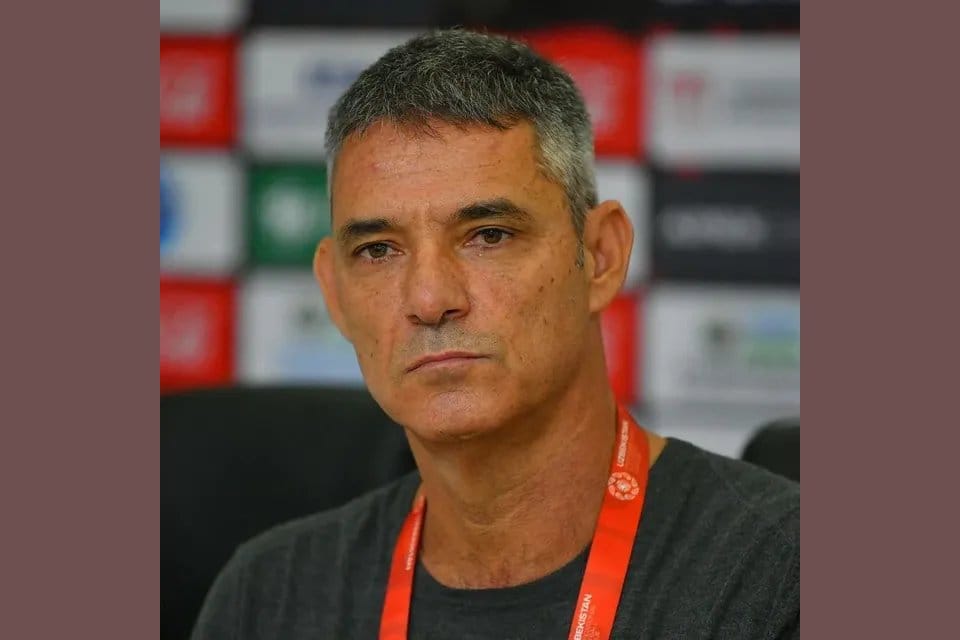
Spanish UEFA Pro coach. Five countries, three continents. The 2018 K League FA Cup, the 2025/26 Maldives double. Real Madrid Foundation and Barça Academy past. Two books. And — on the record — the wish to return to South Korea as a head coach.
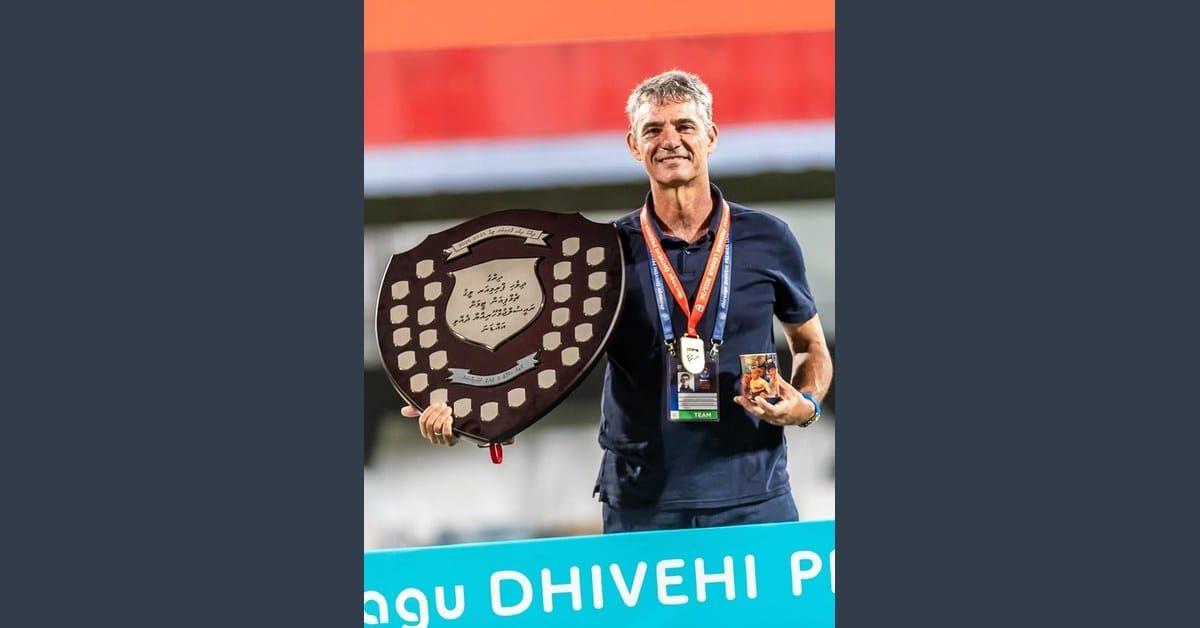
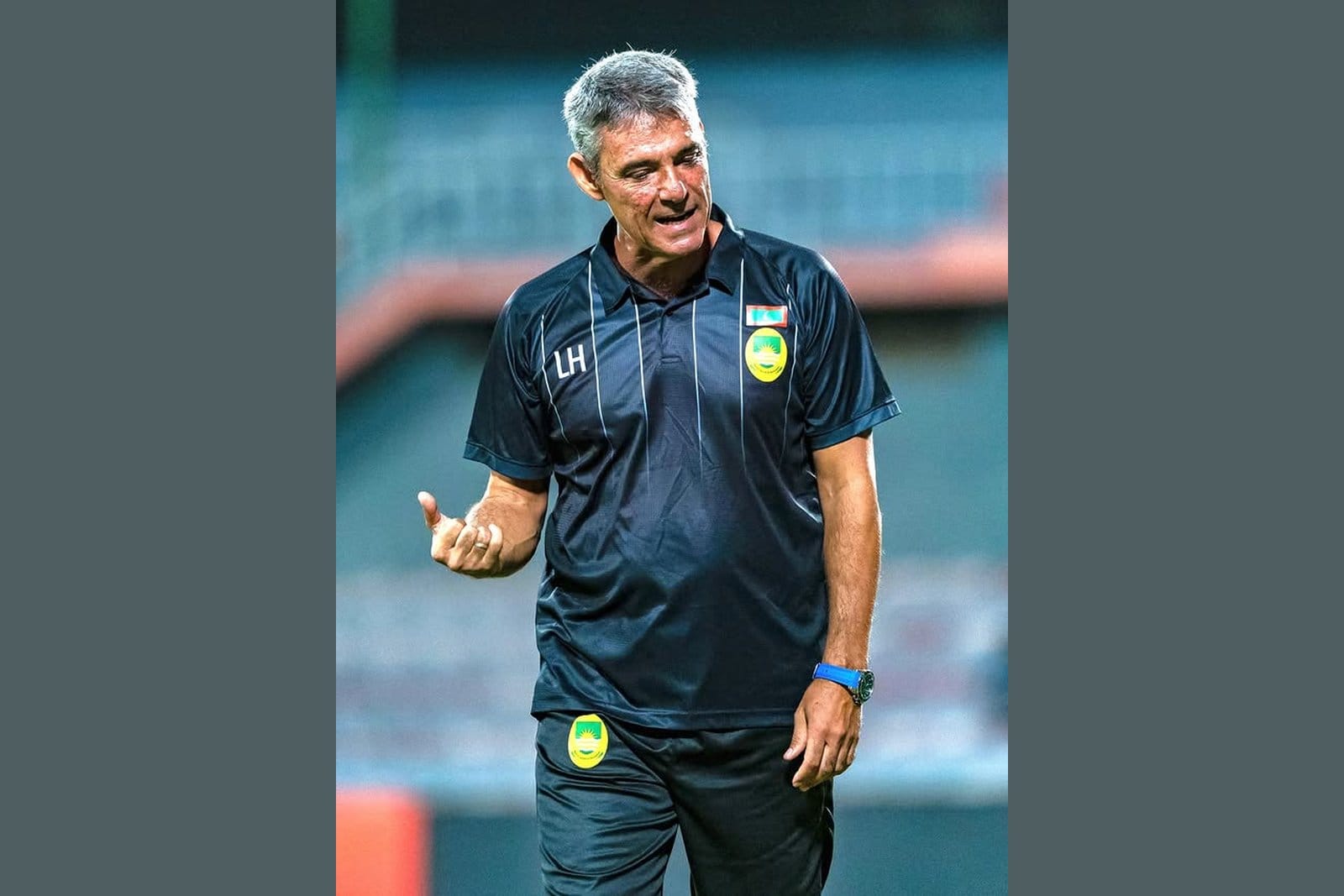
Luisma Hernández has built his career out of a single, repeated act — arriving in a country that is not his, and staying long enough to be able to say, of the team in front of him, that's my team. The phrase recurs in his vocabulary the way structured freedom recurs in Marco Gracia's and mentality over talent in Gert Engels's. It is the test he applies to his own work. He carries it to Kuwait, where he reached an Emir Cup semi-final at Al-Yarmouk. He carries it to Uzbekistan, where he kept Metallurg Bekobod in the first division across a do-or-die five-game stretch. He carries it to South Korea, where he served at Daegu FC from 2018 to 2020, as reserve team head coach with simultaneous tactical analysis and scouting responsibilities for the first team — contributing to the 2018 FA Cup victory and 2019 AFC Champions League qualification. He carries it to Lithuania at FC BE1 Jonava. And in 2025–26, he carries it to the Maldives, where he led Maziya S&RC to an unbeaten Dhivehi Premier League and cup double.
The Spanish coaching education behind this career is a long one. UEFA Pro Licence since 2001. A degree in Physical Education from the University of Las Palmas. A Master's in Sports Organisation Management from Bayern of Barcelona. Two decades of teaching at the Tenerife Coaches School. Technical Director of the FC Barcelona Technical Academy in Tenerife from 2011 to 2014. Technical Director of international projects for the Real Madrid CF Foundation from 2021 to 2024. Clinic attendance with Guardiola, Emery, Mendilibar, Seirul·lo, Valverde. Author of Crea tu modelo de juego and El fútbol es global. And on top of all of it: a methodology consultancy with Esférica in the United States, an active blog at elfutbolesglobal.es, a teaching language that runs in Spanish, English, and the working code-switching that any five-country coach develops by necessity.
In a written exchange with Football Agent Lab, Hernández is at once expansive — covering five continents of work in twenty answers — and pointedly specific where it matters. "Daegu, Daegu — what a great experience!" he writes when the K League comes up, and names the players who used to come individually for tactical conversations: Edgar, Cesinha, Kim Daewon. "To this day, I still receive messages saying 'Thank you, coach.'" In the opening of PART 6, asked about where he is headed next, he does not hedge. I'll admit it: I'd love to return to South Korea as a coach. The interview, read end to end, is a portrait of a coach in his fifties whose curiosity has not narrowed — and whose Korea chapter, by his own account, is unfinished.
Spanish UEFA Pro Coach · Head Coach · Technical Director · Author · Educator
CURRENT ROLE (2025–present)
Maziya S&RC (Maldives, Dhivehi Premier League) · Head Coach · 2025/26 league and cup double
HEAD COACH TENURES
FC BE1 Jonava (Lithuania, Pirma Lyga, 2024) · Metallurg Bekobod (Uzbekistan, Premier League, 2021–2023) · U.D. Las Zocas (Spain, third tier, 2016–17) · Al-Yarmouk Club (Kuwait, Premier League, 2014–16) · U.D. Icodense (Spain, U-19, 2004–06)
SOUTH KOREA — DAEGU FC (2018–2020)
Reserve Team Head Coach · First-Team Tactical Analysis and Scouting · 2018 FA Cup victory · 2019 AFC Champions League qualification
TECHNICAL DIRECTOR ROLES
Real Madrid CF Foundation · International Projects Technical Director (2021–24) FC Barcelona Technical Academy, Tenerife · Technical Director (2011–14) Esférica Methodology, USA · Methodology Consultant Tenerife Football Coaching School · Instructor (2004–present)
HONOURS (selected)
Maldives league + cup double, 2025/26 · Lithuanian promotion play-off, FC BE1 Jonava · Uzbekistan top-flight survival, Metallurg Bekobod · Kuwait Emir Cup semi-final, Al-Yarmouk · Korean FA Cup, 2018 (Daegu FC) · ACL qualification, 2019 (Daegu FC) · FCB Escola international tournaments (as Academy Director)
EDUCATION & QUALIFICATIONS
UEFA Pro Licence (2001) · BA in Physical Education, University of Las Palmas (2001) · Master's in Sports Organisation Management, Bayern of Barcelona (2009) · Spanish Football Coach Level 3 · 32-hour clinic with Guardiola, Emery, Mendilibar, Seirul·lo, Valverde (Lanzarote) · Sports Psychology & Coaching seminar with Xesco Espar (Cruyff University)
PUBLICATIONS
Crea tu modelo de juego (Create Your Own Game Model) El fútbol es global Blog: elfutbolesglobal.es
PART 1 · INTRODUCTION — WHO ARE YOU?
Coach Luisma Hernández, it's a pleasure to have you with us. Kuwait, Uzbekistan, South Korea, Lithuania, the Maldives — you've worked across five different top-flight leagues. Looking back on that long journey, is there something at your core as a coach that you always tried to hold onto, no matter where you were?
Hello, thank you for this interview opportunity.
My philosophy is to try to be proactive in football, whenever the squad and circumstances allow. Sometimes you have to be more pragmatic and less attractive in terms of playing the game.
And to give young talents the chance to show their level, alongside experienced players.
You've maintained your roots in Spain — teaching at the Tenerife Coaching School, working with local clubs — while consistently pushing yourself into new territories abroad. What drew you out? Was there something you felt you simply couldn't find within Spain?
My role as a coach and teacher in Spain has always been more about sharing and helping others grow and improve, or at least trying to.
Leaving Spain was a personal decision — a challenge — to enjoy what I love most, anywhere in the world.
PART 2 · PHILOSOPHY — WHAT DO YOU BELIEVE IN?
I believe in hard work, order, and passion — and in that way, trying to instill a specific identity in your team. Deep down, you recognize your teams regardless of the country you're in: knowing when you're one of the "big" ones and when you're one of the "small" ones, and adapting to the circumstances accordingly.
You yourself wrote Crea tu modelo de juego (Create Your Own Game Model). When you start building a game model with a new team, where do you begin? Is there anything you need to define even before arriving at the tactical structure?
That book came from meetings with friends and students during my time as a teacher in Spain, bringing together many ideas and concepts.
First, you need to identify: the country, the club, its culture, the objectives, the squad, and so on.
Then, in preseason, you begin to transfer your playing style and adapt it to your players — through videos, talks, training sessions, and more. Even when you arrive mid-season, you should make a clear statement of intent: how to attack, how to defend, the set pieces, the rules, the priorities.
The "Spanish style" means something different to everyone. Some think of possession, others of positional play. What does the Spanish style actually mean to you?
The Spanish style is heavily influenced by Guardiola's Barcelona and the 2010 World Cup-winning Spain — teams that dominate possession, are offensively aggressive, press high, and have very vertical transitions. That era still shapes many clubs today: Bayern, PSG, City, Arsenal. Several Spanish coaches, and others drawn to that style, continue to carry it forward.
Positional play, high-intensity pressing, vertical transitions — football trends move fast. Through all of that, has there been a tactical principle you've never been willing to compromise on, regardless of the team or the situation? Where did that principle come from?
As I mentioned, you have your philosophy — but with each club, and even each match, you have to prioritize what the team needs to compete better and win, above your ideals, without abandoning them. You have to be flexible and realistic.
In training, do you tend to spend more time on attacking organization or defensive organization? What's the thinking behind that choice?
A typical week has more of an attacking tactical focus, except when you know you'll be defending heavily in the next match.
I usually dedicate one session to the Defensive Plan, one to the Attacking Plan, and one to the overall Game Plan — with adjustments and fine-tuning throughout.
You attended a clinic that included Guardiola, Emery, Simeone, and Seirul·lo. Is there a single moment or line from that experience that has stayed with you ever since?
Indeed — we've been updating the UEFA-PRO course every three years for many years, and we're always joined by top-level coaches. What really stays with you is this: every team is different, and your job is to bring your experience and knowledge to help them improve. It all comes down to "mutual adaptation."
Every team is different, and your job is to bring your experience and knowledge to help them improve. It all comes down to mutual adaptation.
PART 3 · YOUTH & ACADEMY — HOW DO YOU PLANT THOSE IDEAS?
You've led both the FC Barcelona Technical Academy in Tenerife and the Real Madrid CF Foundation's international projects. How did those two philosophies feel similar to you, and where did they part ways? And where would you say your own academy philosophy fits?
I've been fortunate enough to serve as Technical Director for two of the world's greatest clubs.
FC Barcelona's approach is more focused on the holistic development of the player — as a footballer and as a human being — with a very clearly defined style of play: possession, a proactive approach, creativity. Exciting and complex.
Real Madrid CF's methodology is grounded in human values, where the player must help the team improve in competition. It's a more results-oriented approach.
Both develop the person and the player, but with different emphases.
When you watch a young player for the first time, where does your eye go first? Is there something you find yourself looking for before technical ability or physical qualities even come into it?
Good question! I look at their body language and verbal communication — the human values. Then I analyze their understanding of the game: attack, defence, transitions, set pieces. And of course, tactics, technique, and physical qualities follow.
I have observation sheets that I share with coaches for exactly this. Scouting is becoming increasingly complex; everyone thinks they know everything.
Body language and verbal communication — the human values. Then I analyze their understanding of the game.
Are there mistakes you see coaches fall into more often than they should when working with young players? If there's something you've witnessed or experienced yourself, we'd love to hear it.
As a teacher and coach, many who know me are aware of this: positive reinforcement is sorely lacking — and even I sometimes forget it. We need to keep improving positive reinforcement and encouraging players to self-reflect, so they can make better decisions while feeling the confidence of their coach.
You've been teaching at the Tenerife Coaches School for over twenty years now. Has that work shaped the way you coach on the pitch? What has going back and forth between the classroom and the training ground given you?
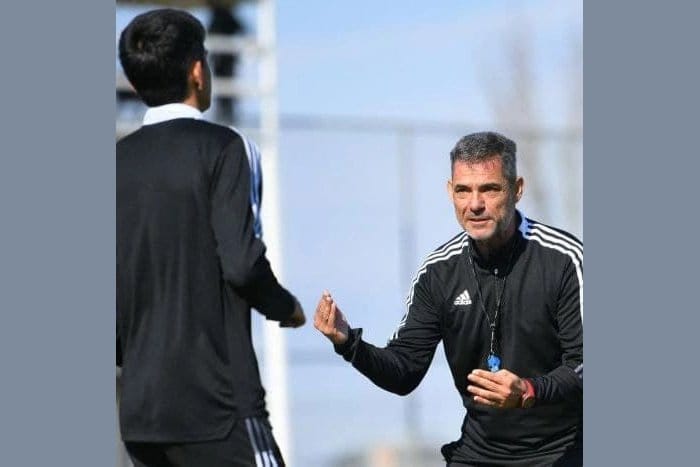
Absolutely. I tend to be more pedagogical with players — using videos, animations, graphics — and with my staff as well, so everyone understands the why and the how behind each task.
PART 4 · ON THE GROUND — HOW DO YOU PUT IT INTO PRACTICE?
By applying my methodology — and that of my book El fútbol es global — through team talks, drills, and reflection.
The principle I work by is: KNOW – BE – WANT.
Everyone needs to know what we're trying to achieve in every training session and every match. Players must know the theory, be able to execute it with their own qualities, and want to do it with both individual and collective commitment.
How do you spend the first three weeks at a new club? Reading the squad, building trust, presenting your ideas — is there a particular order or method you've settled into over the years?
That's where it all begins — the first few weeks.
In the past, the focus was more on physical conditioning; now it's more about establishing the tactical game model, with the physical demands built in around it.
I have a flexible preseason plan that balances game model development with physical preparation, always adapting to the specific country and squad.
In the 2025/26 season you won the league and cup double with Maziya S&RC in the Maldives. When you first arrived at that club, what were the first things you wanted to change — tactically and culturally?
2025 was a great year. We went unbeaten in both the league and the cup.
We adjusted their traditional training culture. Preseason included game model work alongside gym sessions. We improved both attacking and defensive strategies.
And we managed to give debuts to talented young players, complemented by strong local and foreign professionals.
In Uzbekistan, your job was to keep Metallurg Bekobod in the first division. How does your approach as a coach shift when survival is the goal rather than a title? How did you navigate that season?
Uzbekistan was a do-or-die five-game challenge, and we managed to avoid relegation. In two weeks, we switched from a 4-3-3 — the more Spanish-style system they had been using and losing with — to a 5-3-2, a more defensive shape that allowed us to improve defensively and create effective counter-attacks and set-piece situations.
As I said before, sometimes you have to give the team what it needs to win, even if it means setting aside your own ideals for a time.
The following season, we alternated between the 4-3-3 and the 5-3-2 depending on each match. The team became very flexible, and we had a good year.
At Daegu FC, you managed the reserve team while also handling tactical analysis and scouting for the first team. Looking at the K League through an analyst's lens, what stood out to you tactically — and what left you wanting more?
Daegu, Daegu — what a great experience!
In the reserve team, we helped develop players who are now succeeding at Daegu and other clubs: Seoul, Gangwon, Suwon.
That's the core of the job — helping players make the leap to professional football. To this day, I still receive messages saying "Thank you, coach."
From an analytical standpoint, what struck me most was the enormous work ethic of both players and staff — it's a hard-working culture. My role was to help them improve, especially tactically: making better runs, making better decisions. Players like Edgar, Cesinha, and Kim Daewon would come individually to ask how they could improve, and together we elevated the team and the results. That's how we won the FA Cup in 2018 and qualified for the AFC Champions League in 2019 — great memories, professionally and personally.
To this day, I still receive messages saying "Thank you, coach."
You've worked with players from five very different countries, with different technical levels, tactical understanding, and training cultures. After all of that, what has changed in your game model — and what has only become more fixed?
My essence remains. My vision of how I want to play is still there. And I adapt easily to the possibilities and objectives of each club and squad, without compromising my principles. We come back again to "mutual adaptation" — which is necessary for everyone's benefit.
I often say: "That's my team" — recognizing the identity and the idea in the way they play.
PART 5 · LEADERSHIP — HOW DO YOU LEAD PEOPLE?
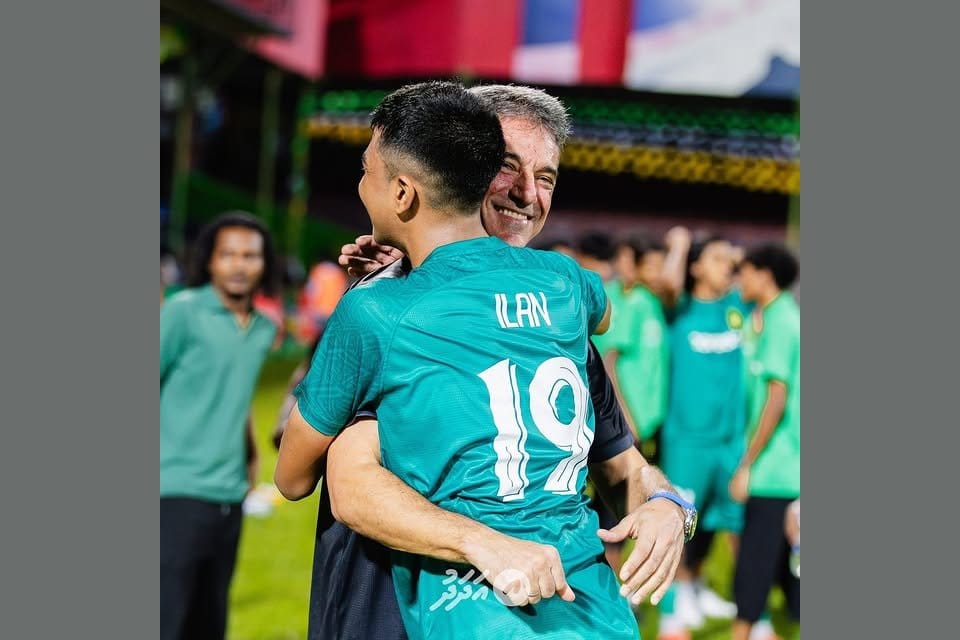
"Mutual respect." It's becoming increasingly complex because new generations are different. Little by little, you try to show them that you're there to help them achieve their individual and professional goals. Twenty-five players, each one with their own wants — and you with yours.
Sincerity and honesty are also key to a long and healthy working relationship, knowing that mistakes will happen along the way.
As a coach, you place great importance on emotional intelligence. Have you ever found yourself in a situation where the tactically correct decision and the humanly correct decision pointed in different directions? What did you do, and how do you feel about it looking back?
Another great question! It happens often, because sometimes the person who is capable of doing something isn't ready to do it yet.
For example: a 16-year-old — the most gifted player at that moment — comes off the bench and scores two goals, replacing a 36-year-old starter who was less prepared. Both are satisfied: the veteran had his start, and the youngster came on and made the difference.
But what if not bringing the youngster on sooner had cost us the match? It's always difficult to get it right. In the end, you trust your instincts.
Being a foreign coach alone in an unfamiliar country must be lonely at times. How have you handled that over the years? Do you think that solitude has, in some way, sharpened your instincts as a coach?
The situations have varied — sometimes more solitary, sometimes surrounded by people. I've always adapted well. You enjoy what you do, you meet new people, and you find meaning in the process.
Being alone does allow for more hours of focus and work, though you have to carve out time to switch off and find balance.
PART 6 · VISION — WHERE ARE YOU HEADED?
I keep dreaming. There are no borders, no limits. Returning to familiar countries, national teams, academies — who knows. Football!
I'll admit it: I'd love to return to South Korea as a coach.
You run a blog, you've written a book, you teach — you share your thinking quite openly. Many coaches prefer to keep their methods close to their chest. Why have you chosen to go the other way? Has that openness helped your career, or has it ever cost you something?
My friends tell me I share too much. I say that giving is helping. You help coaches who help players, people who help people. What more can we do?
Last question. The game model, the academy philosophy, the experiences across five countries — where do you feel all of this is taking you? Ten years from now, how would you like the name Luisma Hernández to be remembered in world football?
It's making me a better person and a better coach. To share and to help.
I love it when someone says: "Thank you for your help."
As I've said before, I want to keep being someone who "dreams his life and lives his dreams — helping others along the way."
Thank you, and see you on the pitch!
I dream my life and live my dreams — helping others along the way.
CLOSING
Across twenty answers, three vocabularies travel together in Hernández's voice. First, the language of a Spanish coach trained inside the Guardiola–Seirul·lo idiom — possession, proactive approach, mutual adaptation, KNOW–BE–WANT. Second, the language of a Real Madrid Foundation and Barça Academy Technical Director — holistic development, human values, results orientation, observation sheets. And third, the language of a coach who has actually lived inside five very different football cultures and stopped romanticising any single one of them. He says it openly: with each club, you have to prioritize what the team needs to compete better and win, above your ideals. In Uzbekistan that meant changing systems in two weeks. In the Maldives it meant rewriting the training week. In Korea it meant tactical analysis sessions one player at a time. Across all of it, the test is the same: at some point, can he look at the team and say, that's my team.
What is most striking, read end to end, is how openly he names what he wants next. There is a Korean chapter in this interview, and he writes about it with a specificity the rest of the answers do not match. The names of the Korean players he developed are in the record. The trophies — the 2018 FA Cup, the 2019 ACL qualification — are in the record. The messages he still receives from those players — "Thank you, coach" — are in the record. And in the opening of PART 6, asked about where he is headed next, he refuses to hedge: I'll admit it: I'd love to return to South Korea as a coach. It is the only line in the conversation that begins with the word admit.
He is in his fifties. He holds the league-and-cup double of an unbeaten Maldives season. He has written two books. He teaches the UEFA Pro course every three years in Tenerife. He has the Real Madrid Foundation and FC Barcelona Academy on his CV. And he has Daegu in his vocabulary — a chapter he names, plainly, as unfinished. Three years on from his first K League tenure, with Korean football carrying more confidence than at any point in its history and the K League's appetite for proven foreign coaches steady and growing, the door to that chapter is more open than it has been in a long time. Football Agent Lab will be watching, with a quiet hope that the next That's my team is written in Korean.
ABOUT THE AUTHOR
SEOK LIM Editor· Football Agent Lab
FIFA-licensed football agent and steel market analyst with over a decade of experience in commodity research. Football Agent Lab publishes interviews and market reports at the intersection of football, agency work, and global markets.


